


Adam Serwer

Adam Serwer

Reporter

Adam Serwer is a reporter at Mother Jones. Formerly a staff writer at the American Prospect, he has written for the Washington Post, the Root, the Village Voice, and the New York Daily News

Get my RSS |

Republicans Are Furious at Obama for Prosecuting an Alleged Terrorist

| Fri Mar. 8, 2013 11:23 AM PST
Republican Sen. Lindsey Graham of South Carolina

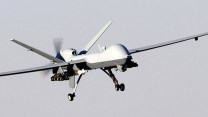
When the Obama administration is killing alleged terrorists with deadly flying robots, Republicans complain that too many of them are being killed rather than captured. When the Obama administration captures alleged terrorists, Republicans complain that they're being given inappropriate trials instead of being locked away for life.

On Thursday, Suleiman Abu Gaith, identified by US officials as Osama bin Laden's son-in-law and a spokesperson for Al Qaeda, was indicted in federal court in New York City on charges of conspiracy after reportedly being handed over to the US by Jordanian authorities.  Senators Lindsey Graham (R-S.C.) and Kelly Ayotte (R-N.H.) promptly went ballistic, saying military detention was imperative. "By processing terrorists like Sulaiman Abu Ghayth through civilian courts, the Administration risks missing important opportunities to gather intelligence to prevent future attacks and save lives." They added that Obama's "lack of a war-time detention policy for foreign members of Al Qaeda, as well as its refusal to detain and interrogate these individuals at Guantanamo, makes our nation less safe."

Advertise on MotherJones.com

John Yoo to Rand Paul: Leave Barack Obama Alone on Targeted Killing!

| Thu Mar. 7, 2013 2:23 PM PST

John Yoo, the author of the Bush administration legal memos justifying the use of torture, thinks President Obama is really getting too much grief over targeted killing. And he wants Sen. Rand Paul (R-Ky.)—who filibustered Obama's nominee to head the CIA for 13 hours on Wednesday—to lay off.

"I admire libertarians but I think Rand Paul's filibuster in many ways is very much what libertarians do, they make these very symbolic gestures, standing for some extreme position," said Yoo, now a UC Berkeley law professor, who once suggested it was okay for the president to order a child's testicles be crushed. Referring to Paul's marathon filibuster, an attempt to force the Obama administration to clarify its views on the use of military force against terror suspects in the United States, Yoo said "It sort of reminds me of young kids when they first read The Fountainhead or Atlas Shrugged and they suddenly think that federal taxation equals slavery and they're not going to pay any federal taxes anymore." Yoo's statements were made on a conference call Thursday held by the Federalist Society, an influential conservative legal organization.

Paul's conservative colleagues also pushed back on him on Thursday: On the Senate floor, John McCain (R-Ariz.) and Lindsey Graham (R-S.C.) mocked Paul's objections as "ridiculous."

Yoo said that he thought the administration's problems stemmed from its belief that it needed to provide "due process" to terror suspects abroad—or even in the United States, referring to a recently leaked white paper outlining the Obama administration's legal views on targeted killings of US citizen terror suspects. Indicative of how the debate over Obama's counterterrorism policies has scrambled the usual partisan divides, Yoo said he agreed with the conclusion reached in Attorney General Eric Holder's letter to Paul earlier in the week suggesting that the president could order the use of military force on US soil under certain extreme circumstances. "I think it's right if an American joins an enemy with which we are at war he is or she is a valid target as an enemy combatant. That's been the rule throughout our history," Yoo said. "People in the Civil War were all American citizens, but the ones who took up arms were members of the enemy."

In the event of an attack similar to the one that occurred in Mumbai, India in 2008, Yoo said, "we would expect that our government would respond to those attacks not just by sending out the police but by sending out the military if necessary. If you could use force in that situation you could use drones just like you could use snipers or combat troops."

Also on the conference call were American University School of Law professor Steve Vladeck and former federal prosecutor Andrew C. McCarthy, a writer for National Review.

Referring to an exchange between Attorney General Holder and Sen. Ted Cruz (R-Texas) over whether an American terror suspect "sitting in a cafe" in the United States could be targeted in a drone strike, McCarthy took Holder's side. Holder had said it would be "inappropriate" to use lethal force under such circumstances; pressed by Cruz Holder agreed it would be unconstitutional.

"I had sympathy for Attorney General Holder yesterday, particularly when he was being browbeaten by Senator Cruz," said McCarthy, who has alleged that the Obama administration is being controlled by the Muslim Brotherhood. "I understood why the attorney general was reluctant to use the label unconstitutional, and substitute it with something that was more equivocal."

Holder sent a brief letter to Paul Thursday afternoon designed to address the concerns Paul expressed during his filibuster"Does the President have the authority to use a weaponized drone to kill an American not engaged in combat on American soil?" Holder asked. "The answer is no."

Attorney General: Obama Can't Order Drone Attack on Americans on US Soil

| Thu Mar. 7, 2013 11:49 AM PST
Attorney General Eric Holder testifying before the Senate Judiciary Committee.

It took Sen. Rand Paul (R-Ky.) filibustering for 13 straight hours, but the White House has finally clarified that President Barack Obama cannot order a drone strike on an American citizen on American soil. In a curt, 43-word letter, Attorney General Eric Holder clarified the administration's stance. 

"It has come to my attention that you have now asked an additional question: "Does the President have the authority to use a weaponized drone to kill an American not engaged in combat on American soil?" Holder wrote. "The answer to that question is no."

Holder had previously stated in a letter to Paul that he believed it would be appropriate to use deadly military force on American soil in two "catastrophic" scenarios—namely another Pearl Harbor or 9/11.

"Nobody questions if planes are flying towards the Twin Towers whether they can be repulsed by the military," Paul said during his filibuster Wednesday. "Nobody questions whether a terrorist with a rocket launcher or a grenade launcher is attacking us, whether they can be repelled."

Paul had also asked during his filibuster whether an Arab American "sitting in a cafeteria in Dearborn, Michigan," and suspected of ties to terror could be targeted with lethal force by a drone. "As for Paul and Holder, I suspect they're in complete agreement on the 'café' hypothetical—but who isn't?" says Steve Vladeck, a professor at American University School of Law. "This isn't about cafés—it's about dirt roads in northern Yemen."

Here's Holder's letter:


Republican Senator Filibusters Obama's CIA Nominee Over Drones

| Wed Mar. 6, 2013 4:12 PM PST

UPDATE: Senator Paul ended his filibuster after midnight on Thursday after nearly 13 hours. As Paul ended his filibuster, he said “I would go for another 12 hours to try to break Strom Thurmond’s record, but I’ve discovered that there are some limits to filibustering and I’m going to have to go take care of one of those in a few minutes here." In order to hold the Senate floor, Paul was not permitted to even sit down, let alone leave to go to the bathroom.

On Wednesday, Senator Rand Paul (R-Ky.) engaged in a marathon filibuster of John Brennan, Obama's nominee to head the CIA, protesting the administration's policy on the use of drones in lethal operations. Paul began speaking at noon and was still filibustering six hours later. 

"I will speak until I can no longer speak," Paul said. "I will speak as long as it takes, until the alarm is sounded from coast to coast that our Constitution is important, that your rights to trial by jury are precious, that no American should be killed by a drone on American soil without first being charged with a crime, without first being found to be guilty by a court." Paul also criticized the administration's rationale for targeting American terror suspects overseas, as laid out in a recently leaked white paper.

Paul has been pressing the Obama administration for weeks to answer if it believes the president has the authority to order a drone strike on American soil. On Tuesday, Paul received a letter from Attorney General Eric Holder stating that, in certain "extraordinary circumstances," such as the attack on Pearl Harbor or the 9/11 attacks, military force could be used domestically. Sens. Mike Lee (R-Utah), Ted Cruz (R-Texas), Jon Cornyn (R-Texas), Marco Rubio (R-Fla.), Pat Toomey (R-Pa.), Jerry Moran (R-Kan.), Saxby Chambliss (R-Ga.), and Ron Wyden (D-Ore.) joined Paul's filibuster, although Wyden reiterated his intention to vote for Brennan's confirmation. The administration recently agreed to allow senators on the intelligence committee access to the legal memos justifying the use of lethal force against American terror suspects. 

"That Americans could be killed in a café in San Francisco, or in a restaurant in Houston, or at their home in Bowling Green, Kentucky, is an abomination," Paul said. "It is something that should not and can not be tolerated in our country…Has America the beautiful become Alice's Wonderland?" Paul also criticized the use of signature strikes—lethal operations targeted at anonymous individuals abroad who are believed to be terrorists based on a "pattern of behavior."

During a Senate judiciary committee hearing held earlier Wednesday, Sen. Ted Cruz (R-Texas) asked Holder whether he believed that it would be constitutional for the president to order a drone strike on an American citizen suspected of terrorism in the United States who was "sitting quietly at a café." After a lengthy back and forth, during which Holder said that he did not think it would be "appropriate" to use lethal force in such a circumstance, and Cruz pressed him on whether that meant "unconstitutional," Holder acknowledged that he did not think it would be constitutional. "Translate my 'appropriate' to 'no,'" Holder said. "No." Holder said he didn't believe the letter he had sent to Paul was inconsistent with that answer. 

Later on during the oversight hearing, Sen. Lindsey Graham (R-S.C.) asked Holder if it would be constitutional for the US military to fire on a hijacked civilian plane that was aimed at the White House. Holder said yes. "When we say Congress gave every administration the authorization to use military force against Al Qaeda, we didn't exempt the homeland, did we?" Graham asked.

"No I don't think we did," Holder said. "In the letter that I sent to Sen. Paul, that's one of the reasons I mentioned September the 11th," Holder said, referring to an order given by then-Vice President Dick Cheney to shoot down passenger planes that were reportedly headed for the Capitol. The order was never carried out because it was received too late. 

"What I worry about are the people who say America is a battlefield," Paul said during his filibuster. "They're saying they want the laws of war to apply here." 

Obama Administration Says President Can Use Lethal Force Against Americans on US Soil

| Tue Mar. 5, 2013 1:55 PM PST
obama

UPDATE March 7 4:12 PM EST: Attorney General Eric Holder sent a second letter to Senator Rand Paul on Thursday clarifying the administration's views on the use of military force inside the United States.

Yes, the president does have the authority to use military force against American citizens on US soil—but only in "an extraordinary circumstance," Attorney General Eric Holder said in a letter to Sen. Rand Paul (R-Ky.) on Tuesday. 

"The US Attorney General's refusal to rule out the possibility of drone strikes on American citizens and on American soil is more than frightening," Paul said Tuesday. "It is an affront the constitutional due process rights of all Americans."

Last month, Paul threatened to filibuster the nomination of John Brennan, Obama's pick to head the CIA, "until he answers the question of whether or not the president can kill American citizens through the drone strike program on US soil." Tuesday, Brennan told Paul that "the agency I have been nominated to lead does not conduct lethal operations inside the United States—nor does it have any authority to do so." Brennan said that the Justice Department would answer Paul's question about whether Americans could be targeted for lethal strikes on US soil.

Holder's answer was more detailed, however, stating that under certain circumstances, the president would have the authority to order lethal attacks on American citizens. The two possible examples of such "extraordinary" circumstances were the attack on Pearl Harbor and the 9/11 terrorist attacks. An American president ordering the use of lethal military force inside the United States is "entirely hypothetical, unlikely to occur, and one we hope no president will ever have to confront," Holder wrote. Here's the bulk of the letter:

As members of this administration have previously indicated, the US government has not carried out drone strikes in the United States and has no intention of doing so. As a policy matter moreover, we reject the use of military force where well-established law enforcement authorities in this country provide the best means for incapacitating a terrorist threat. We have a long history of using the criminal justice system to incapacitate individuals located in our country who pose a threat to the United States and its interests abroad. Hundreds of individuals have been arrested and convicted of terrorism-related offenses in our federal courts.

The question you have posed is therefore entirely hypothetical, unlikely to occur, and one we hope no president will ever have to confront. It is possible, I suppose, to imagine an extraordinary circumstance in which it would be necessary and appropriate under the Constitution and applicable laws of the United States for the President to authorize the military to use lethal force within the territory of the United States. For example, the president could conceivably have no choice but to authorize the military to use such force if necessary to protect the homeland in the circumstances like a catastrophic attack like the ones suffered on December 7, 1941, and September 11, 2001.

The letter concludes, "were such an emergency to arise, I would examine the particular facts and circumstances before advising the president of the scope of his authority."

In a Google+ Hangout last month, President Obama refused to say directly if he had the authority to use lethal force against US citizens. As Mother Jones reported at the time, the reason the president was being so coy is that the answer was likely yes. Now we know that's exactly what was happening. "Any use of drone strikes or other premeditated lethal force inside the United States would raise grave legal and ethical concerns," says Raha Wala, an attorney with Human Rights First. "There should be equal concern about using force overseas."

This post has been edited to include Paul's statement and the final line of Holder's letter.

Tue Apr. 30, 2013 2:20 PM PDT
Wed Apr. 24, 2013 6:01 AM PDT
Tue Apr. 23, 2013 11:42 AM PDT
Fri Apr. 19, 2013 3:12 PM PDT
Tue Mar. 19, 2013 9:44 AM PDT
Mon Mar. 11, 2013 8:30 AM PDT
Fri Mar. 8, 2013 12:24 PM PST
Thu Feb. 7, 2013 5:35 PM PST