





Adam Weinstein

Adam Weinstein

Engagement Editor

I'm Mother Jones' engagement editor and Tumblrizer, specializing in explanatory journalism and new-media reporting. As a Navy vet and ex-Iraq contractor, I'm also committed to articulating all things martial—good, bad, and weird—to new audiences.

Full Bio | Get my RSS |

Adam Weinstein is Mother Jones' engagement editor, having previously served the magazine as its national security reporter and copy editor. Before that, he worked at the Wall Street Journal, the Village Voice, and the Tallahassee Democrat. He's written for the New York Times, New York magazine, GQ, and Newsweek. A Navy veteran, two-day Jeopardy champion and ex-political scientist, he also did a recession-fueled stint as a military contractor in Iraq. For more about Adam and his writing, click here.

The Dot-Com Crash, 10 Years On

| Wed Mar. 10, 2010 1:53 PM PST

Our friends over at Newsdesk.org pointed out to Mother Jones that March 10, 2000, marked the start of the dot-com crash. That's the day the tech-rich Nasdaq stock index reached its peaked, fueled by speculation in the values of them thar new-fangled Interweb-based companies. (Remember the Pets.com sock puppet Super Bowl commercial? I do, fondly. Happy anniversary!) But it turns out those values were overvalued, and an HTML house of cards tumbled, dragging down the economy with it. Nasdaq closed yesterday down about 54 percent from its high a decade ago.

You'd think that would have been a fabulous cautionary tale far future stock market speculators in oh, say, securitized mortgages and credit swaps. But popular US economic discourse has actually slid backward since then: Nowadays, even the most earnest advocates for financial regulation—or even a little circumspection—are derided as Cassandras at best, or at worst, socialists who reject the free market.

Back in 1996, Fed Chairman Alan Greenspan—who had his part to play in both the dot-com and subprime bubbles—warned America to guard against its own economic hubris, "when irrational exuberance has unduly escalated asset values, which then become subject to unexpected and prolonged contractions..." The economist Robert Shiller made that phrase—irrational exuberance—the title of a 2000 book, in which he argued that the Internet-addled stock market was dangerously overvalued. He even put out a revised edition in 2005, warning of a similar phenomenon in the white-hot housing market.

Not that it mattered.

So until our divided nation agrees that you can have a democratic free market with a sane governor on its top speed, let's drink a 40 to the memory of financial bubbles past—and future. And here's hoping the next generation of working stiffs with monied dreams won't ever have to tell their coworkers they're "goin' to Vegas."

Advertise on MotherJones.com

Is Drudge Spreading Viruses?

| Wed Mar. 10, 2010 12:26 PM PST

The Drudge Report, that right-leaning granddaddy of online rumor mills and news aggregators, is being blamed today—along with some other popular websites—for spreading a host of viruses to its readers. The best evidence available at current seems to bear that out: Through no fault of its own, the No. 3 political website in the world is apparently being used to transmit malware through popup ads.

Stalwart conservatives, though, took time out from their busy schedule of global warming and evolution denials to blame a vast left-wing conspiracy for the virus charges. "Democrats in the Senate are attempting to scare people away from alternative news websites by falsely claiming the sites contain dangerous software viruses," claimed one (right-wing) alternative news website, which has branded the plot part of a larger liberal "cybersecurity agenda."

Wal-Mart's Black Barbie Sale

| Tue Mar. 9, 2010 4:03 PM PST

[UPDATE: We've followed up on this story here: "Barbiegate: What We Learned"]

Never let it be said that Wal-Mart doesn't know how to pander for a fast buck. The megachain acknowledged today that it's selling ethnic Barbie dolls for about half of what it charges for Caucasian Barbies.

The store was forced into the admission after a Louisiana-based shopper posted a photo, seen here, of the diverse dolls—and their respective pricetags—side by side in a Wal-Mart. As the good-humored Latino-interest blog Guanabee put it: "The same exact doll, in Caucasian, commands almost double the price! Who says Barbie dolls don’t supply young girls with a realistic portrayal of womanhood?"

(Interestingly, ABC News reported that the dolls were "black," while Guanabee called them "brown." Ambiguity abounds—except for Wal-Mart's contention that whatever they are, they're worth less than white ballerinas.)

For its part, the chain said it was selling the darker-skinned Ballerina Theresa Barbie dolls on the cheap because it needs to "clear shelf space for its new spring inventory." Which must make Theresa feel oh, so special.

No word yet from Wal-Mart, though, on when your kids will be able to find Burka Barbie on your local shelves.

[UPDATE: We've followed up on this story here: "Barbiegate: What We Learned"]

Petraeus' Presidential Fetish

| Tue Mar. 9, 2010 2:19 PM PST

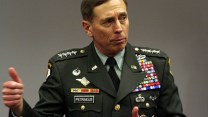
For a guy who doesn't want the job, Gen. David Petraeus sure talks about the presidency a lot. So says the Associated Press in its dispatch today.  The AP followed the head of US Central Command—who's credited with writing the book on counterinsurgency, turning Iraq around, keeping Afghanistan close, and generally making patriotism sexy again—as he participated in Q&A's around the country. And every time he was asked a question that bordered remotely on politics, he steered it into a denial that he's trained his sights on the White House:

Part of his stock reply to the politics question—even when it's not asked—is to cite lyrics from a Lorrie Morgan country-western song about rejecting an unwanted suitor: "What part of 'no' don't you understand?"

Then he chuckles as if to suggest he's a bit embarrassed by the fuss—fuss sometimes of his own making.

Is he keeping his options open?

By a long stretch, this isn't the first time "Petraeus" and "presidency" have been joined in the same sentence; two and a half years ago, MoJo's own DC-based Dan Schulman reported in great detail on the general's electoral potential. Even Bob Dole weighed in last year to give the noncandidate his endorsement for commander in chief. And no grassroots candidacy is truly complete without the occasional Astroturf blog of support.

But on further review (and ignoring the obvious concerns about militarism in electoral politics), a Petraeus candidacy might be healthy for the GOP—and for the country. He publicly supported the Obama administration's now-stalled plan to shutter Guantanamo Bay's detention facility and end torture. He holds a doctorate from Princeton and has surrounded himself with intellectuals, left and right, in and out of uniform, who embrace out-of-the-box thinking—no small feat in the military's often stultifying bureaucracy.

Hurt Locker: War Films Are Back

| Mon Mar. 8, 2010 4:45 PM PST

It's hard not to gush about Hurt Locker's cleanup of the Academy Awards last night. The film, which details the life of an explosive ordnance disposal team in Iraq, was itself an insurgent engaged in an asymmetric war with a high-cost, high-revenue, CGI popcorn thriller (we all know who that is). But besides earning the first Oscar honors for a female director, and being the lowest-grossing "best picture" winner ever, Hurt Locker could be still more groundbreaking: It could pull complex, nuanced war stories out of the art houses and back into favor with commercial audiences and producers.

That's no small feat. Just a few years ago, Michael Moore was being booed off the stage for giving his not-so-nuanced take on the freshly minted Iraq campaign. Since then, a bevy of Iraq-related films (In the Valley of Elah, Redacted, Brothers et al) have been relegated to the margins of American culture, deemed too violent, too political, or just too damned in-your-face at a time when the American public would like to forget its ongoing expeditionary forays. (Last year, as a PR person for the US military in Iraq, I felt like I was Sisyphus rolling a boulder uphill just trying to get any mention of the war in the mainstream media.) But today, Hurt Locker has penetrated the American pop psyche like no war film since Saving Private Ryan—albeit in a completely different way, which is fitting for a movie that chronicles a completely different war, waged by a completely different America.

To be fair, Hurt Locker, too, doesn't satisfy the "been there, done that" war grunt's attitude—a hunger for accuracy or patriotic fervor that the political right has always used to torpedo war films deemed lacking in the John Wayne rah-rah factor. Some of the movie's less realistic points—like US soldiers roaming the streets of Baghdad alone after dark—are the subject of fair ridicule, and "going all Hurt Locker" has now entered the warfighter's lexicon, referring to someone who's being overly dramatic. (The conservative school of thought here, apparently, is that realism is the only mode appropriate to war drama—unless the reality is inglorious, in which case, contrived glory wins.)

But today, even some of the Iraq war's biggest (and most laughable) proponents are praising Hurt Locker's triumph. Apparently, conservatives are now ready to brook some dialogue about war and art, and what their intersection can tell us about ourselves. They're also calculating, I think, that more war references in popular culture will "bring the war home," reminding the civilian public of what's being done abroad in its name. For completely different reasons, I can only hope that they're right.

Wed Dec. 12, 2012 10:19 AM PST
Sun Oct. 7, 2012 7:13 PM PDT
Wed Oct. 3, 2012 8:35 AM PDT
Mon Oct. 1, 2012 9:48 AM PDT
Wed Sep. 19, 2012 8:19 PM PDT
Tue Sep. 11, 2012 10:29 AM PDT
Thu Aug. 30, 2012 2:19 PM PDT
Fri Aug. 24, 2012 1:18 PM PDT
Thu Aug. 2, 2012 3:00 AM PDT
Wed Jul. 18, 2012 3:00 AM PDT
Tue Jul. 10, 2012 11:45 AM PDT
Fri Jul. 6, 2012 3:00 AM PDT
Tue Jun. 12, 2012 3:35 PM PDT
Fri May. 25, 2012 3:45 AM PDT
Fri May. 18, 2012 6:00 AM PDT