



Clara Jeffery

Clara Jeffery

Editor in Chief

Since taking the editorial helm at Mother Jones in late 2006, Clara and her co-editor, Monika Bauerlein, have won two National Magazine Awards for general excellence, relaunched MotherJones.com, founded an nine-person Washington bureau, given birth, and forgotten what it's like to sleep. It probably doesn't help she's on Twitter so much.

Full Bio | Get my RSS |

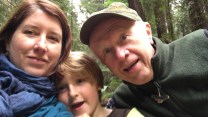
Clara Jeffery is co-editor of Mother Jones, where, together with Monika Bauerlein, she has spearheaded an era of editorial growth and innovation, marked by the addition of an eight-person Washington bureau, an overhaul of the organization's digital strategy and a corresponding tripling of traffic, and the winning of two National Magazine Awards for general excellence. Before joining the staff of Mother Jones, she was a senior editor of Harper's magazine. Ten pieces that she personally edited have been finalists for National Magazine Awards, in the categories of essay, profile, reporting, public interest, feature, and fiction. Works she edited have also been selected to appear in various editions of Best American Essays, Best American Travel Writing, Best American Sports Writing, and Best American Science Writing. Clara cut her journalistic teeth at Washington City Paper, where she wrote and edited political, investigative, and narrative features, and was a columnist. Jeffery is a graduate of Carleton College and Northwestern's Medill School of Journalism. Born in Baltimore and raised in Arlington, Virginia, she now resides in the Mission District of San Francisco with her partner Chris Baum and their three-year-old son, Milo. Their burrito joint of choice is El Metate.

Obama: "Difficult Time for Journalism"

| Wed Sep. 9, 2009 4:35 PM PDT

Via the NYT's Brian Stelter writing at the Media Decoder blog, here's what President Obama had to say about what ails journalism at Walter Cronkite's memorial service today:

… We also remember and celebrate the journalism that Walter practiced — a standard of honesty and integrity and responsibility to which so many of you have committed your careers. It’s a standard that’s a little bit harder to find today. We know that this is a difficult time for journalism. Even as appetites for news and information grow, newsrooms are closing. Despite the big stories of our era, serious journalists find themselves all too often without a beat. Just as the news cycle has shrunk, so has the bottom line.

And too often, we fill that void with instant commentary and celebrity gossip and the softer stories that Walter disdained, rather than the hard news and investigative journalism he championed. “What happened today?” is replaced with “Who won today?” The public debate cheapens. The public trust falters. We fail to understand our world or one another as well as we should –- and that has real consequences in our own lives and in the life of our nation. We seem stuck with a choice between what cuts to our bottom line and what harms us as a society. Which price is higher to pay? Which cost is harder to bear?

“This democracy,” Walter said, “cannot function without a reasonably well-informed electorate.” That’s why the honest, objective, meticulous reporting that so many of you pursue with the same zeal that Walter did is so vital to our democracy and our society: Our future depends on it.

Walter was no naive idealist. He understood the challenges and the pressures and the temptations facing journalism in this new era. He believed that a media company has an obligation to pursue a profit, but also an obligation to invest a good chunk of that profit back into news and public affairs. He was excited about all the stories that a high-tech world of journalism would be able to tell, and all the newly emerging means with which to tell it.

Naturally, we find ourselves wondering how he would have covered the monumental stories of our time. In an era where the news that city hall is on fire can sweep around the world at the speed of the Internet, would he still have called to double-check? Would he have been able to cut through the murky noise of the blogs and the tweets and the sound bites to shine the bright light on substance? Would he still offer the perspective that we value? Would he have been able to remain a singular figure in an age of dwindling attention spans and omnipresent media?

And somehow, we know that the answer is yes. The simple values Walter Cronkite set out in pursuit of — to seek the truth, to keep us honest, to explore our world the best he could — they are as vital today as they ever were.

Our American story continues. It needs to be told. And if we choose to live up to Walter’s example, if we realize that the kind of journalism he embodied will not simply rekindle itself as part of a natural cycle, but will come alive only if we stand up and demand it and resolve to value it once again, then I’m convinced that the choice between profit and progress is a false one — and that the golden days of journalism still lie ahead.

Wow, and on a day he has to defend health care reform!

Clara Jeffery is Co-editor of Mother Jones. You can read more of her stories here and follow her on Twitter here.

Advertise on MotherJones.com

Cost of the NYT Magazine NOLA Story Broken Down

| Fri Aug. 28, 2009 3:20 PM PDT

In the issue that hits doorsteps this Sunday, the New York Times Magazine has published a two-year investigation by Dr. Sheri Fink, a staff reporter with the nonprofit investigative journalism shop ProPublica, into the claims that Dr. Anna Pou and other medical personnel at New Orleans’ Memorial Hospital, euthanized patients after the hospital was flooded, supplies ran out, and the staff struggled to treat scores of patients who were not evacuated.

The piece is great, and will be (damn them) hard to beat when the American Society of Magazine Editors hands out its annual award for public interest journalism. (And then there's that little thing called a Pulitzer.) Not only because it reveals facts that many other news stories as well as a grand jury investigation failed to unearth, but also because it somehow allows you to feel both sympathy for and horror at the doctors’ actions. It also reveals how various philosophies of triage conflict with each other, and how little training doctors have with any of them. Read it and take a look at all the nifty online extras, too.

So: what does a piece like this cost? In one of those “get to know a Times staffer” Q&As, Gerry Marzorati, the NYTM’s editor said that he and the editors of ProPublica did a back of the napkin calculation. Upshot: $400,000.

Now, that sounds like a lot. It is a lot. Gerry has said before that most NYTM cover stories average out at @ $40K, which is the average per-issue edit buy budget for this magazine. But reading the piece, the price tag didn’t surprise me. And if it surprises you, it’s because most people don’t realize how expensive and laborious investigative journalism can be. So to help folks understand, I asked Gerry to break down the $400,000. He obliged, emailing:

Ok, roughly:
2 years of reporting by a staff writer, full-time: 200k
Editing for that period by 2 ProPublica editors: 30k
Lawyering hours at ProPublica: 20K
Editing hours at the Times magazine over past year (from me to copy editors, 5 editors in all involved): 40k
Times fact-checking: 10k
Photography fees plus expenses: 40k
Times lawyering fees: 20k
Web and Web graphic costs at both the Times and ProPublica: 10k
Cost of adding 6 pages to the feature well to accommodate story: 24k

Total: 394k

Now Sheri got a grant during one of those years from the Kaiser Foundation, meaning some smallish portion of the overall cost was not carried by the NYT or ProPublica. And Sheri did report some other stories for PP during this time. But balance against that what’s not included in this rough calculation: proportional overhead for both organizations including rent, equipment, travel costs, libel insurance (there’s a reason a story like this gets so much attention from lawyers), distribution, servers, etc.

My point? This story—which could result in criminal prosecutions and should result in a national conversation among doctors and hospitals around their triage and emergency procedures—is the kind of work that is in peril now that the financial underpinnings (i.e. advertising) for journalism have collapsed. Bloggers and commenters and citizen journalists can’t take on a project like this. They can add to it, amplify it, criticize it, and generally run with it, but a project like this requires consistent, institutional teams of reporters and editors and factcheckers and lawyers and web dudes. In our most recent editors' note, Monika and I explain what’s going on to the media and the threat that the collapse of institutional reporting poses to a healthy democracy, concluding:

What it's going to take [to turn things around] is for many more Americans to decide that quality reporting—be it on local school boards or Iraq or climate negotiations—is as vital to their lives as box scores and celebrity spats. As media theorist Clay Shirky recently wrote, "Journalism is about more than dissemination of news; it's about the creation of shared awareness," and ultimately the ability to act on that awareness. Because make no mistake: This is a zero-sum equation. Less journalism = less accountability. Corruption, nepotism, cronyism, and propaganda thrive when reporting dies. That's not a price we're prepared to pay.

Read the whole thing here.

Update: Zach Seward of Niemam Jounalism Lab (@NiemanLab and one of my favorite sources on media news out there), also dug into the numbers on Friday—a post I surely would have seen and linked to had we not had a server implosion. Read Zach's post, he poses some interesting questions about measuring cost-benefit analysis, when costs are shared.

Clara Jeffery is Co-Editor of Mother Jones. You can follow more of her stories here and follow her on Twitter here.

Families of Hikers Detained in Iran Speak Out

| Wed Aug. 19, 2009 9:46 PM PDT
shane.jpg

The families of Shane Bauer, Josh Fattal, and Sarah Shourd, the three Americans detained in Iran after accidentally crossing the border while hiking in Kurdistan, are breaking their silence: After more than two weeks of keeping a low profile, they've launched a www.freethehikers.orgwebsite and are doing media interviews to push for consular access to their loved ones. (Catch them on Good Morning America and NBC this morning between 7 and 8 am EDT—we'll post video later on, if available). The Iranian government has confirmed that Bauer (whose Mother Jones investigation on corruption in Iraq was just published), Shourd, and Fattal are being held in Tehran, but has refused to grant Swiss diplomats, who handle US affairs in Iran, the right to visit them. The families' full statement is after the jump; there's also a Facebook group supporting the hikers and a Twitter hashtag (#ssj).

John Edwards To Admit Paternity?

| Thu Aug. 13, 2009 3:08 PM PDT

Well, you could have seen this coming. CBS News and its affliate WRAL News of Raleigh, NC, are reporting that former Senator John Edwards will admit to being the father of a daughter born to his mistress Rielle Hunter. When there's a grand jury involved, no secret will stay secret for long. Details here.

Tue Mar. 12, 2013 6:40 PM PDT
Sun Feb. 17, 2013 10:02 PM PST
Fri Apr. 27, 2012 12:00 AM PDT
Sat Feb. 4, 2012 2:34 PM PST
Mon Jan. 23, 2012 8:50 PM PST
Sun Oct. 16, 2011 12:25 AM PDT
Tue Jun. 21, 2011 2:47 PM PDT
Tue May. 3, 2011 12:19 AM PDT
Fri Feb. 4, 2011 2:00 AM PST
Mon Oct. 25, 2010 3:00 AM PDT
Mon Apr. 19, 2010 12:00 AM PDT
Mon Jan. 18, 2010 10:21 PM PST
Mon Jan. 18, 2010 3:40 PM PST
Fri Jan. 15, 2010 10:06 PM PST
Wed Dec. 30, 2009 3:33 AM PST
Thu Dec. 24, 2009 9:49 AM PST
Mon Dec. 7, 2009 1:16 AM PST
Fri Oct. 23, 2009 4:25 AM PDT
Wed Sep. 23, 2009 12:01 AM PDT
Wed Sep. 9, 2009 7:51 PM PDT
Wed Sep. 9, 2009 4:35 PM PDT
Fri Aug. 28, 2009 3:20 PM PDT
Wed Aug. 19, 2009 9:46 PM PDT
Thu Aug. 13, 2009 3:08 PM PDT
Thu Aug. 13, 2009 11:39 AM PDT
Tue Aug. 11, 2009 11:12 AM PDT
Tue Aug. 11, 2009 4:00 AM PDT
Sat Aug. 8, 2009 11:16 AM PDT
Thu Aug. 6, 2009 11:36 AM PDT
Tue Aug. 4, 2009 4:01 PM PDT
Tue Aug. 4, 2009 1:36 PM PDT
Sun Aug. 2, 2009 8:09 PM PDT
Wed Jul. 29, 2009 5:14 PM PDT
Thu Jul. 9, 2009 3:24 PM PDT