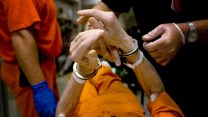





A Kentucky inmate is admitted to the hospital. Click here to see more of Tim Gruber's great photos from inside a prison nursing unit. Editor's note: This article was supported by a MetLife Foundation Journalists in Aging Fellowship, a collaboration of New America Media and the Gerontological Society of America.
William "Lefty" Gilday had been in prison 40 years when the dementia began to set in. At 82, he was already suffering from advanced Parkinson's disease and a host of other ailments, and his friends at MCI Shirley, a medium security prison in Massachusetts, tried to take care of him as best they could. Most of them were aging lifers like Lefty, facing the prospect of one day dying behind bars themselves, so they formed an ad hoc hospice team in their crowded ward. They bought special food from the commissary, heated it in an ancient microwave, and fed it to their friend. They helped him to the toilet and cleaned him up. Joe Labriola, 64, tried to see that Lefty got a little sunshine every day, wheeling his chair out into the yard and sitting with his arm around him to keep him from falling out.
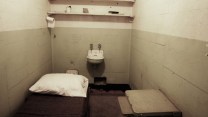
But Lefty, who was serving life without parole for killing a police officer during a failed bank heist in 1970, slipped ever deeper into dementia. One day he threw an empty milk carton at a guard and was placed in a "medical bubble," a kind of solitary confinement unit with a glass window that enables health care staffers to keep an eye on the prisoner. His friends were denied entrance, but Joe managed to slip in one day. He recalls an overpowering stench of piss and shit and a stack of unopened food containers—Lefty explained that he couldn't open the tabs. Joe also noticed that the nurses in the adjoining observation room had blocked the glass with manila folders so they wouldn't have to look at the old man.
[Read the full article]