





James Ridgeway

James Ridgeway

In 1965, James Ridgeway helped launch the modern muckraking era by revealing that General Motors had hired private eyes to spy on an obscure consumer advocate named Ralph Nader. He worked for many years at the Village Voice, has written 16 books, and has codirected Blood in the Face, a film about the far right. In 2012, he was named a Soros Justice Media Fellow.

Get my RSS |

Prison Cost Crisis Solved: Make the Inmates Pay

| Thu Aug. 13, 2009 6:49 AM PDT

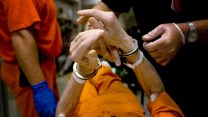
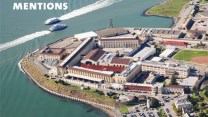
Facing big budget cuts, hard-pressed state prison officials have come up with a new way of paying for operating costs: charging inmates for room and board, health care and other amenities, according to USA Today. The money generally comes from prisoners’ families, many of whom are extremely poor.
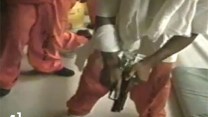
In Arizona's Maricopa County, which includes Phoenix, Sheriff Joe Arpaio humiliates prisoners by making them wear pink underwear and forcing them to sleep outdoors in 100 degree heat. Reports USA Today: "Earlier this year, he announced that inmates would be charged $1.25 per day for meals. His decision followed months of food strikes staged by convicts who complained of being fed green bologna and moldy bread."
Below the jump, some other examples cited by the paper:
 

Advertise on MotherJones.com

Drug Company's Ghostwriters Push Product in Medical Journals

| Wed Aug. 12, 2009 7:07 AM PDT

It’s looking increasingly likely that the pharmaceutical industry will escape price regulation under any new health care reform. For its part, the drug makers have promised $30 million in special price reductions to support Medicare recipients--a move that, as I've written before, is really a backdoor method of keeping seniors hooked on brand-name drugs.

Brand-name drugs are required by federal law to be safe and efficacious. We often rely on independent medical journals to provide important information and analysis to make the case for their use. We trust the editors of these journals and the experts who write the articles for expertise and sound judgement. And it’s not just the general public who relies on these respected sources. Doctors also use these articles in deciding whether or not to prescribe a drug.

So it comes as something of a shock to many people to learn that these articles aren’t always written by the people who sign them. Earlier this month, the New York Times reported that ghostwriters employed by drug company Wyeth produced 26 articles in medical journals to promote Premarin and Prempro, two controversial estrogen-replacement therapy drugs later linked to serious health problems in menopausal women. Dr. Adriane Fugh Berman, a doctor at Georgetown University and a colleague of mine in a publically funded project called Pharmedout.org, is making public some of these internal documents.

Woodstock and the New York Times

| Tue Aug. 11, 2009 7:43 AM PDT

On the 40-year anniversary of Woodstock, a new book—Peter Fornatale’s Back to the Garden—has a great description of the horror with which New York Times’ editors regarded the whole affair:

[T]he real fun began on Monday, August 18, when the Times printed an editorial with the headline "Nightmare in the Catskills," which read in part: "The dreams of marijuana and rock music that drew 300,000 fans and hippies to the Catskills had little more sanity than the impulses that drive the lemmings to march to their deaths in the sea. They ended in a nightmare of mud and stagnation that paralyzed Sullivan County for a whole weekend. What kind of culture is it that can produce so colossal a mess?"

More On That White House Drug Deal

| Mon Aug. 10, 2009 6:37 AM PDT

Since I wrote last week about Obama’s capitulation to the drug industry, the White House sought to tamp down protests by Democratic House and Senate leaders by sweeping the whole business under the rug. Instead of openly agreeing to promise no control over pricing—the Obama public line earlier in the week–the White House now says, according to the Times on Saturday morning, that it’s all a big misunderstanding and the pricing question was not discussed.
      Oh, come on. That is a ridiculous line, since pricing of pharmaceutical products is not only a key issue in this year’s health care reform debate, but has been at the heart of the debate over controlling drugs since the Kefauver amendments in the 1950s. Remember, the mechanism that allows Big Pharma to have its way on pricing is patent protection, which has gone virtually unchanged over the years. What the companies are looking for is a way to maintain their monopoly.
 

Dogs Are As Smart As Politicians

| Sun Aug. 9, 2009 5:59 PM PDT

Dogs may be smarter than most people think they are, according to the findings of a Canadian researcher. But when it comes to knowing that they're getting shafted, they are just as dumb as a lot of politicians--and the voters who support them.

The web site LiveScience yesterday reported on recent studies conducted by Stanley Coren, an academic from British Columbia who has done extensive research on canine intelligence. Coren says that the average dog compares favorably with a human two-year-old in language abilities; smarter breeds, like my Border collie, rate with kids six months older, and can understand about 250 words. Dogs fare even better in math, showing abilities similar to a four-year-old. And in terms of social development, they are more comparable to human teens, Coren says, "interested in who is moving up in the pack and who is sleeping with who and that sort of thing." (This may or may not be a compliment to dogs, depending on what you think of teenagers).

Coren also studied the responses of dogs on some issues that might be seen to have political implications:

While dogs know whether they’re being treated fairly, they don’t grasp the concept of equity. Coren recalls a study in which dogs get a treat for “giving a paw.”

When one dog gets a treat and the other doesn’t, the unrewarded dog stops performing the trick and avoids making eye contact with the trainer. But if one dog, say, gets rewarded with a juicy steak while the other snags a measly piece of bread, on average the dogs don’t care about the inequality of the treats.

If that’s the criteria, it appears that dogs suffer from the same intellectual shortcomings as some adult humans. Why else would so many working-class and middle-class people vote for politicians who oppose tax hikes for the rich? Why else would they stick up for a health care system that screws them over, leaving them with crumbs while the wealthy and the insurance and drug companies keep their jaws around the juicy steak?

In this area, at least, canine intelligence seems to be about on par with that of most Republicans--and quite a few Democrats, too. (Again, you may or may not think this is a compliment to dogs. I know what I think.)

My dog Jenny: Smarter than Max Baucus?

My dog Jenny: Smarter than Max Baucus?


Wed May. 16, 2012 12:09 AM PDT
Mon Nov. 7, 2011 3:00 AM PST
Wed Sep. 28, 2011 2:42 PM PDT
Tue Aug. 9, 2011 10:39 AM PDT
Wed Apr. 13, 2011 1:53 PM PDT
Fri Mar. 18, 2011 9:02 AM PDT
Fri Mar. 11, 2011 12:27 PM PST
Tue Mar. 8, 2011 1:59 PM PST
Thu Feb. 24, 2011 7:46 AM PST
Sun Feb. 20, 2011 8:48 PM PST
Mon Feb. 7, 2011 8:54 AM PST
Thu Feb. 3, 2011 9:30 AM PST
Tue Jan. 18, 2011 2:38 PM PST
Sat Jan. 8, 2011 2:58 PM PST
Wed Nov. 10, 2010 3:20 PM PST
Wed Jul. 14, 2010 11:11 AM PDT