Josh Harkinson

Reporter

Born in Texas and based in San Francisco, Josh covers the economy, corporations, and a wide range of political issues in California and the West.

Get my RSS |

Why NorCal is Stoked That Pot's Still Illegal

| Fri Nov. 5, 2010 3:00 AM PDT

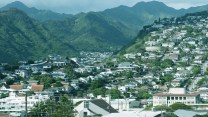
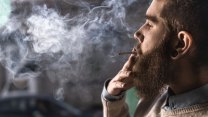
Northern California's Humboldt County has long been considered the Napa Valley of marijuana. Stoners around the country speak admiringly of "Humboldt dank," Cypress Hill name-drops "Humble pound weed," and local grocery stores stock massive displays of odor-sealing "turkey bags" far beyond Thanksgiving. Populated by hippies who fled San Francisco a generation ago to get back to the land,  Humboldt and adjoining Mendocino and Trinity Counties are known as the "Emerald Triangle" for the permissiveness of their pot laws and abundance of their "indo." So it might come as a surprise that all three counties on Tuesday rejected Proposition 19, a ballot measure that would have legalized marijuana statewide.

"There’s a large movement up here of people who realize that their self interest lies in keeping marijuana illegal," says Hank Sims, the editor of the North Coast Journal, based in the Humboldt town of Eureka. Growers in the Emerald Triangle's rugged hills and foggy redwood groves are shielded from the snooping eyes of the DEA, but that advantage would become a handicap if pot could be openly cultivated in California's warm, flat, agribusiness-dominated Central Valley. North Coast ganja growers "have got government-sponsored price control in the form of busts," Sims explains. "So I think a lot of people kind of cynically voted their pocketbook and voted to keep it illegal."

The real surprise is that cannabis cultivators convinced a majority of voters in the three counties (two of which strongly lean to the left) to side with them. "Our export product is weed, by and large," Sims notes. And in an isolated corner of the state where the timber and salmon fishing industries that once paid the bills long ago collapsed, people who aren't weed growers are mostly earning their keep by selling things like food, fertilizer and firearms to them. Sims explains: "This is the cornerstone of our economy."

Of course, the defeat of Prop 19 probably isn't enough to keep the Emerald Triangle forever awash in green. Cannabis aficionados already bypass the North Coast's outdoor weed in favor of designer strains with unique flavors and psychoactive effects that are most easily achieved indoors beneath expensive grow lamps. And while hydroponic pot now sells for about 50 percent more than the free-range variety, the price spread is dropping as indoor growers move out of closets and garages and into partnerships with major cities. This year, Oakland plans to authorize four industrial scale pot cultivation warehouses that may corner the market on low-cost, high-quality sensimilla.

Sims believes that the Emerald Triangle could still flourish in the weed world by becoming a destination for marijuana tourism—a place to take in a scenic pot farm and then relax with a joint at a pot-friendly spa. "But for that to happen," he says, the old growers “have to get out and hustle.” That means “they have to actually be in the system, where the whole appeal in the past was being out of the system. They have to suit up and go around with a sample case from club to club. And that’s going to be hard for people to put their head around."

Front page image: Bob Doran/Flickr

Advertise on MotherJones.com

CA to Tea Party: Been There, Done That!

| Wed Nov. 3, 2010 5:45 AM PDT

Like one of those homes in the tinderbox hills above Los Angeles that miraculously survives a wildfire that scorches the rest of the neighborhood, California held on last night against the Republican rager that swept the nation. This was more than just a matter of luck or progressive temperament, though. This trend-setting state had a buildup of conservative, anti-establishment voters long before they became known as tea partiers. But they've already wreaked their havoc and mostly burned themselves out. There's not much populist outrage left around the house of California. Mostly there's just smoldering populist exhaustion.

Back in 2003 it was a different story. In an unprecedented recall election, voters who were incensed by California's energy crisis swept out the establishment Democratic governor, Gray Davis, and replaced him with a political outsider who pledged to cut taxes, root out "waste, fraud, and abuse," and say "hasta la vista" to liberal special interests. Sound familiar? Now, of course, Governor Arnold Schwarzenegger is as unpopular as Gray Davis was during the recall. And California voters saw no reason on Tuesday to believe that Meg Whitman would turn out any differently. One nifty ad juxtaposed video clips of Schwarzenegger and Whitman mouthing off the exact same talking points.

Schwarzenegger's failures aren't entirely his fault; he's been stymied by opposition from ideologues in his own party. Although Republicans make up only about a third of the state legislature, they wield an outsized influence over the state budget and taxes, which both require a two-thirds supermajority to become law. Pathologically unwilling to compromise, Republicans in the legislature have repeatedly spiked budget negotiations, forcing the state to allow its credit rating to be downgraded and even issue IOU checks to its workers in order to provide basic services.

This might be what tea party/Republican rule looks like in America between now and 2012. Many of the incoming Republican freshmen see a mandate to obstruct the Democratic economic agenda in almost any way possible. And as I've noted, Rand Paul alone could substantially freeze legislation and appointments in the already glacially slow-to-act US Senate.

But the California experience also suggests that none of this will last. Fed up with the state's fiscal gridlock, voters passed a referendum yesterday that stripped the GOP of its cherished supermajority requirement for passing a budget. They decided that hothead outsiders might not accomplish as much as veteran legislators (Governor-elect Jerry Brown and returning Senator Barbara Boxer are both long-time politicians). And they held the line against a substantial GOP takeover of House seats and an assault on the state's groundbreaking climate change law. If California is any indication, the Republican wildfire of 2010 will be hot, but it won't last long enough to keep the tea pot boiling.

A 4:20 PM Dispatch from Prop 19 HQ

| Tue Nov. 2, 2010 7:06 PM PDT

At the Oakland campaign headquarters for Prop 19, the California referendum to legalize marijuana, the time is exactly 4:20 PM, stoner culture's designated hour to get high. Dozens of marijuana activists who've flown in from all over the country are phone banking, noshing on pizza, and trading war stories. It feels kind of like a hemp festival. Except for one thing: Nobody is smoking pot. "Well, it's not legal," said a woman in a green tank top manning a table by the front door. She laughs. "I'm an upright citizen."

Not everybody displays such discipline. I run into a young phone banker who is wearing a mock John Deere shirt that says, "High Geere." Dude, it's 4:20 right now, I tell him, what are you going to do? "I'm going to make phone calls to help legalize pot!" he says. Because then he can smoke? "I've smoked!" he says. "I'm high right now!"

Proponents of Prop 19 are quick to point out that legalizing weed is about a lot more than winning the right to get stoned. Smoking pot in California is already incredibly easy. The state's laxly worded medical marijuana law, passed in 1996, has spawned a cottage industry of "pot docs" who will recommend herb for just about anything worse than a stubbed toe. As a result, some 500,000 medical marijuana users in California already enjoy the legal right to smoke up. And even if you get busted for smoking illegally, a bill recently signed by Governor Arnold Schwarzenegger makes the penalty the equivalent of a parking citation.

The real motivation behind Prop 19 has more to do with ending California's nod-nod, wink-wink approach to prohibition. Making pot fully legit (at least on the state level) would fuel a national debate about legalization, and, they hope, turn California into a test case for completely ending the federal war on weed. Near the front of the Yes on 19 HQ is a billboard filled with stories of upstanding families that have been wrecked by drug arrests. One example: The Clyde Young Family of Mississippi. Both parents are serving around 25 years in prison for growing a small amount of weed: "The police seized all the money in the house, including the children's piggy banks and a 90-year-old uncle's social security check."

As 4:20 PM came and went, I spoke with Neill Franklin, the executive director of Law Enforcement Against Prohibition. He last smoked pot in 1976. "And I don't plan to use it once it's legal," he said. Even so, he's come to the HQ to vouch his strong support for legalization. As a former police officer who focussed on drug cases in Maryland, he found that alcohol caused far more problems than pot. He felt that legalizing weed would allow the state to regulate it, thereby keeping it out of the hands of children. 

It was a little bit weird to be sitting with Franklin, who had a shaved head and a conservative suit, as young bearded volunteers milled around us wearing shirts that said, "Yes We Cannabis." Another popular shirt was a version of the California state flag, in which the star in the corner had been transformed into marijuana leaf, as if to guide leading the wise (or the party-minded) towards the the promised land of kush.

As 4:20 faded into the late afternoon, it became clear that Prop 19 was headed for a defeat. Even so, pot activists still had reason enough to party. Their campaign has taken the legalization debate mainstream, and they'll all probably try again in 2012. They gathered in a parking lot outside of Oaksterdam University, the cannabis cultivation school owned by Richard Lee, Prop 19's biggest financial backer. Pot smoke occasionally wafted through the air, and there wasn't a cop in sight who gave a damn.

Updated at 10:20 PM Pacific

Photos: Josh Harkinson.

Rand Paul Wins: What Does It Mean?

| Tue Nov. 2, 2010 4:05 PM PDT

Tea party Republican candidate Rand Paul has won the Kentucky US Senate race. Throughout the campaign, Democrat Jack Conway occasionally seemed to come almost within striking distance, but ultimately Conway, the state attorney general, was unable to overcome a bad year for Democrats in an increasingly red state. The real nail-biter now is how politically extreme Paul will be once he's in the Senate.

Even at the end of this obsessively watched campaign, it remains unclear how Paul would legislate—or anti-legislate. Is he a libertarian with tea party tendencies, or a tea partier with libertarian impulses? It's hard to know, because Paul won this race virtually without talking to media. One of us went to Kentucky to try to get someone—anyone—on the Paul campaign to discuss Paul's positions on various issues and policies. We didn't have much luck

If the hardcore libertarians who support Rand Paul get their way, he'll act much like his father, Rep. Ron Paul (R-Texas), who is known as "Dr. No" for his practice of voting down almost every spending and tax bill to cross his desk. Ron Paul has referred with pride to the fact that he's often on the short end of 434-to-1 votes in the House. But when a House member casts a lone nay vote, it doesn't gain him much except credit with his followers. In the Senate, a single opposition vote—expressed via a hold, a filibuster, or some other parliamentary maneuver—can block legislation and bring the chamber to a standstill. Look at how Sen. Jim Bunning (R-Ky.), whose vacated seat Rand Paul is filling, held up unemployment benefits for millions earlier this year all on his own. In the Senate, Paul—or other incoming tea partiers—could do that again and again, freezing both legislation and appointments. If Rand becomes the "Son of Dr. No" in the Senate, that would further gum up the already dysfunctional chamber and ensure even greater gridlock in Washington.

There is another thing to watch for. If Paul votes in libertarian style like his father on some issues—such as drug policy and the war on terror—he could face the wrath of the tea party conservatives who've embraced him. And that's not all. He must also please the regular, moderate Republicans in Kentucky who backed him because they couldn't bring themselves to support Conway. These folks aren't exactly small-government purists. They want fiscal discipline but also some bacon for the state.

It may not be be easy to be Rand Paul. And maybe that's why it's fitting that he's named Rand. Like Ayn Rand's John Galt character, he could prove too rigid to operate in an ideologically mushy world. But even if he finds it tough to get his bearings in the Senate, Paul is unlikely to follow Galt's lead and move to an isolated mountain valley and invent a motor that runs on air.

"It's Because of Texas"

| Tue Nov. 2, 2010 9:44 AM PDT

At my polling place in San Francisco this morning, all the talk was of a contest that didn't appear on the ballot: The Giants' World Series victory last night over the Texas Rangers. A Birkenstock-clad woman from the Haight explained her glee. "It's because of Texas," she said. "It's the land of oil drilling, conservative textbook defining, Bush electing—you know?"

I know. In a depressing election year for liberals, the Giants' unlikely victory has emerged as the rare silver lining: A way to sock it to all those conservative Republicans who are going to otherwise kick our asses at the polls today. As my colleague Adam Weinstein notes, the long-haired, beard-wearing, ganja-puffing Los Gigantes embody Left Coast rebellion. Meanwhile, former Rangers co-owner George W. Bush was on hand along with his father to root for the Red State home team at Game 4. That San Franciscans got to rob Bush of a win makes up (a little bit) for the one that he stole in 2000.

People say that sports is a way to distract the masses from the social fights that really matter. Or maybe it's a way to blow of steam so that we don't shoot each other. Of course, El Salvador and Honduras once fought a war over soccer.

All I know is that sports rarely fits neatly into politics. Take the example of Texas, where Democratic gubernatorial candidate Bill White actually has a small chance of toppling incumbent arch-conservative Rick Perry. Mother Jones' Suzy Khimm points out that shifting demographics will turn Texas blue in the not-distant future. Or take the example of me: I was born and raised in Dallas and my father hasn't talked to me in awhile, not because we disagree on politics (he's a staunch Democrat) but because we kind of disagree on baseball.

I ultimately decided to root for the Giants because I left Dallas after high school and have lived in the Bay Area for almost ten years. Still, I would have been happy if either team had won. I wish I could say the same thing about politics.

Tue May. 21, 2013 6:56 AM PDT
Mon May. 20, 2013 8:38 AM PDT
Mon May. 6, 2013 3:00 AM PDT
Sat Apr. 20, 2013 3:00 AM PDT
Mon Apr. 8, 2013 2:00 AM PDT
Mon Mar. 4, 2013 7:56 AM PST
Fri Mar. 1, 2013 4:06 AM PST
Thu Feb. 28, 2013 4:31 AM PST
Tue Feb. 19, 2013 3:41 PM PST
Tue Feb. 19, 2013 4:02 AM PST
Mon Feb. 11, 2013 4:36 AM PST
Mon Jan. 28, 2013 4:01 AM PST
Mon Jan. 28, 2013 3:56 AM PST
Tue Jan. 22, 2013 10:22 AM PST
Thu Jan. 17, 2013 1:44 PM PST
Mon Jan. 14, 2013 4:06 AM PST
Mon Nov. 26, 2012 2:56 PM PST
Thu Nov. 15, 2012 3:25 PM PST
Tue Nov. 6, 2012 11:06 PM PST
Tue Nov. 6, 2012 4:48 PM PST
Fri Nov. 2, 2012 12:25 PM PDT
Thu Oct. 11, 2012 3:01 AM PDT