
Julia Whitty

Julia Whitty

Environmental Correspondent

Julia is an award-winning author of fiction and nonfiction (Deep Blue Home, The Fragile Edge, A Tortoise for the Queen of Tonga), and a former documentary filmmaker. She also blogs at Deep Blue Home.

Full Bio | Get my RSS |

Julia is a writer and former documentary filmmaker and the author of The Fragile Edge: Diving & Other Adventures in the South Pacific, winner of a PEN USA Literary Award, the John Burroughs Medal, the Kiriyama Prize, the Northern California Books Awards, and finalist for the Dayton Literary Peace Prize, and Deep Blue Home: An Intimate Ecology of Our Wild Ocean. Her short story collection A Tortoise for the Queen of Tonga won an O. Henry and was a finalist for the PEN Hemingway Award. She also blogs at Deep Blue Home.

Congolese Forests Falling In Exchange for Beer And Soap

| Wed Apr. 11, 2007 5:59 PM PDT

The world's second largest forest, and one of the oldest on Earth, is being traded for bars of soap and bottles of beer. A Greenpeace report exposes international logging companies for creating social chaos and environmental havoc in the Democratic Republic of Congo in the wake of the logging. The report also nails the World Bank, largest "donor" to the DRC, for utterly failing to stop the destruction, despite a moratorium on new logging. In fact since 2002 more than 37 million acres of rainforest have been leased to the logging industry, an area the size of Illinois, including areas vital to biodiversity. You think it doesn't matter to you? Wrong. We all need these big leafy green places at the equator. --Julia Whitty

Advertise on MotherJones.com

The Deep Freeze Is Thawing. So's The Crap We Put There

| Wed Apr. 11, 2007 5:27 PM PDT

The Intergovernmental Panel on Climate Change (IPCC) predicts wide-ranging thawing of the Arctic permafrost. This is likely to have significant implications for infrastructure including houses, buildings, roads, railways and pipelines. A combination of reduced sea ice, thawing permafrost and storm surges also threatens erosion of Arctic coastlines with impacts on coastal communities, culturally important sites and industrial facilities. One study suggests that a three degree C increase in average summer air temperatures could increase erosion rates in the eastern Siberia Arctic by up to 15 feet a year. But you've heard all this, right? What's worse is that in some parts of the Arctic, toxic and radioactive materials are stored and contained in frozen ground. Thawing will release these substances in the local and wider environment with risks to humans and wildlife. The report predicts significant clean-up costs. How optimistic. I predict no clean-up at all. Only a Super-Duper Fund. --Julia Whitty

Using Niacin To Foil Drug-Screening Tests? Don't. Bad Medical Juju Follows

| Wed Apr. 11, 2007 5:13 PM PDT

Taking excessive doses of niacin (vitamin B3) in an attempt to defeat drug screening tests could send you to the hospital. Or worse. Researchers from The Children's Hospital of Philadelphia and The University of Pennsylvania reported that two adults and two adolescents suffered toxic side effects from taking large amounts of niacin. Both adults suffered skin irritation. Both adolescents suffered potentially life-threatening reactions, including liver toxicity and hypoglycemia (low blood sugar), along with nausea, vomiting and dizziness. One teen also had disrupted heart rhythms. All four recovered after treatment in emergency rooms. The report appeared online in the Annals of Emergency Medicine.--Julia Whitty

Say Good-By to Arctic Foxes?

| Wed Apr. 11, 2007 4:52 PM PDT

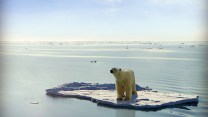
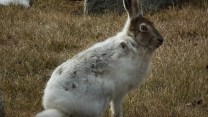
Arctic foxes failed to retreat to cooler climes when global temperatures rose in the past. A new study dampens hope that species will be able to adapt to climate change by moving towards the poles this time around, reports Nature. Comparing DNA from living arctic foxes with DNA extracted from fossils indicates that, at the end of the last ice age, foxes that lived in mid-latitude Europe simply died out rather than move north. The same could be happening now. Today, Alopex lagopus, is restricted to northern tundra in Scandinavia and Siberia, while 10,000 years ago, at the end of the last ice age, it lived in what's now Belgium, Germany and southwestern Russia. So will Arctic foxes join polar bears and half of all Earth's species threatened by the mass global extinction already underway, and hugely amplified by global warming? Maybe, says the latest installment of the IPCC (Intergovernmental Panel on Climate Change) report. Will our species ever do one righteous thing about it? --Julia Whitty

Clear Need for Integrated Climate/Human Behavior Models

| Mon Apr. 9, 2007 7:41 PM PDT

Adapting to global climate change will require humans to develop new tools. (Our specialty, right?) The new tools will need to integrate climate models with analysis of human behavior, reports the International Geosphere-Biosphere Programme, an international network of environmental scientists. "We need to continue discovering how the Earth system works in order to evaluate the numerous ways that humans can adapt to climate change," says Kevin Noone, executive director of the IGBP.

Human adaptation to a changing climate can take many forms, and can have both positive and negative environmental impacts. Small-scale, adaptation measures—for better or worse—might include more air conditioning, architectural changes for more efficient heating and cooling, better forecasting and warning systems for extreme events, and increased water usage. Large-scale adaptations might include switching to renewable energy sources or attempts at "geoengineering." Furthermore the large-scale migrations of refugees from frakked-up areas ruined by global warming and other environmental and socioeconomic stresses will also be a form of adaptation.

"The science needed to support decision making about adaptation requires a sophisticated understanding about how the Earth system works, but goes well beyond just that. We need new tools to help us develop robust 'what if' scenarios for different potential adaptation schemes, and their consequences," says Noone. He describes the new tools as new types of models that couple together active, predictive descriptions of human behaviour and choice with the kinds of models used to predict future climate. --Julia Whitty

Tue May. 21, 2013 3:00 AM PDT
Tue Apr. 16, 2013 3:05 AM PDT
Fri Apr. 12, 2013 3:10 AM PDT
Fri Apr. 5, 2013 3:15 AM PDT
Fri Mar. 8, 2013 4:20 AM PST
Mon Feb. 11, 2013 4:02 AM PST
Thu Jan. 31, 2013 4:21 AM PST
Fri Jan. 18, 2013 2:37 PM PST
Fri Dec. 14, 2012 4:18 AM PST
Tue Nov. 27, 2012 4:13 AM PST
Thu Nov. 15, 2012 4:18 AM PST
Fri Nov. 9, 2012 4:03 AM PST
Tue Nov. 6, 2012 4:13 AM PST
Mon Oct. 22, 2012 12:18 PM PDT
Thu Oct. 11, 2012 3:00 AM PDT
Wed Oct. 10, 2012 3:00 AM PDT
Tue Oct. 9, 2012 3:00 AM PDT
Mon Oct. 8, 2012 3:51 PM PDT