





Julia Whitty

Julia Whitty

Environmental Correspondent

Julia is an award-winning author of fiction and nonfiction (Deep Blue Home, The Fragile Edge, A Tortoise for the Queen of Tonga), and a former documentary filmmaker. She also blogs at Deep Blue Home.

Full Bio | Get my RSS |

Julia is a writer and former documentary filmmaker and the author of The Fragile Edge: Diving & Other Adventures in the South Pacific, winner of a PEN USA Literary Award, the John Burroughs Medal, the Kiriyama Prize, the Northern California Books Awards, and finalist for the Dayton Literary Peace Prize, and Deep Blue Home: An Intimate Ecology of Our Wild Ocean. Her short story collection A Tortoise for the Queen of Tonga won an O. Henry and was a finalist for the PEN Hemingway Award. She also blogs at Deep Blue Home.

EPA Pesticide Tests Seriously Shortsighted

| Mon Aug. 17, 2009 4:58 PM PDT
H_crucifer_USGS.jpg

Hard to believe but the Environmental Protection Agency commonly uses 4-day tests to set safe levels of pesticide exposure for humans and animals. New research suggests this timescale is way too short and doesn't begin to account for long-term effects.

The new data, published in Environmental Toxicology and Chemistry, describe how the highly toxic pesticide endosulfan—a neurotoxin banned in several nations but still used extensively in US agriculture (check out the CDC's outdated description)—exhibits a "lag effect" after direct contact has ended.

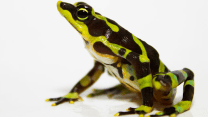
The researchers exposed nine species of frog and toad tadpoles to endosulfan levels already occurring in the wild for the EPA's required 4-day period. After 4 days the amphibians were transferred to clean water for an additional 4 days.

Although endosulfan was ultimately toxic to all species, three species of tadpole showed no significant sensitivity to the chemical until after they were transferred to fresh water. Within 4 days of being moved, up to 97 percent of leopard frog tadpoles perished along with up to 50 percent of spring peeper and American toad tadpoles.

Tadpoles and other amphibians are famously sensitive to pollutants and considered environmental indicator species. The authors suggest that if endosulfan does not kill the world's most susceptible species in 4 days, then the 4-day test period is inadequate to gauge the long-term effects for larger, less-sensitive species—like us.

Co-author Rick Relyea said: "For most pesticides, we assume that animals will die during the period of exposure, but we do not expect substantial death after the exposure has ended. Even if EPA regulations required testing on amphibians, our research demonstrates that the standard 4-day toxicity test would have dramatically underestimated the lethal impact of endosulfan on even this notably sensitive species."

A second paper by some of the same authors in the same journal expands on Relyea's earlier findings that the popular weed-killer Roundup® is "extremely lethal" to amphibians in concentrations found in the environment. The latest report on Roundup® is available on Pitt's website (pdf).

Last year Relyea reported that the world's 10 most popular pesticides combine to create "cocktails of contaminants" that can destroy amphibian populations—even if the concentration of each individual chemical is within levels considered safe to humans and animals. I reported on this at TBM at the time. The cocktail killed 99 percent of leopard frog tadpoles. Endosulfan alone killed 84 percent.

A month earlier, Relyea published a paper in Ecological Applications reporting that gradual amounts of malathion (the most popular insecticide in the US)—too small to directly kill developing leopard frog tadpoles—nevertheless sparked a biological chain reaction that deprived the amphibians of their primary food source. As a result, nearly half the tadpoles in the experiment would have died in nature.

In other words, pesticides really really suck. How much research more does the EPA need to embrace 21st-century science?
 

Advertise on MotherJones.com

China's Air Pollution Causing Drought

| Fri Aug. 14, 2009 4:13 PM PDT
Umbrella_with_raindrops.jpg

Increasing air pollution over China in the past 50 years has reduced days of rainfall by nearly a quarter in the eastern half of the country—home to most Chinese people and pollution. Bad air is now likely affecting the country's ability to grow food crops, as well as causing a flood of health and environmental problems.

The study in the Journal of Geophysical Research-Atmospheres links for the first time high levels of air pollutants with conditions preventing the light rainfall critical for agriculture. The research suggests that reducing air pollution might ease the drought in north China.

In the last 50 years, southeastern China has seen increased amounts of total rainfall per year, while the northern half has seen less rain and more droughts. But the light rainfall that sustains crops has decreased everywhere. At the same time China's population has more than doubled and sulfur emissions from fossil fuel burning have exploded to nine times their levels 50 years ago.
 

In Defense of Milk

| Thu Aug. 13, 2009 6:40 PM PDT
Friesian-Holstein.jpg

For those of us who still drink milk and like it and have no trouble digesting it in any of its glorious guises, from butter to yoghurt... here's an intersting blog by Dave Munger at SEED on  current scientific thinking/speculation about why some of us can tolerate milk and others can't. Northern Europeans and Africans generally fare well. Southern Euros and East Asians, not so.

One analysis from a paper in PLoS ONE suggests the lactase gene evolved in Europe because there isn't enough sunlight to produce the vitamin D needed to take in calcium—so milk drinking helped meet that deficiency. In Africa the lactase gene evolved in conjunction with early milk-producing domesticated animals—helping boost protein intake.

Milk. It does some bodies good. Especially with chocolate or cookies.

Extinct Seabird Returns to Life

| Thu Aug. 13, 2009 6:08 PM PDT
702px-Masked_booby_(Sula_dactylatra)_in_flight_-Ecuador.jpg

Well, it was never really dead. The Tasman Booby, Sula dactylatra tasmani, described from fossils on islands off the east coast of Australia, went extinct in the late 18th century—victim of hungry European sailors, reports New Scientist.

But now a team of geneticists, paleontologists, and naturalists has found the bird alive and well and living among its own fossils and on a few islands off New Zealand. DNA analysis of six Tasman Booby fossils perfectly match the living birds known as Sula dactylatra fullagari. Paper in Biology Letters.

Henceforth, the resurrected and misidentified will be known as as Sula dactylatra tasmani.

Whatever we call it, this gannetlike seabird is another, and very welcome, Lazarus taxon (read John Platt at 60-Second Science) risen from the dead—along with the Nelson's small-eared shrew rediscovered in Mexico last month and the greater dwarf cloud rat found in a Philippine forest in 2008. Plus a few I wrote about in Gone: the Wollemi pine and mahogany glider in Australia, Jerdon’s Courser in India, takahe in New Zealand, and (maybe) the Ivory-billed Woodpecker in the US.
 

Salmon Return to Paris

| Wed Aug. 12, 2009 7:44 PM PDT
atlanticsalmon_williamhartley-usfws.jpg

It's been nearly a hundred years since Atlantic salmon swam the Seine upriver to Paris. Now they've done it on their own, without any efforts to reintroduce them. AFP reports that hundreds, maybe a thousand, swam past the Eiffel Tower and Notre Dame cathedral this year.

And they aren't all. Only four species swam through Paris in 1995 when up to 500 tons of fish died upriver every year in foul pollution. Today at least 32 species inhabit the Seine, including lamprey eel, sea trout, and shad. Why? Because there have been massive clean-up efforts in the last 15 years, including construction of a new water purification plant.

Reduce. Reuse. Recycle. Restore.
 

Tue May. 21, 2013 3:00 AM PDT
Tue Apr. 16, 2013 3:05 AM PDT
Fri Apr. 12, 2013 3:10 AM PDT
Fri Apr. 5, 2013 3:15 AM PDT
Fri Mar. 8, 2013 4:20 AM PST
Mon Feb. 11, 2013 4:02 AM PST
Thu Jan. 31, 2013 4:21 AM PST
Fri Jan. 18, 2013 2:37 PM PST
Fri Dec. 14, 2012 4:18 AM PST
Tue Nov. 27, 2012 4:13 AM PST
Thu Nov. 15, 2012 4:18 AM PST
Fri Nov. 9, 2012 4:03 AM PST
Tue Nov. 6, 2012 4:13 AM PST
Mon Oct. 22, 2012 12:18 PM PDT
Thu Oct. 11, 2012 3:00 AM PDT
Wed Oct. 10, 2012 3:00 AM PDT
Tue Oct. 9, 2012 3:00 AM PDT
Mon Oct. 8, 2012 3:51 PM PDT