



Mark Follman is a senior editor at Mother Jones. He is a former editor of Salon and a cofounder of the MediaBugs project. His reporting and commentary have also appeared in Salon, Rolling Stone, The Atlantic, Fox News, andNational Public Radio. The in-depth investigation into mass shootings he led for MoJo was honored with the 2013 Izzy Award.
A version of this piece was first published in the March 25 edition of USA Today.
Ever since the massacres in Aurora, Colorado, and Newtown, Connecticut, it's been repeated like some surreal requiem: The reason mass gun violence keeps happening is because the United States is full of places that ban guns.
Second Amendment activists have long floated this theme, and now lawmakers acrossthenation are using it too. During a recent floor debate in the Colorado Legislature, Republican state Rep. Carole Murray put it this way: "Most of the mass killings that we talk about have been effected in gun-free zones. So when you have a gun-free zone, it's like saying, 'Come and get me.'"
The argument claims to explain both the motive behind mass shootings and how they play out. The killers deliberately choose sites where firearms are forbidden, gun-rights advocates say, and because there are no weapons, no "good guy with a gun" will be on hand to stop the crime.
With its overtones of fear and heroism, the argument makes for slick sound bites. But here's the problem: Both its underlying assumptions are contradicted by data. Not only is there zero evidence to support them, our in-depth investigation of America's mass shootings indicates they are just plain wrong.
Among the 62 mass shootings over the last 30 years that we studied, not a single case includes evidence that the killer chose to target a place because it banned guns. To the contrary, in many of the cases there was clearly another motive for the choice of location. For example, 20 were workplace shootings, most of which involved perpetrators who felt wronged by employers and colleagues. Last September, when a troubled man working at a sign manufacturer in Minneapolis was told he would be let go, he pulled out a 9mm Glock and killed six people and injured another before putting a bullet in his own head. Similar tragedies unfolded at a beer distributor in Connecticut in 2010 and at a plastics factory in Kentucky in 2008.
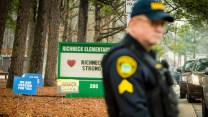
Or consider the 12 school shootings we documented, in which all but one of the killers had personal ties to the school they struck. FBI investigators learned from one witness, for example, that the mass shooter in Newtown had long been fixated on Sandy Hook Elementary School, which he'd once attended.
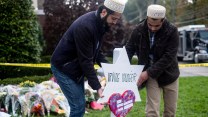
Or take the man who opened fire in suburban Milwaukee last August: Are we to believe that a white supremacist targeted the Sikh temple there not because it was filled with members of a religious minority he despised, but because it was a place that allegedly* banned firearms?
Thirty-six of the killers committed suicide at or near the crime scene. These were not people whose priority was identifying the safest place to attack.
Proponents of this argument also ignore that the majority of mass shootings are murder-suicides. Thirty-six of the killers we studied took their own lives at or near the crime scene, while seven others died in police shootouts they had no hope of surviving (a.k.a. "suicide by cop"). These were not people whose priority was identifying the safest place to attack.
No less a fantasy is the idea that gun-free zones prevent armed civilians from saving the day. Not one of the 62 mass shootings we documented was stopped this way. Veteran FBI, ATF, and police officials say that an armed citizen opening fire against an attacker in a panic-stricken movie theater or shopping mall is very likely to make matters worse. Law enforcement agents train rigorously for stopping active shooters, they say, a task that requires extraordinary skills honed under acute duress. In cases in Washington and Texas in 2005, would-be heroes who tried to take action with licensed firearms were gravely wounded and killed. In the Tucson mass shooting in 2011, an armed citizen admitted to coming within a split second of gunning down the wrong person—one of the bystanders who'd helped tackle and subdue the actual killer.
Photo illustration: designalldone/istockphoto; icons from The Noun Project: Bruno Gätjens González (church); Chris Cole (school); United Nations OCHA. Front page image: Tribalium/Shutterstock
Police tape outside the Lanza home in Newtown, Connecticut, in December 2012.Stephen Dunn/ZUMA Press
Shortly after the massacre in Newtown, Connecticut, police investigators seized a large arsenal of weapons from the killer's home, according to search warrants made public on Thursday. That the home of Adam Lanza and his mother, Nancy, contained an array of powerful handguns and rifles is no surprise, but the documents reveal an even darker picture than previously known to the public: Investigators also found a cache of knives, samurai swords, 1,600 rounds of ammunition, a military uniform, and news clippings about prior mass murders in the United States and abroad.
They also discovered materials from the National Rifle Association.
In addition to the stockpile of weaponry, the home contained a certificate from the NRA bearing Adam Lanza's name, a NRA guide to shooting, and training manuals for various firearms, including the Bushmaster that Lanza used to carry out the slaughter. The CEO of the company that sells Bushmaster rifles sits on a powerful committee inside the NRA, as we first reported in January.
For the NRA, which has been highly effective with its messaging in the gun debate over the years, the news is a blow. The new details begin to disarm the gun group's strategy to divert attention from the highly lethal weapons Lanza used by focusing on him as just another deranged criminal with no connection to "good guys with guns." In his audacious speech a week after the Newtown massacre, NRA spokesman Wayne LaPierre talked of "genuine monsters" lurking across America, of "people so deranged, so evil, so possessed by voices and driven by demons that no sane person can possibly ever comprehend them." He continued: "They walk among us every day. And does anybody really believe that the next Adam Lanza isn't planning his attack on a school he's already identified at this very moment?"
Now we know that "next Adam Lanza" may well have NRA certification and know-how at his fingertips.
Since the NRA makes virtually none of its information public, naturally we'll have to take their word against that of Connecticut law enforcement officials and the FBI.
The NRA's response on Thursday seemed telling: flat-out denial, with some defensive kick to it. "There is no record of a member relationship between Newtown killer Adam Lanza, nor between Nancy Lanza, A. Lanza or N. Lanza with the National Rifle Association," it said in a statement. "Reporting to the contrary is reckless, false and defamatory."
Specifics about the NRA certificate found in the house remain unclear. Since the NRA makes virtually no information available to the public about its inner workings or the membership it claims, naturally we'll have to take the group's word against that of Connecticut law enforcement officials and the FBI. (And if that seems reasonable, the NRA also has a fantasy about "gun-free zones" they'd like to sell you on.)
Details in the newly released documents also underscore why Lanza was capable of such terrible carnage on December 14 at Sandy Hook Elementary. The military-style assault rifle and 30-round magazines he used—defended by the NRA as tools of hunting and sport—allowed him to unleash 154 bullets in less than five minutes. These were the same type of powerful weapons used in numerous other mass shootings, which the White House and some Democrats in Congress now seek to outlaw.
The news came on a day when President Obama appeared at the White House with Newtown families and other mass-shooting victims to once again demand action from Congress. (Though the president's focus is now on passing universal background checks, with political prospects dimmer for legislation banning assault weapons or high-capacity magazines.) The anguish is still fresh in Newtown and well beyond, the president said, pushing back on the notion that the emotional impact of the tragedy has started to fade:
It's been barely a hundred days since 20 innocent children and six brave educators were taken from us by gun violence, including Grace McDonnell and Lauren Russo and Jesse Lewis, whose families are here today. That agony burns deep in the families of thousands, thousands of Americans stolen from our lives by a bullet from a gun over these last 100 days, including Hadiya Pendleton, who was killed on her way to school less than two months ago, and whose mom is also here today, everything they lived for and hoped for taken away in an instant.
The president didn't mention the NRA or its allies, but he took direct aim at their argument against universal background checks, a policy he noted has extraordinary public support, with 90 percent of Americans—including an overwhelming majority of gun owners—behind it. "What we're proposing is not radical, it's not taking away anybody's gun rights," he said. "It's something that, if we are serious, we will do it. Now is the time to turn that heartbreak into something real."
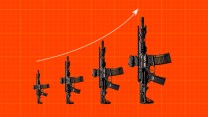
The political fortunes of the Assault Weapons Ban of 2013 have looked dim from the start. But as Congress considers the new legislation put forth by Sen. Dianne Feinstein (D-Calif.), one thing is clear: If it were to pass, the bill would outlaw highly lethal firearms that dozens of mass shooters in the United States have used to unleash carnage.
More than half of the killers we studied in our investigation of 62 mass shootings over the last three decades possessed weapons that would be banned by Feinstein's bill, including various semi-automatic rifles, guns with military features, and handguns using magazines with more than 10 rounds. The damage these weapons can cause has been on grim display since last summer, from Aurora to Milwaukee to Minneapolis to Newtown, where attacks carried out with them left a total of 118 people injured and dead.
"They got the most shots," said a Chicago teenager who prefers high-capacity magazines. "You can shoot forever."
The new legislation aims to outlaw weapons that let a shooter fire a large number of bullets quickly without having to reload. Law enforcement officials we consulted generally considered that to be a reasonable approach for distinguishing between firearms used for sport or self-defense and military-style weapons designed to maximize body counts.
Using the parameters of the new bill, we dove deeper into the data on mass shootings that we first began gathering in July after the slaughter at the movie theater in Aurora, Colorado. We dug up additional specific details on the perpetrators' guns and ammunition devices (often elusive, particularly with older cases). In our initial analysis we had used broader criteria for "assault weapons," including some modified shotguns and bolt-action rifles; now, our more detailed chart and data set use four categories of firearms: semi-automatic handguns, rifles, revolvers, and shotguns. Across those four categories, we account for assault weapons and guns using high-capacity magazines that would be specifically outlawed by the new legislation. The data includes all guns recovered at the scene in each case, though not all of them were used in the crimes. Using this criteria we found:
42 guns with high-capacity magazines, across 31 mass-shooting cases
20 assault weapons, across 14 mass-shooting cases
33 cases involving assault weapons or high-capacity magazines (or both)
A total of 48 of these weapons (accounting for the overlap between the two categories) would be illegal under the new legislation.*
Feinstein's Assault Weapons Ban of 2013 isn't just about mass shootings, of course. By far the most common weapons used in these cases are semi-automatic handguns—the type of weapon also at the heart of the daily gun violence plaguing American communities. Banning high-capacity magazines may be especially key with regard to these guns, not only because they're popular among mass shooters, but also because they tend to increase casualties in street violence, as a veteran ATF agent explained to us in a recent interview.
The devices have appeal on the streets. A Chicago high school student recently described his preference for 30-round magazines to a reporter for This American Life: "They got the most shots. You can shoot forever. Let out 15. Run back to where you going. Somebody else come out and let out five more. There you go."
It's been one year since Trayvon Martin was confronted, shot, and killed in Florida by George Zimmerman. Ever since Zimmerman was charged with second-degree murder last April in the death of the unarmed teen, a story that sparked a firestorm of debate over racial tensions, law enforcement, and gun regulations has mostly faded from the headlines. Zimmerman's trial is expected to begin this summer. In the meantime, here are some key aspects of the case worth considering:
Does Zimmerman's story add up? A written statement and police video released last June, in which Zimmerman reenacts the deadly altercation for investigators at the scene, raised questions about Zimmerman's story in more ways than one. He seemed to suffer from some peculiar memory loss that night regarding a street in his neighborhood of many years, and his description of the confrontation did not jibe with a prior written statement that he'd given police. More details here.
Conflicting video evidence: A cautionary reminder about trying Zimmerman in the court of public opinion: Videos emerged in the media with different views of the alleged injury to Zimmerman's head the night of the killing. Did Al Sharpton's show on MSNBC play fast and loose with the footage?
Zimmerman's 911 obsession: The case was tinged with racial tensions from the start. While Zimmerman and his supporters maintained that racial bias played no part in his pursuit of Martin that night, police call logs surfaced last March suggesting that Zimmerman was obsessed with suburban law-and-order minutiae—and black men stalking the neighborhood. Other police records showed Zimmerman had called 911 a total of 46 times between 2004 and the day he shot Martin. Federal investigators later conducted local interviews and concluded that Zimmerman was not a racist.
Florida was just the beginning for "Stand Your Ground" gun laws: The Sunshine State's controversial legislation allowing citizens to defend themselves with lethal force was the "first step of a multi-state strategy," said the National Rifle Association's Wayne LaPierre after the law was signed in 2005. As an in-depth Mother Jonesinvestigationlast summer revealed, Stand Your Ground laws—backed by the NRA as well as the American Legislative Exchange Council, a corporate-sponsored consortium of lawmakers—spread to two dozen other states by 2012. Meanwhile, studies showed that Stand Your Ground laws do not deter crime, are racially discriminatory, and are associated with increases in homicides.
President Obama: "If I had a son, he'd look like Trayvon." In a sign of just how big the case had become last spring, the president himself weighed in. "I think all of us have to do some soul searching to figure out how does something like this happen," Obama said at the White House nearly a month after the killing. "When I think about that boy, I think about my own kids…If I had a son, he'd look like Trayvon. I think they are right to expect that all of us as Americans are going to take this with the seriousness this deserves, and that we're going to get to the bottom of exactly what happened."
Right-wing reactions: There was no shortage of outrage from conservatives over Obama's comments, as MoJo's Adam Serwer detailed here. In other developments from the political right:
When neo-Nazis showed up in Sanford allegedly to protect "white citizens in the area who are concerned for their safety," a Fox News affiliate in Orlando referred to them as a "civil rights group." (Eventually Fox-35 in Orlando corrected the problem, after two more iterations of their headline.)
Conveying a different type of right-wing impulse in response to the story, Fox News' Geraldo Rivera infamously blamed Martin's death on his hoodie:
And what's happened in the quieter months since? ThinkProgress rounded up some recent developments in the case here, including Zimmerman's lawsuit against NBC News, his request to the court to be freed from GPS tracking (denied), and his six-figure personal spending since he started soliciting donations for his defense fund.
Navy SEALs outside Osama bin Laden's compound in Zero Dark ThirtyColumbia Pictures/Entertainment Pictures/ZUMAPRESS.com
Zero Dark Thirty is a gripping Hollywood epic, but the Oscar-nominated film has become best known for setting off a torrent of debate about whether torturing prisoners helped in the hunt for Osama bin Laden. Its opening sequence announces that the film is "based on firsthand accounts of actual events." There is pretty clear evidence, however, that it gets the torture question seriously wrong, as more than one journalist has laid out in detail.
Then there is the matter of exactly how the Navy SEALs killed bin Laden. Ironically, a movie famously described by its director as a "journalistic account" gets little help on this front from practitioners of the trade. In the nearly two years since the mission, several respected journalists and even members of SEAL Team 6 itself have put forth different versions of how the killing went down. Since I first documented some of these divergent stories, more have piled up. The so-called fog of war is surely a factor; even America's most highly trained warriors are bound to have faulty memories of such a heart-pounding, high-stakes mission. But from conflicting reports about real-time footage to various rundowns of the number of shooters, bullets fired, and witnesses present, the collection of accounts makes for a Rashomon-style epic of its own.
The basic facts are clear enough: On May 2, 2011, the SEALs stormed bin Laden's compound in Abbottabad, Pakistan, shot him dead, and departed with his corpse by helicopter. The US military soon transported the body to a naval ship, where it was given Muslim burial rites and dumped into the ocean. Thus concluded an unambiguous and essential victory in the decade-old war on terrorism.