






Tim McDonnell joined the Climate Desk after stints at Mother Jones and Sierra magazine, where he nurtured his interest in environmental journalism. Originally from Tucson, Tim loves tortillas and epic walks.
"I think we all can agree we're seeing complete and utter devastation," Brendan Gallagher says, standing in front of the charred remains of his childhood home.
Just a short drive from New York City's famous Rockaway beaches, Breezy Point, Queens, is a quaint seaside hamlet where many cops and firefighters come to retire. It's a place known for charming historic bungalows and sweeping ocean views, but on Monday night it quickly became the setting for some of Hurricane Sandy's most terrifying damage.
As a massive storm surge swept in with the gale-force winds, an as-yet-unknown source sparked a fire that, according to New York City Fire Commissioner Sal Cassano, ultimately leveled more than 100 homes—luckily, most residents heeded early evacuation warnings and no one was killed. Today, locals waded back in through still-receding flood waters to assess the damage while firefighters—some off-duty, picking through the wreckage of friends' and neighbors' homes—tamped down the smoldering ruins.
Big storms always raise the spectre of damage to nuclear reactors and other important energy infrastructure. But with wind speeds predicted to gust up to 90 mph today, how are the East Coast's wind turbines holding up to Hurricane Sandy?
"Wind turbines are designed specifically to harness the wind, but they are also designed to withstand it," Ellen Carey of the American Wind Energy Association said in an email. Most turbines are designed to stand up to winds up to 135 mph, she said, well beyond what's expected from this storm. And there are a host of techniques turbines operators can make use of to protect the infrastructure, starting with rotating the blades laterally so that wind slips through them.
Matt Tulis of E.On Energy said a wind farm the company operates in Munnsville, NY, will stay open through storm, barring any mandatory evacuations for workers there.
"They're prepared for whatever Mother Nature might blow in," he said. "We look for windy spots. So on a certain level, the more wind the better."
Feel like you're undersaturated with campaign advertising? Need even more exposure to the slogans and smiling faces of our two major presidential contenders? When Alexey Komissarouk, a Bay Area programmer, wanted to add to the growing list of apps for political junkies, he designed a program that can give voters a bit more control over the web ads they see.
This week he and a few friends launched Hotspot the Vote, which harnesses Android devices to "Obamify" or "Romnify" WiFi routers so browsers will replace every ad (including ads for Amazon, Etsy, OkCupid, or whatever else you might normally see, along with ads for other politicians) with ads for your candidate.
"It's like putting up a campaign poster in your living room," he said. And while you might apprecitate being reminded of which candidate you're rooting for with each and every banner ad, the program packs a bigger punch when installed on public routers: Komissarouk is pitching the tool to coffee shops and other spaces with open internet connections. It's Obama or nothing at Philadelphia's Trolley Car Diner, a 1950s-style eatery that owner Ken Weinstein said "Obamified" its free WiFi yesterday.
"We're in a very liberal community," Weinstein said. "Our choice to Obamify reflects our clientele."
Still, Weinstein said the change didn't equate to an official Trolley Car Diner endorsement of the incumbent, and rejected the suggestion that limiting online content for his patrons was a form of censorship: "They have a choice about whether to eat here, and about whether to sign in to our WiFi. As long as we're providing it for free, I think that's reasonable."
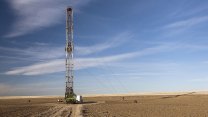
Wind turbines grace the North Dakota prairie.James West/Climate Desk
Jacob Susman is frustrated again. Sitting in the bright green conference room of his company's trendy industrial office, overshadowed by the Brooklyn Bridge, he's a clean-cut poster child for the "green economy": Since 2007, Susman's OwnEnergy, which installs wind turbines, has grown to be one of the nation's most prominent wind installers. But he's plagued by a recurring nightmare: "Every few years the industry has to drop everything for six or nine months and focus exclusively on having the credit passed."
He's talking about the Production Tax Credit, the federal subsidy for renewable energy that gives a 2.2-cent per kilowatt hour break to wind energy producers. Those pennies add up to about $1 billion per year, no chump change for the burgeoning industry. Proponents of wind energy say since its inception in 1992, the PTC has been a crucial driving force behind the industry's rapid growth; critics of the PTC (including the fossil-fuel funded American Energy Alliance) say the industry has had ample time to take off its training wheels (never mind that fossil fuel subsidies historically run about 13 times higher than renewables).
The subsidy has become a touchstone issue in the presidential campaign for windy swing states like Iowa and Colorado: Mitt Romney has referred to the PTC as a "stimulus boondoggle" and vowed to kill it, while President Obama has promised to give the credit his support. Every one to three years, as the PTC reaches its expiration date, it must be taken up, re-debated, re-tweaked, and re-approved by Congress, exposing it to shifting political whims particularly in a general election year where the future party spread is far from certain.
The PTC is set to expire at the end of this year, and uncertainty about whether Congress will extend it has led to layoffs and much anxiety in the industry. And while 2012 was a big year for wind, with 10 gigawatts installed nationwide by August and another gigawatt predicted by year's end (only 0.9 percent of total new power in the US, but nearly double the wind installed in 2011), projections for 2013 are grim: Estimates range from half to a tenth of that.
"Next year is already going to be a crash year for the wind industry," said Michel Di Capua, an analyst with Bloomberg Energy Finance.
But what happens next year is only the next iteration of a boom-bust cycle that has been the bane of the US wind industry for over a decade. The PTC has been allowed to expire three times in the past, and the industry has consistently tanked; even the possibility of expiration sends shivers up the spines of everyone from blue-collar factory workers to Manhattan investors. Breaking free of that cycle, Susman and other industry leaders interviewed by Climate Desk agree, is the industry's only hope for sustained long-term growth, and it starts with weaning the industry off the PTC once and for all.
The iPhone has become one of the developed world's most ubiquitous consumer products; the new iPhone 5 sold more than 5 million units in its first week. But the vast majority of iPhone users have no clue what goes into the guts of their coveted toy. That's no accident, since the phone's internal design and chemical content are closely guarded trade secrets and Apple deliberately makes it difficult for consumers to open up the device.
Enter Kyle Wiens, whose company, iFixit, aims to help users penetrate their gadgets' dark secrets, from how much toxic mercury they contain to how to change the damn battery. Last week, Climate Desk found shelter from a torrential rainstorm near one of New York City's Apple stores and watched Wiens go to work (see video above). Today, iFixit released the results of its chemical analysis of the iPhone 5 and a suite of other popular cellphones, conducted by the environmental nonprofit Ecology Center.
The good news: The iPhone 5 is far less toxic than the early models. The bad news: There's no such thing as a "green" phone.
First the good news: The iPhone 5 is leagues ahead of its more toxic predecessors—especially the original, 2G model. (The worst overall performers—most toxic first—were the iPhone 2G, Palm m125, Motorola MOTO W233 Renew, Nokia M95, BlackBerry Storm 9530, and Palm Treo 750.) The latest iPhone performed better on the toxins front than most rival models, including Samsung's Galaxy S III, and was only narrowly beaten out by the least-toxic phone examined, the Motorola Citrus.
Now the bad news: The iPhone 5 still tests high for mercury and chlorine, both of which can present serious healthhazards if they leach into local water supplies from a dump somewhere—typically in a poor area of China, Ghana, or India. It also contained trace amounts of bromine, which has been linked to thyroid cancer and lung disease. "There's no such thing as a 'green' phone," Wiens points out. "There's no such thing as a phone that has no toxic chemicals."
iFixit.comStill, the new iPhone looks great compared with its original progenitor, which contained an astonishing 1,020 times more bromine and 97 times more mercury than the current model, according to iFixit. But the point of all of this is less about any one phone's chemical components, and more about the need to curb our addiction to throwing away phones that could be fixed rather than dumped. "It's critically important to consume as few phones as possible, to conserve the resources we have," Wiens says.
To see how iFixit helps make that happen, Mother Jones contributor Dashka Slater visited the company bat cave and came back with this great new profile.