- ‹ previous
- 934 of 1542
- next ›
Trees Cast Dark Shadow Over Solar Panels
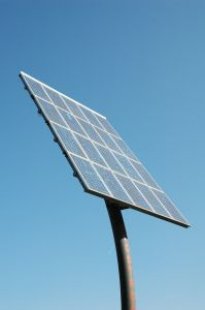
In one of those "only in California" type lawsuits—a state that heavily promotes solar and renewable energy under the California Solar Initiative—homeowners Richard Treanor and Carolynn Bissett of Sunnyvale, California, have been forced to chop down two redwood trees in their backyard that were obstructing prime-time rays from their neighbor's solar array. Citing the Solar Shade Control Act, a remnant legislation from the energy crisis of the '70s, a Santa Clara County judge ruled in December in favor of solar array owner and Santa Clara resident Mark Vargas.
Vargas installed the 10-kilowatt solar array on his home in 2001. Treanor and Bissett's redwoods, which were planted in 1997, eventually grew tall enough to shade more than 10 percent of Vargas' solar panels, inciting a not-so-neighborly feud. Aside from the tricky issues regarding property rights, the case also pits the benefits of carbon-dioxide-absorbing resources against those associated with sources of renewable energy.
The EPA estimates that trees and plant life sequester between 35 to 800 pounds of CO2 emissions annually. How does that compare to a solar panel installation? Well, it depends on a multitude of factors—most importantly the type of energy source it's displacing (coal, gas, hydro) and the emissions factor for that energy source. In California, where most electricity comes from relatively clean gas-fired power plants, approximately 0.6 pounds of CO2 emissions from power plants are offset per kilowatt hour (the commonly used measurement for electricity) of energy produced by solar photovoltaic panels.
That means in California the obstructed 10 percent of Vargas' 10-kilowatt system would offset nearly 1,300 pounds of CO2 emissions per year, whereas an average estimate for CO2 sequestration by the two soon-to-be-felled redwood trees would be about 835 pounds per year. So in this case, solar appears to have the better environmental payoff.
Unfortunately, the law may not always fall on the greener side, as the straight numbers calculation will vary by situation and state. (Nationwide, a 1-kilowatt system would offset only 915 pounds of CO2 emissions per year, according to the Energy Information Administration.) Concerned that the ruling would set a dangerous precedent, Treanor and Bissett entered Senator Joe Simitian's annual "There Oughta Be a Law" contest and won. Simitian has introduced a bill that would favor trees planted before the installation of a solar array.
But as of yesterday morning, the two redwoods are history.
—Joyce Tang
Photo used under a Creative Commons license from everystockphoto.com.














I assume having the solar panels repositioned or elevated was never considered an option. It might have been LESS expensive than taking down the trees.
Now that the trees are down, the owner of the solar panels should pay to have a dozen planted somewhere else in California, where there they won't interfere with any solar panels. The CO2 draw down will be much greater over the lifetime of the trees.
What a total shame - there really oughtta be a law - how rediculous that those trees would have to be cut down to please another neighbor - that was totally wrong - shame on sunnyvale!
Shame on Mark Vargas!! Did anyone bother to consider not only carbon but these facts:
1) The trees were there first.
2) The trees are living organisms.
3) The trees also produce oxygen.
4) The shade produced by the trees and the energy they soak up reduces urban and suburban heat sinks.
5) The trees are living organisms. I know I said that twice. It's important enough that it warrants it.
Well, if the bit of Google mapping I've done is accurate, those trees are (were) in the far corner (North/Northwestish) of the owner's lot, acting not to shade their house, but as a privacy screen. As redwoods grow, their lower limbs tend to fall, which makes them rather less effective as a screen as time goes by.
The 10 kilowatt solar installation covers what appears to be all the viable roof surface of the house, (someting like 100 panels by my count) so there really is nowhere else for them to be put on the property. Even if the panels could be raised a bit, the trees would only keep growing - redwoods top 100 feet easily.
It is a dilema I can easily understand - at my own house in Sunnyvale I have a bunch of Privets (aka weed trees :) along the South property line. They aren't native, they do provide some shade to my house, they are no longer an effective privacy screen (allowed to grow much too tall before I bought the house) and even then I am conflicted about removing them when I finally can afford to install solar panels.
Now, if folks want something about which to complain, do the web/map searches and notice that the house with the solar panels is an "executoad" house in a newish subdivision build on land along a creek (to be fair as is the other house which was probably built 30+ years previous) probably sold-off by the school district for the school nearby.
Executoad - an "executive" house - multi story, 2Kish square feet (give or take) built all of 6 to 10 feet from its neighbor, probably with boatloads of AC. Almost always built on former agricultural land (then again, what house isn't...)
Is this the same Mark Vargas that used to drive a corvette, Lexus LX 470, BIG Chevy truck that was modified for increased power, had a POWERBOAT, 2 Jet ski's? Did he get rid of all of these? Is this the same Mark Vargas that now claims to be an environmentalist? Hypocrite!
Shade
tagged as:- solution
The numbers used in this article (& often in this debate) make a direct comparison of the carbon sequestration of the trees and the carbon offset of the solar panels, while the carbon offset of the shade cast by the trees is never mentioned. This is a glaring omission in my opinion because trees, especially in urban areas, do much more than absorb and store carbon. Trees provide shade, which can reduce cooling costs (relevant in Sunnyvale, CA) up to 25%, therefore further reducing carbon emissions. In addition to the many benefits of trees in urban areas, the carbon offset provided by shade needs to included as part of an honest debate of the environmental impacts of trees vs. solar panels.
Com'on, just move the trees
Com'on, just move the trees somewhere else! Man, it's so simple
the trees are down, the
the trees are down, the owner of the solar panels should pay to have a dozen planted somewhere else in California