In The Blogs

Guilt-Free Meat?

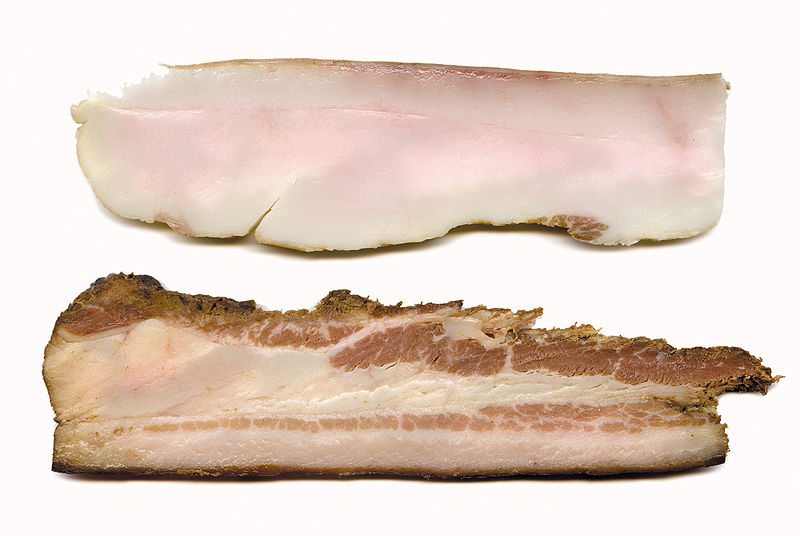
—Photo courtesy Rainer Zenz, Wikimedia commons

I suppose it's a sign of some kind of progress that people are thinking about ways to produce meat without the guilt. But these ideas give me the creeps.

As New Scientist points out, we eat 300 million tons of meat a year—50 percent more than in the 1960s. Much of it comes from inhumane factory farms.

Enter Adam Shriver's controversial paper in Neuroethics arguing that we are close to, if not already at, the point of genetically engineering factory-farmed livestock who cannot suffer.

Wow. Pain-free cows. You know, that doesn't work for me. It's right up there with the Cheney method of torture. I mean, what does hurting an animal who can't (or can) feel pain do to the miserable souls stuck with (or desiring) those jobs? Post-traumatic meat disorder.

Why not genetically engineer people to abhor meat?

Meat is more bad than good for us, bad for livestock, and bad for the planet. Eating a quality vegetarian diet would benefit every single living person. Here's why and why and why and why and why and why.

Plus, eating meat is bad for cows and sheep and goats and chickens and fish and every other wiggling thing we insist on putting into our mouths. Whether they feel pain or not.

MoJo has covered more than once some of the compelling and ever accumulating reasons that eating meat is bad for the planet.

Now some thinkers are suggesting producing in-vitro meat bioengineered in Petri dishes. Jennifer Jacquet blogging at Seed calls it Frankenmeat.

I'm feeling the need to fight back against the strange bacon fetish sweeping the sweepable world.

Tofu never suffers.
 

image image

Get Mother Jones by Email - Free. Like what you're reading? Get the best of MoJo three times a week.
Comments
no profile pic for comment author

response

Julia, I actually agree with a lot of what you're saying. In the article, I'm pretty clear that I think getting rid of factory farming would be the best option. However, given that people are eating *more* meat now then they were twenty years ago, I feel like we should at least consider whether we really should be holding out for some miraculous event where everyone decides to become vegetarian. If we think that this is unlikely, and that factory farming will continue to exist for some time, then in the meantime we should make sure that it's causing as little suffering as possible. I'm vegan, and have been vegetarian since I was five and my mom read Animal Liberation. This is not about guilt for me. It's about unnecessary suffering. I think we should do what we can to get rid of it.

Julia Whitty

I agree with you in part,

I agree with you in part, Adam, though I think your argument's greatest strength is a subversive one. By agreeing to using animals immune to pain, the factory farming world and all who regulate it must acknowledge that animals suffer and that factory farming inflicts suffering. That would be a milestone.

I disagree elsewhere. First, there are a rare number of humans born with a congenital inability to feel pain. Yet they still suffer. Without a sense of pain, they inadvertently blind, main, disfigure, and kill themselves. What farmer is going to babysit his livestock around the clock so as to prevent its self-destruction?

Second, the business of killing animals degrades those who do it. I don't believe this would change if animals who cannot feel pain but who can suffer are the ones killed. The business of making meat is violent. Factory farming is a particularly bad example. But even pampered grass-fed free-range beef cows suffer the torment of the slaughterhouse, Temple Grandin notwithstanding.

Pain is not the only form of suffering and livestock are not the only beings who suffer the meat industry.

Julia Whitty, Environmental Correspondent, Mother Jones

no profile pic for comment author

Re: I agree with you in part

Julie, thanks for the thoughtful response. Though I am sincere in thinking that if we can't get rid of factory farming, we should consider using animals with a reduced capacity to suffer, I am also fine with the "subversive argument" you mention. There really is no excuse for ignoring the horrible conditions at factory farms. In regard to your two points:

(1) Congenital insensitivity to pain is a problem with the peripheral nervous system, specifically in the nerves. The knockout I am discussing has a very specific effect where the acute responses to pain stay the same but the affective dimension of pain is diminished. The best analogy in humans are people who have been treated with morphine or people who have had cingulotomies, who report that they still "feel pain but no longer mind it." Thus, the risk of the animals mutilating themselves in a way similar to humans with the condition you mention is greatly reduced.

(2) I think this is a very good point. One of my neighbors when I lived in Texas worked at a chicken processing plant, and he told me horrible stories about how the workers abused some of the chickens. But given that this is *already* going on, wouldn't it be better if the animals weren't suffering as they were being abused? I guess you could say that the workers will be more cruel if they knew the animals weren't suffering, but it seems to me like an open psychological question whether that would actually make them more or less cruel. Perhaps they would be less psychologically damaged if they knew they were not really torturing the animals? Anyway, I agree with your broader point that the working conditions at factory farms provide a very good reason to prefer getting rid of these farms altogether.

Julia Whitty

Adam, I think the

Adam, I think the morphinelike approach is interesting and better. The experience of not caring about pain reduces suffering, except perhaps in those inflicting the pain. Nevertheless, I agree that we should strive to reduce suffering.

Which leads me to the next comment by ML. I realize that not all people mind that animals suffer when we eat them. And yes they do suffer. Animals, including ourselves, desire to save their own lives when threatened. They strive to live. Plants do too, though in different ways (chemically, for instance). But we don't always kill plants to eat them. Consider fruits. Some perennials provide for us and continue living.

The thorny side of all of this is that every life form that is not a primary producer (plants) consumes some other life form in order to survive. Meat eating is a tough call and a personal one. I'm glad that ML is concerned with the environmental and personal health issues associated with eating meat. When more people care about those issues our planet will be healthier. Then perhaps we will have enough time and sanity to parse the finer ethical points. I believe it's all part of our journey as individuals and as a species to becoming better people.

Julia Whitty, Environmental Correspondent, Mother Jones

no profile pic for comment author

Let's do it humanely

It sounds like your argument ultimately comes down to being against the killing of animals, no matter how humanely done. And I just don't think that's necessary.

I'm all for everyone eating less meat, for both health and environmental reasons. But I don't see why killing animals is immoral. Why is it OK to kill plants but not animals? I think that the only difference is that animals are cuter and excite people's emotions.

Post a comment
Alternately, you may login to or register an account
The content of this field is kept private and will not be shown publicly.
  • Web page addresses and e-mail addresses turn into links automatically.
  • Allowed HTML tags: <a> <ul> <ol> <li> <blockquote> <img>
  • Lines and paragraphs break automatically.

More information about formatting options


Jail.org - Inmate Search
Criminal records, instant public records & people search & current court records. www.jail.org

U.S. Public Records Search
Search County & State Court Records, Criminal records, Vital and Adoption Records www.PublicRecordsInfo.com

Records.com - People Search
Public Records and Background Checks. Instantly Search Criminal Records, Addresses and Court Records www.Records.com

Court Records & County Records
Find Instant Public Records, Criminal Records as Well as County Property Records Search. www.PublicRecordsIndex.com

Mother Jones Podcast
Get in on the conversation! We talk about culture, politics, the environment, the economy and more. Listen now!

TalkBackTees.com
A treasure trove of liberal wit, wisdom and quotations, from ancient to modern, on colorful, cotton tees.

Support Independent Artists
Amazing art, crafts, apparel, paper-goods and more. A carefully curated selection of sundries since 1999.

FREE CONNECTIONS FOR GREEN SINGLES
Meet progressive singles in the environmental, vegetarian & animal rights community who share your values