- ‹ previous
- 28 of 1535
- next ›
Econundrum: Bamboozled by Bamboo?
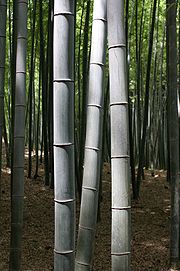
When I needed new sheets last year, I didn't dream big: High thread counts are well outside my price range. So imagine my delight when I found bamboo sheets at my local Target. So soft! So cheap! And so sustainable: Bamboo is kind of an eco wonder crop, since it grows fast, absorbs more CO2 than most trees, and requires few pesticides. It’s also biodegradable and even naturally antimicrobial. I skedaddled out of Target in record time (phew), congratulated myself on this smart buy, and celebrated with a nap.
But last month, I had a rude awakening: I learned that my sheets are probably not as dreamy as Target claimed. Turns out most soft fabrics labeled bamboo are actually rayon, a synthetic fabric that can be made from the cellulose of any plant. In October, the Federal Trade Commission ruled that a company called, pricelessly, Bamboosa was not allowed to pass its bamboo-based rayon products off as "100 percent bamboo"—or claim they had bamboo's ecobenefits. The reason: Once you turn bamboo into rayon, it loses its biodegradable and antimicrobial properties. Bamboosa has changed its label to "viscose derived from bamboo." Cozy, huh?
My sheets aren't as bad as some of the cheapo synthetics out there. Since rayon is derived from plants, it's less carbon-intensive than fabrics made from petroleum (polyester, nylon, and acrylic, to name a few). But the chemical processes used to manufacture rayon can be awfully gnarly. Truly sustainable fabrics are hard to come by: Organic cotton is popular among ecodesigners, and while its water footprint is smaller than its conventional counterpart's, it's still not tiny. In general, determining a fabric's environmental impact requires a little homework. Organic Clothing blog has a great ecoclothing glossary.
The bottom line: Don't let fabric manufacturers pull the wool over your eyes: "Made from bamboo" often means rayon derived from bamboo, which isn't as sustainable as pure bamboo fibers.



Probably not lower carbon than petroleum products either
Unless you have an actual life-cycle analysis to consult, you can't say that "bamboo" sheets have lower carbon emissions than oil-derived synthetic fabrics either, because agriculture is the largest sector source of carbon emissions of all, and making petro fabrics means you're not burning the oil but rather processing it into a form that will not enter the atmosphere for a very long time.
Walker makes a good point
I bought sheets in the 'pre-geen' days of the early 70's. They were my only sheets. I gave them to a freind who's daughter has used them as her main sheets ever since. It can be hard to compare product impact!
If a company uses green/eco claims to sell their product, they should be held to higest standards, (even not if not using an organic logo) or face public disdain. I used a "90% organic" shampoo that sported the organic logo, till I found out at OCA that the 90% ingredient was water - talk about Greenwashing! I was very PO'd 'cause it cost more, and I'm not rich. I now buy a shampoo cake that comes unwrapped - no plastic bottles, no trucking of water.
It takes work to keep on top of all this. Thanks for the heads up, MJ.
Bamboosa
Hey, Mo from Bamboosa here. I have a couple of comments about Bamboosa, bamboo and the FTC.
This article states, "In general, determining a fabric's environmental impact requires a little homework".
It actually takes more than a little research to arrive at a conclusion on a given fabric's environmental impact. Not only would one have to ascertain how the source crop (if it is plant based) was grown and cultivated, but also where that activity took place and under what conditions. Additionally, one would have to evaluate how and where the fiber was prepared for yarn spinning, how and where the spinning was completed, how and where the knitting or weaving was accomplished, and how and where the fabric was wet processed, meaning the scouring, dyeing and finishing of the roll goods.
To evaluate the environmental impact of a garment, one would have to also address where the fabric was cut, sewn, possibly embellished, packaged and distributed and by whom and under what conditions. Since approximately 90%-95% of the total environmental impact of a garment occurs AFTER it is purchased by the consumer, the laundering and care of that product would certainly need to be taken into account and weighed proportionately.
I'll will give you these factors for Bamboosa's product and then you can decide whether you think our products are a good choice.
1) Our bamboo is USDA certified organically grown
2) Our farm has OCIA organic certification
3) Our fiber has FSC Chain of Custody certification
4) Our fiber has Oeko Tex 100 Class A certification
5) Our fiber is produced in a closed loop system where 100% of the sodium hydroxide and 74% of the carbon disulphide is recovered and recycled
6) Our fiber is transported to the US via container ship and trucked less than 200 miles to the spinner
7) Our spinning, knitting, wet processing, cutting, sewing, printing, embroidery, and distribution are all performed with a 150 mile radius
8) No chemicals are applied to our fabrics unless they meet the GOTS standards
9) Bamboosa has created 25 jobs and plans for an additional 20 jobs by 2010
10) I just wore a pair of Bamboosa socks for more than 10 days before laundering and they did not smell. I routinely wear my t-shirts at least five times between laundering. Try either of those scenarios with cotton.
Bamboosa will put the environmental footprint of the products that we make up against pretty much anything on the market. As an added benefit, they are some of the most comfortable clothes you can wear.
The FTC says that we have 'bamboozled' our customers. That is absolutely not true and a total misrepresentation of the facts. The fiber we use comes from bamboo and is unique in its properties. 'Bamboo fiber' has been the accepted term for the fiber for the past several years and it is what everyone, from the fiber manufacturers to the marketers to the end users, have been calling it. Most marketers continue to do so.
We also believe that eventually we will be able to convince the FTC that they are wrong about the antimicrobial properties as well as the biodegradability.
Bamboosa will weather the FTC storm and will continue to make high quality, comfortable, American Made apparel and baby products that are a good choice for the environment and for the consumer. And we will continue to do so, as we have done for the past five years, with consideration of the environment, our community, our employees, and our customers.
"10) I just wore a pair of
"10) I just wore a pair of Bamboosa socks for more than 10 days before laundering and they did not smell. I routinely wear my t-shirts at least five times between laundering. Try either of those scenarios with cotton."
Ha! Not only did I do that with my 100% Costco Cotton socks and t-shirts, but I've been wearing the same pair of underwear for two weeks now, and I can't smell a thing!
Ya know, just for picking a
Ya know, just for picking a name that sounds like "Bamboozle", you guys are asking for trouble.
Thanks Mo. It is obvious
Thanks Mo. It is obvious that your firm has thought a great deal about your entire environmental footprint.
As un-American as it may seem, we need to acknowledge that there are no magic fabrics, woven from pure air, that wear like iron and then biodegrade. Even those of us who know better have a longing for a technological fix that will make our consumption OK. There are always trade-offs. Buying a few high-quality, long-wearing items and then taking care of them is a better strategy than stuffing our closets with purchases that help us feel righteous about our consumption.
Give me HEMP any day! But
Give me HEMP any day! But NOOO! too many idiots think hemp is a drug.
Bamboo
I must say...this article is not unlike all of the other articles that I have run across, on this topic. That is...devoid of due diligence :)
A little research would have uncovered several very pertinent facts.
For starters...you have blindly accepted the FTC's fallacious statements. The FTC has in the past...been accused (by a Federal Judge) of bringing small businesses to court...with out a shred of evidence to back up their claims. Here are many examples of their ineptness: FTC discredits itself
So, bamboo derived fabric is nothing but rayon, correct? Ok, did you know that it is commonly accepted among textile engineers and scientific journals, that rayon is a biodegradable textile? Well, now you know. If you want to get a better understanding of this little caveat...you can read all about here: FTC claims fruits and vegetables are not biodegradable
You will also find many other posts at this blog, that will give you much insight in to the other, less publicized, side of this story.
Thanks for allowing me my soapbox :)
Doug
Green Earth News
"Smart, fearless journalism"?
I am disappointed with Mother Jones for so blindly accepting (and regurgitating) what the government tells you to believe. If the government told you now is the time to buy shares in banks, would you? Not without some degree of investigation I would hope! I have read the FTC's releases and it doesn't take a journalist - heck, a journalism student to spot biased language. A truly smart and fearless journalist would sniff out, I would guess, protection of business interests from competing fabrics such as cotton. How about living up to your credo and investigating beyond what is put out by the government?
Doug and Mo
With all the greenwashing for greenbacks that goes on, we can be forgiven our cynicism. I haven't time now, to weigh all the info you gave in post and link, but will be considering it with an open mind.
Fringedweller, Thats all I
Fringedweller,
Thats all I would ask of anyone...is have an open mind. I have spent literally hundreds of hours researching this topic, and I am still learning new things every week. I don't expect the average joe to be on top of the issue. However, a *journalist* should do their due diligence and at least check into it a little - As oppose to assuming that the FTC's statements are true and accurate.
We actually found a whole bunch of cases where the FTC had been ridiculed by a judge, for filing claims against a small business...without having any evidence of their own. It's just not something that most of us are aware of until we start investigating things.
Thanks for the open mind.
Doug
Green Earth News
Certification and Listing
If we researched everything we buy, when would we have time to do anything else, let alone work to earn the money to buy anything? I want to buy ecologically sound goods, and yet just as the author discovered with her bamboo sheets, I'm often fooled. I spent ten years buying organic tomatoes that turned out to come in enamel lined cans that featured a toxic chemical known to leach out into foods, and of course acidic foods like tomatoes were the worst products to store in that material. And I only discovered this by chance. What the consumer needs is a resource where the truly good products are listed, where if the worst products can't be for legal reasons (litigation threats) then at least the categories (shoes, shirts, belts, jackets) can be rated for acceptability or danger giving the consumer an idea which needs to be most researched. Surely there is some effective way for the consumer to find out how his consumer goods are produced in a reliable and somewhat convenient manner.
Re: Certification and Listing
It's called the Organic Consumers Association: http://www.organicconsumers.org/
It's not perfect, but I believe it's the best we have.
SUPPORT THEM.
Wonderful organizations like you describe can't exist in a vaccum.
They need our help.