Ethanol's African Land Grab
Mozambique has survived colonialism and civil war. But can it survive the ethanol industry?
massingir is an unremarkable town. The electricity supply here in rural Mozambique is erratic, clean water is hard to come by, and the hotels—well, calling them hotels is a little too polite. The town center is two ragged blocks of colorful bars, stores, and market stalls arranged along a reddish sandy furrow—the main street—with goods packaged in the smallest possible quantities to match the pinched cash flow of local buyers: individual quarts of fuel in old bottles, spoonfuls of soap powder in bright little packets, single cigarettes, microcans of tomato paste and sardines, all laid out in creative patterns to catch the eye. Babies doze in the shade while their mothers gossip, pausing on the way back from the unicef tent outside the shabby clinic; loose-limbed teenagers play rough games of pool under a thatched roof by the side of the road.
Hardcore nature nuts sometimes pass through Massingir; tourism has been picking up as word spreads of the giant Great Limpopo Transfrontier Park, a "peace park" that will merge the Mozambican wilderness of the nearby Limpopo National Park with South Africa's world-famous Kruger National Park (just across the border) and some adjacent Zimbabwean wildlands to make one of Africa's largest protected areas.
But I'm here for something bigger than elephants. This backwater is also the beachhead for an enormous project that promises to spend some $500 million, employ at least 2,000 people, and use nearly 75,000 acres of native woodland and savanna—an area five times the size of Manhattan—to grow sugarcane and produce ethanol for the growing global biofuel market. Known as ProCana, it's an endeavor that could not just transform Massingir, but also, via a mess of land claims and conflicting promises, put at risk the transnational park and other significant conservation projects.
ProCana is just the first in a long line of massive biofuel projects backed by investors ranging from local speculators to multinational corporations like BP. Some have asked the government—which legally owns all land here—for entire districts (the equivalent of US counties). Government officials told me that as of 2007, biofuel investors had applied for rights to use about 12 million acres, nearly one-seventh the country's 89 million acres of arable land; unofficial tallies are double that. The message is clear: This country, almost twice the size of California, is beckoning the plow. ProCana and its ilk are the vanguard of an underreported land revolution—a movement that could reshape vast terrains and the livelihoods of millions as international agribusiness sets its sights on the cheap soil of Africa.
i find the big man of ProCana, Izak Cornelis Holtzhausen—Corné to his friends—in an unexceptional '60s modernist office block in Maputo. A secretary shows me to a small boardroom with new furniture, extremely shiny parquet floors, and a promotional banner for a new coal mining area along the Zambezi River. Holtzhausen walks in, plants himself sideways at the table, and introduces himself with a charming smile; as we talk, his chubby fingers spin a tiny cell phone in unbalanced orbits on the table.
Holtzhausen is the Mozambique manager of the Central African Mining & Exploration Company (camec), which does what its name suggests and owns half of ProCana. He won't tell me who owns the other half ("Ask me next month"), and he doesn't want to talk about camec at all. There's been too much in the media about the company's allegedly corrupt mining deals in the Democratic Republic of the Congo and its connections with two notorious white Zimbabwean businessmen, Billy Rautenbach and John Bredenkamp, who were blacklisted by the US Treasury Department in November for their support of Zimbabwean despot Robert Mugabe. (Six months after our interview, a British Virgin Islands-based company named BioEnergy Africa, led by top camec officials, bought 94 percent of ProCana; Holtzhausen remains its head.)
An Afrikaner born and raised in South Africa (he served in the apartheid-era army and often uses Afrikaans in conversation), Holtzhausen has taken Mozambican citizenship and married a Mozambican woman of color. He believes in the place. Many Afrikaners, he says, ask him for business connections in Mozambique. "Most of them are scum. Absolute scum. They go on about the bad black government over there, and when they start using the k-word"—kaffir, the racist slur—"I just put the phone down on them. Afrikaners have caused a lot of trouble in Africa."
Mozambique is set to become a major biofuels producer, Holtzhausen assures me, and other agribusiness ventures are booming, too. (Among other things, he has a stake in the country's growing beef industry.) ProCana will process its cane in a Brazilian-built sugar-ethanol factory. It will lay miles of track to link the plant up with the national rail network. Eventually, trains will take about 9.5 million gallons of ethanol a month down to the Maputo harbor, where it will be pumped into tankers and shipped to Europe. Once the operation is up and running, ProCana will be printing money.
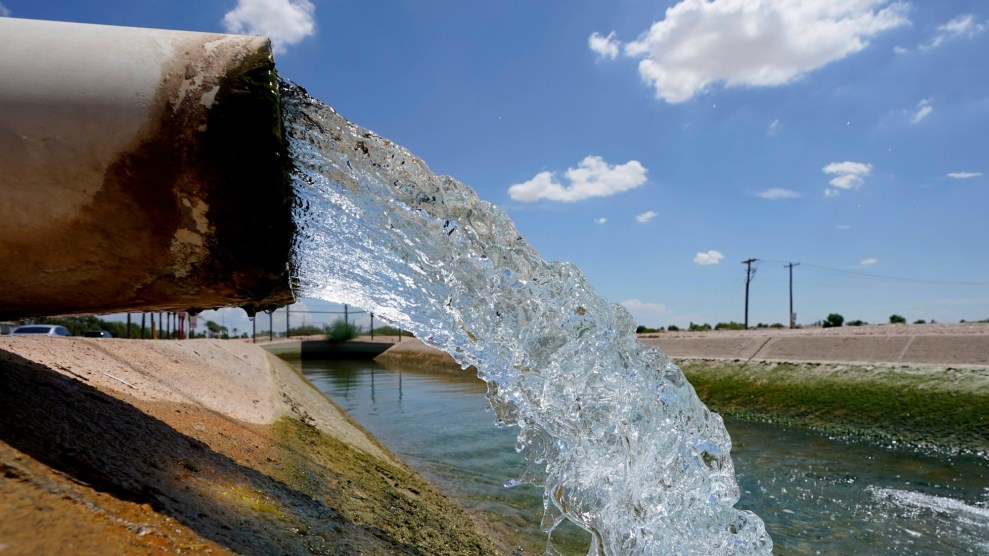
Yes, Holtzhausen acknowledges before I even ask, he's putting his plantation in the driest part of Mozambique—but he's investing a fortune in efficient drip irrigation. "You can't produce a green fuel and waste water," he says. Still, ProCana will use 108 billion gallons of water per year, supplied via canal from the nearby Massingir Dam. I've heard that this has downstream farmers worried, but Holtzhausen says those stories are pure fiction: "I'll give you a million bucks if you find me one of those farmers!" he brags, grinning broadly.
I've also heard that much of the area ProCana aims to plant had previously been slated to complete the development of the peace park, but that Holtzhausen levered it away, leaving the project in chaos. He laughs this off, too. I tell him of rumors that he got his land rights because powerful people had equity in the venture. (The story around Maputo is that Graça Machel, widow of Mozambique's first president and now wife of Nelson Mandela, is involved in ProCana—though verifying this is near impossible.) "No prominent people have invested in ProCana," he replies, after some thought. "But it will only be good for me if she did." Machel is a friend, he says. "I would be honored to have her as an investor." Another triumphant smile.
Despite Holtzhausen's disavowals, out in Massingir I discover that many of ProCana's 75,000 acres had indeed been slated rather precisely (and publicly) as part of planning for the Transfrontier Park. Some 29,000 people still live within Limpopo National Park's borders, and as many as 9,000 in the heart of the park are supposed to be relocated. After years of delicate negotiations, park authorities have arranged for the inner 9,000 to move to the valley of the Rio dos Elefantes, just downstream of Massingir Dam. They have—as Mozambican law requires—obtained permission from "receiving" communities to build houses for the newcomers and, very important, identified a sufficiently large grazing area for the new residents' livestock.
A ProCana map I've managed to obtain shows that the company's 75,000 acres cover this intended grazing zone. The same chunk of land has been promised to both the inner 9,000 and ProCana. How did this happen? I'll need a 4x4 and two interpreters (Shangaan to Portuguese, Portuguese to English) to find the answer.
a trip into the Rio dos Elefantes valley is a journey into a cliché of Africa: hardworking women in colorful cloth, relentlessly pecking chickens, and thin, lazy yellow-brown dogs scattered around circular grass-roofed huts. In most village centers a hand-carved flagpole carries a Mozambican flag (crossed hoe and Kalashnikov, nice bright colors). Take away the occasional T-shirt, radio, and cell phone, and the ever-present cheap plastic buckets and chairs, and you have something like the Mozambique of 500 years ago. Polygamy is common, many children and cattle are a sign of wealth, and the village leader and his elders are not to be crossed. Villagers build their homes near a river, plant crops in the fertile floodplain, and graze cattle in the nearby savanna; like about 70 percent of their compatriots, they rely on the land for their livelihood.
Mozambique was colonized by the Portuguese starting in the early 1500s; they set up vast plantations whose laborers were kept in line with brutal corporal punishment. In 1975, after Portugal's Carnation Revolution, Mozambique was chaotically catapulted into independence. The civil war that followed, one of the Cold War's many proxy conflicts, shattered the country's infrastructure and killed about a million people before petering out in 1992. To this day, bullet holes pockmark buildings, amputees beg along the roads, and crushing poverty saturates the country. During one of my trips to Mozambique early last year, riots broke out a day after a high-profile visit by the president of the World Bank, who had congratulated the country on its success in becoming "a major destination for foreign investment." Thousands took to the streets to protest skyrocketing prices; Mozambique's staple food, corn, had become vastly more expensive as the United States turned an increasing percentage of its crop into ethanol.
"It's important to remember that Mozambican independence was about liberating people and land," Diamantino Nhampossa, a land-rights activist, told me. Mozambique's constitution decrees that all land is owned by the state. Individuals and private companies can acquire rights to use parcels for 50-year periods, but the country's sweeping Land Law requires them to find out if any local people are already using the land and, if so, obtain their permission for any project. In theory, the law gives Mozambican peasants more power to determine their fate than their counterparts around the world. In practice, as I was to discover, the arm of the law has limited reach.
“The electricity supply
“The electricity supply here in rural Mozambique is erratic, clean water is hard to come by, and the hotels—well, calling them hotels is a little too polite. The town center is two ragged blocks of colorful bars, stores, and market stalls arranged along a reddish sandy furrow—the main street—with goods packaged in the smallest possible quantities to match the pinched cash flow of local buyers.”
Can it survive the ethanol industry? ‘Can it survive WITHOUT the ethanol industry?’ is the real question. The author acknowledges that the town’s most notable characteristics are the signs of abject poverty. And he uses that as the introduction for how bad it is that an industry is coming in with 2,000 jobs?
We get the previous land owners’ perspective here; how about hearing from the poor and unemployed? They’re exploited for dramatic effect in the introduction – babies sleeping outside a “shabby clinic,” – and then they’re never interviewed. My bet is they’d welcome some actual employment and an improved standard of living.
And what about the farmers? This article cites rumors that the farmers are disgruntled. The manager challenges the reporter to find just one, offers him a million bucks, in fact. If the reporter couldn’t find even one, that rumor should never have been printed. Irresponsible journalism.
Something tells me that if
Something tells me that if the evildoers in this story had been Bush and free market proponents, the author would have made that very explicit. So I wonder why, when the villains in this story are Barack Obama and anti-free market subsidies and mandates, Mother Jones lets it all go unsaid?
Wait - what?
Why are the evildoers Barack Obama here? This guy is a South African and this is African politics and corporate greed (which we have everywhere around the world). Can we hold the feet of REAL people at fault here to the fire? I propose we try to nip this issue in the bud... the company head himself comments that it is the consumer who will make a difference. We should petition / campaign to make companies like Pro-cana that get involved document online that they will follow certain principles and that they will provide public documentation about their land usage.
Additionally, to the first person who commented on the "poor and unemployed"... the author's point in the beginning was not to "exploit" the poor and unemployed for effect, but to show that in this part of Mozambique people are still farmers and live off the land. They are not unemployed... not everyone lives in the Western World's concept of you have a job where you get a salary and then you go home at night and farming is a past time (or industrial)... his point was that the people were basically subsistence farmers, they fed themselves and maybe made enough extra on the side to afford eke out a meagre existence... and he DID interview those people, they were the ones who were very confused about what was going to happen to their farming and grazing land. Thus, the author's point is that the people are making a living out here, even if it seems primitive to us, and that lifestyle and their self-sufficiency is threatened by the shady deals of this corporation.
Mozambique is for sale
the reported 2000 jobs are certainly outweighed by the loss of lands for the 9000 farmers and herders, and the loss of income and tourist jobs that the national park might have brought, and the biodiversity losses which affect us all, and the "copycat" development that is sure to follow (and bring similar problems). They aren't building more land, and since most Africans support themselves from the land, the best bet would be to help them improve their lot but remain on their land.
This project is not the only example of the Moz gov't putting every natural resource under its jurisdiction up for sale; the coal development, Chinese logging concessions, illegal fisheries (to which the gov't turns a blind eye) and large dams are just a few examples that are sure to come back and bite Mozambique's citizenry after the payoffs for these unsustainable developments have all been spent.
http://www.internationalrivers.org/node/3807
The 9,000 are doing what
The 9,000 are doing what with the land in a national park?
"The manager challenges the
"The manager challenges the reporter to find just one, offers him a million bucks, in fact. If the reporter couldn’t find even one, that rumor should never have been printed. Irresponsible journalism."
Riiiight …like the manager was actually going to pay a million dollars if the reporter found a villager foolish enough to confront him.
Any student of history can recite hundreds of examples of power brokers stealing the land from native people all across the planet. This is no different. History is about to repeat itself. You want an account of what it is like to be a cane worker? Read this. And keep in mind that eventually the cane farms will be mechanized and there will be no jobs, and no land for the poor to farm:
The Brazilian Sugar Cane Industry Association predicts that 80 percent of the sector's 500,000 jobs will be gone in the next three years because of mechanization.
Source: http://americas.irc-online.org/am/5851
Consumers are responsible for this?
Wanted: Young cane cutters for part time seasonal work. Must be willing to work ten hours a day swinging a machete in tropical sun while wearing gloves, long sleeved shirt, and hat--no retirement benefits (because you won't live that long). Apply within.
"....The sugarcane plantation will employ 2,000 people....."
Mozambique's population (where the total fertility rate is five children per woman) grows by that much every two days. With eventual mechanization the number of employed will drop to 400. As a means of reducing poverty, cane ethanol is a drop in a very large bucket. Industrial agriculture provides very few jobs per square mile. The fix for African poverty remains elusive, but industrial agriculture is unlikely to be the answer.
"...The consumer. That's who determines what happens...."
I did not ask to have ethanol blended into my gas. How long are we going to let our governments get away with this?
A means of reducing poverty
"As a means of reducing poverty, cane ethanol is a drop in a very large bucket."
Via direct employment, yes of course it is minor. But development of agriculture in the hinterland helps bring improved transportation and agricultural input supplies to other farmers.
Moreover, Mozambique and comparable countries spend more on importing refined petroleum products than they do on their health or education budgets. Even some countries that export crude oil don't have domestic refineries.
As an import substitution, with locals reaping a substantial fraction of those revenues throughout the fuel supply chain, large-scale ethanol production could make a huge difference. It has worked wonders for Brazil, why shouldn't it be similarly effective in Africa?
Jonathan Maddox (xoddam)
working wonders?
One thing that cane ethanol did not work wonders for is the Atlantic coastal forests of Brazil. While the focus is on the Amazon it's easy to forget that probably less than 5% of these extraordinarily biodiverse forests remain. They have a different species complement to the Amazon forests and supply most of the water for Brazil's giant coastal cities. Sugarcane for ethanol and Eucalyptus for paper pulp have destroyed large tracts of this habitat since the early 1970s, and there is now serious talk of getting rid of areas of sugarcane and Eucalyptus to restore forest so as to increase water security and bring hundreds of wildlife species back from the brink of extinction.
It's easy to hold Brazil's cane-ethanol programme up as a success if you have not been to the affected areas. I went birding on Brazil's Atlantic coast in 2005 and was quite shocked to see a) how diverse the forest was and b) how little there was left of it.
Crops require land. Not Cartesian land, real land, even if you want to call it 'marginal land' or 'underutilised land'. A lot of it. Let's not forget that when touting 'solutions' to the rather difficult problems of energy.
parrots??
Mr Welz's credibility at being a purveyor of "smart, fearless journalism" (Mother Jones header) is dented somewhat by his florid description of a baobab (giant, centuries old ... you know the cliches) providing a backdrop for "a screaming flock of parrots" ... parrots? in Mozambique? Sure you aren't confusing what you saw on a visit to a sugar cane ethanol project in northern Western Australia or Queensland?!
Likewise, his potted bio of Holzhausen reveals a lack of the objectivity expected of a "smart" journalist - the "revelation" that Holzhausen "served in the apartheid-era army" is a real cheap shot. So did more than 95% of Holzhausen's white contemporaries - white males were conscripted to do national military service in that era. Why would the fact that Holzhausen "often uses Afrikaans in conversation" be worth a mention? In my experience this is rather common amongst Afrikaners (Mr Welz may be surprised to learn that Greeks, French and Germans are commonly known to lapse into Greek, French and German respectively)!
Come on Mr Welz, at least a passing attempt at objectivity might give your arguments greater credibility.
"providing a backdrop for "a
"providing a backdrop for "a screaming flock of parrots" ... parrots? in Mozambique? Sure you aren't confusing what you saw on a visit to a sugar cane ethanol project in northern Western Australia or Queensland?!"
perhaps the parrots he was describing were one of the other 371 species, in 85 other genera, than the ones you're thinking of from Australia.
Let's call a spade a spade
It's pretty bizarre that this article tries to blame the destruction of the ethanol industry on consumerism and, implicitly, free markets. In reality, ethanol is NOT the consumer's choice, as evidenced by the fact that the government had to intervene and give subsidies to ethanol producers and mandate that consumers use their products (raising the price of corn all over the world above what natural supply and demand would stipulate). It would be nice if the author had given a hint that rather than the inherent result of unfettered neoliberalism, the ethanol price supports that created this industry are decidedly illiberal.
Something tells me that if the evildoers in this story had been Bush and free market proponents, the author would have made that very explicit. So I wonder why, when the villains in this story are Barack Obama and anti-free market subsidies and mandates, Mother Jones lets it all go unsaid?
Rum vs whiskey
Governments habitually provide subsidies to new industries.
I think you'll find that ethanol subsidies in Brazil finished long ago and consumers are still buying the stuff in enormous quantities.
Rum is much cheaper to make than whiskey, and the market seems to prefer it anyway. Corn ethanol is a loser. Ethanol is not.
Jonathan Maddox (xoddam)
Hemp is an alternative
-
tagged as:
- solution
It is sad that the government is so greedy that it is willing to deceive the local people into accepting this as a done deal. There probably isn't any way to stop this land grab, but the negative impact could be lessened if hemp was grown instead of sugar cane. Hemp doen't require as much water as sugar cane, nor the pesticides. The seeds can be pressed for biofuels and/or cooking oil, the fiber can be used for animal fodder, cloth, paper, and building supplies, eliminating the burning necessary for the processing of sugar cane. A diverse economy would be created that would probably employ more than the estimated 2000 noted by the corporation while lessening the environmental impact of the project.
A sad waste of Venture Capital.
I have to wonder how much wind, tidal, or solar generating capacity these ProCana people could be buying - creating - in Mozambique (or anywhere) for the same price they're paying to make this project happen. Ant of these Technologies couls make Mozambique lots of money; just as South Africa does, by exporting excess genrating capacity (to Zimbabwe {Boo! Hiss! Maputo!}, Botswana, etc.).
As far as Automotive Fuels are concerned; where are the prophicized Hydrogen Fuel Cell Vehicles? These green energy techs could produce lots of Hydrogen; and they would slide in nicely between the towering Baobabs of Paradise - or under the waters just outside of the harbors or off the shores of the Indian Ocean!
And what about OTEC? They are semi-tropical - with lots of warn surface water; which makes Mozambique a Great Place to set up and OTEC Plant!
This is Unconscienable!
JimRinX
What about all the other wastes of land and water?
All over this beautiful planet good land and water is being wasted on "growing" livestock for slaughter and consumption. Let's hear about this and the number one cause of Climate Change and pollution and depletion of resources and habitat - overpopulation! There are too many people on this little planet for the resources we have and the ability to process all our waste (rivers, lakes and seas all over the world are choked with human excrement, chemicals and plastic bags). The article mentions the average of 5 children per woman (Five!!) in a country where people can't feed themselves. That is the problem! They use up land for the parks to raise their cattle that use up more of the environment than they are worth.
One single pound of meat requires 10 pounds of grain and 2,500 gallons of water to produce. (2,500 gallons of water is more than one person uses in a year for showers). Fifty five square feet of rain forest is destroyed to produce this one pound of slithering meat too. Seventy percent of the grain and 1/2 of the water used in the US are used to raise livestock.
So if you really want to save the environment and make the world a better place; to reduce the use of fossil fuels and slow climate change, STOP BREEDING AND BECOME VEGETARIANS!! This will have more effect than any other in saving this planet, reducing pollution and saving habitat for other species that have as much right to live here as we do. Yet Overpopulation is the one subject that is taboo to talk about. Why? No one has the right to breed and produce even more mouths to feed and more people to destroy habitat and pollute. At least is we are to survive.
At least using land for Ethanol produces non-polluting fuel, reduces the amount of dirty petroleum burned and our subservience to backward corrupt oil producers. Raising livestock produces nothing but more heart disease and cancer, more suffering for other animals, more methane to destroy the ozone layer, destroys habitation for other flora and fauna, and uses grain and water that could/should be used for feeding people a lot more efficiently.
comments on comments from the writer
a few quick comments on the comments on my story:
1) Holtzhausen and Afrikaans: I also speak good Afrikaans and received draft papers from the apartheid-era army -- although I never served in it for various reasons. The fact that Holtzhausen chooses to use Afrikaans in conversation despite claiming to have departed quite markedly from his original milieu of 'typical Afrikanerdom' is interesting: How far has he really travelled? Has he disowned his original identity or not? These observations are not intended as cheap shots but are intended to show elements of the background and character of Holtzhausen for American readers.
2) State support for ethanol industry/'free markets': Stephen's comment is in general terms appropriate -- a lot of the support for bio-ethanol in most parts of the world has come from governments. The Bush government drove the US corn-ethanol industry with some support from the Democrats, an environmental disaster if there ever was one and considered by most serious economists to have driven food-price rises around the world. However, this story had limited space and could not address this issue in the depth that it perhaps could have. A closer reading will reveal that I do not 'blame' the ethanol industry solely on consumers (do not confuse Holtzhausen's statements with my views).
Also, if the oil price rises again (as it surely must) the so-called 'free market' is likely to drive a lot more land-grabbing without any help from public funds. When agricultural commodity prices are right, millions of hectares of land can be bounded and cleared in very, very little time. Remember that in places like Mozambique, where land cannot be privately owned but is worked and occupied under lease from the state, it is effectively extremely cheap because investors don't have to buy it at market rates -- they merely have to persuade locals and the government to grant it to them.
3) Poverty in Massingir: I did interview (many) locals, mostly off-the-record as many were fearful of being quoted. There was no space to reflect all their views, although I feel the descriptions of the area leave little doubt that economic and social progress is needed. The question is how this should happen: Is a giant biofuel farm that effectively takes land from people the solution? If not, what else could be done? I don't claim to know all the answers. The stakes are certainly very high for these people and the environment.
4) Jobs: In the early stages of securing land and support for their project ProCana's managers said that it could create up to 7000 jobs. Now the company speaks of 2000. According to Holtzhausen 7000 seasonal jobs could theoretically be created if the cane was cut by hand, but this is expensive and involves burning the cane prior to harvest, creating vast amounts of air pollution. 'Green-harvesting' of the cane by machine (without prior burning) improves the eco-credentials of the farm and can be cheaper. It remains to be seen how many jobs the project does in fact create and how well-paid and secure they are.
5) Parrots: I have tertiary education in ornithology and have worked as a field ornithologist. Two species of parrot are possible in the Massingir district: Poicephalus sahelicus (Grey-headed Parrot) and Poicephalus cryptoxanthus (Brown-headed Parrot). Brown-headed is more common.
I hope this adds some useful background to the article.
Poor MR Welz who dont realy know !!!
Im very much involved with ProCana and Corne as well as farm managers and personell. In the past 2 years I did some soil analysing and walked the area, I see high potensial farming land for growing various crops. The whole of the area were I have being is bush area, totaly unproductive with a few underfed cattles grazing around. Here and there you can see traces of locals who tried to plant 1 or 2 hectars of maize,unsuccesfully. ProCana planted about 25 hectars of maize for the locals which I see a avarage yield of 8 tons/ha just because its done right. Training is provided by ProCana at their cost to try and make these farmers self sustainable. About 250 family drip systems is erected with a fertilizer program and training to the locals just to try and get them self sustainable as vegetable producers. All these and lots more has, and is currently being done by Corne and farm managers just to uplift the local initiative and self maintained skills. Just to put things in prospective, most of the above was done even before the first cane was planted for the sugar project.NS: Just to put things in prospective about the reality of the project.
It's great if Pro-Cana helps the community...
I think it's great if Pro-Cana helps the community, but I still think (as I do with my own government) that all of the information on a corporation's impact on the community where it produces, it's environmental impact, it's economic impact, and what it is doing to combat any negatives should all be public and easy to find information that's verified by an unbiased source (maybe there needs to be a UN agency that does this - an International Better Business Bureau type of thing, but better). This way, the power really does remain in the hands of the consumer, where it belongs, to understand the full impact of what they're consuming... and if they don't like it to petition their governments to stop subsidizing ethanol (or at least only subsidize those companies who do business ethically).
great
this is a great article Adam. I really liked it.
well researched
Well researched story brother.
a little confirmatory update
the last paragraph is the interesting one
http://www.engineeringnews.co.za/article/investment-worth-710m-flows-into-mozambique-ethanol-projects-2009-04-14
Brazilian Model?
-
tagged as:
- result
Ironic that the model for development is Brazilian ... very telling, and not really a compelling reason to support the industry's expanison at the expense of "native" industry or farming.
A Quick How-To Guide for Exploitation:
1. Use the promise of a better tomorrow to secure capital and political cover.
2. Create some jobs. Menial? Dangerous? The important this is the numbers. Don't sweat the details here.
3. Once popular support is no longer relevent, we ditch that promise and focus on our "responsibilities to shareholders."
4. Now, you can sit back and rest of that grandest of capitalist mantra - the "mysterious invisible hand" that converts your greed and avarice into a benefit for the society you're clearly f***ing.
4(a). Hopefully, 5-10 years later, nobody remembers the promises!
US need ethanol from
US need ethanol from geopolitical and ethical considerations. However we should not lose sight of the population of the countries, which are planned to produce biofuels in. I believe that the production of biofuel would damage especially the poorest segments of the population and will take giant spaces of land.
دردشة منتدى منت
The electricity supply here
The electricity supply here in rural Mozambique is erratic, clean water is hard to come by, and the hotels—well, calling them hotels is a little too polite.
Regards
Mo Raja
Compare SIM Only Deals | Best SIM Only Contracts | Students Services
I take issue with this
Ok, one of the things we know about the world is that good old Russia used to be pretty famous for making something called...VODKA! What IS this 'vodka'? Well, there's different kinds and brands, some are pretty hard to stomach, while others make what is known as...The Magic Screwdriver. Citrusy...in a leaded velvet glove kind of way.
Soooo...why isn't Russia maybe more prominent in this ethanol industry business, given that they have a fairly robust history in the vodka dept? Grain, corn, potatoes, whatever, if it's not fit for the dinnertable, it can be turned into mash which serves as fermentation stock for later distillation. We aren't splitting the atom, here. Matter of fact, I don't think we're even splitting any water molecules.
I think it's great that countries like Mozambique are getting into ethanol, but my money's on Russia to finally be the power hitter in that industry. They know some agriculture, and the same general technology used to make table spirits can be used to really refine your alcohol, so....?
Klaatu marachas necktie
Adam It is excellent
Adam It is excellent article.I like it alot.All the queries are solved very nicely.Thanks for sharing such a great post here...
Adam - wonderful piece.
Adam - wonderful piece. Although, I am now depressed at the thought that some African countries may never be able to resist global demand for their vast land, cheap labor, minerals, and complicit governments.
As an African American who loves Africa, I am saddened by this thought. I read, I study and there seems to be no way out of the mess that is Africa. Then I think of all the beautiful people, animals, and cultures and want to believe that that just can't be. The problems of the continent are overwhelming and I think the reason why so many Americans (of all backgrounds) find it easier to disengage.
I support our Secretary of State and hope that we can craft a new relationship to these governments as she intimated on her trip there (patronizing admonishments aside). At any rate, with the growing influence of China on the continent, we have no other choice.
d
These sneakers will be
These sneakers will be hitting stores in June and today louis vuitton we can get a good overview of the line-up and especially get a closer look at the numerous luis vuitton high top sneakers that are part of louis vuitton handbags the collaboration. lvToday's topic has nothing to do Louis Vuitton Sale Of course, they really never let us down.
replica handbags
Links: replica handbags fake