In The Blogs

Miscellany

Here are two miscellaneous factlets that have caught my eye recently.  First up is On The Public Record, who is reading The Resilient City: How Modern Cities Recover From Disaster:

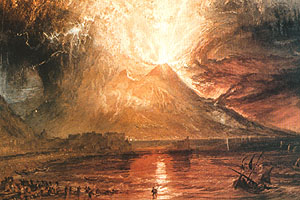
DAMN!  Cities NEVER give up.  Like, ever.  You cannot raze a city so bad that it goes away.  Like, some study showed that between 1100 and 1800, only forty cities stopped existing.   I suppose that makes sense.  I mean, the fact of a city not existing is so powerful that we remember it forever: Atlantis, Babylon, whatever that one was that got volcanoed.  I’ve been wondering if New Orleans and Galveston will be the leading edge of a new era of cities vanishing.  We’ll know in a generation, I guess.

Well, there's always Carthage.  It can be done as long as you're single-minded enough about the project.  Next up is Mark Kleiman, exploding an urban myth about marijuana cultivation:

Cannabis is not "the largest cash crop in California." That zombie statistic has a history: during the collapse of the lumbering industry in the early 1980s, the Ag Department county extension agent in Humboldt County, which grows timber and pot, was so angry about the suffering he saw around him due to unemployment among loggers that when he filled out his annual estimates of crop-by-crop revenues for his county he listed pot as #1, using a completely made-up number. Dale Gieringer of California NORML then projected that out nationally to show that cannabis was the nation's #2 cash crop, ahead of soybeans but behind corn (or maybe it was the other way around.) Since then, another NORMALista named Michael Gettman has produced even more fantastic numbers. In fact, the Abt Associates estimate put the total retail value of the cannabis trade at about $10b, about 15% of the total illicit-drug trade. That's retail price, not farmgate price. And not all of that is grown domestically; some of it comes from Mexico, from Canada, and from Jamaica.

No special axe to grind on either one of these things.  Just thought I'd share.

UPDATE: Jeez, bust one urban legend and propagate another.  Bad blogger.  In comments, coyote says:

The myth about salting the earth, etc, for Carthage is just that — a myth. Yes, the Romans trashed it, but it was such a logical trading spot that it was rebuilt, and by 400 or 500 AD it was a wealthy city again.

OK, so Carthage doesn't count.  Or does it?  If you destroy a city, drive out all the people, reduce everything to rubble, and then repopulate it a few decades later with your own people, is it really the same city?  Or is it a different city of the same name in the same place?  Hmmm.  Is there a philosopher in the house?  Did Shakespeare really write all those plays?  Or some other guy named Shakespeare?

image
image

Get Mother Jones by Email - Free. Like what you're reading? Get the best of MoJo three times a week.
Comments
anandine

Why cities seldom die

One reason is that cities form in certain places for reasons: maybe where two rivers join, or near a good harbor, or on a trade route between two valuable products. The reason doesn't go away after a town is destroyed.

New Orleans will survive because there is a need for a city at the mouth of the Mississippi River, but it may not need nearly as many people.

no profile pic for comment author

The myth about salting the

The myth about salting the earth, etc, for Carthage is just that - a myth. Yes, the Romans trashed it, but it was such a logical trading spot that it was rebuilt, and by 400 or 500 AD it was a wealthy city again.

no profile pic for comment author

Short memory?

>>we remember it forever: ... whatever that one was that got volcanoed

I guess forever just isn't as long as it used to be.

--Larry

no profile pic for comment author

two cities attacked with early atomic bombs have also survived

The two cities attacked with early atomic bombs have also survived, but they were not attacked with hydrogen bombs.

Is someone sharing their Humboldt stash?

anandine

And as for cannabis

From other things I've read $10 billion might be a little low, but it's the right order of magnitude.

It's interesting to look at other cash crop values in California. Corn = $1 billion. Rice = 0.6 billion. Corn, grain, barley, winter wheat, durum wheat, all rice, all types of hay, and dry edible beans combined $4.7 billion.

We don't know how much of the $10 Billion for marijuana is cash crop value and how much is payment for imported stuff, but there is no reason to toss out the claim that it is a substantial cash crop in California.

no profile pic for comment author

new orleans

I was just in NOLA this past weekend, and it appears to be largely recovering. I can't speak for the low-income neighborhoods as I didn't visit there and do not follow the issue closely, but the city in general did not appear to be on the verge of vanishing.

Galveston, on the other hand...

no profile pic for comment author

There are some cities that

There are some cities that probably shouldn't have been built in the first place, like New Orleans or most of the huge desert cities in the South West.

thersites

Beavis's Blog

Damn! That Public Record guy is, like, writing like he's stupid or something. It's like Beavis has grown up and totally gotten a job.

What does the drought actually DO?
Now I’m thinking that I maybe need to understand...

Kevin, are you quoting this guy just to remind us of what a good writer you are? We already know.

no profile pic for comment author

There was a little while in

There was a little while in CA that in some counties - especially the scrub and lumber ones - that it was their #1 cash crop. But mostly that was because demand on whatever scant crops they did grow there was so weak.

Still, the whole war-on-some-people-who-use-drugs against various weeds and plants and pills gives me a bad taste in my mouth. It's legal to sell really bad tasting alcohol for people to get drunk, do millions of dollars in damages, lead to countless illnesses... Or smoking tobacco, same, less damages, more illnesses. But these other substances which injure a few smaller proportion of their users lead to incarceration?

I just don't get it. It just doesn't even make logical sense. Are you against drugs because of the temple of purity? Then why are candybars legal? Are you against drugs because they're intoxicants? Why is catnip, alcohol, nicotine, and caffeine legal? Are you against death and damages caused while intoxicated? Once again, caffeine and alcohol are legal, thousands of fires are started by smokers addicted to nicotine. Are you against death and illness? Again, alcohol and nicotine kill many more of their users than many of these hugely illicit drugs. Are you against the tradition? Meth simulacrums are common in many middle east (Yemen, Africa) cultures - but not meth as we know it, but they're still illegal. Various harmless psychedelics to dangerous hallucinogens are all illegal in the US, even though they've been used continuously in cultures and art we display publicly and proudly across the nation.

It just doesn't make sense. There's no why or reason or logic to it all.

no profile pic for comment author

OK, so Carthage doesn't

OK, so Carthage doesn't count.

Troy?

Eden? (never been found)

no profile pic for comment author

Some have really vanished.

I can think of a few. Usually it is because of conquest. Troy, Persepolis, Chaco canyon, come to mind. Sometimes there is no going back.

no profile pic for comment author

Carthage

You know, rebuilding Carthage by 400AD isnt so impressive. That would be 500 years after the Punic Wars. A long time for a city to disappear. Would you count the grand city of the Hohokam civilization, which was abandoned due to ecological disaster in the 15th century AD, a persistent city just because Phoenix AZ was built on top of it?

g. powell

SSJPabs -- Give me a break,

SSJPabs -- Give me a break, point taken about the Southwestern cities, but as others have noted, New Orleans is built on the most logical geographic site for a city.

I also can't imagine how horrible American music would be without New Orleans.

By the way, it's worth checking out the work of David Hummels at Purdue about the relationship between economics and geography. Very interesting.

no profile pic for comment author

"The City that Sank"

Port Royal was the major city of Jamaica for much of its early colonial history. Then it sank. Yeah, you read that right - then the city sank. Into the ocean. Earthquake. Now it's gone.

no profile pic for comment author

lost cities

You can have Troy, if you want, which faded away in Byzantine times when people apparently decided they just didn't care to live there anymore.

Or Ur, which was no longer inhabited by 500 BC due to climate change.

A city these days in an expensive investment to walk away from.

RobertWaldmann

Carhage is still there

Not so fast. Carthage still exists. It is a suburb of Tunis. In fact, Tunis is really Carthage and it had a population of 1,200,000 in 2008.

See it's still there, just about where it always was.
http://maps.google.it/maps?near=carthage&q=carthage&f=p&btnG=Cerca+sulle+mappe&rl=1

no profile pic for comment author

This may be of use to you

http://en.wikipedia.org/wiki/Abandoned_city

no profile pic for comment author

A couple of vanished cities

The ancient Armenian capital of Ani is pretty well gone: just a few shells of buildings standing around. Still, it has been 1000 years and earthquakes. There's a few others that time just moved on around, especially in the Americas where the Indians died out: Macchu Picchu, for example.

I understand there is a deserted modern city in Nagorno-Karabakh: Agdam, once home to 100,000 people.

no profile pic for comment author

Yeah, cities do die

Google "Indianola, Texas" or check out this rather good Wikipedia article: http://en.wikipedia.org/wiki/Indianola,_Texas

no profile pic for comment author

I'm guessing the author of

I'm guessing the author of "Resilient City" didn't spend much time looking at cities in North and South American during his case study.

no profile pic for comment author

There were plenty of major

There were plenty of major trade cities that vanished during the Bronze Age Collapse (ca. 1200 BCE), a period marked by destruction on a vast scale. (One of the most famous, and haunting, is the city-state of Ugarit, in modern Syria -- only rediscovered in the 1920s.) Virtually every major city linked to a coastline has one or more destruction layers from that time period, and many of those cities simply vanished, with the inhabitants presumably murdered or dragged away to slavery. The collapse of systemic international trading links and hypothesized continued threats from sea-borne raiders probably contributed to the lack of rebuilding.

Of course, given the sheer scale of devastation during this period, it's probably more remarkable that so many cities recovered, not that so many vanished without further trace.

no profile pic for comment author

Dead Cities

I'm writing this from Flint, Michigan...

'nuff said?

no profile pic for comment author

I will never buy a device

I will never buy a device that allows a company to push deletes to stuff I have. If I pay for something, I want to be in control. Nagware on our PC's, popup ads in the browsers, locked cellphones. Enough of all this crap.

Post a comment
Alternately, you may login to or register an account
The content of this field is kept private and will not be shown publicly.
  • Web page addresses and e-mail addresses turn into links automatically.
  • Allowed HTML tags: <a> <ul> <ol> <li> <blockquote> <img>
  • Lines and paragraphs break automatically.

More information about formatting options


Jail.org - Inmate Search
Criminal records, instant public records & people search & current court records. www.jail.org

U.S. Public Records Search
Search County & State Court Records, Criminal records, Vital and Adoption Records www.PublicRecordsInfo.com

Records.com - People Search
Public Records and Background Checks. Instantly Search Criminal Records, Addresses and Court Records www.Records.com

Court Records & County Records
Find Instant Public Records, Criminal Records as Well as County Property Records Search. www.PublicRecordsIndex.com

Mother Jones Podcast
Get in on the conversation! We talk about culture, politics, the environment, the economy and more. Listen now!

TalkBackTees.com
A treasure trove of liberal wit, wisdom and quotations, from ancient to modern, on colorful, cotton tees.

Support Independent Artists
Amazing art, crafts, apparel, paper-goods and more. A carefully curated selection of sundries since 1999.

FREE CONNECTIONS FOR GREEN SINGLES
Meet progressive singles in the environmental, vegetarian & animal rights community who share your values