
- ‹ previous
- 709 of 2715
- next ›
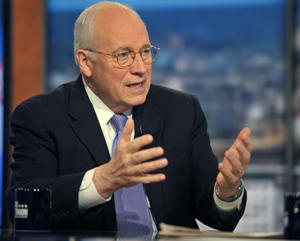
Cheney's Interview with the Feds
I've been unhappy about the Obama administration's embrace of several Bush-era secrecy rules, but I'm on the fence about the latest one. David Corn reports that they're continuing to fight the release of Dick Cheney's interview with the FBI in the Valerie Plame case:
On Wednesday night, in another move that puts the administration on the side of secrecy over openness, Obama's Justice Department filed a memo supporting its ongoing opposition to a lawsuit requesting the release of the Cheney interview. This memo included a declaration from Assistant Attorney General Lanny Breuer, who said that if the Cheney interview is made public it could cause public officials in the future to not cooperate with criminal investigations.
I guess what I'm unclear about here is the distinction, if there is one, between an ordinary FBI interview and one with a high-ranking politico. Just speaking generally, it strikes me that it's genuinely in the public interest for interviews like these to be kept private unless they lead to criminal prosecutions. Lots of people really would would be less forthcoming during FBI investigations if they knew their interviews might become public, so it's reasonable that the default position should be that they stay confidential. That's certainly how I'd want things to stand if I were dishing dirt to the FBI.
Now, perhaps things should be different for non-ordinary people like vice presidents. But I don't know if that's part of the legal argument here or not. Are there any law bloggers out there who can step in and explain what's going on here?
UPDATE : Jeralyn Merritt points out that FBI interviews are also kept private in order to protect the names and reputations of the innocent, those who don't get indicted:
Even though this isn't a grand jury secrecy case, I think in order to protect the privacy and reputation of those who are mentioned or discussed by the subject of a law enforcement interview, the reports of these interviews, untested by cross-examination, should remain in government hands and not subject to release via a FOIA request.
....The same rule should apply to Cheney as to everyone else. In my view, the Congressional Committee had a right to the documents since they are federal officials investigating a matter related to the subject matter of the grand jury's Valerie Plame leak investigation. But CREW and the public don't. It's too bad that Dick Cheney is the one who wins if the material is not released to CREW and the public, but I'd rather have that than a precedent that allows reports of law enforcement interviews of the average citizen who ultimately is not indicted, and who may have slandered Tom, Dick and Mary during their interview, subject to public disclosure.






Cheney Must Be Impeached For Treason
Obama is headed toward becoming an incredibly disappointing President.
Cheney and Bush committed treason against the U.S. Constitution, against the U.S. Military, against Humanity and the Rule of Law, and now Obama is allowing Cheney to get away with it.
While it is impossible for Obama and the congressional democrats to be a greater threat to American Democracy than the Cheney-Bush administration, the congressional republicans and SCOTUS have been, Obama and the congressional democrats are now alienating those of us who are still dedicated to the concept that American Democracy is the greatest political system in history.
God Help America, and save us from Washington politicians.
Don't blame me!
I saw through Obama well over a year ago, and although it's not the perfect choice, voted Green.
The prime take
See Jon Stewart on this.
The difference is that
The difference is that government officials acting in their official capacities are subject to various sunshine laws. It's one thing to keep interviews with private citizens confidential, but entirely another thing for government officials who are working on the clock to be shielded from normal scrutiny just because a criminal investigation is involved.
I'm not saying that the interview shouldn't be confidential, I'm just saying that the interests upheld by confidentiality are competing against the interests upheld by openness. After all, the argument that we want government officials to be more forthcoming is the basis for the sweeping executive privilege arguments and other attempts to escape the requirements of FOIA.
Fine Opinion, But ...
Anon92107, at the top of the thread, says something that I'll bet the vast majority of us more-or-less agree with. Yeah, Cheney is a bad guy. Or course, it's a little stupid to say he should be "impeached," since he's no longer in office. Do you mean "prosecuted"? And "treason" is a big stretch since while there's lot of evidence of sleazy (and likely illegal) behavior, there's precious little that he ever did anything which would meet the fairly restricted definition of "treason" as spelled out in the U.S. constitution.
But, you know, a troll is a troll, even if the troll droppings tend to be on our own side of the ideological line. Kevin Drum was writing about a specific thing, not about Dick Cheney's general horribleness. Anon92107's comment is non-responsive to Kevin's posting; the posting could just be a pre-canned rant, written years ago and cut-and-pasted today without the slightest evidence of respect for the forum or its readers.
I tend to agree with Kevin's concern. FBI interviews ARE normally considered the sort of thing that don't get released publicly. They can come out in trial, but not normally in other ways ... leastways, not until years have passed and they've moved from active investigation to historical records. Mind you, this isn't to suggest that Cheney deserves any kind of free pass on anything: the sleazeball surely ought to be held to account for all he did while in power.
Hopefully some other commenter can address Kevin's core question: is there a precedent or provision for treating FBI interviews with top political leaders differently than the norm for their interviews in routine cases?
under oath
It probably doesn't make sense legally, but I'd like to see this tied to speaking under oath. If the official answering official questions refuses to take a legally binding oath to tell the truth, then they don't get to enjoy protection from publication. Basically it gives people the option--if you lie, you get to choose to be punished for it either now (legally) or later (public opinion).
One good response ...
When I started writing my note (up above at 12:35), there was just one other comment posted (Anon92107's at 11:50 a.m.) After I started writing, and before I posted, Anonymous at 12:26 made a very good point that I wish I'd made myself. Maybe one of the Sunshine laws applies to this, maybe not, but in any case it can be argued that the proper functioning of our democracy perhaps compels us to regard Cheney's FBI interview as appropriate for general publication.
Releasing the Cheney's
Releasing the Cheney's interview to the public only serves curiosity. I would hope that if there is anything in the interview that would genuinely interest us, that Obama already has the Justice Department following up on it!
What about the trial?
The way I see it is there was a trial--a public one having to do with this case, and no matter how the trial came out, the interview was part of the public investigation into a public crime against the people. As such, it should be public information because Cheney, Libby, et al. screwed up on our dime and we need to know how much they screwed up.
Oh yeah--they suck, too.
It's Time To Fight Like Hell For We The People
Re Roger Keeling on July 2, 2009 - 12:42pm: For someone who chooses to be knitpicky, you should have looked up the definitions of impeach, including “To make an accusation against.”
But I thank you for your feedback anyway, you provided another example of why democrats never accomplish anything, instead spending too much time watching, arguing and doing nothing, especially about Cheney’s acts of treason, such as sending the U.S. Military Heroes and Patriots to Iraq to lose their lives due to Cheney and the GOP’s lies of mass destruction, especially for the Cheney-Halliburton military-industrial complex that Eisenhower gravely warned us about.
The fact is that the FBI and CIA screwed up and looked the other way until 9/11 happened, when Cheney and the Neocons got their most demonic wish to make money off of another war, for oil and power. And for all we know, the FBI and CIA are still screwing up after the way Cheney emasculated them during his tyranny.
Whether you wish to recognize it or not Keeling, Cheney-Bush-GOP-SCOTUS have threatened American Democracy for the last eight years, and their kind are not done yet.
At least SDJim on July 2, 2009 - 1:01pm got the point with his question “What about the trial?” so there is some hope for some of We The People waking up at last instead of watching and doing nothing, arguing and wasting time.
It's time to fight like hell to protect and preserve American Democracy that is under constant attack by corrupt republican and incompetent democratic politicians we keep sending to Washington.
If making the interview
If making the interview public causes public officials or anyone else in the future not to do what Cheney did, I would say that is good. But there is no reason to characterize Cheney's actions as "cooperation". Keeping such interviews private encourages people to lie and suffer no consequences.
Cheney is not liable to retribution from superiors, which is the case for whistleblowers. Whistleblowers' allegations are never taken at face value and they are never assumed to be truthful without investigation.
Forged Niger Documents
This is probably outside the domain of this particular FBI investigation regarding only, I suppose, the outing of Valerie Plame, but I'd like to know if there's an active investigation into who forged those Niger documents. It's a question that is central to the outing of Plame and I'd be willing to bet has Cheney's fingerprints all over it. I do believe that forging documents (or ordering or okaying the act) as evidence to promote an unnecessary war would be cause for a charge of treason. The Niger docs and who forged them has been ignored by the government since day one and there is a reasonable amount of evidence for investigation at hand.
If the FBI promised that the
If the FBI promised that the interview was confidential, it should stay confidential. This principle was abused over and over in the witch hunts of the Clintons. We're trying to restore the rule of law here, not follow the Republicans into the swamp. Of course, none of this prevents us from subpoenaing Cheney to testify under oath, with TV cameras running and the whole world watching. And the prosecution is free to ask Cheney questions based on their knowledge of the FBI interview. (Not a lawyer, just my $.02)
all government information should be available to citizens
Governments by, for and of the people should not keep secrets from its citizens, even national security information. Criminal or civil investigations, on the other hand, can reasonably keep those investigations secret until after the investigation is completed or after trial, but eventually the information gathered by the government should become available to its citizens. A government with as many state secrets as the US should not be considered much of a democracy.
We should see it in the name
We should see it in the name of transparency and truth; let's start right now. Let's not worry about the future possibilities.
Law bloggers
You asked. Jeralyn Merritt answered.
Clinton testimony
I seem to remember a video of Clinton answering a lot of questions from a grand jury led by Kenneth Starr. I know it was grand jury and this is fbi, but I am not sure the principle Kevin is asking about is much different. You must answer questions from either one, whether you want to or not, or you are obstructing justice or lying during a criminal investigation or under oath. Potential witnesses are often reluctant to give testimony for a variety of reasons. Witness testimony is protected at the discretion of the investigating entity and it is certainly not an iron rule, especially if needed for a conviction.
For public officials committing potentially illegal acts regarding their responsibilities as a government official, it would take a very important reason for default procedure not to be release of the interview -- such as national security or being made fun of by Jon Stewart.