- ‹ previous
- 46 of 2794
- next ›
The Debit Card Hustle
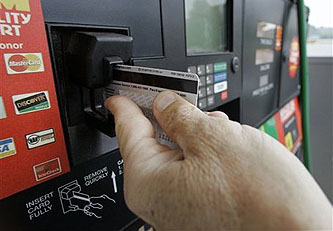
While I was out yesterday, there was big news on debit card fees. Here's how the LA Times headlined it:
Fed Reserve bans most bank overdraft fees
This caused some editorial gnashing of teeth at MoJo world headquarters, since a big chunk of my upcoming piece on the finance lobby is built around the failure of authorities to do anything about overdraft fees. In the end though, it turned out we didn't have to do
very much aside from changing "the Fed has never done anything" to — well, I don't want to give anything away just yet. Let's just say the change wasn't a big one.
You see, the Fed didn't ban most overdraft fees, regardless of what the Times copy desk might think. All they did was tell banks that they have to give customers the option of whether they want overdraft protection in the first place. If they don't, they'll be allowed to opt out and purchases that run your account down past zero will simply be rejected.
This is, without question, a good thing. The fact that banks not only made billions of dollars by charging outrageous overdraft fees, but insisted that customers had to accept overdraft protection even if they didn't want it (a policy put in place a few years ago as a deliberate way to make more money from their most vulnerable customers), made it almost a poster child for abusive practices. So three cheers that it's gone.
But look: most people want overdraft protection. Banks are right about that. Unlike checkbooks of old, debit cards are marketed as routine payment devices, and since debit cards don't have built-in check registers that warn you when your account is getting low, it's all too easy to inadvertantly run up big overdraft charges. But the new Fed regulations do nothing about that. Under industry pressure, they ruled in 2004 that overdraft fees weren't loans, and they still aren't. So a $35 fee on a $17 overdraft that's paid off in five days —and yes, this is the industry average — amounts to an APR of over 10,000%. Except it's not an APR because it's not a loan. It's a "fee."
Hogwash. It's a small, short-term loan, just like a credit card charge. The APR should be somewhere in the neighborhood of 10-30%, like a credit card, with perhaps a small processing fee added to that. And since we live in an electronic era, that processing fee is small: maybe 50 cents or so. A dollar max.
But the Fed did nothing about that. Or about the number of fees banks can charge per day. Or about re-ordering of fees to run up total charges. Overdraft protection really is a convenience in a world where banks are doing everything they can to encourage their use even for tiny transactions, and consumers shouldn't be required to accept usurious loan rates and sleazy hidden hustles in order to get it. Wake me up when the Fed gets around to that.









what is different about 1937 and today
"I Promise to Pay," a movie from 1937, was about a family man who borrowed $50 from a loan shark in order to take his family out of the city during the dog days of summer. Then he found out his bonus was not coming from his employer and he could not pay the $10 a week he had promised to repay the loan. That is when he noticed the interest rate was 10,000%. The hero went to the police despite being beaten up and having his children threatened. What is different about 1937 and today is the authorities wanted to shut down the loan shark operation, not provide it with 0% interest loans to prop it up.
credit union
What you describe in the penultimate paragraph is similar to what my credit union offered me when I opened my account 9 years ago. I had to apply for the overdraft protection and it has a $500 limit. It functions just like a credit card, but with no grace period. I wasn't careful and it kicked in once, but it only cost me about $1. I wish I could do all my banking with the credit union but they don't offer all the services I want, so I am also a customer of one of the big national banks.
Marketplace had a neat story
A little off topic: Marketplace had a neat story on Walmart in Chile. Evidently they've been giving credit cards with 20-50% APR rates to people who have never had credit before. They have something like a 25% default rate but they still make more money of the card fees and interest than they do in their stores. Banking is awesome.
I disagree
I disagree with your reading of the article. Debit card transaction overdraft fees will require previous approval by customers. What's exempt is recurring bills (eg, phone, electric) and checks. The "debit cards [that] don't have built-in check registers that warn you when your account is getting low" are not exempted, so no more $35 fee for the $3 coffee, unless you're paying for it with a check. And unless you pay 5 electric bills a day or write many overdrawn checks a day, the reordering thing should be moot as well.
Of course, if you're stupid enough to agree to the debit card portion of the overdraft protection, then you've invited the candygram landshark into your house.
Trust me, my reading of the
Trust me, my reading of the article is correct. Honest. Check out other stories on the Fed's action if you want to make sure.
Other info?
Maybe you can point me to some of the other articles then- this sounds like it requires opt-in for ATM and DC purchases:
"the Federal Reserve on Thursday banned ATM and debit card overdraft fees unless customers have opted to pay to ensure that balance-busting transactions go through.
The new rules, which take effect July 1, mean that if you don't have overdraft protection, any debit card purchase or ATM cash withdrawal will be rejected if it exceeds the amount of money in your account."
"Wake me up when the Fed
"Wake me up when the Fed gets around to that."
Slumber on :) The Fed is owned by the banks. This was just a token effort to hide something equally egregious and more profitable in the fine print.
Credit unions are better
One solution is to join a credit union instead of using a bank. I have a $1000 overdraft line of credit at mine. They charge 7.5% until I transfer money to repay the line of credit.
CDRealist@blogspot.com
Credit unions are better
One solution is to join a credit union instead of using a bank. I have a $1000 overdraft line of credit at mine. They charge 7.5% until I transfer money to repay the line of credit.
CDRealist@blogspot.com
"This is, without question,
"This is, without question, a good thing. The fact that banks not only made billions of dollars by charging outrageous overdraft fees, but insisted that customers had to accept overdraft protection even if they didn't want it (a policy put in place a few years ago as a deliberate way to make more money from their most vulnerable customers), made it almost a poster child for abusive practices. So three cheers that it's gone."
Replace "banks" with "federal government."
Replace "overdraft" with "health insurance reform."
I'm guessing if Drum did that, he wouldn't be cheering three times.
I remember when Obama castigated HRC for her views on individual mandates. She was for them; he was not.
I remember when Obama said no one making less than 250k/year would pay any additional taxes - not a dime - under his watch. And he included all sorts of taxes, not just payroll taxes.
Now that the individual mandate is on the table, enforceable with hefty fines and jail time, liberals are backtracking, calling the individual mandate constitutional because it is a tax.
President Obama? What happened to your pledge?
Ya know, when you actually
Ya know, when you actually do journalism-like activities, you can do some good and useful things.
If it took you a day of riding the porcelain bus for you to get here, well, it was worth it.
Thank you.
Why overdraft protect a debit card?
"But look: most people want overdraft protection."
I'm not sure they would if they thought it through.
A good reason to have overdraft protection when paying with actual checks is that you can avoid check bouncing fees. Obviously this is only rational if your overdraft protection fees are less than your check bouncing fees. But checks can bounce because they aren't always processed immediately (though nowadays they often are processed immediately in a way very similar to debit cards).
Debit cards, however, will either work or fail immediately and immediate failures mean that whoever you are trying to buy from will cancel the transaction rather than charge you a bounce fee and have to go through a lot of hassle trying to get the money out of you. At that point you might pay cash, use a credit card, decide you shouldn't buy because you are broke, go to the bank to get things sorted out, etc. Unless over-drafting is very cheap or you have no other options you don't want the transaction to work.
So debit cards do have a bit of built in check register functionality, at least if they don't have overdraft protection. When you run out of money they NSF and stop working and the retailer tells you.
I suppose a more ideal solution for people who really do want overdraft protection would be for the bank to alert you when you try to use the card that this use will trigger overdraft protection. That way you can decide if you want to pay for that or not depending on the situation, and you will know you need to investigate further.
Usury Rates
What happened to the days when usury rates were 12% in most states? The logical fix would be a federal usury rate of, say, 10%. That's a decent markup for doing nothing and taking no risk.
Dream on
That is NOT going to even be discussed because the thieves in charge, often labeled "Masters of The Universe" by the Old Line Media, would have to get real jobs and then actually be productive while giving up their golf outings and long lunches not to mention their yachts etc.
Nice idea though.
"“We have always known that heedless self-interest was bad morals, we know now that it is bad economics.” - Franklin Delano Roosevelt
Regarding my debit card, I
Regarding my debit card, I have a telephone number where I can call and find out my balance. I call it at the beginning of the day whenever I am going out shopping. That way I know what is in the account. I gave up on check registers along time ago because of fees that I seldom remembered or knew to subtract from my account; thus, my balance in the register was almost always wrong. This automated stuff via telephone makes things so much easier. I also prefer it to doing anything online because I had some serious viruses last year on my computer, which nearly destroyed my bank account.
...
BofA will phone me when the account goes to 0. If I can get to a computer before 10pm that day, then I can transfer the money myself and avoid a charge.
If I don't make it, I get charged $10.
Of course, they have other fees for me to avoid: If I use another bank's ATM, they charge me $5 (plus whatever the ATM charged me). If they call the place I transacted at 'foreign' they tack on a 2% fee. (I had this happen at an online store located in my state but owned by a foreign company recently)
Grr.
The new fee for balance
The new fee for balance inquiries is 2 dollars and goes up to 10 dollars retroactively if you call more than 5 times per month.
...
I've already reduced my fee to $10 a day when they loan me my own money. So this isn't really very helpful. I would've liked it a long bit ago, though.
Not all cards are the same... I found out the hard way
I used to work at Ruby Tuesday and our card was pretty bad. But, from what I hear, it was typical because most cards either have a monthly fee or pretty limited as to the free items. I have worked at Starbucks for about 7 months now and they allow us to have a card called the Money Manager Card. The choice was pretty simple because there are no monthly fees, I can use it on their network (allpoint atms) free at all times, never any fees to buy things (signing or using my PIN and getting cash back if I want…all without a fee or surcharge), no overdraft. Let’s just say I haven’t paid a fee in the entire time I’ve had the card. It’s pretty simple to use it at no charge and I really don’t have to tip-toe around any limited free items like most other cards I have seen have.
Oh, and don’t lose most payroll cards! If you do, it’ll cost you $$ even to get the replacement sent by the post office. My new card give free replacements when delivered by the post office all of the time. Or, if I want, I can get it delivered by Fedex for $10. Pretty reasonable as I sent something by Fedex a month ago and paid $14!
My point is, if you are a company and are going to get your employees something, don’t do what Ruby Tuesday did and get something that costs your employees $$$ to use it! I hated them for “giving” us that card…IMHO of course.
I should state that Walmart has something that is similar sounding to Money Manager Card. I think it is the Money Card or something like that. That card is definitely not the same.
I did a quick Google search on Money Card when investigating the Starbucks offering and mistakenly clicked on a link to a Money Card “problem” page where people complained about it. Then, I realized that “Money Card” is not “Money Manager Card”.
Thought I would let you know so you don’t make the same mistake.
I agree almost completely
The issue though is that most people are OK over-drafting their account thinking they might only pay a fee or two. The problem with debit cards is that the bank clears transactions from highest to lowest (if on the same day) to get customers to overdraft quicker. The reason this is so misleading is that checks clear in the order they are made based on the check number (if on the same day) and banks tell everyone that overdrafts to keep a register tracking their purchases. But a register is misleading because it gives the impression that debit transaction if made clearing on the same day will clear in that order. A customer thinking they might only overdraft only $20 but has their highest transaction place them in the red will pay a fee for each individual transaction no matter how low the purchase the item is. A customer can buy 20 songs on itunes and receive $680 in fees as a result. A customer could also have a transaction accidentally post buy an inexperienced worker and then re-credited back by a supervisor, but incur a series of fees from other debit transactions like itunes songs. A bank teller is not a finance genius and is going to see a screen that makes you look like you went crazy with your debit card and encourage you to use a register. Unless of course you are lucky enough to get through to someone willing to take your concern seriously. What needs to happen is a technological overhaul of the way transactions are processed online if we upgrade the technology and introduce new standards with regulation banks can make money Amazon style, and consumers can buy an honest product.