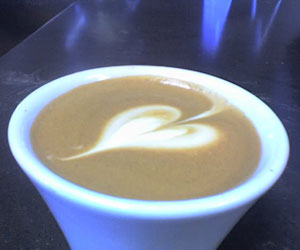
MoJo Video: The Perfect Espresso
Are you paying too much for your organic Fair Trade coffee? In search of the perfect cup.
Traditionally, coffee has been treated somewhat like cotton: It's a commodity to be bought and sold in bulk. Such a system leaves coffee growers largely at the mercy of middle men and the market, and leaves consumers with beans of dubious quality.
But in recent years, the Fair Trade movement, the Cup of Excellence program, and serious roasters have challenged the status quo. Some are establishing direct relationships with individual growers and co-ops, helping them improve the quality of their beans and paying them significant bonuses to produce high-quality beans.
As prices climb for the consumer, how can a coffee lover tell when they're getting the best espresso for their recession dollar? We asked Mother Jones' own in-house coffee expert, Richard Reynolds, to demonstrate the perfect cup.
This video would be more
-
tagged as:
- solution
This video would be more useful to the hearing-impaired if there were captions or captioning.
Yes it would. Sorry about that!
New Media Editor, Mother Jones
http://www.motherjones.com/authors/laura-mcclure
useless - he failed to tell
useless - he failed to tell us how fine to grind the coffee - quantities needed
we don't all own $1,000 machines - what about those of us who have none
did he tell us how to make good expreso - NO - surely every one in
Italy doesn't have restaurant equipment at home - again useless
even his analysis was way off - fair trade coffee has caused great deforestation because everyone now wants to get into the coffee growing business-
Fair Trade does NOT cause deforestation
"fair trade coffee has caused great deforestation because everyone now wants to get into the coffee growing business-"
I am not quite sure where you are getting your information, but not only does "Fair Trade" (as various non-profits from around the world) set standards for coffee production, but Fair Trade coffee only makes up a maximum of 6% of coffee consumed in the world! Fair Trade production partners are typically organic, and their beans are shade grown (using natural forest to foster coffee plant growth). Also, ALL Fair Trade producers use less than 10 hectares and about 70% use less than 2 hectares to grow their beans, and you can pretty much bet they are all family owned and operated. Fair Trade is just setting a minimum price per pound of coffee in order to help the impoverished families of the "South". Since coffee prices hit a record low in 2001 and were extremely unstable over the last two decades, Fair Trade gave these farmers more stability. However, once again, Fair Trade only makes up a tiny, tiny percentage of the coffee market and in NO WAY leads to deforestation nor "everyone jumping on the bandwagon" because it's not possible.