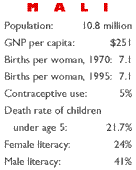
 The government discourages female genital excisions, but they remain, together with polygamy and arranged marriages, a stubborn, controversial feature of Mali’s patrilineal and largely Muslim culture. Severe droughts have strained Mali’s already weak economy–which is based primarily on farming and animal husbandry–and forced more rural women into the cities. There, small improvements in women’s education and more women-owned businesses–as well as increases in prostitution–are all signs that some traditional rules for women may be eroding.
Following those traditions, Pama Kondo, 34, spent much of her childhood caring for her grandmother. At 18, she married Natomo, with whom she has five children. Natomo’s second wife, Fatouma, has three. The women live separately, but share meals and responsibilities. Kondo also handles the sale of rice and millet in Mopti, an overnight boat ride from their village. She feels her life is no different from her mother’s, and that her daughter’s will also be the same.
PAMA KONDO: My husband and I work together and are faithful to each other. It was his decision to marry a second wife. Some wives do not get along, but we have no misunderstandings, we are equal. If I go to sell in Mopti, Fatouma stays home.
I think my husband will take another wife soon, to help me. Even if Natomo married four women, I would be lucky because I am the first, and I will decide the roles. Natomo will tell me if he’s going to take another wife, but it is not my problem to decide if I love her or not; everything depends on Natomo.
I would like to have more children, even five more. They could help me work–some could become fishers, some farmers, some civil servants–and if I get hurt, they would care for me.
In my mother’s time, you could find many fish in the river, but now fish are scarce and women have to work hard to sell things to feed the family. Women, most of the time, are the harder workers. Besides fishing, men cannot do much; besides fishing, men just talk and wait for money from the women. I would like it if women in my country had less work to do.