Let’s start with one little-understood fact: Social Security is not a retirement plan. It’s a collective safety net, designed to provide a minimum income to every retired worker. Payroll taxes for all employees (taxed at 6.2 percent of their first $62,700 annually) go into one big pot, along with matching contributions from their employers. After retirement, all workers are entitled to monthly payments based roughly on their average former salary. Typically, monthly benefits equal about 42 percent of prior monthly wages, with lower-paid workers getting a greater proportion and higher-wage earners getting less. The maximum annual benefit currently stands at $14,976.
Proposals to privatize Social Security would make benefits work more like savings accounts. Instead of having their taxes lumped collectively, workers would put a percentage of their salary into their own private pots. Those with a lot to put in would get a lot back at retirement; those with little to invest would get little in return.
The Social Security Advisory Council, appointed by President Clinton to propose solutions to the Social Security shortfall expected in the year 2030, failed to agree on a uniform recommendation. While they have not formally released any proposals (sources say the administration delayed the council report to keep it out of the election arena), the council’s members are split among three plans:
The six traditionalists, led by former Social Security Commissioner Robert Ball, oppose creating privatized individual accounts. They want the government to continue collecting taxes (raising rates in the year 2045) and paying benefits as it does now, but to invest 40 percent of the Social Security Trust Funds in stocks and split the remainder between corporate and government bonds. Net result: The trust funds would grow more quickly (if less reliably), and the poor would retain their safety net.
The plan from council chairman Edward Gramlich, dean of the University of Michigan School of Public Policy, edges toward privatization. It would boost the employee’s payroll tax from 6.2 to 7.8 percent, the extra 1.6 percent going into accounts directly managed by the employee with only a handful of government-approved investment options. And it would reduce guaranteed benefits slightly. This plan would probably leave most people paying more and getting somewhat lower benefits.
The most radical privatization plan comes from council member Sylvester Schieber, an economist at Watson Wyatt Worldwide in Washington, D.C., and four other committee backers, including Carolyn Weaver, Social Security adviser to Bob Dole. It would slash benefits to about $400 a month for everyone, raise Social Security taxes on both employees and employers from 6.2 to 6.96 percent, and mandate that almost all the employee share — 5 of the 6.96 percent — go into self-directed Personal Security Accounts with the employee having a wide choice of mutual fund investment options. Given how mutual funds outperform government securities, Schieber and his allies argue that these accounts would give workers a cushier retirement than they get now.
In the best of all worlds, that might be true. But the Schieber plan would more likely produce a new set of winners and losers. During the transition to privatization, the government would have to maintain benefit levels to current retirees while taking in much less from current workers. To cover the shortfall, the plan would levy its payroll tax increase for 70 years and allow additional federal borrowing of $650 billion. The winners: the young and well-paid, who could absorb higher taxes and allow large investment accounts to grow over many years. The losers: the middle-aged and middle-incomed, who would be socked with higher taxes but wouldn’t have enough working years to grow substantial investment accounts. Only in a very rosy future would low-salaried workers be better off.
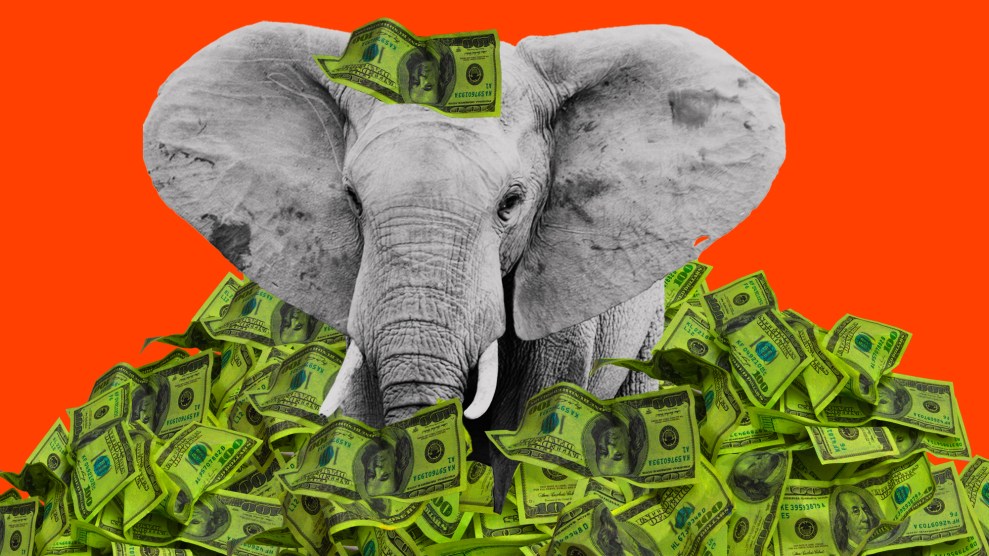
The three plans do create one common winner: Wall Street. Revamping Social Security — however it’s done — would pour billions or even trillions of dollars into the stock and bond markets over the next 25 years. (One estimate puts the loot from the Schieber plan at a total of $1.6 trillion between 1998 and 2015.) An influx of money on that scale is almost guaranteed to push up market prices, making the promises of big market gains for investment accounts a self-fulfilling prophecy-at least for a while.
But these plans — especially Schieber’s — offer more questions than answers. Will workers actually put their money into the kinds of investments that can get high returns? How much will be left once Wall Street takes its fees? Will high-income workers push to opt out of Social Security altogether, leaving the system short of cash to fund guaranteed benefits to low-income workers?
And what happens if — or, rather, when — the market crashes? Will the government leave millions of retirees to face a poverty-stricken old age, or will it step in to rescue the investment account industry, as it did the savings and loan industry? After all, it was the Depression that brought us Social Security in the first place. If we privatize it, what will the next depression bring?