MOTHER JONES BY E-MAIL

Did I Steal My Daughter? The Tribulations of Global Adoption

News: The answers are never easy when you enter the labyrinth of global adoption.

November/December 2007 Issue


TOOLS

EmailE-mail article
PrintPrint article


BACKTALK

E-mail the editor


Google


RELATED ARTICLES

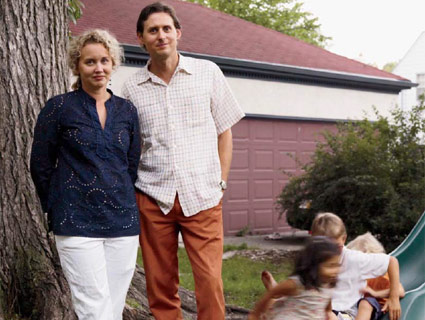
i first met my daughter in the lobby of the Westin Camino Real, the grandest hotel in Guatemala City. The night before, my husband Walter and I had soothed our nerves running on the treadmills in the fitness center, where a polite attendant handed us plush white towels and spritzed the equipment with a flowery disinfectant. Afterward I wrote a series of letters to our daughter. Because children adopted from overseas usually have little information about their history, parents are advised to document the trip as best they can, creating what is known as an "adoption story."

Reading the journal now, more than two years later, it feels so self-conscious. "We've been waiting so long to meet you—almost seven months!" the first entry reads. "Ever since you were seven days old and the agency emailed us your beautiful photos, we've wondered what you will be like. We fell in love with you that minute!" Gone is any sense of the surreal. Walter and I already had two biological sons; now we were jetting into a Third World country with the sole aim of leaving with one of its daughters. (Wanting a girl, we'd opted for the sure bet that adoption offers.) I mentioned, but didn't dwell on, the brutal poverty outside our hotel windows, focusing instead on how my sons were looking forward to meeting their little sister.

There is one section of the journal, however, that jumps out from the boilerplate. "I feel so sad for the pain your birth mother must be in since she is not able to raise you," I wrote. "But I believe now that I am your 'real' mommy." Reading those words now sparks a flash of shame. Because even though my daughter was, as is required by U.S. immigration law, legally classified as an orphan, she had two Guatemalan parents who were very much alive.

I remember being comforted by the Guatemalan social worker's report on the case; the baby's mother, Beatriz,had evidently made an informed choice to place her for adoption. Or at least that's what I told myself.

The truth is that I didn't know Beatriz. And I was secretly relieved this was so.

people have been parenting children not born to them since the dawn of time. But adoption as an irrevocable severing of a child's relationship with her biological family is largely a European and American practice. "In the vast majority of the countries where children are adopted from, the Western notion of adoption doesn't even exist," says Hollee McGinnis, policy and operations director of the Evan B. Donaldson Adoption Institute, a research and advocacy organization. "Informal adoption and kinship care have always existed, but our form of formalized adoption by nonrelatives is very, very new."

Until 1945 (and in some states much later), most adopted Americans and their parents had legal access to birth certificates and related court documents. Adoption agencies even facilitated contact between adoptees and birth relatives. The push toward secrecy and sealed records took hold in the postwar culture, when adoptions were increasingly run by social workers. Confidentiality was thought to shield both mothers and children from the stigma of illegitimacy, and it allowed parents to hide their infertility even from their own children—birth certificates were simply changed to list the adoptive parents. (This practice continues today. My daughter's American birth certificate lists her birthplace as Antigua, Guatemala, but gives us credit for the one thing we most certainly did not do.) Young pregnant women were rushed into homes for unwed mothers, where social workers told them they'd forget about their babies once they signed the adoption papers.

But they didn't. In the 1970s, a psychology professor named Lee Campbell realized that she was suffering from mental health problems brought on by being forced to "surrender" her infant son when she was a high school senior in 1962. Campbell wrote a letter to the Boston Globe in 1975 asking what were then called biological mothers to contact her if they were interested in talking about their experiences.

These women founded Concerned United Birthparents, one of a handful of organizations that advocate for birth families. (The use of the term "birth parent," coined by Campbell, is controversial. Some parents believe it relegates them to breeder status; alternate terms include "natural parents," "first parents," "surrendering parents," or simply "parents." I call Beatriz my daughter's "Guatemalan mother" because it feels somehow more factual, although to be honest I have never referred to myself as her "American mother.")

As more women gained access to contraceptives and legal abortion, and the stigma of unwed pregnancy lessened, fewer American women placed their babies for adoption, and those who did had more power to get what they wanted, including knowing their children's fate. Today, almost no American woman deciding on adoption seeks anonymity; roughly 90 percent of mothers have met their children's adoptive parents, and most helped choose them. Research shows that such arrangements result in less grief for the birth parents and many benefits for adoptees.

Yet the vast majority of transnational (also called international and intercountry) adoptions remain closed—and it's widely understood that this appeals to some adoptive parents. "It's about entitlement and ownership," says Marley Greiner, the executive chair of the activist adoptee group Bastard Nation. "When you read the adoption boards online, it seems like parents go overseas because they don't want some pesky birth mother or relative showing up."

In fact, while we've belatedly acknowledged the trauma of American women who were forced to surrender their children, birth families abroad have remained shrouded in mystery, allowing parents and professionals to invent the narrative that best suits them. "Practitioners 20 years ago assumed we were rescued from these horrific nations and would never go back," says McGinnis, who was adopted from Korea when she was three and has been in touch with her Korean family for more than a decade. And while many adoptees won't want to meet their birth families, she notes, virtually all would like basic information about their background. "We grow up in environments where it is so much about your dna, it's quite natural for adopted people to feel excluded because we don't have that basic human right."

The right to background information is laid out in a little-noticed provision in the 1993 Hague Convention on Intercountry Adoption, which 74 countries have signed. If the U.S. Senate finally ratifies the treaty this winter, as expected, the transnational adoption landscape may change. Already, Children's Home Society and Family Services of Minnesota, one of America's most prominent adoption agencies, has shifted to advocating openness and helps with birth family searches in Guatemala, Korea, Colombia, and Peru.

Still, the treaty's provisions are nonbinding, and parents who prefer closed adoptions will be able to arrange for one. And while celebrities' forays into transnational adoptions bring on the occasional ethics complaint, there's no sign of a broader debate. "It's absurd on some level," says open-adoption pioneer Campbell. "Every day, parents look into the face of their child and they see a different race and a different ethnicity. And yet, they compartmentalize that truth and deem it unimportant. Why aren't the movie stars talking about the birth parents of their kids and modeling the opportunity to do it right?"

walter and i had tried to do everything right. We'd heard of corrupt adoption lawyers, fly-by-night operators who use online photo listings to lure parents, of baby stealing and baby selling, and of the myriad agencies that offer, for hefty fees, to help Americans bring home a child from some of the world's poorest countries. We chose one of the largest and most respected, and faithfully attended all the counseling appointments it offered, including a seminar that featured a session with an American birth mother. She clearly loved her son, but said she hadn't been ready to become a mother. "I'm not his parent," she told us.

And yet when it came time to choose a program, our agency told us to go with whatever we were comfortable with, as if "open" and "closed" were items on a menu. We asked our social worker about a domestic open adoption; she said that because we already had biological children and were only open to adopting a girl, we wouldn't be a very compelling family to an American birth mother. We never discussed adopting from the U.S. foster care system or an Eastern European orphanage; we wanted a baby who had never spent an hour in institutionalized care. We also wanted our daughter's country of origin to be easy to travel to, so we could go there for family vacations. Talk about menu items!

We did agonize over some moral questions—the potential hardships for a Latina child raised in a white family, the ethics of choosing the sex of our child. At every step, we were reassured that what we were doing was a good and worthy thing. "I think [adoption] is almost an antithesis to oppression," Kevin Kreutner, a moderator at the support group Guatadopt.com who is in contact with his children's Guatemalan family, told me. "For people who are given no access to family planning, have an unplanned pregnancy, and can't raise that child, there is a liberating sense where they can realize that this child will not suffer that same oppression."

"I just need to know that the child we adopt has no other options," Walter finally told our social worker. I can't remember her exact answer, but it was something along the lines of "all these children need families." When I later told this to an adoptee-rights advocate, she said the agency should have pursued a discussion that might have dissuaded us from transnational adoption, or led us to a program through which we could sponsor a child to remain with her family. But the truth is I don't think I would have listened—so absorbed was I in the force of my own wanting.

when we got our daughter's paperwork, Walter and I noticed that her first, middle, and last names were exactly the same as her mother's. We told ourselves this was probably because the adoption lawyer had suggested it—an efficient decision made for the sake of checkups and court appearances. I'd read that some adoptees believe their given name is a precious connection to their heritage. When we asked our social worker what she thought about changing it, she said it was up to us to decide what was right for our family. So we changed her first name to Flora and made Beatriz her middle name.

We did not, however, want Flora's life before us to be irretrievable, so we asked if Beatriz wanted to meet us and stay in touch. Our social worker contacted the lawyer in Guatemala, who replied that Beatriz "would love to know us." Then, a week before our trip, the social worker called and said there would be no meeting; Beatriz had gone back to her village and wasn't reachable.

"But she's from Guatemala City," I said. "Do you think the lawyer is telling us the truth?" The social worker said it was hard to know. Adoptions in Guatemala are arranged entirely by private lawyers, without oversight from any central authority, and corruption is widespread. Our agency promised it carefully screened those it worked with in Guatemala. But this incident gave us pause. The lawyer might technically be representing both Flora and us, but whose interests was he really looking out for?

a week later, we flew to Guatemala City. The hotel of choice for American adoptive parents is the Marriott, which is so used to these "pickup" trips, it offers strollers for rent and has arranged with a nearby pharmacy to deliver formula and diapers to panicky new parents. Via chat rooms, adoptive parents with similar pick-up trip schedules make arrangements to connect at the Marriott. But the idea of all that camaraderie just heightened my anxiety. So we stayed at the Westin.

As the elevator chugged down toward the lobby, Walter pointed the video camera at me and said, "Here's Mommy waiting to see Flora for the first time!" I forced a feeble smile. I was naked and sweating when I met my sons in the sterile glow of a hospital birthing room. Now I stepped out onto rose-marble floors to face Flora's foster mother Maria, a stout woman with a six-month-old girl riding at her hip in a woven sling. As they cuddled and laughed—later I'd look at photos of this moment to remind myself that Flora could laugh; for weeks her eyes grazed her new home with a dull blankness—my heart sank.

Our lawyer was, to our surprise, not present. My limited Spanish had drained from my memory, but somehow I managed to ask Maria to walk with us to the hotel's business center so that we could hire a translator. On our way, a gray-haired man in a suit stopped to shake Maria's hand. Later she told me he was an adoption lawyer; he owed her four months' salary that she knew would never be paid.

The woman who ran the business center was feeding documents into a fax machine when we blew into her office. On seeing Flora, she rose and shook hands with Walter and me. Then she nodded at Maria. I told her I needed to ask Maria a few questions: What time did Flora go to bed? How often did she nap? Did she eat solid foods?

stars

A Star Is Adopted

In the 1950s, celebrity parents such as George Burns and Gracie Allen gave adoption mainstream cachet; now Brangelina et al launch new adoption trends, and controversies, each time they bring home another child.
Ellen Charles


adopted from

aftermath

candidate for sainthood?

Angelina Jolie

Cambodia (Maddox, 2002), Ethiopia (Zahara, 2005), Vietnam (Pax, 2007)

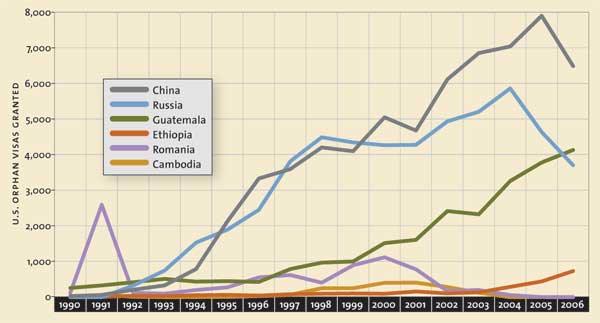
A month after Jolie filed Maddox's adoption papers, the ins suspended adoptions from Cambodia because of fraud and baby stealing; no foul play was found in her case. When she brought home Zahara in '05, Jimmy Kimmel sniped that she and Brad Pitt were just deflecting attention from breaking Jennifer Aniston's heart.


Pitt has said he's ready for No. 5; he and Jolie have reportedly been looking at Chad and the Czech Republic.

Meg Ryan

China (Daisy True, 2006)

This year China disqualified single parents such as Ryan and required adoption applicants to vouch that they are not gay or lesbian.


"I just really wanted a baby. I was on a mission to connect with somebody."

Mia Farrow

China, India, South Korea, Vietnam (10 children, 1973-1995)

Woody Allen, Farrow's companion of 12 years, married her adopted daughter Soon Yi Previn in 1997. Previn and Allen have adopted two children, Bechet (China, 1999) and Manzie (Texas, 2000).


"I felt that I had a lifeboat and that many people were drowning all around the world. I could take some into my lifeboat."

Madonna

Malawi (David, 2006)

Madonna picked 13-month-old David from an orphanage even though he had a father who rode his bike 50 miles twice a week to visit him. After the adoption, the father said he hadn't wanted to give David up. The Malawian government brushed him off.

"I have the welfare of all of you at heart and I love you," the Material Girl told a group of orphans in Malawi. "I will try to support you all and take care of you in the same manner as David."


Photo: David Bowman


Post a Comment

Your Name: 

Your Comment: 
 
Please press "Submit" only once to avoid double-posting.
All HTML formatting is removed from comments.
Read the Mother Jones community rules here.

Comments:

Thank you so much for sharing this powerful and personal article about ethics in international adoption. I was deeply moved and appreciate this much-needed entry in the media discussion.
Posted by:Dawn FriedmanOctober 22, 2007 10:06:14 AMRespond ^
What an amazing journey you have allowed us to join. Words cannot describe my feelings and I don't remember being so moved by an article in a very long time. Thank you.
Posted by:Laurie McGrathOctober 22, 2007 10:39:30 AMRespond ^
I want to thank Elizabeth Sherman for this thoughtful, important, and moving piece on adopting her daughter from Guatemala. I want to clarify one small point, however. The University of California/Berkeley's Human Rights Center did not "develop" the database that has connected children kidnapped by the military in El Salvador during the war with their birth families, or certainly not alone. Much of that work was done the Asociación pro Búsqueda de Niños y Niñas Desapacidos (http://www.probusqueda.org/), prominently under the leadership of the late Jesuit priest, Fr. Jon Cortina. The organization was born in the hard and dangerous work of helping organize testimony for the Truth Commission in 1992, when families came forward and told of seeing their children kidnapped by the military. Not a word of their testimony appeared in the Truth Commission report, however. Cortina and others began the slow, tedious work of searching records of the Red Cross and orphanages, trying to match the stories of families with notations about children dropped off by the military. Since 1992, they have built a network of more than 700 families in El Salvador that lost children, putting more than 300 children in touch with the families that lost them. They have built networks with organizations of mothers and disappeared children across Latin America and Europe, including Hijos, COMADRES. CODEFAM, and COMAFAC, and won a case before the Inter-American Court of Human Rights that established that the Salvadoran military had indeed kidnapped children. This is not to minimize the important work done by the Human Rights Center, California's Justice Department, and Physicians for Human Rights in Boston, which have collaborated with Pro Búsqueda and created a DNA database of 700 families that has confirmed, complemented, and augmented the work of Pro Búsqueda in matching stories with records of children, and facilitated disappeared children and family members meeting each other. Discouragingly, when I was in the offices of Pro Búsqueda two years ago, one of the staff members who works to locate adoptive families of missing children told me that when they contact U.S. adoptive families with the information that their child has living family members in El Salvador who have been searching for the child since the war, only about one in three is willing to allow the child to have contact with their Salvadoran families. In Guatemala, in contrast, the disappearances of children and their subsequent adoption was documented in the truth commission report, but their stories have been less noted than Salvador's (or Argentina's) since then. Nevertheless, since 1999, a group similar to Pro Búsequeda's, Todos por el Reencuentro of the Liga de Higiene Mental de Guatemala (no website, but offices at 12 Calle 9-35, Zona 1, Guatemala City), has documented 560 cases of children disappeared during the war, and facilitated 117 reunions.
Posted by:Laura BriggsOctober 22, 2007 11:51:22 AMRespond ^
Thank you from the bottom of my heart for the strength, love and courage you brought to living (and writing) this story. There are many ways in which it is like our own story, and you have put the deep questions beautifully.
Posted by:Tesi KohlenbergOctober 22, 2007 12:04:08 PMRespond ^
With all of the children being taken from their prents for one reason or the other in the USA, why are so many option for children from foreign countries? Is it because they don't want any from here?
Posted by:Hinda GibbsOctober 22, 2007 2:24:36 PMRespond ^
Edited: With all of the children being taken from their parents for one reason or the other in the USA, why are so many opting for children from foreign countries? Is it because they don't want any from here?
Posted by:HindaOctober 22, 2007 2:27:20 PMRespond ^
Robbing the dead and dying of their gold teeth is only slightly less offensive than the sanitized slave trade you call Infant-adoption. You dare call the buyers who fuel this trafficking in human beings 'parents,' I call them INFERTILE ADOPTERS. No one wants to be an adoptee. No one wants to be a breeder. originscanada.org
Posted by:ankaraOctober 22, 2007 2:43:17 PMRespond ^
one point you have incorrectedly attributed: Lee Campbell did NOT coin the term "birthparent" (with or without the space). Adoptive parent Pearl S. Buck did, and it was further promoted by social worker Marietta Spencer in her "Positive Adoption Language" campaign. CUB used it naively, not realizing that it demeaned them into not being mothers at all.
Posted by:CedarOctober 22, 2007 2:54:07 PMRespond ^
Hi! Just finished reading an amazing book called "Bones That Float- Adopting Cambodia", about adopting a child from that country...Ms. Larsen, you might find that a great, thought-provoking read regarding adoption issues.(Author is Kari Grady Grossman - from Wyoming)Best wishes!
Posted by:Brigitta WieselOctober 22, 2007 2:54:47 PMRespond ^
I work often in Guatemala and I am shocked by the number of parents meeting their adopted children. Even though I don't stay in the more popular hotels for adoptive parents, several still stay where I stay. Although in the author's case the adoption was voluntary, Guatemala has a history of forced baby surrenders. When I go to the rural area, I am advised to not take my camera and especially to not take photos of children since I will be accused of being a baby-snatcher. This warning, though it may be exagerrated, demonstrates the incredible harm that illegal adoptions are causing on the psyche of the country. I thank the author for this article, but hope that more information can be provded about the effects of such large number of adoptions from one country and the likelihood that these adoptions are illegal in some way.
Posted by:ChristinaOctober 22, 2007 3:03:56 PMRespond ^
For another opinion. Our daughter is Chinese and truly had few options while being raised institutionally in China. We are fully prepared to help her and support her in her quest to find her birthfamily. We have two daughters, and they are from different provinces. We and many other families have become active on their orphanages email groups to see if there are other siblings (from photos) that have been adopted. More than 20 sets of twins have been located (adopted into different families) and the families are doing all they can to keep their twins connected through summer vacations and other visits with each other. I have two other families that believe they may have a sister to one of my girls. We shall see. It is ludicrous to believe that China would change their one child policy (really two if you have a girl first)because of our advocacy. China will change it, when it becomes a problem for China. It is a burgeoning issue as China now has 20% too many marraige-age men with no women to marry. Families do adopt with the prayer that they can find the children's families in many places. And we chose China because they had a system to work with, albeit fluctuating, and the girls needed families, as they had been abandoned. Both Love and humanitarian issues influenced our choice. Pat Felter To aid the orphans left behind, many American families have started and support new charities that send money, teachers, play areas and training (for all aspects of child rearing) to orphanages in China. Teh Chinese government has recognized some of thesse organaizations by making them part of the orphan discussion and planning for the future. ONe such is Half the Sky, another is Amity / Altrusa.
Posted by:Pat FelterOctober 22, 2007 4:47:07 PMRespond ^
For another opinion. Our daughter is Chinese and truly had few options while being raised institutionally in China. We are fully prepared to help her and support her in her quest to find her birthfamily. We have two daughters, and they are from different provinces. We and many other families have become active on their orphanages email groups to see if there are other siblings (from photos) that have been adopted. More than 20 sets of twins have been located (adopted into different families) and the families are doing all they can to keep their twins connected through summer vacations and other visits with each other. I have two other families that believe they may have a sister to one of my girls. We shall see. It is ludicrous to believe that China would change their one child policy (really two if you have a girl first)because of our advocacy. China will change it, when it becomes a problem for China. It is a burgeoning issue as China now has 20% too many marraige-age men with no women to marry. Families do adopt with the prayer that they can find the children's families in many places. And we chose China because they had a system to work with, albeit fluctuating, and the girls needed families, as they had been abandoned. Both Love and humanitarian issues influenced our choice. Pat Felter To aid the orphans left behind, many American families have started and support new charities that send money, teachers, play areas and training (for all aspects of child rearing) to orphanages in China. Teh Chinese government has recognized some of thesse organaizations by making them part of the orphan discussion and planning for the future. ONe such is Half the Sky, another is Amity / Altrusa. And we cried for the birth mothers a lot that first year, knowing what they had to lose in order for us to gain such a familiy. We are eternally grateful and will do everything we can to make sure our daughters find their first families.
Posted by:Pat FelterOctober 22, 2007 5:00:45 PMRespond ^
Thank you for your story. Like you, we wondered about our daugther's biological family. We, too, adopted from Guatemala, and were able to meet our daughter's biological family in the summer of 2006. Over and over, her mother told us how happy she was to see our daugther so healthy and happy, and how happy she was that our daughter would have advantages that her daugthers in Guatemala would never have. She told her two daughters with her (10 & 12 yr old) that they were going to the city to see some old friends- she never told them our daughter was their sister. I think she looks so much like her biological mother than I don't think they could have missed it, but Dona R. said that our daughter looks just like her biological father. The girls were clearly confused, but so happy just to be there. We took them to the zoo for their first visit ever to there. We hope to make contact again the next time we're able to go, and I send letters to a friend of hers who takes the letters to Dona R. and reads them to her, since she nor her girls do not read. We hear nothing back, but I am hopeful that the letters get to her. I agree that poverty shouldn't be the reason for adoption, but the truth is, it often is. Poverty in the US often means they don't have a nice home- in Guatemala, it more often means a shack-if lucky- and not enough to eat. Our daughter's Guatemalan family's story is heartbreaking. I believe that if you want to slow down adoptions, then you need to stop the root causes- abject poverty, lack of access to birth control, lack of power over their own bodies, NO social services or safety nets, and few opportunities for women. Fix these, and you "fix" the situations when so many women lose their children through adoption. Then, of course, the US Embassy needs to ban, once and for all, any attorney (and all in that attorney's office) who participate in unethical and/or illegal practices in relation to adoption. Our Embassy has never done that, they ban someone for a couple of months, and then let them come back, so it amounts to a slap on the wrist. There is much to be cleaned up. I wish that our daughter could have been rasied by her biological family, but knowing what I do about them, and from what her mother has told us, we know that she has the opportunity here to go to her full potential, something Guatemala would never have allowed to happen. It is not my "right" to say that her mother "should" have relinquished, but since she did, we are ever grateful for her sacrifice. Having grown up with 3 cousins who were all domestically adopted, I can say that I've seen the positive side of adoption since I was very small. The painful side- that of the biological family, I didn't see until more recently, when I learned that yet another cousin was a "birthmother." She registered and was able to meet her daughter when the daughter turned 18 and I believe it has been a good relationship. I've got 2 other friends who are birthmothers, and both of them have been very well adjusted-they both said that they made the decision to relinquish, that they were not emotionally ready to parent, and that they believe they gave their children the gift of a family who was ready to parent. They're able to know about their child, and one reguarly sees their child. Poverty did not play in their adoptions, just readiness. In our daughter's case, poverty was the main factor. It is true, we could have sent money to sponsor her, but, honestly, we did not adopt to "save" a child- we adopted because we wanted to parent. When people "bless us" for adopting, we're very prompt to say that our daughter has blessed us much more than we can ever bless her. Kathi Thomas
Posted by:Kathi ThomasOctober 22, 2007 6:43:05 PMRespond ^
Dear Hinda, Have you adopted a child from the foster care system? If not, than you shouldn't be criticizing other people who have made the same choice. Don't be a hypocrite. Parenting always involves some degree of selfishness no matter how you do it. What about people who conceive children? Do you ask them why they chose to conceive instead of adopting a child in the foster care system? People conceive children for purely selfish reasons. The world has a population crisis and we are destroying the planet with our numbers. Why conceive a child and add to the problem when you can adopt or foster a child that's already here?
Posted by:LBEOctober 22, 2007 7:01:33 PMRespond ^
Thank you so much for this moving article. I too am a parent of a child from Guatemala and I struggle with the same questions and concerns you've written about. Thank you for writing about them so honestly and openly.
Posted by:AnneOctober 22, 2007 7:20:05 PMRespond ^
Dear Ankara, You're right that nobody wants to be an adoptee. However, adoptive parents are only part of the issue. To solve a social problem you must look at the root cause and start there. Almost every adoption starts with an unplanned pregnancy. The best type of adoption reform is birth control, education of sexual responsibility, and women's rights so that the unplanned pregnancy can be prevented in the first place. In most cases in the USA of infant adoption, it is the birthparent's decision to have sex outside of marriage and the bad job our culture does in teaching sexual responsibility. In poor countries these are issues too, but a woman's lack of control over her life is a big factor. The adoption industry does have ethical problems that need reform, but an even bigger cause of children unable to live with their birthparents is a society that encourages people to conceive children they cannot take care of. This "encouragement" takes the form of the lack of acceptance of birth control and lack of women's rights. There are other factors of course, but these are big issues. Have you read the article "Dan Quayle was Right"? If not, you should read it. Dan Quayle definitely was right; a child raised by a stressed out single mom who had an unplanned pregnancy can have serious and permanant problems. Adult adoptees in the USA who were placed for adoption as infants to a married couple should not assume that life would have been better if they had not been adopted.
Posted by:LBEOctober 22, 2007 7:24:34 PMRespond ^
Ms. Larsen, I commend you for the rigor with which you examine this difficult issue. So often we only focus on the benefits to the child in becoming an American. Your article reminds us that there is another side to this story. Thank You
Posted by:Mark, Park CityOctober 22, 2007 7:44:19 PMRespond ^
Very powerful article. God bless this woman for going above the call. Thank you from the heart of an adoptee. You really get it.
Posted by:AmyadopteeOctober 22, 2007 8:27:46 PMRespond ^
Great. More unsolicited advice about what we adult adoptees should or should not think. I do know this. A social worker placed me into a severely dysfunctional home. My adoptive father has narcissistic personality disorder. My adoptive mother was histrionic and controlling. I became their emotional caretakers. Many of us adoptees were placed in dysfunctional homes. And before anyone starts going on about dysfunction in biological families, remember, being intentionally placed is different that simply being born into a family. I've met my first mother. I suspect I would have been better off with her, but certainly no worse. Not all adoptive parents are lovely, empathetic people who act in the best interests of the child. Then there is the whole other separate issue of closed adoption and the impact it has on the adoptee. The article, by the way, was refreshingly honest and moving.
Posted by:Nina De La FuenteOctober 22, 2007 9:00:21 PMRespond ^
I wish there had been some mention, some mention of what adoption does to adoptees, I was also a must be female adoptee. That always turns my stomach. People really need a girl child THAT much, two boys are not adequate? Can't you just get a doll? Or dress up a niece?
Posted by:joyjoyOctober 22, 2007 10:45:45 PMRespond ^
Thank you, Elizabeth Larson, for finding Flora Beatriz' mother. You will not regret it.
Posted by:Jeanene HeadleeOctober 22, 2007 11:21:19 PMRespond ^
Adult adoptees in the USA who were placed for adoption as infants to a married couple should not assume that life would have been better if they had not been adopted. How could you possibly know what it feels like to be an adult adoptee??? Unless of course you are one? Go to www.adultadoptees.org and find out
Posted by:Peter DanaOctober 23, 2007 12:25:19 AMRespond ^
Dear Peter, I know it is painful to be an adoptee. That is why I am a passionate advocate of preventing anyone from even considering placing a child for adoption. The best way to do that is to promote funding and cultural acceptance of birth control and sexual responsibility. An adoptee's difficulties don't start with an adoption; they start long before that. The root of the problem is an unplanned out-of-wedlock pregnancy. Married couples with a planned pregnancy rarely need to even think about placing a child for adoption. If you want to prevent adoption, I suggest you concentrate on this issue. I am a volunteer and long-time financial supporter for Population Connection. I suggest you check it out at www.populationconnection.org
Posted by:LBEOctober 23, 2007 5:15:56 AMRespond ^
Thank you so much for putting into words the turmoil in my heart. Thank you for your courage. I too am a mother of two guatemalan born children. I would love information on how to contact Susi myself.
Posted by:Loriann MoroOctober 23, 2007 6:26:09 AMRespond ^
LBE, What about the adoptive couples who go on to divorce? A typical stereotype you are perpetuating is that a birthmom is an unwed uneducated woman. A lot of married woman place babies in adoption, although not as many as single moms. Marriage is not a big factor in placing children in adoption as you have played it up. Each adoption is so unique and different. Adoption has changed, but society's view on it has stayed the same, making it very difficult to make major progress. I appreciate this article as a birthmom and as a mom.
Posted by:NJMOctober 23, 2007 6:49:41 AMRespond ^
Thank you for writing this. I have recently started searching for my child's birth parents as well. It was a relief to read your article and know that my emotions are not irrational.
Posted by:LaurieOctober 23, 2007 6:52:18 AMRespond ^
why do you feel you have the right to speak for those mothers who have been robbed of their human rights, their motherhood? Your arrogance is a reflection of your ignorance. And don't speak for their children either. You grave robbers all make me sick to my very soul.
Posted by:adopteeOctober 23, 2007 7:47:12 AMRespond ^
G-d bless you all.
Posted by:AnonymousOctober 23, 2007 8:13:55 AMRespond ^
Hands down, the best article ever written about adoption. It is easy to forget that adoption is about loss-for the child, the birthmother and in some cases the parent. I wish all parents who adopted children internationally would read this article. Thank you deb capone www.bullyeraser.blogspot.com
Posted by:Deb CaponeOctober 23, 2007 9:08:06 AMRespond ^
Many people adopting from Ethiopia do meet first parents, often in meetings arranged by the agencies. And they facilitate the exchange of letters. I understand the theory behind waiting for the adoptee to be old enough to decide about birth family contact, but the combination of poverty and health issues in Ethiopia means that early contact may be the only contact. I'm certain my kids won't regret the contacts I've made with their first families. We may lose track of the families otherwise. With one of our adoptions, our agency even provided a video lifebook that includes footage of the first family and their home. I went into adoption, naively, as a "preferential" adopter. My husband and I could get pregnant but decided instead to adopt children who needed homes. I read about the orphan crisis in Ethiopia and the seemingly ethical process, and it seemed perfect. We have two wonderful boys from Ethiopia. But now I know it's not all so simple. So many babies, especially baby girls, are being adopted from there that I'm certain there's some coercion or bribing or lying going on. I'm also certain that many children being placed are not orphans at all, but have one or sometimes TWO living and healthy birth parents. Often the problem is a lost job. A few hundred dollars is really what these families need, not to relinquish a child. My children have suffered terrible tragedies, and it's wrenching as a parent to realize I may have been the cause. Especially since we adopted older boys because it seemed they were really languishing as the mad dash for girls, especially young girls, raged on. Adoption really does suck. Not always, and not for everyone, but often. And apparently it's not making a dent in Ethiopia's orphan crisis. Real kids are suffering while other kids from intact, healthy but poor families are placed with American and European families. It's an epic tragedy that I hope our kids can forgive us for someday.
Posted by:adoptive parentOctober 23, 2007 10:28:30 AMRespond ^
I do not agree with all of this article. I do believe that their is alot of coruption in Guatemala that needs to be worked on in the adoption community before more adoptions take place. However, I am highly offended that the author refers to adoption as a selfish act. She was definitely selfish having 2 biological sons and then just HAD to HAVE a girl. In my opinion, this was one of the biggest selfish reasons for adoption. I did not have any children and was never told that I could not become pregnant but had always wanted to adopt. Therefore, my husband and I both decided to adopt before biological children. I know from a personal experience that all mothers are not coerced into giving their children up for adoption. It can be a choice for the birth mother, therefore, these mothers only pray for a person who cares and wants to give their child a safe and loving place to grow up. I am not ignorant to the fact that all adoptions are legitimate but many are and the babies are not given to "SELFISH" parents such as the author of this article. I have a little girl from Guatemala and would love to adopt from Guatemala again one day. I do not regret my adoption and believe that she was given away at her birth mothers desire. It is sad that the author's daughter will one day read this article the and the one person she thought she could count on changed her mind about adopting her and wanted to give her back (no matter the reason....you did say you wanted to give her back!!). Very sad! It is also sad that you accuse other adoptee parents as being selfish by not seeking an open adoption in a third world country. Seriously, the feasability of that is absurd. However, if we as human-beings turn our back to international adoption, many (not all) of these children will go into institutions in these third world countries (by the way, did the author visit any of these orphanages while in Guatemala....maybe she needs to). I could go on and on about the points placed in this article and rebute many of them with altering views and other cases that are the opposite. It's just a shame that this author casted such a view point without any altering views of birth mother's who are happy about the decision. My final point is that I love my daughter and will NEVER regret her adoption.
Posted by:AngOctober 23, 2007 12:14:32 PMRespond ^
Listen Adopter, After you give away one of your own-born sons or daughter, you might have some notion of how absurd and ignorant you are for depriving a child of her own mother and her mother from her. Next time, get yourself a real orphan and keep his or her identity intact.
Posted by:AdopteeOctober 23, 2007 1:48:29 PMRespond ^
Ang I highly agree with your comments. The above article is way too one sided.
Posted by:MelOctober 23, 2007 1:50:27 PMRespond ^
There are only 2 justifiable reasons for the "taking" of any child from a birth mother. 1. If the birth mother has abused the child. 2. Or if there is absolute provable evidence that the birth mother does not want the child. Those in the USA who want to "adopt" should adopt the birth mother with the baby. Taking a baby away from its mother is not an act of benevolence. Sometimes it is an act of selfishness.
Posted by:rosemarie jackowskiOctober 23, 2007 1:54:49 PMRespond ^
Dear NJM, It is true that adoptive parents can divorce. I am aware of that fact. However, adoptive parents are actually less likely to divorce after becoming parents than couples with bio children. This is not a reason to place a child for adoption; I am only stating a fact. I never said "birthparents are uneducated". I actually said that education about birth control and sexual responsibility can help decrease the number of children placed for adoption; this is definitely not the same as saying "birthparents are uneducated". I am well aware that there are many married couples who place children for adoption, but as you know it is a small percent and this is why I said "most" and not "all" birthparents are unmarried.
Posted by:LBEOctober 23, 2007 2:02:42 PMRespond ^
Great reading. I think is a fantastic honest account of your experiences and emotions. I felt deeply moved when I read this. Why do people viciously criticise people who write honest accounts of their experiences and feelings?
Posted by:Jen CollinsOctober 23, 2007 3:04:23 PMRespond ^
I mostly agree with Ang and Mel above. I'm pretty stunned that adoptive parents would talk about "giving their child BACK", and instead of heading to counseling for the sake of their child, they went to Guatemala! And why the author didn't feel fully like a "real mother" until she hugged the birth mother is beyond me. I think that's just romanticism. Did her husband not feel like a "real father" until he hugged the birth dad? If this was just the author's personal account of her own feelings, I'd be fine with all of this - but I think she's making some unfair implications about other adoptive parents, and adoption in general. Also, what's with the snarky sidebars? "Candidate for sainthood?", "she and Brad Pitt were just deflecting attention from breaking Jennifer Aniston's heart", "banned parents who are worth less than $80,000". Some admirable journalism, that.
Posted by:GenX parentOctober 23, 2007 3:47:48 PMRespond ^
I have some questions. This first question is for birthmothers and adoptees. Do you blame part of your pain on the birthfather? Besides the adoption business and adoptive parents, is there anyone else that you blame for your pain?
Posted by:JayOctober 23, 2007 4:13:35 PMRespond ^
Adoptee, did you NOT see the comment about personal experience. Read between the lines!!!!
Posted by:AngOctober 23, 2007 4:22:50 PMRespond ^
as an adoptee i have never once felt like my true identity had been stolen because i was adopted. i think identity is who you become. between birth and 5 years old i dont believe i thought about my identity. i thought about barbies and shiny toys. but as i grew up my identity came into play. since i was adopted into a hearty Italian family i learned about what it means to be italian, and how important culture is. and let me honest, my mother and father never once told me i was not allowed to practice the culture of my birthparents. it has always been an open issue in my family, my adoption. it was my choice to follow in the path of my adoptive parents culture. i have never been swayed one way or the other by any means. Family is family. its not as if my birthmother didnt want me, it was that she was unable to care for me the way she wanted to. I dont agree with the idea that there are only 2 reasons for adopting. i dont think mothers ever want to really give their children away, but those who do...do it because the want the best for the child and know they are unable to do so at the moment. it is out of love and being true to yourself and your child. i have a letter/questionaire my birthmother completed about her and her reasons for giving me up. Neither reasons included that she absolutely didnt want me, nor did it imply that she was abusive or would have been. rather, she was 15. she wanted to finish school. pick up sophmore year since she had to drop out to give me life. and she expressed that she loved me and im sure it was hard (through the story my mom told me of the day my birthmother handed me over to my new family). she had dreams and goals, and really couldnt do it raising a child alone. its hard enough doing it married with a child. adoptive parents arent selfish. if you put it into realistic terms. sometimes they are taking responsibility for others mistakes. i was a mistake. but a lucky one. my parents are a perfect example of how un-selfish adoptive parents are and how important adopting is. i have been able to request a meeting with my birthmother since i was eighteen. and i havent. it doesnt mean that i dont ever want to meet them. its just not a huge gap in my life that need to be filled. but think on this, my birth parents never came looking for me either. my family is who raised me. my identity is who i became through growth, maturity, and knowledge. it has nothing to do with where my pedigree puts me. hell, im not a dog. lol. but really if all people thought that adopting was a selfish thing to do, less parents would be adopting. less children get put into good homes with families who accept them for their differences, because they're family. and more children go through the horrid foster care shuffle. so who is really wrong here? those who are willing to take care of a child who deserves a better life or those who judge parents who adopt? and if every one thought to only adopt orphans, where would i be?
Posted by:adopted at birthOctober 23, 2007 7:16:23 PMRespond ^
Someday the author's daughter will read this article and think her mother - the person who raised her - is nuts! She'll say - I love you mom. You were the one who took care of me, who nurtured me who fed and clothed me and taught me right from wrong. I think its wonderful she can have a relationship with her birthmother Beatrice but there will be no doubt where the kid was brought and and who did the brining up. Which makes me think that comments like the one below - that suggest that Elizabeth and Walter shouldnt have completed the adoption but should instead have financed the kid to stay with her mother are bizarre: When I later told this to an adoptee-rights advocate, she said the agency should have pursued a discussion that might have dissuaded us from transnational adoption, or led us to a program through which we could sponsor a child to remain with her family. But the truth is I don't think I would have listened—so absorbed was I in the force of my own wanting.
Posted by:JohnOctober 23, 2007 8:09:05 PMRespond ^
I was previously in favor of adoption because of the many social ills it helps ease. But I've been swayed by the well-reasoned positions of the comments of readers above who argued against baby breeding. And they made me start thinking and I realized that I have a modest proposal of my own. It is indeed wrong that anyone adopt a child from any country under any circumstances whatsoever. We have no right to deny those kids who have been abandonned by their birthmothers the opportunity to sniff glue and join street gangs and generally participate in their cultural heritage. Some people will argue that it won't work to leave these kids alone on the streets to fend for themselves. But I disagree! Its worked for thousands of years. And given the general poverty in Guatemala it would be a shame not to take advanteage of these kids by putting them to work immediately. The state may lack funds to care for them, but by two or three they should be able to work in a factory, maybe making garments for Kathy Lee Gifford's latest line or some Nike footwear. That way everyone would benefit. Americans would get lowcost and stylish apparel and Guatemala would get to prepare its people for the future.
Posted by:BillOctober 23, 2007 8:26:50 PMRespond ^
I only read one lin to ralize[llkjlfjlsjljfyouy are ar stupid pig..idot american have a nice day dumb [deleted]
Posted by:fdalan earthOctober 23, 2007 8:44:09 PMRespond ^
To adopted at birth, thank you for your amazing story. I needed to read that after reading other people's criticisms. I pray my son will grow to be as grounded as you are in his adoption and story. To fdalan earth, um... I think Bill was being sarcastic.
Posted by:adoptive parentOctober 23, 2007 9:14:37 PMRespond ^
thank you very much for your openness and effort. I have been discussing internetional adoption with a dutch-korean member of United Adoptees International. For me your article stresses the rights questions and shows there is no (simple) answer to thoise questions. I am other of two Chinese daughters and a writer too. I have been reading stories from Chinese mothers and discussing a way to connect parantes from China and adoptive parents and their children with a Chinese journalist and activist. We havn't found a good way yet. But your story gives some ideas.
Posted by:Nies MedemaOctober 24, 2007 2:27:28 AMRespond ^
Finally, someone who can think honestly and fearlessly about the complicated ethics of adoption. Why do we believe that America is so superior that importing a child trumps any losses the first family suffers? On the domestic front, why do we believe that those who have a wedding band and can pay for a child are so much more deserving than the original families? I'm a successful American woman who is also a birthparent. I relinquished my child thanks to coercion from the big-bucks adoption industry, which needs suppliers like me to meet the demand. I bought into the sales pitch that a two-parent home was so much better than what I could offer. My child's life is not better than it would have been with me - just different. And we are both living with unnecessary loss. Please publish more articles like this one. There are so many ethical questions in adoption, both foreign and domestic, that need this kind of frank discussion.
Posted by:Heather LoweOctober 24, 2007 4:09:06 AMRespond ^
Heather, You're wrong about single parenthood in the USA. ALL the studies I have seen comparing the life of a child with a single parent and a married couple show that children in single parent homes do worse. Sorry, but the articles I have are not available on-line. If you want me to send them to you by snail mail, I would be happy to do so. Please post your e-mail address if you are interested and we can discuss it privately. Bringing a child into the world without the benefit of marriage is a human rights violation. Single parenthood is NOT "just another lifestyle choice"; it is a problem for the children and it is a selfish thing for the parents to do. Marriage is central to child-rearing; to a child it is like air and water, it is not optional. What about your role in the adoption? Do you just put all the blame on everyone else? Unless you were raped, I think you played a significant role by choosing to have sex outside of marriage. I realize it is easier to put the blame on others, and perhaps you are in denial about your choices.
Posted by:JayOctober 24, 2007 5:09:51 AMRespond ^
LOL Bill!!
Posted by:GenX parentOctober 24, 2007 5:45:16 AMRespond ^
I really wish that adoptees and adopters can one day come to respect each other and combined their energies to end IA and help children stay where they belong. I adopted from China and not because I was "infertile" or trying to "save" a child. I wanted to expand my family and was always interested in adopting. Naive and always assuming that the many stories agencies tell clients is true. I bought into the bullcrap I was told and adopted. I added to the demand from China, which adds to the need for trafficking, baby buying and corruption. I didn’t understand it then, but I do now and I am doing everything I can to help end this very ill process. Baby exporting should not be happening to fill a demand, however demonizing rather than educating adoptive parents will never help this huge problem. People make mistakes and are misguided all too often. By combining resources between adult adoptees and adoptive parents, pressure can be placed on the corrupt agencies, the sending countries as well as the receiving countries without the hostility. China is just as corrupt as the other programs; it has just perfected hiding its corruption. We too feel like a victim of a sick system. It is a heavy burden to carry knowing that your money contributed to a child losing their family. I think the answer is for everyone to collectively come together and work to end IA.
Posted by:anotherchinaadopterOctober 24, 2007 6:06:08 AMRespond ^
Jay, Are you a birthfather? I have no anger towards my child's birthfather. I made the conscious decision to involve myself with him in a serious relationship. Although, a lot of teens involve themselves in nonsense relationships, with boys (or girls) who aren't 'right' for them. The only difference with my situation was I got pregnant. Again I have no anger towards the birthfather regarding the adoption. I made all the decisions. I am involved in my child's life to the extent his parents and I have chosen. The birthfather is what he is and he also has no relationship, no contact and has never even seen his child. His choice not mine. Am I angry, heavens no. I don't have to share any time I have with him... Selfish yes, but after everything that has gone down, I am grateful for that. I do not deny his importance in my child's life. I have kept anything I can of him regarding correspondence, pictures and his whereabouts, to pass on to my child when age is appropriate. A lot of birthmom's I have worked with are angry with birthfathers b/c the birthfather can walk away from the situation, a birthmom can not. They face pregnancy, delivery and the pain of loosing a parental relationship with their child. A birthfather can walk away unscathed, not saying they all do, but they can. Also birthfathers typically chose to not involve themselves in the pregnancy or any decision making surrounding the child. Unless it was a rape, it takes to to make a baby and if a man is willing to lay down and make that baby, he should be willing to lay down and make some decisions with the pregnant mom as well.
Posted by:BirthmomOctober 24, 2007 9:02:36 AMRespond ^
Some inconvenient questions: In America you can look in the newspaper and find someone to pay $20,000 to have your baby. Why isn/t that illegal? Why is it ok to pay white birthmothers in the U.S. huge amounts of money and wrong to pay woman in Guatemala $500? In the U.S. anyone who was discovered to have "sold" their baby for money would probably have that baby taken away from them and no one would feel any remorse. We would think they don't deserve any rights as parents. If parents are indeed selling kids in Guatemala why would we feel differently? In China the government bars parents from having more than one kid. Basically you are forced to give up the child. And the government keeps the $20,000 adoptive parents pay and the children get nothing. The kids are strapped to chairs twenty to a room in orphanages. Is that a better system than Guatemala, where by most admissions the kids are well fed and taken care of?
Posted by:AdopterOctober 24, 2007 10:21:44 AMRespond ^
After rading all these posts, I am amazed that so many are negative. Just look into the eyes of your adopted children. The love they feel for us and the love I feel for them is inexplicable, overwhelming. I swear, I often forget that they are adopted and feel like they came from my own tummy. If you believe in God, then it is easy to believe that God placed us together. It is what it is and I thank God for my girls.
Posted by:adoptive parent- chinaOctober 24, 2007 10:38:36 AMRespond ^
I’m an adoptive mother, and like many of us, I’m not infertile, I was not desperate to get a baby, and I don’t think I’m saving the world by adopting children. Yes, I wanted to raise children, and I wanted to take care of a child in need of a home rather than make a new child. In my home state, the foster care social worker told us that we couldn’t get a child under ten years old, because they would not give us a child outside our race. So we went overseas. We are in touch with all our children’s birth families, all of them have two living parents. Our siblings from Africa were older adoptees, and when we first came home and had a translator tell them that we would take them back to visit their family some day, both kids begged never to be taken back there, even for a visit. Now that they speak English, they merely tell us that their father was mean to them and their mother ignored them, they don’t care to go there ever. I’ve kept in touch with my Asian children’s mother as well. When she got pregnant again, I sent money so that she could keep her child. I set her up in a business. She had more children but each time the father left. A year ago she sent word that she’d like me to adopt two more of her children, she only wants to keep the new baby. I have no money to adopt any more children, so I agonize about those kids, and send what money I can, but I just found out that one of the children died. I wish I was as certain as a lot of people seem to be that there is one easy, obvious, morally correct answer to all this.
Posted by:CarrieOctober 24, 2007 12:43:04 PMRespond ^
Bravo...I want to thank the author for writing this heartfelt and obviously soul-searched article. As the adoptive mother of one child from the US and two from across the globe, I can't believe some of the critical responses that have been submitted. (Some people really have some pent up anger issues...whew!) This is not an easy issue from any perspective and I'd like to commend the author for sharing her views and experience. I would very much like for my children to feel/know that they were adopted because of (and despite) love from BOTH of their sets of parents. I also hope that I can give them the courage to make the right decisions for themselves if they want to have a relationship with their birthparents one day.
Posted by:adoptive motherOctober 24, 2007 1:48:25 PMRespond ^
I appreciate the honesty of this article, although I cannot say I agree with every single line of it. My husband and I adopted a daughter from China, not from any high minded thoughts of "saving" her, but because we wanted a child and China has a pretty straightforward process in place. We did research foster care and domestic adoption in the US beforehand but there was no contest. It took some time for me to realize just how much we took from our little girl by bringing her to the US. In reality, if we hadn't adopted her she would have simply been placed with another family and she still would not have remained with her birth family. She was found abandoned and classified as an orphan by the Chinese government. I used to be glad that I didn't have to ever worry about birth parents appearing, but now I wish that I could give my daughter something, any piece of information about them. Considering the rural environment she came from it is highly unlikely that we could ever find them. Every day I look in her eyes and wonder about the two people whose DNA she carries, and I wonder if they ever think about her. I no longer look at adoption as a happily ever after fairy tale although I'm very glad we did it and would do it all over again in a heartbeat.
Posted by:KimOctober 24, 2007 6:09:13 PMRespond ^
Dear Birthmom and Dear Kim, To "Birthmom"- thank you very much for your post. It was nice to hear; you sound like you have handled a difficult situation in a very mature and positive way. I am not a birthfather; I am an adoptive father. Kim- after reading your post I sense that you feel it is somehow your fault that your child does not know her genetic roots. You shouldn't feel this way. She was abandoned because of policies of the Chinese government and not because she was adopted.
Posted by:JayOctober 24, 2007 6:37:03 PMRespond ^
I can't believe the inaccuracies in this piece. First, adoption is MORE open now than it has ever been. Children from other countries do NOT get a birth certificate with the names of adopting parents today, they don't even get a new birth certificate, only a certificate of adoption. "Birth parent" even a slightly controversial term in my part of the country. It is not a special responsibility of celebrities to use their status to educate the rest of us about the reasons for orphaned children worldwide. Adoptions around the world differ greatly, and Guatemala is not representative of any other country. Although one part was right, adoptions as we know them in America didn't exist hundreds of years ago in other countries. What did they do instead with unwanted babies? Female infanticide, in China, the Mideast, Polynesia, in fact nearly everywhere. Is that better than adoption by foreigners? This piece acts as if adopting a child from another country is "stealing" their "human resources" like ExxonMobil steals oil by paying nearly no royalties to other countries. If int'l adoption is such a horrible thing, why is Mrs. Larsen not spending the same time and effort to write this article instead lobbying the government of Guatemala to provide more post-natal care for young mothers or make it easier for Guatemalans (or Russians, or Chinese, or Liberians, or Ethiopians) to adopt their OWN children in country? I'm sure adoption workers in Guatemala would prefer that to outlawing it or shaming people into not adopting because they do it to help kids, not to get rich off some kind of black market baby ring. Birth parents can choose the race of their children, many will partner only with a father of the same race and nobody judges them. They can choose the time and place of their child's birth, but as soon as someone wants to have any say in who/when/how they adopt they're some kind of elitist. When you adopt you must choose the country early in the process, which often determines the child's race and in some cases the gender. I'm not even sure what "Every day, parents look into the face of their child and they see a different race and a different ethnicity. And yet, they compartmentalize that truth and deem it unimportant" means. Are mixed race families horrible for going outside their race? Or are they supposed to treat dark skinned children like they are mentally disabled or something? I don't understand what this "truth" is supposed to compell us to do differently when a child is a different race. It just sounds like like Larsen, Campbell, and Greiner are feeling angry or guilty and are taking it out on people who want to adopt, coloring every phrase as if it's a criminal act and making it sound like one person's opinion or one event means orphans who get adopted are treated like abused stolen property, but I don't see Larsen giving up her child now. Maybe she just thinks nobody can be as good of a parent as she is. You got your daughter, Larsen, congralations, but don't try to pull up the ladder behind you. I can't believe the intolerance of and judgment passed on such a beneficial and wonderful cultural institution. It makes me ashamed to hear it coming from a liberal publication.
Posted by:ZackOctober 24, 2007 7:40:52 PMRespond ^
We forget that adoptive parents are not responsible for the situation that these kids find themselves in. My kids are both adopted from Russia. To have someone claim that I stole them is ridiculous. They were in an orphanage where they are doomed to a life of want and neglect. The average life expectancy of a child in an institution in Russia is 29! Adoptive parents are not the problem. These are the people that have opened their hearts and homes to these children and whether it was because they wanted a daughter or a son...they are caring for a child and giving a child that they did not give birth to, an opportunity to grow in a family and be loved and successful in the world.
Posted by:Adoptive ParentOctober 24, 2007 7:52:12 PMRespond ^
a beautiful and ground breaking article. as the mother of a daughter adopted from china - i long to meet my daughter's birth mother. i am convinced that knowing the reality is desirable and trumps the endless absence of understanding that an adopted child contends with.
Posted by:elizabethOctober 24, 2007 9:22:18 PMRespond ^
Excellent article! Thank you so much for writing what needs to be written.
Posted by:Barbara H.October 25, 2007 7:32:19 AMRespond ^
ha ha
Posted by:bobOctober 25, 2007 7:39:46 AMRespond ^
Dr. Laura Briggs, thank you for the clarification and important information. Your work continues to educate, challenge, and inspire. - Sun Yung Shin, co-editor of Outsiders Within: Writing on Transracial Adoption (South End Press 2006)
Posted by:Sun Yung ShinOctober 25, 2007 7:48:19 AMRespond ^
To respond, poverty in the U.S. is invisible to many in the middle class. Though you may not see "favelas," children in poverty in the U.S. are often living in dangerous conditions and chemically toxic environments, are often mal- and undernourished, medically unattended, etc. Their endangerment is not necessarily because of so-called neglectful parents, but because of the legacy of institutionalized oppression against families of color, the working class, the poor, children of immigrant parents, immigrant children, etc.
Posted by:Sun Yung ShinOctober 25, 2007 7:52:48 AMRespond ^
My sincere question to our global community of social justice activists is this: how is adopting another woman's child mitigating the situation that creates a "lack of power over their own bodies,"?
Posted by:Sun Yung ShinOctober 25, 2007 7:54:43 AMRespond ^
Tell it, Nina.
Posted by:Sun Yung ShinOctober 25, 2007 7:55:59 AMRespond ^
While we cannot know, I strongly predict that the daughter will not think her adoptive mother is nuts, but will applaud her for thinking deeply.
Posted by:Sun Yung ShinOctober 25, 2007 8:01:35 AMRespond ^
I totally agree with Carrie's post on Oct. 24th
Posted by:ADOPTEROctober 25, 2007 8:15:15 AMRespond ^
Maybe I am the exception to the rule. I was adopted as an infant and I have no "pain" or angst over the adoption. I respect my biological (or natural whatever the pc term is) mother for making a hard decision, but other than that don't have any big gaping adoption hole that can only be filled with my biological mother. I quite honestly am puzzled by the reaction of some adult adoptees. I know many other adult adoptees who feel the same as I. No lingering issues or angst about the process. Hopefully my daughter (adopted at one year old) will feel the same.
Posted by:DanaOctober 25, 2007 8:30:48 AMRespond ^
Dear Mrs. Larsen, My compliments for your piece. I guess this was not always easy to write down.But we need more 'open' minded adoption mothers in the world who understand that we should look at the mothers who feel 'pressed' to relinquish children eventhough they love their kids so much. We should never forget that fo each adoptee their is another life touching story behind it of mothers and fathers around the world. I distributed your article to adoptees world wide and the first responses are very positive. I hope we can get in touch somehow. With kind regards, United Adoptees International uai.hwestra@gmail.com
Posted by:Hilbrand W.S. WestraOctober 25, 2007 9:23:28 AMRespond ^
Hey adopter... You do know that mothers don't get money for their children. Its the agency and the attorneys that get the money.
Posted by:AmyadopteeOctober 25, 2007 9:42:40 AMRespond ^
I am so glad that all of you have so much concern and compassion for the children/birth families from other countries. However, what about our children right here that are being abused and forgotten? I am the proud adoptive parent of four children from foster care. The abuse and neglect that my children faced at the hands of their birth families is unimaginable. Most of you will never experience such trauma, loss, and pain. Most of you would not even be able to listen to the story of abuse that my children went through. Most of you WILL NOT listen to the story of abuse my children endured. Why? Because it is so awful that you just can't stand to hear about it. So, ask me why I chose to adopt my children? I will tell you it is because NO ONE else would. It is easy to judge those who are willing to accept responsibilities that we would never even consider taking on. Ankara, my children were and are very glad to have been adopted. You can not speak for adoptees as a whole. I feel very blessed to have such wonderful kids. They are my life and I will do anything in the world to make them happy. That is WAY more than I can say about their birth families. All that being said, I have kept what little info I have on their birth families. Even when they have asked me to get rid of things from their birth families, I have not. One day they may want those things. I know that I can not take the place of my children's birth mothers. However, there is much more to being a mother than just giving birth. I just wanted to give a different perspective on this topic. Also, I am a single parent. My children have done very well in my home. I think it is a shame to make generalizations about single parents. I am working on my masters and have done a lot more for my children than their two parent foster and birth families ever did. I believe that God has given each of us different gifts and purposes for existing. Who are we to judge others?
Posted by:KHOctober 25, 2007 10:13:13 AMRespond ^
"God brought us to each other," they'll say. "We were meant to be a family." I understand why we want to think that, but the reality is, Flora is my child because something went wrong. To believe otherwise would mean that God intended for Beatriz to suffer because she couldn't afford to raise her child, that we were meant to have the option of adding a girl to our family because we could afford the price. None of us knows why Beatriz was born in Guatemala and got pregnant with a girl at that particular time and ended up with that particular lawyer that you happened to end up with, but I believe that God uses our circumstances to make things happen that turn out for our good. And maybe these circumstances drew Beatriz closer to God and will allow her to contribute something later on through the education you are helping to provide for her. Life doesn't come without suffering and we don't have the power to avoid that. Will Flora suffer because she was adopted? Yes. What you are offering her is the opportunity to have more choices than her mother had and to have access to all the voices involved in her adoption so that she can make an informed decision about how to view that suffering.
Posted by:MicheleOctober 25, 2007 11:38:59 AMRespond ^
To anotherchinaadopter - I hope you do not treat your daughter with the disrespect that you show her country of birth.
Posted by:motherofchinesedaughterOctober 25, 2007 1:39:46 PMRespond ^
To Amyadoptee -- It seems mothers are either "histrionic and controlling" or cold and uncaring. Can we ever succeed?
Posted by:New MomOctober 25, 2007 3:33:09 PMRespond ^
Ang, Why exactly did you 'always wanted to adopt', even though you had no known infertility problem? You seem to think that makes you somehow a loftier and holier person, but the truth is that your desire to adopt children before having biological children is just as selfish as wanting to have a girl after two biological boys, as the author did. Further, I would challenge you to come up with a reason for having ANY child, biological or adoptive, that would be 100% devoid of selfishness. THERE IS NONE. Once you have a child, however, it is possible to love him or her unconditionally, that is a whole another matter. You love your daughter, but do not realize that her biological mother had loved her too. Even though you have visited Guatemalan orphanages, you have no data at all whether your daughters birth mother has relinquished her voluntarily and without pressure. Yet, you have constructed many beliefs that it has been easy for her, and seem very comfortable wrapped up in them. Nice to see yourself as a do-gooder, isn't it?
Posted by:ivana_krumiOctober 25, 2007 10:34:48 PMRespond ^
Jay, It may be a news flash to you but adoptees, just like children from single parent families, also carry a disproportionate burden of problems. Adoptees are over-represented in the prison system and psychiatric wards. And the fact that even the well-adjusted ones have major identity issues and a lot of pent-up anger over their lives and the system should really give you a pause. Your insinuation that Heather wasn't a fit parent to begin with just by virtue of being a single woman is, at best, based on incomplete information, and at worst downright insulting. Why don't you put yourself into her shoes instead and try to imagine what it's like to live under such unbelievable pressure as sshe had described.
Posted by:ivana_krumiOctober 25, 2007 10:48:44 PMRespond ^
Elizabeth: Your article saddened and angered me. Please read my lengthy response posted on http://guatemala.adoptionblogs.com/
Posted by:LisaOctober 25, 2007 10:54:24 PMRespond ^
Dana, it is very good that you don't feel emotional pain over having been adopted. I would venture to guess that it has something to do with the way you were raised. The adoption system, as it is setup right now, feeds the narcissistic family dynamic. Narcissistic family dynamics develops when parents, instead of providing developmentaly necessary nurturing for the emotional needs of the child, use the child to fulfill their own emotional and psychological needs. Children from narcissistic families fit the profile of children of alcoholics even if there wasn't any substance abuse in the family, and many issues that the adoptees face fall into the same continuum. Looks like your parents were able to navigate these traps and had truly loved you and accepted you unconditionally. Hope your daughter grows up just as emotionally healthy as you are.
Posted by:ivana_krumiOctober 25, 2007 10:58:12 PMRespond ^
Lisa, I have read your blog post and am baffled. Some of your statements plainly show that you haven't read the article carefully. E.g., you suggest to the author to go and find the birth mother to figure out whether she was forced to relinquish her daughter. Well, a big part of the article is dedicated to how she went in there and did just that -- surely you have seen it? Your rebukes about the author supposedly ignoring her daughter's heritage are also way off the mark. I will stop at itemizing your misperceptions and assumptions about the author, some of which are downright demeaning. the subject seemed to have touched a raw nerve in you, the reason for which IMO is worth examining. But first you might want to cool off and reread the article. The author's ideas may not turn out to be be as big and mean of a bear as you think.
Posted by:karissaOctober 25, 2007 11:09:17 PMRespond ^
Dear LBE: You are partly right. Are children better off, statistically speaking, in two parent homes? Yes, when comparing children raised by their biological parents, children are better off in two parent homes than in single parent homes. This might make one assume that any child raised in a two parent home is better off than any child raised in a single parent home. Is this assumption borne out by the statistics? In fact, no, it is not. Statistically speaking, adoptees (with all due respect to them) are over-represented in the same areas as single parent raised children. Indeed, statistically speaking, they even outstrip their single parent raised peers; being over-represented in: outpatient psychological care, inpatient psychological care, prisons, and in sociopathic and psychotic criminal groups. Therefor, the only logical conclusion is that children are better off in two parent homes, so long as they don't have to be abandoned at birth in order to get there. People such as you, who deliberately lie through omitting the facts, are the reason why adoption is an atrocity of an epidemic in this country. My daughter will be forwarned of the truth about the intentionally skewed statistics that people like you give, so that she can avoid adoption industry predators like you. Predators who have religious and financial agendas, not an agenda to save children. Your so-called statistics are lies simply by virtue of what they deliberately and calculatedly leave out.
Posted by:AmrisOctober 26, 2007 12:50:38 AMRespond ^
Here is some food for thought. Many jail inmates share something in common: they have little or no relationship with their biological father. This includes people who are adopted and those who are not. Some of the identity problems that adoptees have are due to issues that occurred BEFORE the adoption took place. One thing that a lot of adoptees have in common is they don't know the identity of their bio father; this is more likely the fault of the bio parents and society, and not the adoption industry or adoptive parents. Don't forget that many of the problems such as psych issues, criminal behavior, etc. have biological causes. An unplanned pregnancy can cause permanant damage to a fetus due to maternal stress hormones, not receiving proper medical care, not preparing for the pregnancy in advance by stopping smoking and drinking before the pregnancy, etc. The big question here is how much of an adult adoptee's issues are due to the adoption itself, and how much are due to factors that occurred before the child was placed for adoption? I think that both factors are significant issues. Don't forget that the mother only provides 50% of a child's genetic identity. If the bio father is unknown or refuses involvement in a child's life, the child is still dealing with the lose of 50% of their genetic identity whether they are adopted or not.
Posted by:MaryOctober 26, 2007 5:44:59 AMRespond ^
I just read a great article about orphans in Romania. It is a study comparing institutional care vs. living with a family. Check it out at: http://tinyurl.com/yokxdf
Posted by:LBEOctober 26, 2007 5:58:00 AMRespond ^
motherofchinesedaughter, I apologize that my comment was misinterpreted. I do not disrespect my child’s homeland; in fact I felt she deserved the right to stay there. Is that not the ultimate love? To place my daughters needs before my own selfish desire to parent? We will not adopt again. Not because we would not love to parent another child, we just do not want to add to more demands for children which contribute to child trafficking, baby buying, parents feeling pressure to relinquish their child etc. Governments should cater to their residents first and allow them to adopt and only after all local resources are exhausted, allow for IA. This is not what is happening and anyone who chooses to think otherwise is only choosing the rosy picture. I love my daughter and treat her with the utmost unconditional love that she deserves. However I refuse to implant fantasies into her personal story. I will raise her, as she deserves (the very most I can give her of myself), however when she is old enough to understand, I will hand her the facts that I have on her adoption. We owe our kids much more than the material offerings of the western culture. We owe them information, openness, unconditional love and most of all an apology for not doing more when we had the chance. I will be there for her if she chooses to search for her birth parents. I will never make her feel guilty for questioning the ethics of how she came to our family. No topic will be closed in our home. Try to really listen to the adult adoptees and understand the loss they have experienced and then ask yourself how you have contributed to this loss. Believe me, China is not innocent of corruption. This is not disrespect, this is a reality.
Posted by:anotherchinaadopterOctober 26, 2007 6:54:56 AMRespond ^
Dear Elizabeth, I have made some necessary corrections in my response to your article. I am a professional blogger for adoptionblogs.com Please come read what I've written in response to your suggestion of child theft. Thank you, Lisa - mother to amazing Guatemalan-born daughter http://guatemala.adoptionblogs.com
Posted by:Lisa S.October 26, 2007 8:00:05 AMRespond ^
Wow, Ivana...you are a very angry person, aren't you? I wanted to adopt for as long as I can remember because regardless of what many of the people here think, adoption is not ALL bad. The bottom line is there are children out there who need homes and would otherwise stay in orphanges until they were old enough to live on the streets. As I said, I am not ignorant or as you say "holier than though" to think that there are no complications either way. I have no doubts that my daughters mother loved her but the bottom line is she "told" us that she would either have to place her for adoption or turn her over to an orphanage. So Ivana...you seem to know ALL the answers. What do you think we should do about ALL of the children who have been abandoned and need homes. From what I can tell, you feel we should all turn our backs and let them fend for themselves. My point about not have infertility problems is just to explain to adoption haters that not all people have to have infertility problems to want to adopt. Even if you do have inferitlity problems and want to adopt, I still do not have a problem with this. Due to the number of children who need homes in this world, I really think that it is sad that people feel the way you do. Another question, Ivana, should we just stop adoptions all together because a child does get placed in bad situation. Yes, horrible and I could not imagine but what about ALL the families who do give good homes to children and truely unconditionally love them. Again, Ivana, you seem to have the answers....so lets hear your thoughts on all of the abandoned children.
Posted by:AngOctober 26, 2007 8:43:58 AMRespond ^
I'm sorry you have such a bleak view of adoption. Our son was also adopted from Guatemala, legally and ethically. Though it isn't common to meet the adoption attorney we did meet ours both in Guatemala and recently at a gathering arranged by the agency we worked with, here in the states. I do acknowledge that there are some unethical people working in the adoption area, in Guatemala but from my research most adoption are processed both legally and ethically according to the adoption laws that are currently in place. Some birthmom, families don't have the means due to the circumstances they live in to care for a child. Should these children be placed in an orphanage, which many in Guatemala are understaffed and underfunded, or left on the street to fend for themselves, possibly to die due to malnutrition rather than being loved and cared for by an adoptive family. We acknowledge my son's heritage and maintain contact with the family who cared for him so as to learn about his country and culture so that we can provide a part of that for him and celebrate his heritage, not forget about it. As an adoptive parent, I am deeply offended by the comments made in this article that make adoptive families out to be no more than baby thieves. With such negative things like this being published it is no wonder people look on adoption has being something bad. The majority of adoptions are entered into with love and care of a couple wanting to have a family. I want my son to know as much as he wants to know about his birth family. I would love to have contact with his birthmom, to know more about her. I wish that the media would focus more on the positives and give a true picture of adoption rather than just focusing on the negative. Every one has a right to their opinion whether it is based on the actual facts or not, too bad it seems that most aren't based on the facts.
Posted by:Cindy UhrickOctober 26, 2007 9:01:40 AMRespond ^
Let's see, Ang ... you have called the author "selfish" for adopting her daughter after she already had her biological children. And I say you are just as "selfish" for adopting your children before you had biological children. You have said nothing that would disprove it. You are no better than the author (you both being decent people), but think that you are -- and that's what I find wrong in the picture. As for your assumption re: my supposedly negative views on adoption, you are totally wrong. I think adoption is a wonderful institution, if the process is done with the best interest of the CHILD'S well-being, both the physical and psychological, in mind. And to that end, the priority should be given to keeping the child the the biological family. Money spent on adoption process and getting through all the corruption around it would have been better spent on helping the birth parents keep the children. If that fails, than the opportunity to be adopted should be available to the children.