MOTHER JONES BY E-MAIL

Don't Leave College Without It

Lenders who market credit cards to university alumni are also targeting students

News: Universities are cutting big-dollar deals with credit card companies, and students are paying the price.

March/April 2002 Issue


TOOLS

EmailE-mail article
PrintPrint article


BACKTALK

E-mail the editor


Google


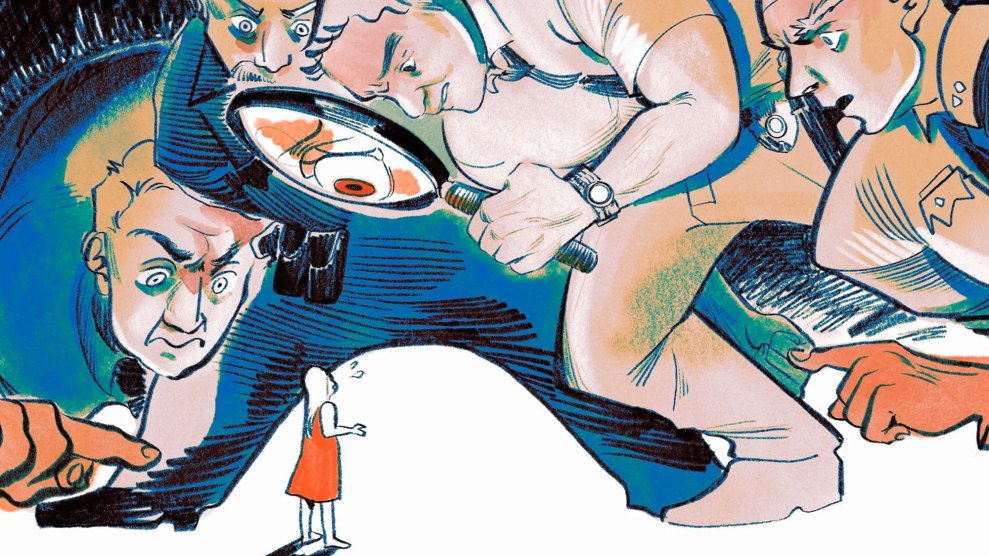
Jon Selden never had a credit card before he went to college. But a few weeks after arriving at Brigham Young University, he received an offer mailed to his dorm room for a preapproved Citibank card. Before Selden even managed to find a job or establish a credit history, he was running up thousands of dollars in debt.

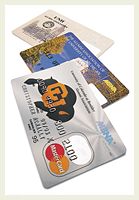
Credit card companies like Citibank aren't the only institutions profiting from student spending. Like other colleges and universities across the country, Brigham Young has done a lucrative business with big lenders, enhancing university revenues at the expense of students. BYU received an estimated $70,000 last year in exchange for stuffing offers for Citibank cards into 1 million shopping bags at the university bookstore. The University of Tennessee has a seven-year, $16.5 million deal with First USA that gives the company the names and addresses of alumni, employees, and more than 40,000 students. The University of Michigan and Michigan State have struck similar deals with MBNA, the self-proclaimed "world's largest independent credit card issuer," worth an estimated $14 million.

Companies are focusing their marketing efforts on the 250 largest public schools and their highly profitable student populations. But while universities profit handsomely from the deals, many students wind up deep in debt. Ten percent of all college students owe $7,000 or more to credit card companies, and the number of people under 26 filing for bankruptcy tripled between 1995 and 2000. "They are trying to entrap students in debt," says Robert Manning, author of Credit Card Nation.

First USA offers cards through 200 schools, including Yale, Notre Dame, and Duke, and now markets them through fraternities and sororities. The University of Oklahoma has a 10-year, $13 million deal that gives the company exclusive rights to market Visa cards to all employees, alumni, and students. The company is also the only lender allowed to set up tables at school football games, offering a special Sooners card to some 80,000 fans each week. "Every major university has a credit card agreement," explains Jeff Hickman, an Oklahoma spokesman.

Every major university also has students burdened by massive debts that they have little hope of paying off. Sean Moyer, a National Merit Scholar, racked up more than $12,000 on 12 credit cards while enrolled at the universities of Oklahoma and Texas. In 1998, even though he was working two jobs to pay off the cards, he believed his debt would prevent him from attending law school. "He just said he felt like he was a failure," recalls his mother, Janne O'Donnell. Nine days after confessing his fears, the 22-year-old Moyer hung himself in his bedroom closet.

Congress is considering a bill that would require companies to offer students starter cards with lower credit limits and to provide more information about fees and penalties. "There simply has to be some limit on credit card companies before more students end up in bankruptcy," says O'Donnell. Although the bill has support from Democrats, it is unlikely to win approval from the Republican-controlled House -- ensuring that many students will have to work for years to pay off cards marketed to them when they were teenagers.

By the time Jon Selden graduated from Brigham Young last year, he had accumulated $8,000 in debt. Now enrolled in law school, he lives with his parents and waits tables rather than filing for bankruptcy. "Was I stupid to run up that debt?" says Selden. "You bet. But I was 18."

Image: Paul Moore SF


Post a Comment

Your Name: 

Your Comment: 
 
Please press "Submit" only once to avoid double-posting.
All HTML formatting is removed from comments.
Read the Mother Jones community rules here.

Comments:

(August 2007) I am an OU graduate, and wish to thank you for reminding us of the unpleasant fact that an OU student had killed himself while he was in a state of anxiety over his credit card debt. This is exactly the kind of news which OU’s corrupt president David Boren would like to see buried. I have more information. OU enrollment costs today are three times higher than they were in 1994, when Boren, mentor of George Tenet, resigned from his seemingly safe U.S. Senate seat to become OU president. Boren has been using much of the extra cash to repay revenue bonds he has issued to finance his massive construction campaign. In the meantime, because of affordability barriers, OU enrollment has been declining. Freshmen enrollment in 2006 was 20% less than it was in 2002. Sophomore enrollment declined 15% in the same period. From the National Center for Public Policy and Higher Education, Oklahoma colleges and universities get an F for affordability. To avoid financial catastrophe, Boren has been annually raiding Texas to recruit enrollees from there, and telling lies along the way to promote the school. Readers may email me for documentation (mpwright9@aol.com).
Posted by:Michael P. WrightAugust 11, 2007 12:08:22 PMRespond ^
According to Nellie Mae, an incoming freshman who has no debt in September will have approximately $1500 in credit card debt by May and most get their credit card from a direct mail marketing offer. Parents should start by sitting down with their kids and going over their own credit card bill. Explain about finance charges, grace periods and minimum payments. Explain about rotating balances and how much extra you will pay each year in interest charges if you only pay the minimum payment. It is also a good idea to show them a copy of your credit report and the effect of credit cards and other debt on their credit score and future financial options. There are a lot of credit cards available and the choices can be confusing. Help your student shop around for the best credit card. Studies show that most college students apply for a card based on a direct mail offer. These cards often sound good in the promotion, but hide the true terms and fees, making it is easy for a first-time applicant to get the wrong card. Get only one card and pay it off each month. Stick with this card to build a long credit history. One way to help keep control of your card is to sign up for online alerts from the card issuer. They now notify you when you are close to your limit and before your payment is due. Unfortunately, recent changes by FICO have eliminated the option of simply adding your child to your credit card account to help them get their start. Parents need to know that they if they just add a their child as an authorized user on their credit card, it no longer helps build the authorized user's credit score. Fair Isaac, the company that created the FICO credit score, recently announced that its new scoring model will no longer factor the scores of authorized users into its FICO accounts. Authorized users on credit cards are those who are not responsible for paying the balances but are approved to make purchases with the cards. Often, authorized users are family members of a cardholder, such as a college student, who have little or no credit of their own. This change means that college students should apply for a credit card in their own name while they are in college because this will be the easiest time in their lives to get a credit card. If they wait until after college, they will probably have to start with a secured card or store card to begin building credit. www.Lowcards.com offers additional tips educating college students and consumers about credit card debt.
Posted by:Bill HardekopfAugust 12, 2007 5:44:26 AMRespond ^
If 18 year old kids can drive tanks and make split decisions on whether to fire their rifle and take a life in Iraq and Afganistan then shouldn't a college student whom is supposedly more educated be able to use a credit card responsibly. Stop babying these kids if they blow their money now they'll blow it later. You never here all the success stories of the much greater amount of students that didn't screw up like a few but much higher publicized kids do then cry about it. Grow up world. I'm sorry but my Dad had 3 kids by the time he was 21. He raised us well. That is responsibility. Boo Hoo that little johnny bought too many cds and now can't pay for them. Life get's alot harder and more difficult. These kids have sex, drive, rent apts, have jobs, have 600 dollar cell phones, but can't seem to figure out how not to buy a bunch of crap they don't need. They better get used to serving tables and changing oil.
Posted by:grown upSeptember 4, 2007 10:42:25 PMRespond ^

Jail.org - Inmate Search
Criminal records, instant public records & people search & current court records. www.jail.org

U.S. Public Records Search
Search County & State Court Records, Criminal records, Vital and Adoption Records www.PublicRecordsInfo.com

Records.com - People Search
Public Records and Background Checks. Instantly Search Criminal Records, Addresses and Court Records www.Records.com

Court Records & County Records
Find Instant Public Records, Criminal Records as Well as County Property Records Search. www.PublicRecordsIndex.com


bookIN PRINT

CLICK HERE
for more great reading

headphones IN TUNE
New music every issue

CLICK TO LISTEN


This article has been made possible by the Foundation for National Progress, the Investigative Fund of Mother Jones, and gifts from generous readers like you.

© 2002 The Foundation for National Progress

About Us   Support Us   Advertise   Ad Policy   Privacy Policy   Contact Us   Subscribe   RSS