This story first appeared on the TomDispatch website.
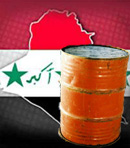
Has it all come to this? The wars and invasions, the death and destruction, the exile and torture, the resistance and collapse? In a world of shrinking energy reserves, is Iraq finally fated to become what it was going to be anyway, even before the chaos and catastrophe set in: a giant gas pump for an energy-starved planet? Will it all end not with a bang, but with a gusher? The latest oil news out of that country offers at least a hint of Iraq’s fate.
For modern Iraq, oil has always been at the heart of everything. Its very existence as a unified state is largely the product of oil.
In 1920, under the aegis of the League of Nations, Britain cobbled together the Kingdom of Iraq from the Ottoman provinces of Basra, Baghdad, and Mosul in order to better exploit the holdings of the Turkish Petroleum Company, forerunner of the Iraq Petroleum Company (IPC). Later, Iraqi nationalists and the Baath Party of Saddam Hussein nationalized the IPC, provoking unrelenting British and American hostility. Hussein rewarded his Sunni allies in the Baath Party by giving them lucrative positions in the state company, part of a process that produced a dangerous rift with the country’s Shiite majority. And these are but a few of the ways in which modern Iraqi history has been governed by oil.
Iraq is, of course, one of the world’s great hydrocarbon preserves. According to oil giant BP, it harbors proven oil reserves of 115 billion barrels — more than any country except Saudi Arabia (with 264 billion barrels) and Iran (with 138 billion). Many analysts, however, believe that Iraq has been inadequately explored, and that the utilization of modern search technologies will yield additional reserves in the range of 45 to 100 billion barrels. If all its reserves, known and suspected, were developed to their full potential, Iraq could add as much as six to eight million barrels per day to international output, postponing the inevitable arrival of peak oil and a contraction in global energy supplies.
Nailing Down the Energy Heartland of the Planet
Iraq’s great hydrocarbon promise has been continually thwarted by war, foreign intervention, sanctions, internal disorder, corruption, and plain old ineptitude. Saddam Hussein did succeed for a time in elevating oil output, in the process raising national income and creating a well-educated middle class. However, his ill-conceived invasions of Iran in 1980 and Kuwait in 1990 led to devastating attacks on Iraqi oil facilities, as well as trade embargoes and crippling debt, erasing much of his country’s previous economic gains. The trade sanctions imposed by Presidents George H.W. Bush and Bill Clinton in the wake of the First Gulf War only further eroded the country’s oil-production capacity.
When President George W. Bush launched the invasion of Iraq in March 2003, his overarching goals all revolved around the geopolitics of oil. He and his top officials were intent on replacing Saddam Hussein’s regime with one that would prove friendly to American oil interests. They also imagined that, greeted as liberators by a grateful population, they would preside over a radical upgrading of Iraq’s petroleum capacity, thereby ensuring adequate supplies for American consumers at an affordable price. Finally, by building and manning a constellation of major military bases in a grateful Iraq, they saw themselves ensuring continued American dominance over the oil-soaked Persian Gulf region, and so the energy heartland of the planet.
All of this, of course, proved to be a mirage. The U.S. invasion and ensuing occupation policies provoked a bitter Sunni insurgency that quickly overshadowed all other American concerns, including oil. As a result, no matter how much money they poured into the task, the Bush administration and its Baghdad agents found themselves incapable of boosting petroleum output even to the levels of the worst days of Saddam Hussein’s regime — and so their plans to use oil revenues to pay for the war, the occupation, and the reconstruction of the country all vanished into thin air.
 The data provided by BP on yearly production tallies cannot be starker when it comes to the impact on oil output of the insurgency, rampant corruption, the loss of the nation’s oil professionals (many of whom fled into exile amid sectarian warfare), and other related factors. Prior to the American invasion, Iraq was pumping 2.6 million barrels of oil per day, already significantly below its pre-invasion peak of 3.5 million barrels per day. In the first year of the ill-starred U.S. occupation, production quickly plunged to a paltry 1.3 million barrels per day. Only in 2007 did it finally top the two million mark and, with improved security, 2.4 million in 2008. Assuming conditions continue to improve, Iraqi output could, for the first time, exceed pre-invasion levels, though barely, in 2009 or 2010 — six years or more after Baghdad fell to American forces.
A Sea Change in Iraqi Oil Production?
Until recently, most analysts assumed that Iraq would continue, at best, to make modest progress in its efforts to increase daily output. There were too many obstacles, it was argued, to achieve dramatic breakthroughs. These included continued insurgent attacks on pipelines and production facilities; corruption in the Oil Ministry and major energy production enterprises; the failure of parliament to adopt a national hydrocarbons law; differences between the Kurdish Regional Government (KRG) and the central government over who has the right to award what sort of oil contracts in Kurdish-controlled territories; and the reluctance of major foreign oil firms to venture into, or invest in a major way in such a dangerous and unstable place.
Recently, however, the Oil Ministry has made noticeable progress in overcoming at least some of these obstacles. Under the leadership of Oil Minister Hussain al-Shahristani, a former nuclear scientist who was jailed and tortured by Saddam Hussein for refusing to assist in the development of nuclear weapons, corruption has been substantially reduced and various production bottlenecks eliminated. Shahristani has also won support from Prime Minister Nuri Kamal al-Maliki for the participation of foreign firms in the development of Iraqi oil fields, even though this has alienated many in Iraq who oppose any such involvement. Once derided for ineptitude, the Oil Ministry is beginning to be viewed as a functioning, professional operation.
As a result, there are clear indications that Iraq’s oil industry could be poised for a major turnaround. Among the most significant recent developments:
* Late last year, Iraq’s state-owned North Oil Company signed a $3.5 billion, 20-year service contract with the Chinese National Petroleum Corporation (CNPC) to develop the Adhab oil field in Wasit province, southeast of Baghdad. Originally negotiated under the Saddam Hussein regime, the deal was put on hold after the 2003 invasion and only given final approval in November 2008. This is the first major contract the government in Baghdad has signed with a foreign oil firm since the Iraq Petroleum Company was nationalized in the 1970s. It also represents the first significant investment by a company from China in Iraq. Under the agreement, CNPC and its partners will develop the Adhab field and deliver all resulting crude oil to state refineries; as the field’s main operator, CNPC will be paid a fee by the Iraqi government for its engineering work and all delivered petroleum.
* In May, the Oil Ministry reached an accord with the Kurdistan Regional Government that, for the first time, will allow the Kurds to export oil from fields under their control. Previously, the Baghdad government had refused to recognize any contracts signed by the KRG with private oil firms to develop fields in their territory and had prevented the Kurds from exporting oil from these fields through pipelines controlled by the central government. Under the accord, the KRG will initially be allowed to export 100,000 barrels per day from the Tawke and Taq Taq fields, with higher rates expected in the future; 73% of the resulting revenues will go to the central government, 15% to the Kurds, and 12% to the foreign oil companies that signed production contracts directly with the KRG, bypassing the central government in Baghdad. This agreement paves the way for a significant increase in output from Kurdish-controlled areas, which are thought to hold substantial reserves of untapped petroleum.
* In June, the Oil Ministry conducted its first auction of rights to operate existing fields in the country’s major producing areas. This represented a major — even staggering — shift in policy, opening the door for the first time in three decades to the participation of major international oil companies in the operation — if not the ownership — of the country’s nationalized oil fields. Although opposed by many key groups in Iraq, ranging from the oil workers’ union to significant factions in parliament, the move was taken to secure outside expertise in modernizing and upgrading the country’s crumbling oil infrastructure, thereby boosting output in a country that still relies on oil for more than 75% of its gross domestic product and about 95% of its revenues. In fact, many foreign companies chose not to bid in the auction’s opening round, finding the returns being offered insufficiently attractive. Nevertheless, one Western firm, BP, won the right (in partnership with CNPC) to operate the giant Rumaila field, Iraq’s largest. The Oil Ministry has since indicated that it will conduct additional auctions, including one for the right to explore for oil, on terms as yet unrevealed, in the country’s undeveloped south and west — possibly laying the groundwork for significantly more intrusive participation by foreign firms.
Taken together, these steps — aimed at securing the necessary external financing and expertise to achieve a significant boost in production — represent a genuine sea change in the way the Oil Ministry has been overseeing the country’s hydrocarbons industry. If all goes as planned, it intends to increase output by 1.5 million barrels per day, and another four to five million barrels by 2017. These efforts, if successful (and given recent history, that remains a big “if”), would place Iraq among the world’s top four or five oil producers, along with Saudi Arabia, Russia, and the United States.
A New Petro-State Servicing the Global Economy?
No one should underestimate the potential obstacles in the way of this objective. Any number of factors — a rise in opposition to giving away any part of the national “patrimony” to foreigners, a significant increase in insurgent violence, heightened factional fighting in Baghdad, a sharpening of tension between Baghdad and the Kurds, an increase in corruption — could prevent the realization of these ambitious goals. Moreover, pending the passage of a national oil and gas law (a goal pursued by U.S. officials for years), the major foreign oil companies will remain reluctant to sink too much money into Iraq, fearful that their assets will not be protected.
Nevertheless, it appears that, for the first time since the outbreak of the Iran-Iraq War in 1980, the stars in the energy firmament are aligning in ways that may favor Iraq’s reemergence as a major oil producer. Whereas the major powers once competed among themselves for influence in Iraq or backed one or another of Iraq’s local rivals in efforts to weaken or contain that country, all now seem inclined to invest in, and benefit from, the reconstruction of its energy infrastructure. The Bush administration, which looked with alarm at Saddam Hussein’s growing ties to Russia and China, invaded the country in part to reassert American dominance in the Persian Gulf region and diminish the role played by Moscow and Beijing. Today, Washington appears to welcome the growing role of Chinese and Russian firms in the rehabilitation of Iraq’s dilapidated energy infrastructure.
It’s a reasonable assumption that behind this unprecedented shift lies an acknowledgement of the inescapable reality of peak oil. As things stand now, the world will soon reach a maximum level of sustainable daily oil output, followed by an inevitable contraction in available supplies. Many experts believe that the peak in conventional (liquid) oil output is likely to occur in the very near future, perhaps in the 2010-2015 timeframe, with global output topping out about 5 to 10 million barrels per day higher than today’s 85 million barrels.
Hitting the peak moment in that timeframe, and at that level, would prove devastating to the world economy, as global energy demand is expected to climb far higher, thanks to rising consumption patterns in China, India, and other dynamos of the developing world. It’s not hard, then, to do the math. An addition of perhaps six million supplemental barrels per day from Iraq would make a striking difference in the energy equation. In fact, it might prove the difference between squeaking by and a catastrophic worldwide shortage. Under such circumstances, it is understandable that — no matter what their governments felt about the Bush administration’s invasion and occupation of Iraq — the major powers now share a common interest in facilitating that country’s recovery as a major oil exporter.
For devastated Iraq, of course, these last years were a disaster and real reconstruction of the country still remains a long way off. For the United States, gone are expectations of converting Iraq into a model Middle Eastern democracy, or of inserting a Western-trained, pro-U.S. regime in Baghdad. Nor is there any expectation that the state-owned Iraq National Oil Company will be completely privatized — once the dream of Bush-era neocons. Nonetheless, the (re)emergence of a functioning Iraqi petro-state working closely with foreign energy firms to boost global oil supplies (with American troops, whether based in Iraq or neighboring countries, providing ultimate security) would be an outcome that could be sold to Congress and, presumably, a majority of the American public.
Within Iraq itself, conditions may favor such an outcome. Although various Iraqi factions have enormous differences, all recognize that their future prosperity rests on the successful development of the nation’s hydrocarbon reserves. While Shiites, Sunnis, and Kurds may each hope to benefit disproportionately from this great treasure, they all realize that some degree of cooperation — for example, in the construction and maintenance of export facilities — is essential to their ambitions, however disparate. While the bargaining over the terms of cooperation may seem endless, and violence may sometimes accompany these negotiations, it is likely that some sort of collaborative structure will, in the end, emerge. A gradual drawdown, if not total departure, of American forces will, in all likelihood, only accelerate this process.
So it has finally come to this dismal possible end point: after all the blood and tears, all the death and destruction, almost all interested parties seem to be returning to the only vision of the country, however depressing, that has demonstrated any viability. In the future, Iraq is likely to be an oil-fueled petro-state with no function other than to service global markets and enrich local elites as well as the technocrats that assist them. This may be not be an inspiring vision — especially for Iraqis who have suffered so much — but it might possibly be the only reality available that will circumvent the horrific bloodletting of the past 30 years.
Michael T. Klare is a professor of peace and world security studies at Hampshire College in Amherst, Massachusetts. He is the author, most recently, of Rising Powers, Shrinking Planet: The New Geopolitics of Energy (Henry Holt).