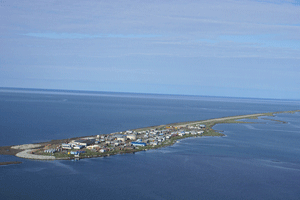
Kivalina, Alaska.<a href="http://www.flickr.com/photos/uscgpress/3817629717/sizes/m/in/photostream/">US Coast Guard Press</a>/Flickr.
Two new studies by the Alaska Native Tribal Health Consortium report that warmer climates are threatening the Northwest Arctic’s food-cooling and water-treatment systems, and posing various food- and waterborne health risks to nearby communities.
According to the studies, two small communities in the region, Kivalina and Point Hope, are experiencing longer warm seasons that cause sanitary water systems to flood, damage “washaterias” (places where people can get clean water to bathe or wash clothes), and worsen algae blooms. In 2004, Kivalina had to close its washateria after the belated freeze-up damaged its leach field system for the winter; during the shut down, the village reported a rise in respiratory and skin diseases. In Point Hope, algae blooms between 2007 and 2008 became so frequent and large in the nearby lake that the village’s water that technicians had to clean filters more than a dozen times daily.
Worse, warmer temperatures have meant longer growing seasons, triggering a spike in the number of wood-chewing beavers, which are suspected of contaminating local riverways with solid waste and elevating the risk of giardia, a stomach infection commonly known as “beaver feaver.”
“In general, people could drink from [the creeks and rivers] freely,” Michael Brubaker, director of the health consortium’s Center for Climate and Health, told the Arctic Sounder. “Now they have beavers defecating into the river.”
Longer warm seasons also mean shorter periods in which villagers can dry caribou, fish, and seal meat before rotting, the studies say, along with melting ice cellars that usually store raw meat. That can lead to more stomach infections from botulism, salmonella, and E. coli, not to mention the more immediate threat of attracting polar bears close to town as milder temperatures expose the odor of raw meat.
The Arctic’s problems are not entirely isolated: Warmer temperatures have resulted in some 10,000 cases of food poisoning in the United Kingdom (PDF) as warmer weather breeds bacteria and other pathogens in meats. And both food regulators and scientists in the US are increasingly concerned about food contamination caused by germs that like heat. In the remote corners of the Arctic, however, where temperature swings can be more dramatic than other regions, the research is only getting started, and funding for adaptation projects has been slow to come. “We can’t wait around for 15 or 20 years to make sure people have adequate water and sanitation,” Brubaker said.