The Science of Pickles

<a target="_blank" href="http://www.flickr.com/photos/marik0/2793709363/sizes/z/in/photostream/">mariko</a>/Flickr

Get your news from a source that’s not owned and controlled by oligarchs. Sign up for the free Mother Jones Daily.

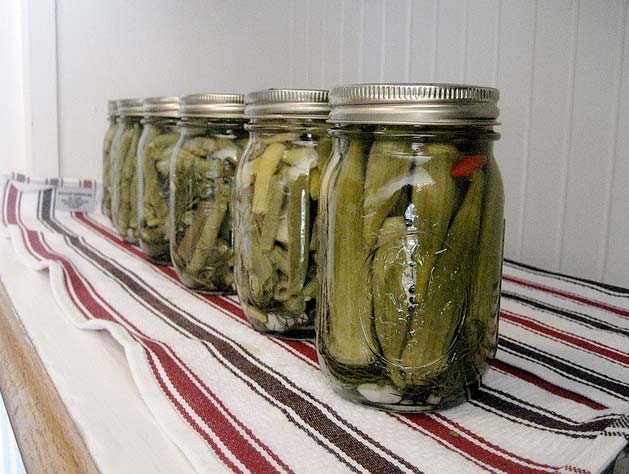
Pickles are mysterious things. You take a regular old vegetable. Just your average cucumber, carrot, bell pepper. Add some brine, maybe a few spices, and then, a few days later, presto! A pickle. But what really causes this magical transformation? The latest episode of The Field Trip podcast sets out to find an answer:

On our tastiest field trip yet, we investigate the delicious world of fermentation and the bacteria that make it possible. We take a trip through Cultured Pickle Shop in Berkeley, where owner Alex Hozven explains the art and science behind fermenting food and shows us how they make sauerkraut, pickles, kombucha and other mysterious surprises. At Cultured, they use traditional methods of fermentation — that means no heat, and no vinegar, but plenty of Lactobacilli and other friendly microbes. Come with us as we explore “the cave” and learn about its billions of tiny workers.

Then we check in with fermentation revivalist Sandor Katz, author of Wild Fermentation: The Flavor, Nutrition and Craft of Live-Culture Foods and expert on all things pickle-y. We hear about some surprising and tasty treats that we had no idea are made through fermentation, and learn about some of the ancient roots of pickling, and why it was such an important method of food preservation in the era before refrigeration.

Have a listen:
Play

Great reporting takes time. Funding it takes less than 60 seconds.

This is the season for packed schedules and long to-do lists. For us too: Mother Jones reporters are busy digging deep into the next powerful investigations that we'll be publishing here soon. So we'll make this quick: We can't do this work without your support.

We're a nonprofit newsroom, which means articles like the one you just read are funded by readers, never by a corporate owner. And if you've read this far down the page, that means the story mattered to you. Help fund more of this essential work by making a donation of any amount today. It'll only take a minute. Thanks in advance for powering the next story.

We Recommend

Latest

Sign up for our free newsletter

Subscribe to the Mother Jones Daily to have our top stories delivered directly to your inbox.

Get our award-winning magazine

Save big on a full year of investigations, ideas, and insights.

Subscribe

INDEPENDENT. BECAUSE OF YOU.

Mother Jones has no billionaires calling the shots—just readers like you making fearless reporting possible

Donate