Native American Dishes You Can Cook This Week

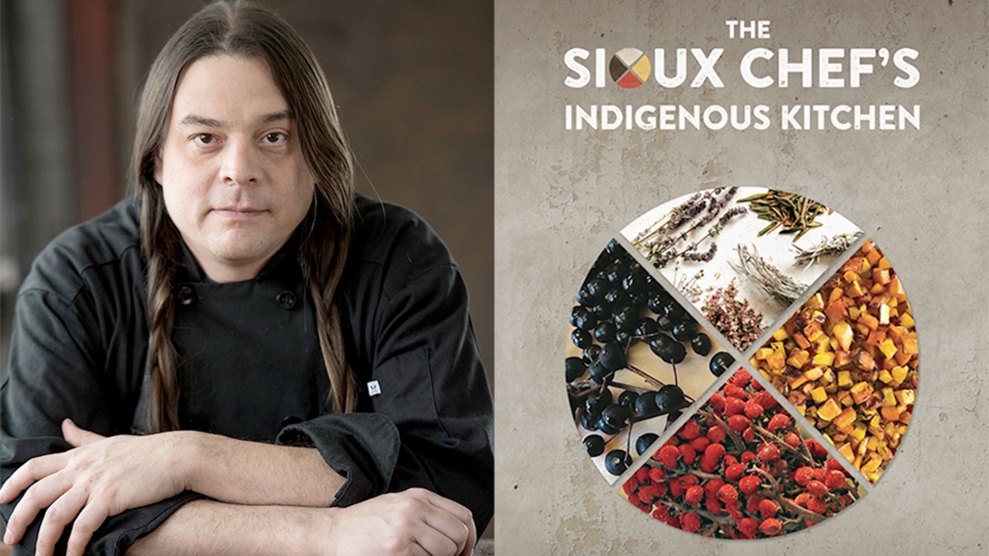
“Sioux Chef” Sean Sherman is on a mission to revive the vibrant cuisine of his ancestors.

Courtesy The Sioux Chef

Get your news from a source that’s not owned and controlled by oligarchs. Sign up for the free Mother Jones Daily.

Lakota Chef Sean Sherman, known as “The Sioux Chef,” is on a mission to revive the pre-Reservation cuisine of Indian tribes—food that’s largely gone missing from the American diet. Now Sherman is out with a new cookbook, The Sioux Chef’s Indigenous Kitchen, featuring sumptuous recipes for North Woods ingredients: think griddled wild rice cakes, wild greens pesto, maple sage roasted vegetables, duck and wild rice pemmican (recipe here), and sweet and sour roast goose with autumn squash and cranberries (recipe here).

Sherman joined us last year on Bite podcast to talk about paying tribute to his culinary legacy:


As I wrote in this profile of Sherman:

To construct this “un-modernist cuisine,” he says, he delved into historical documents, cookbooks, foraging manuals, first-person accounts, and even archeological texts. The process was like trying to take “this giant broken pot that was shattered all over the place and piece it back together.”

Sherman concocts dishes like corn and sumac-seared Walleye, focusing on “building plates that speak of a certain region, almost like a walk around a lake.” Indeed, trees, shrubs, and buds you’ve probably never imagined were edible turn up in his meals. He even has a culinary ethnobotanist on staff to help him identify wild plants that he can use.

Cooking this way doesn’t just pay homage to Sherman’s culture: He also sees this cuisine as much healthier than the typical American diet. Frybread has 700 calories and 25 grams of fat, one of the many reasons that modern Native Americans struggle with diabetes and obesity. Traditional Native American cooking, on the other hand, is “dairy-free, gluten-free, soy-free, sugar-free—super diet-friendly,” Sherman says.
What’s independent journalism worth to you?

Our news will always be free to read, watch, and listen to online. But what is its value?

Unbiased reporting on the issues that billionaire-owned newsrooms won’t touch. Fearless research into the dark corners of government and corporations. Ferociously fact-checked news that focuses on the facts, and the facts alone.

It IS free for you and every reader, viewer, and listener to utilize. But it’s not free for our team to make. So, what’s it worth to you? Let us know by making a donation: Make a one-time donation today to support this work. Or make a monthly sustaining donation to help us plan for the future.

Whatever you choose, know that you’re supporting more independent, investigative journalism in a time when we need it most.

What’s independent journalism worth to you?

Our news will always be free to read, watch, and listen to online. But what is its value?

Unbiased reporting on the issues that billionaire-owned newsrooms won’t touch. Fearless research into the dark corners of government and corporations. Ferociously fact-checked news that focuses on the facts, and the facts alone.

It IS free for you and every reader, viewer, and listener to utilize. But it’s not free for our team to make. So, what’s it worth to you? Let us know by making a donation: Make a one-time donation today to support this work. Or make a monthly sustaining donation to help us plan for the future.

Whatever you choose, know that you’re supporting more independent, investigative journalism in a time when we need it most.

We Recommend

Latest

Sign up for our free newsletter

Subscribe to the Mother Jones Daily to have our top stories delivered directly to your inbox.

Get our award-winning magazine

Save big on a full year of investigations, ideas, and insights.

Subscribe

INDEPENDENT. BECAUSE OF YOU.

Mother Jones has no billionaires calling the shots—just readers like you making fearless reporting possible

Donate