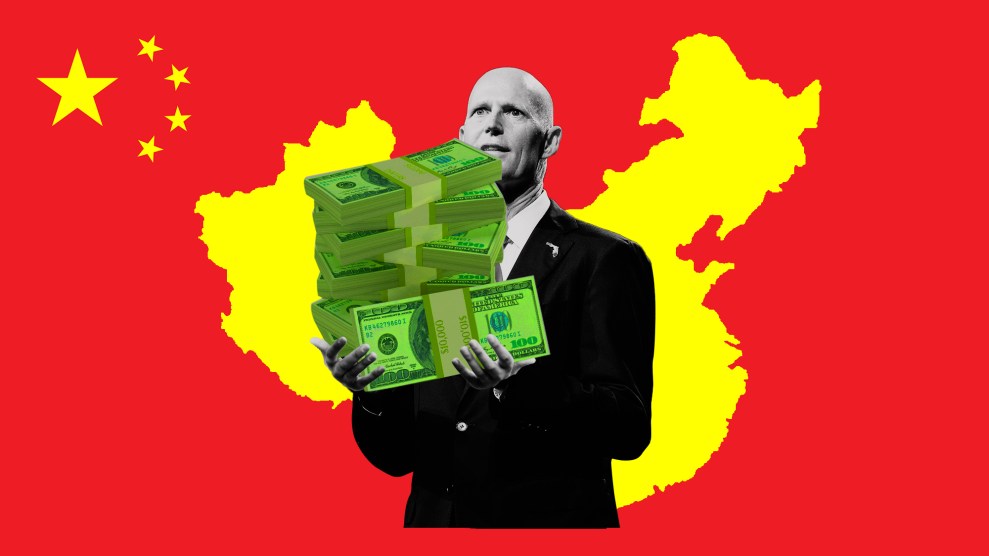
BinC Watch: Donald Trump Still Has No Idea How Government Debt Works

Get your news from a source that’s not owned and controlled by oligarchs. Sign up for the free Mother Jones Daily.


Donald Trump last week:

I’ve borrowed knowing that you can pay back with discounts. I’ve done very well with debt….Now we’re in a different situation with the country, but I would borrow knowing that if the economy crashed, you could make a deal. And if the economy was good it was good, so therefore, you can’t lose.

Donald Trump today:

It was reported in the failing New York Times and other places that I want to default on debt. You know, I’m the king of debt. I understand debt better probably than anybody….But let me just tell you, if there is a chance to buy back debt at a discount, in other words, interest rates up, and the bonds down, and you can buy debt, that’s what I’m talking about.

….But in the United States, with bonds that won’t happen because in theory the market doesn’t go down so that you default on debt and that’s what happened. So here’s the story, just to have it corrected. If we have an opportunity where interest rates go up and you can buy debt back at a discount, I always like to be able to do that, if you can do it. But that’s all I was talking about. They have it like I’m going to go back to creditors, and I am going to renegotiate and restructure debt, it’s ridiculous and they know it’s ridiculous.

I’ll give Trump this much: it was ridiculous and everyone knew it was ridiculous. It was pure Trump bullshittery. But here’s the thing: even if you accept that this was what Trump was talking about, it’s still ridiculous. The US government isn’t a third party trading Treasury bonds. It’s the issuer of the bonds. If interest rates go up, should the Treasury refinance? No: it should keep paying the lower interest rates on its outstanding bonds. But what if interest rates go down? The answer is still no. Let’s hand the mic over to the Economist:

The interest rate on Treasury bonds is fixed. If the government issues debt during a low-rate period, that’s good news. To refinance that debt in a period of higher bond yields [i.e., lower bond prices], the government would have to borrow from the market at much higher rates….Currently, most of the US’s longer-term debt trades above par value because it was issued at a time when bond yields were higher. For example there is a bond with a 2030 maturity and a 6.25% coupon; it trades at 152 cents on the dollar. Would it be worth offering 155 cents on the dollar upfront, and refinancing the debt at today’s lower rates? The dollar value of US debt would rise, not fall, in such circumstances.

In short, any voluntary deal with the market would require the government to pay fair value. And unless you think the Treasury bond market is mispriced (and it is the most liquid market on the planet), the government is unlikely to profit. It might be sensible for the government to alter the patterns of new Treasury issuance; borrowing long-term to lock in low rates for a generation. The Treasury has discussed the idea of refinancing illiquid bonds to improve market liquidity. But that is quite a different idea from Mr Trump’s proposal; the interest savings would be trivial.

Here’s the scary thing: debt really is one of the few things that Trump probably knows a bit about. It’s certainly bitten him in the ass often enough. And yet he still has no idea how it works. He continues to think that the federal government is basically the same thing as a trader on the Goldman Sachs trading desk.

It’s not. Whatever Trump is talking about, it won’t work. Sovereign debt is sovereign debt, and it gets paid off at 100 cents on the dollar. Trump may think everyone except Trump is an idiot, but I’m pretty sure the folks at the Fed and the Treasury are already keenly aware of how to handle open market operations to maximize value for the US government. Someone at the Trump Organization needs to clue him in about how all this stuff works.
From the desk of Mother Jones CEO, Monika Bauerlein...

Newsrooms can be funded in many ways. One of the most controversial (and volatile) ways is by a for-profit corporation or a billionaire owner. We see it across the headlines on a weekly basis: the claw backs in public media, the gutting of The Washington Post, the bending over backwards to appeal to Trump and his allies.

But not here.

When Mother Jones first started publishing 50 years ago, our founders made a critical decision: to be a reader-supported nonprofit. They knew that no corporate owner would be interested in a muckraking newsroom; they also knew that no muckraking newsroom would be interested in following the agenda of a corporate owner.

And so, we’ve been reader-funded for half a century. We rely on contributions from our readers—readers like you—whether it’s $50, or $15 a month, or whatever fits your budget. People give what they can, and every donation makes a difference for our newsroom, which has grown tremendously—in size and reach and renown—since its inception in 1976.

You may be wondering: What does it take to publish an investigation? And what does my donation actually fund? The answers are one and the same: It takes people, resources, and time. And that’s what your donation funds directly.

Every donation Mother Jones receives from readers fortifies our newsroom, whether we’re covering underreported scandals out of Washington, DC, or the most important news of the day. And right now, each donation will be doubled because of our $50,000 match. So when you make a donation—$5, $50, any amount—it’ll go twice as far.

Your support keeps us going. If you’re able, donate today.

Thanks for reading.

—Monika

From the desk of Mother Jones CEO, Monika Bauerlein...

Newsrooms can be funded in many ways. One of the most controversial (and volatile) ways is by a for-profit corporation or a billionaire owner. We see it across the headlines on a weekly basis: the claw backs in public media, the gutting of The Washington Post, the bending over backwards to appeal to Trump and his allies.

But not here.

When Mother Jones first started publishing 50 years ago, our founders made a critical decision: to be a reader-supported nonprofit. They knew that no corporate owner would be interested in a muckraking newsroom; they also knew that no muckraking newsroom would be interested in following the agenda of a corporate owner.

And so, we’ve been reader-funded for half a century. We rely on contributions from our readers—readers like you—whether it’s $50, or $15 a month, or whatever fits your budget. People give what they can, and every donation makes a difference for our newsroom, which has grown tremendously—in size and reach and renown—since its inception in 1976.

You may be wondering: What does it take to publish an investigation? And what does my donation actually fund? The answers are one and the same: It takes people, resources, and time. And that’s what your donation funds directly.

Every donation Mother Jones receives from readers fortifies our newsroom, whether we’re covering underreported scandals out of Washington, DC, or the most important news of the day. And right now, each donation will be doubled because of our $50,000 match. So when you make a donation—$5, $50, any amount—it’ll go twice as far.

Your support keeps us going. If you’re able, donate today.

Thanks for reading.

—Monika

We Recommend

Latest

Sign up for our free newsletter

Subscribe to the Mother Jones Daily to have our top stories delivered directly to your inbox.

Get our award-winning magazine

Save big on a full year of investigations, ideas, and insights.

Subscribe

INDEPENDENT. BECAUSE OF YOU.

Mother Jones has no billionaires calling the shots—just readers like you making fearless reporting possible

Donate