Your Smartphone Is the Latest Excuse for Low Inflation

Here’s the latest bizarre excuse for low inflation:

Holiday shoppers with smartphones can retrieve instant price comparisons that make bargain hunting easier—and the Federal Reserve’s job tougher….Most Fed policy makers agree they should keep gradually raising short-term rates in the months ahead to prevent the buoyant U.S. economy from overheating. But some are hesitant because inflation remains puzzlingly weak, running below 2% for most of this year. Moving too quickly could stall growth.

….In a nod to the growing practice, Ms. Yellen said in September that increased competition created by online retailers “may have reduced price margins and restrained the ability of firms to raise prices in response to rising demand.” She said in October that online shopping “could be helping to hold down inflation in a persistent way in many countries.”

For most of the 20th century, inflation was low. Then, starting in the late 60s, it climbed steeply for about 15 years, peaking around 1980. Then it spent the next 15 years declining to its old rate. Here’s what it’s looked like since then:
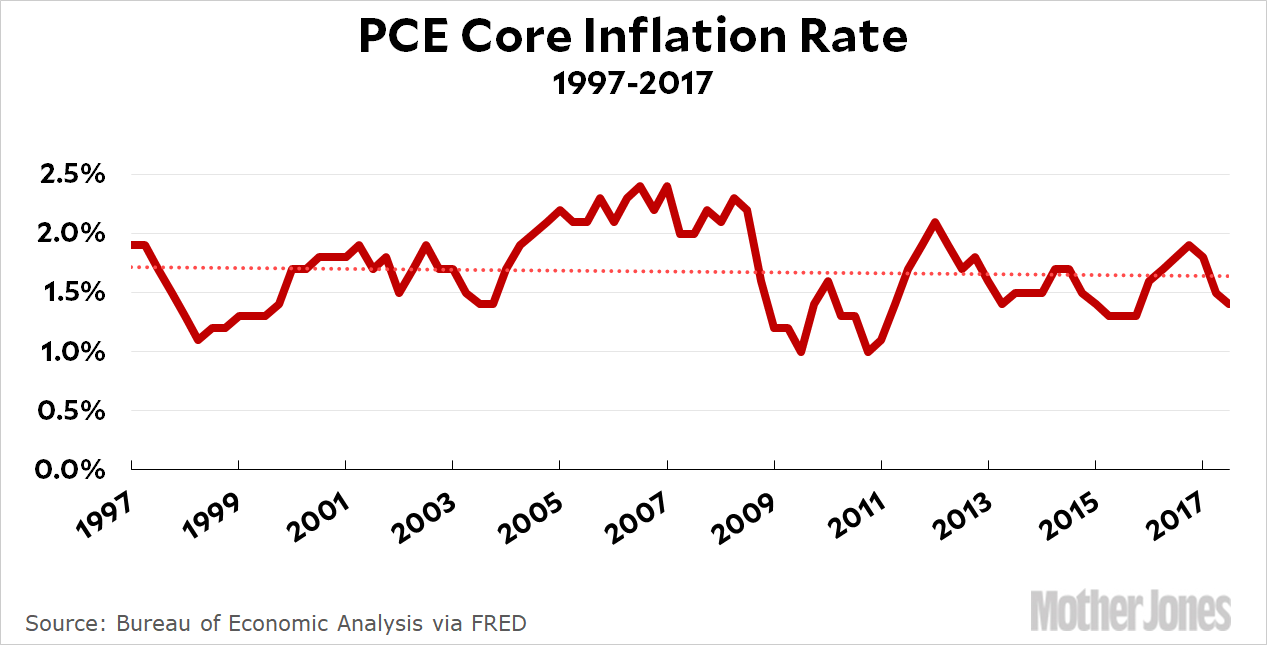
Core inflation—the Fed’s preferred bellwether—has been dead flat for 20 years. It hasn’t been very noisy, either, staying tightly within a band of 1-2.5 percent. It’s maintained this level through recessions and expansions, through war and peace, and even during the tight labor market of the late 90s. For a while, it was globalization that was supposedly to blame. But even after the China shock had mostly passed, inflation stayed low. So then it was because of retiring boomers. Or maybe the Great Crash of 2008. Then came the subsequent expansion, and inflation still remained quiet. So then it was because even though unemployment was low, the labor market was too loose. But now the labor market is starting to genuinely tighten, and inflation is going nowhere. So we’re adding web-based comparison shopping to the list.

Come on. If web shopping has constrained the ability of companies to raise prices, you’d expect corporate profit margins to be down. But they aren’t:
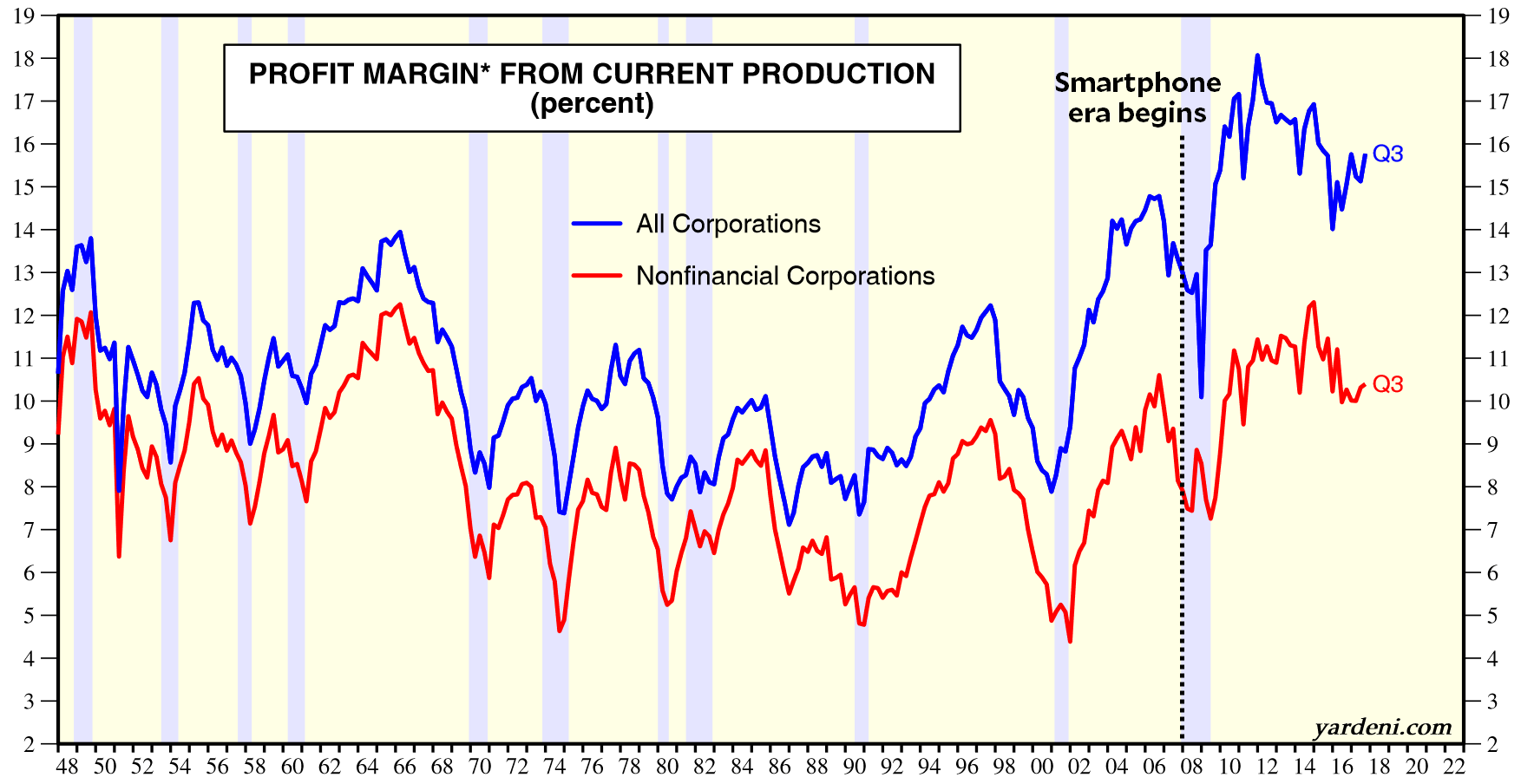
Granted, this shows profit margins for all corporations, and web shopping only affects a subset of consumer products. Still, you’d expect to see something. Instead, starting around the time smartphones took off, what we see is higher margins. They’re now at their highest point in 50 years.

I’m not smart enough to know what’s going on. But when inflation has stayed flat so widely and for so long, it’s hardly credible that it’s the result of a bunch of factors that have coincidentally followed one after the other. There’s something more fundamental going on. And this something has been at work for at least 20 years, and probably more like 30.

I’ll toss out one possibility that I think gets too little attention in general. The late 60s and 70s, when the world truly left the gold standard and opened up financial markets, represented a massive financial sea change that neither governments nor central banks were prepared to deal with. Add in a couple of oil shocks and the global economy became unmoored. It took years for financial rules to adapt and for the major central banks to learn from experience what they had known only academically before. But then they learned. They’re nowhere near perfect, but ever since the late 80s they’ve been surprisingly good at dealing with recessions and expansions—and just generally keeping the economy on an even keel. The result is that inflation is roughly as quiet as it was for most of the 20th century until the mid-60s.

Feel free to leave your own guesses in comments.
From the desk of Mother Jones CEO, Monika Bauerlein...

Newsrooms can be funded in many ways. One of the most controversial (and volatile) ways is by a for-profit corporation or a billionaire owner. We see it across the headlines on a weekly basis: the claw backs in public media, the gutting of The Washington Post, the bending over backwards to appeal to Trump and his allies.

But not here.

When Mother Jones first started publishing 50 years ago, our founders made a critical decision: to be a reader-supported nonprofit. They knew that no corporate owner would be interested in a muckraking newsroom; they also knew that no muckraking newsroom would be interested in following the agenda of a corporate owner.

And so, we’ve been reader-funded for half a century. We rely on contributions from our readers—readers like you—whether it’s $50, or $15 a month, or whatever fits your budget. People give what they can, and every donation makes a difference for our newsroom, which has grown tremendously—in size and reach and renown—since its inception in 1976.

You may be wondering: What does it take to publish an investigation? And what does my donation actually fund? The answers are one and the same: It takes people, resources, and time. And that’s what your donation funds directly.

Every donation Mother Jones receives from readers fortifies our newsroom, whether we’re covering underreported scandals out of Washington, DC, or the most important news of the day. And right now, each donation will be doubled because of our $50,000 match. So when you make a donation—$5, $50, any amount—it’ll go twice as far.

Your support keeps us going. If you’re able, donate today.

Thanks for reading.

—Monika

From the desk of Mother Jones CEO, Monika Bauerlein...

Newsrooms can be funded in many ways. One of the most controversial (and volatile) ways is by a for-profit corporation or a billionaire owner. We see it across the headlines on a weekly basis: the claw backs in public media, the gutting of The Washington Post, the bending over backwards to appeal to Trump and his allies.

But not here.

When Mother Jones first started publishing 50 years ago, our founders made a critical decision: to be a reader-supported nonprofit. They knew that no corporate owner would be interested in a muckraking newsroom; they also knew that no muckraking newsroom would be interested in following the agenda of a corporate owner.

And so, we’ve been reader-funded for half a century. We rely on contributions from our readers—readers like you—whether it’s $50, or $15 a month, or whatever fits your budget. People give what they can, and every donation makes a difference for our newsroom, which has grown tremendously—in size and reach and renown—since its inception in 1976.

You may be wondering: What does it take to publish an investigation? And what does my donation actually fund? The answers are one and the same: It takes people, resources, and time. And that’s what your donation funds directly.

Every donation Mother Jones receives from readers fortifies our newsroom, whether we’re covering underreported scandals out of Washington, DC, or the most important news of the day. And right now, each donation will be doubled because of our $50,000 match. So when you make a donation—$5, $50, any amount—it’ll go twice as far.

Your support keeps us going. If you’re able, donate today.

Thanks for reading.

—Monika

We Recommend

Latest

Sign up for our free newsletter

Subscribe to the Mother Jones Daily to have our top stories delivered directly to your inbox.

Get our award-winning magazine

Save big on a full year of investigations, ideas, and insights.

Subscribe

INDEPENDENT. BECAUSE OF YOU.

Mother Jones has no billionaires calling the shots—just readers like you making fearless reporting possible

Donate