This tweet seems to be getting a fair amount of attention this morning:
The US CDC is going to recommend that ‘essential workers’ are vaccinated before the over-65s, despite their *own modelling* showing this will result in more deaths.
Why? They say it is unethical to prioritise the elderly because they are not racially diverse enough. THREAD.
— David Algonquin (@surplustakes) December 17, 2020
The CDC recommendation in question is about who to prioritize first for the COVID-19 vaccine after frontline health care workers have been vaccinated: essential workers, high-risk adults, or the elderly. The answer is partly based on which strategy would prevent the most deaths, but it turns out that this depends a lot on whether the Pfizer and Moderna vaccines merely protect individuals from the coronavirus, or if they also prevent transmission to other people. We don’t know with certainty yet, but the testing so far suggests that they do in fact prevent or reduce transmission. If that’s the case, here’s the relevant CDC chart:
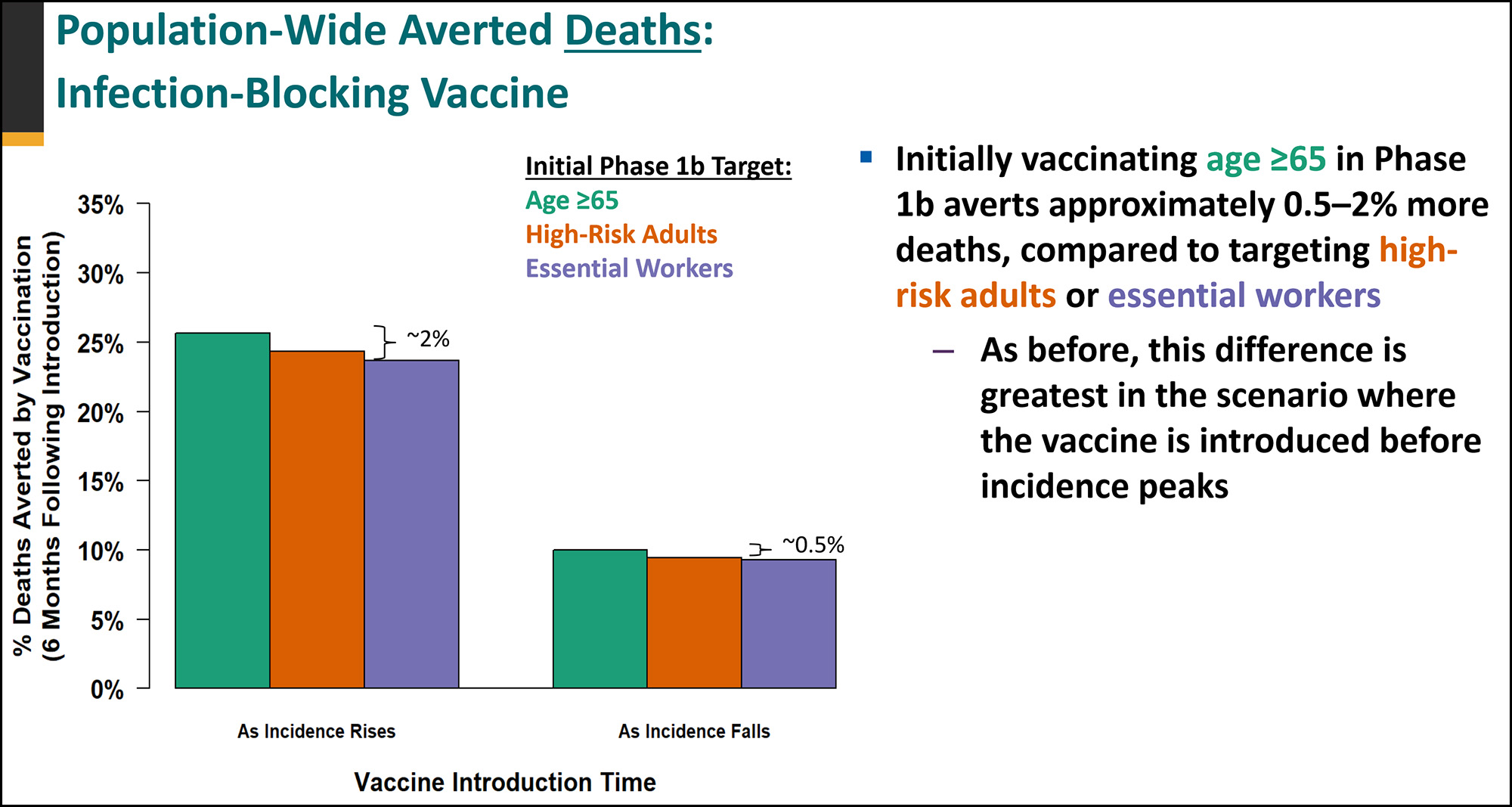
As you can see, vaccinations of all three groups produce very similar numbers of averted deaths. There are no error bars on this chart, but I’d guess that they’re fairly large, which justifies the CDC assertion that differences between the three groups are “minimal.” So the CDC moves on to ethical considerations. Here’s their summary:
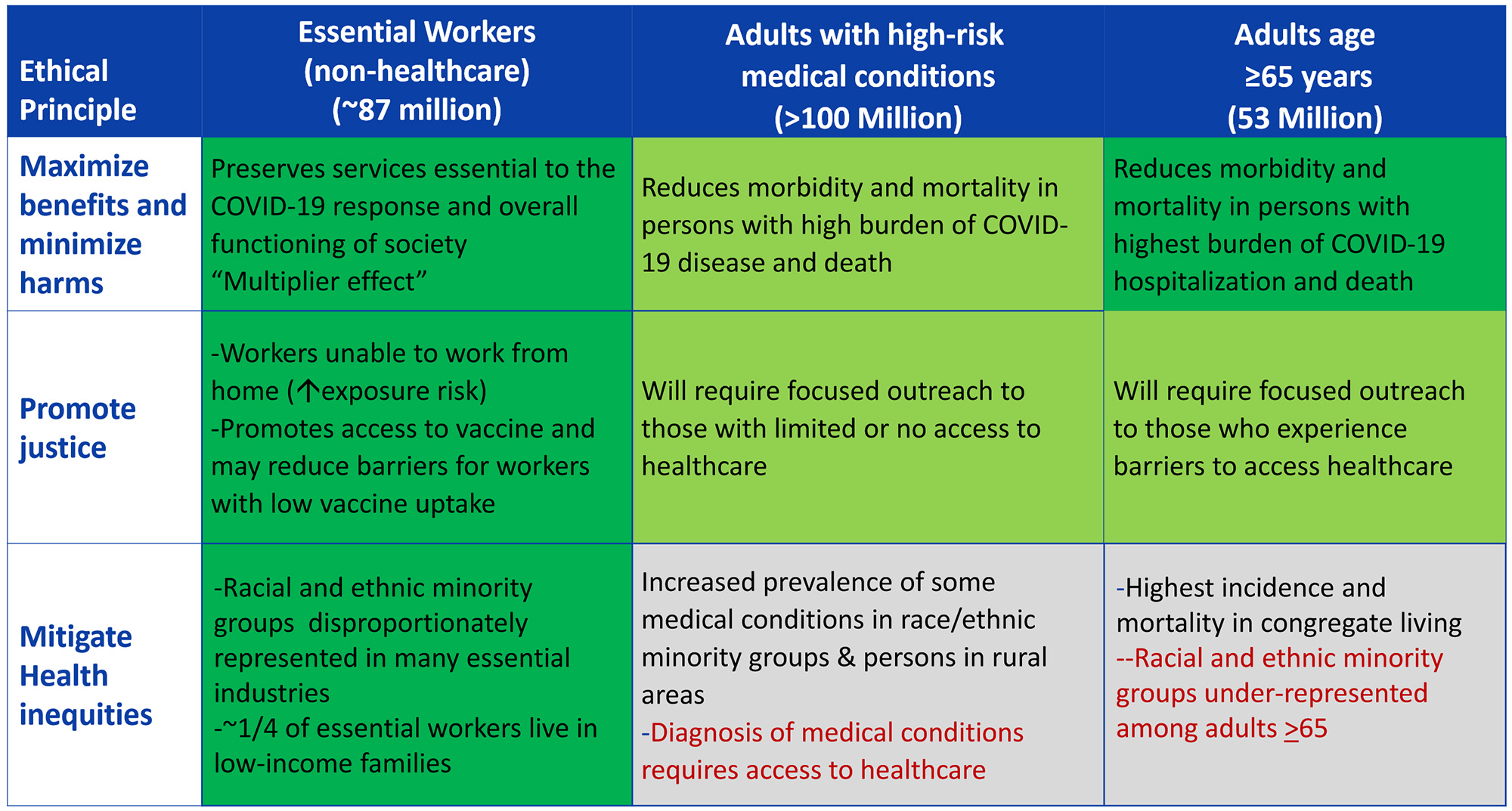
It’s true that CDC lists underrepresentation of racial and ethnic minority groups in the 65+ population as one issue among a dozen. But this is a very far cry from saying “it is unethical to prioritise the elderly because they are not racially diverse enough.” CDC says nothing of the sort, only that it’s one factor among many worth considering, especially given that the number of deaths averted is a close enough call not to be determinative.
This little kerfuffle highlights one of the ways in which racial justice is so hard to attain. In order to address it, you have to actually take it into account. But if you take it into account, you’ll be accused of racial bias or worse. It’s one of those things that sounds fine in principle, but there are always people around to complain if you do it in practice.
One way or another, we all have to make up our minds. If we believe in racial justice, it means taking it into account in the real world.