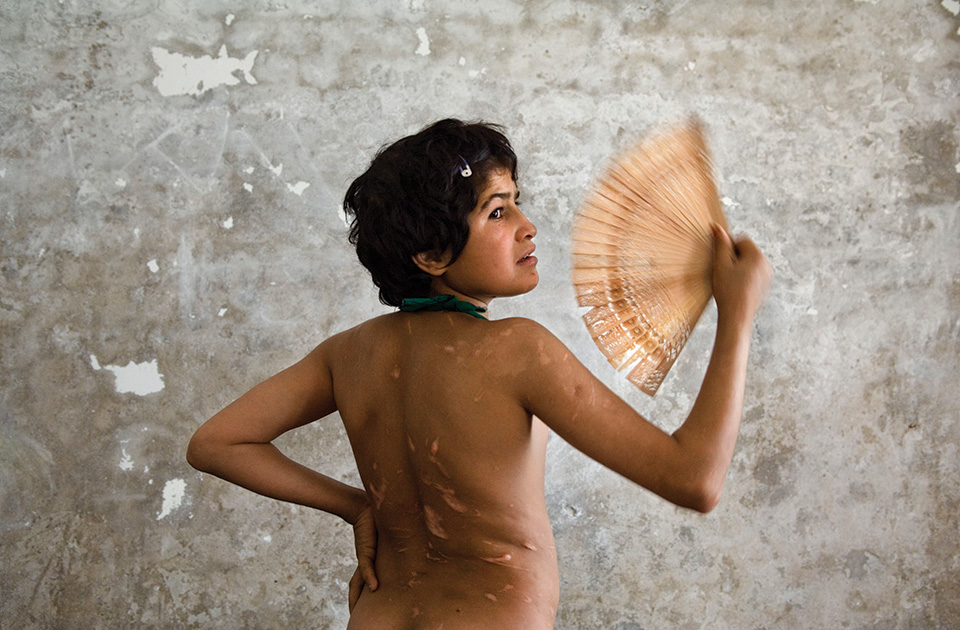
“There is no room for love in Afghanistan,” said a young teenage girl to me one day as we sipped tea in the sitting room of her family’s apartment in Kabul. She said it as if it were true and had been true for years, for as long as she could remember. And not in that moment, but in the twilight of that evening and for several years after, her remark caused me to reflect on the kind of space that love itself can consume. An endless space without dimension, like a sketch without charcoal or a raindrop without water—more space than even the glorious mountains of the Hindu Kush could ever take up. Yet in the tiny precipice of this Afghan girl’s heart, where love and all of its beautiful unknowns should have blossomed, it didn’t, it couldn’t.
The love that I felt in Afghanistan was a luxury. It was a luxury because I was an outsider and could afford to let Afghanistan enter me in a way that allowed me to recognize the beauty in all of its harshness. And although this land and its strife often, almost every day, brought me to feel defeat, loss, and compassion, I always had a great fluffy cushion to land on—a cushion provided to me by the love of my family and the memories of a life monumentally different than what I was witness to there.
From the moment I landed in Kabul, that love could have gone in several directions. It could have rested on the landscape or the children or the poetry that existed in the tired sighs of the people. But I was unequivocally drawn—as one is to light in utter darkness—to Afghan women. For them I had passion and energy. For them my emotions had no boundaries. For them I gave in wholeheartedly in order to show them to others as I saw them for myself, the most intricately designed butterflies stripped of their wings.
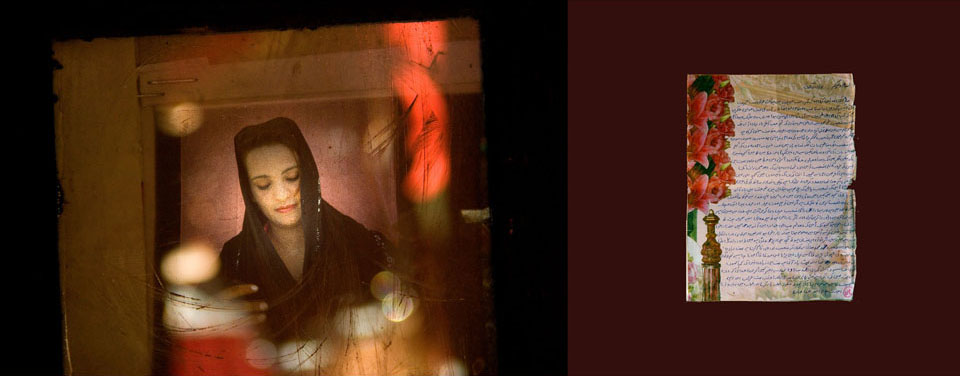
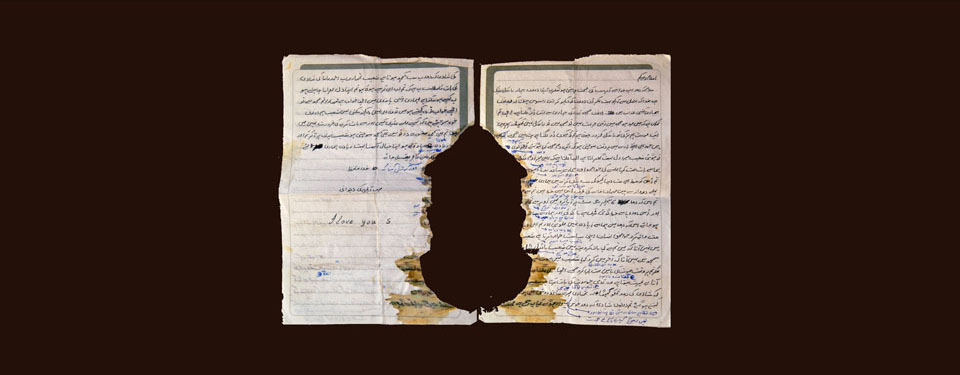
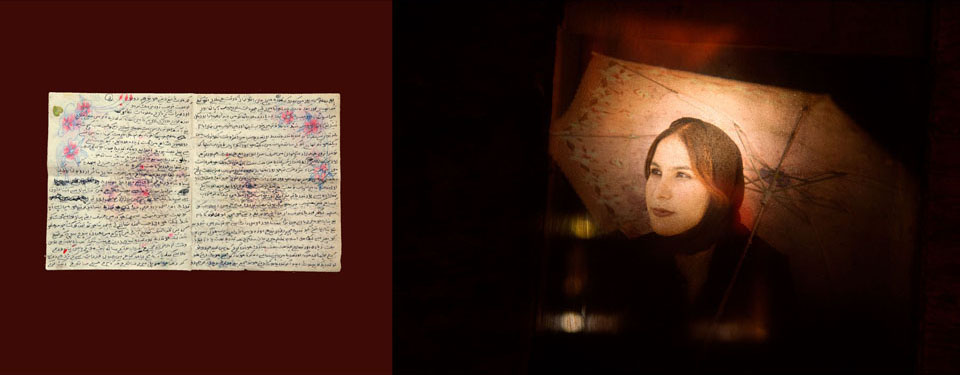
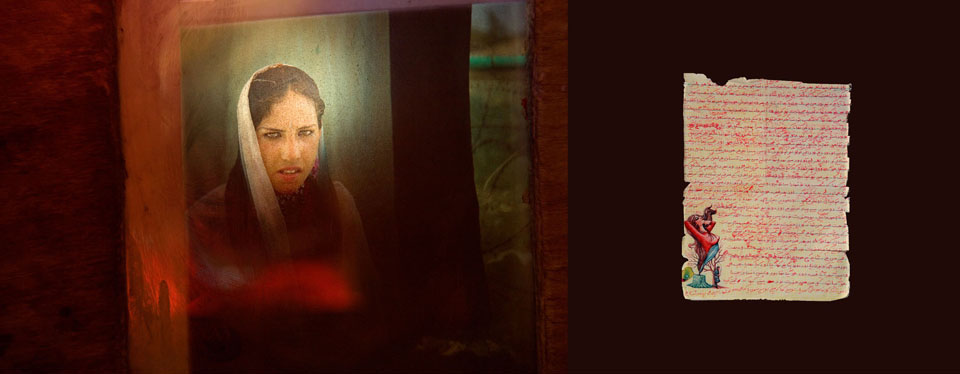
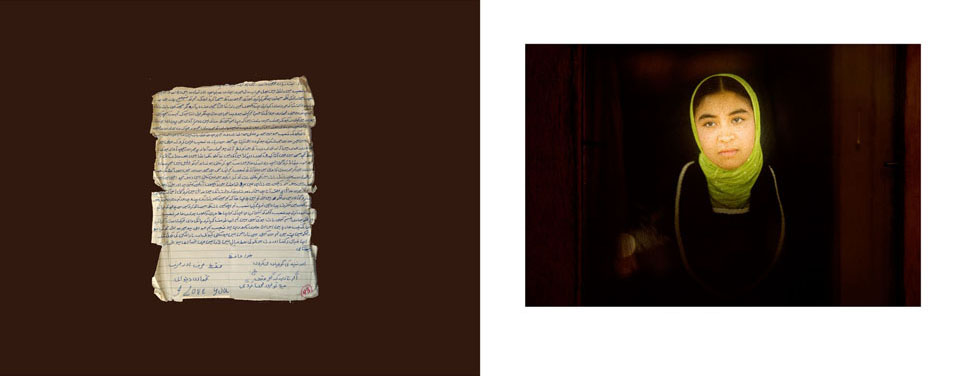
And then one day, a surprise. A young man I had known brought to me a stack of letters. More than 600 pages. It was a secret correspondence of love, one that allowed the imaginations of him and his love to wander, for it was only in those pages and in their dreams that they could walk together. To disclose their love would mean the end and perhaps worse. That day I realized that love existed in Afghanistan—in a single glance, a certain tone, the shadow of a school yard—but not without grave risk or consequence.
For me this complicated intertwining of love took shape and form in the darkness of an old Afghan box camera. It was there as I peered into a space not larger than a small treasure chest, isolated from the rest of Afghanistan, that I could fully express how I felt for these women.

This is an excerpt of a larger project by Slezic.