The Service Employees International Union yesterday won a tentative agreement for higher pay and health insurance for its new members in Houston, who have been locked in an acrimonious, monthlong strike at the city’s largest cleaning companies. It’s a major victory for the SEIU, which set out last year to organize part-time, often-undocumented Hispanic workers in a region of the country that hasn’t typically embraced organized labor. Houston is likely to become a model for the union’s efforts in other Southern cities: Beyond using the same quiet educational efforts, noisy protests and hardball negotiating, organizers are sure to be on the lookout for another Ercilia Sandoval.
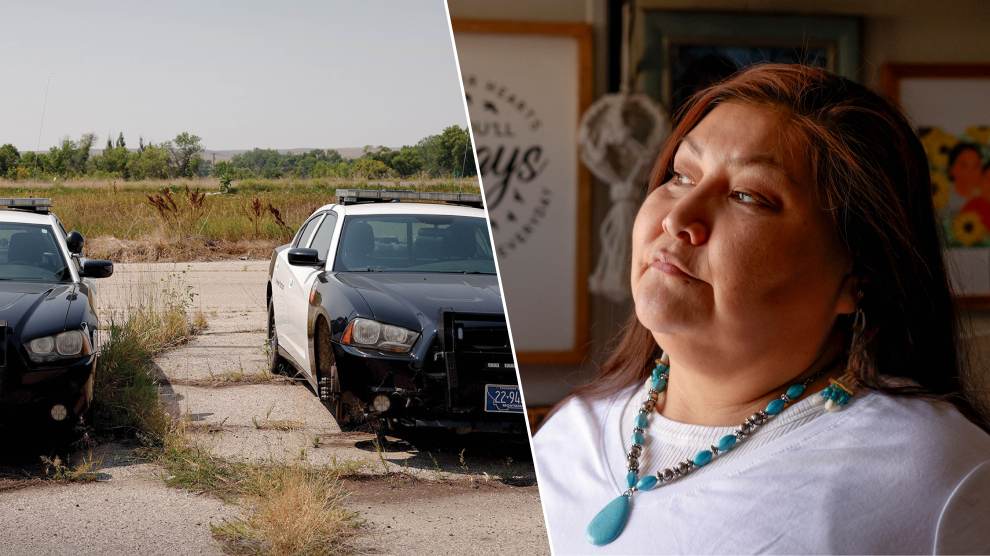
Rosy-cheeked, clad in a wig and leopard print headband, and suffering from laryngitis that had reduced her voice to a whisper, Sandoval met with me in her small apartment last month, sitting down at a table beneath a print of the Last Supper. She told a story of leaving three of her children in San Miguel, El Salvador ten years ago to pursue an illusory American Dream. “I promised them that, at most, I would be gone a year,” she whispered, “and then I would bring them here.” To this day she hasn’t seen them. Instead, she has struggled to make ends meet laboring for a tortilla factory, then an Episcopal church, and finally a major janitorial contractor working in downtown skyscrapers—one of five companies targeted by the SEIU. Preoccupied with sending money to her family, she might have never involved herself in the union’s struggle if she hadn’t decided she’d nothing to lose.
Last September Sandoval began feeling worn out on the job. She scrubbed bathroom fixtures through headaches and fevers, emptied trash cans with sore arms and a tight back. Lacking health insurance, she couldn’t afford to see a doctor. Nearly a year passed before she forked over $200 for a consultation. A mammogram confirmed her worst fears: she suffered from an advanced stage of breast cancer. Yet hospitals in Houston wouldn’t treat her because she was uninsured. She waited two months to be approved for state disability coverage. In June, Doctors finally began chemotherapy treatments but say she probably has only a few months to live.
Just as her cancer was spreading, she met an SEIU organizer at her Episcopal church who was looking for janitors. The organizer found in Sandoval someone looking to harness her outrage and despair. “Some of the workers were afraid,” Sandoval says, “but often I said, ‘Afraid of what? We are not going to lose a good job. We are not going to lose a good salary– we don’t have benefits, we don’t have anything.” As Sandoval’s health deteriorated, her resolve strengthened. In September, she accepted a spot alongside the SEIU top brass at the negotiating table. Her job: to convince the cleaning companies to provide her and 5,300 fellow janitors with health insurance in the union’s first contract.
On the day of the negotiations, Sandoval was the last person to talk. She feared she’d be just another person asking for something. She stepped into the bathroom to steel her nerves. Returning to the conference room, she asked the executives and lawyers if they were looking at her. “And I looked them all in their eyes,” she said. “I assured myself that they were all looking at me. And I took off my wig.”
Sandoval saw a group of men who were shocked. “Some were crying. Others sat with their mouths open. Other ones just couldn’t even blink their eyes.
“And that,” she said, “is what I wanted.”
Sandoval’s display was only the beginning of a struggle this fall that led to the strike, solidarity protests around the country, and ads featuring her bald visage. But it was clearly a defining moment for the movement and Sandoval’s own sense of transcendence. “I’m not just fighting for me,” she told me. “I’m fighting for everyone. Because why not rise up? Why not try?”