Prescription Drugs Are in our Drinking Water: What to do Now?

Get your news from a source that’s not owned and controlled by oligarchs. Sign up for the free Mother Jones Daily.


The biggest sex story of the day, besides the expensive sex life of the New York Governor, is the revelation that prescription drugs (including sex hormones) are in the drinking water of 41 million Americans. Forget Room 871’s minibar. Maybe Spitzer got horny on tap water.

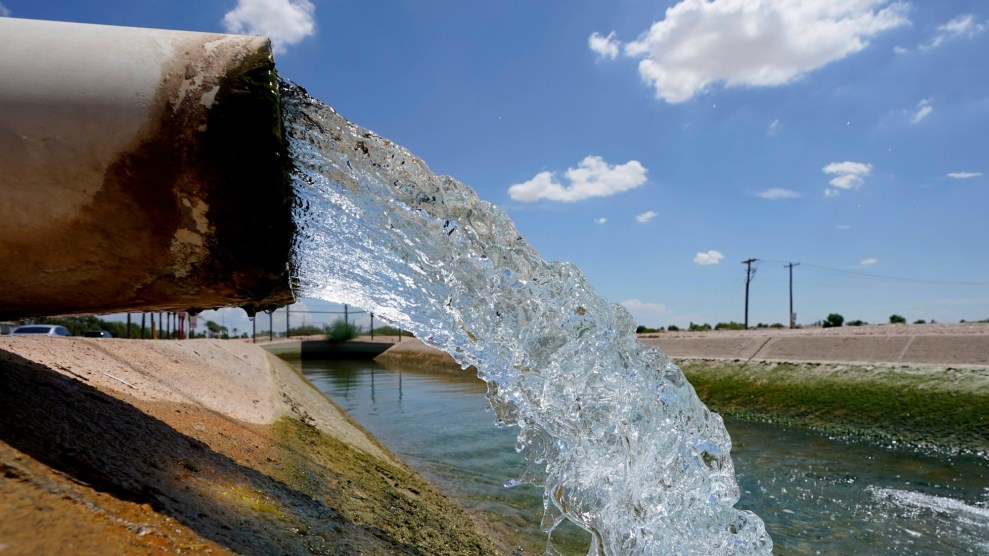
That drugs are in our water isn’t new news, but the AP’s five-month investigation will be sure to prompt a rush on Brittas and bottled snowmelt from the Alps. It will also probably lead to a reexamination of our wastewater treatment systems, including the policy of spreading sewage sludge on farmland–sort of the stealth turd in the swimming pool of water politics. Sludge, the black goop that comes out of sewage plants, contains drug residues that have the potential to be absorbed into plants and animals and run off into streams. So does the “purified” water that comes out of the same plants, but the sludge has gotten less attention as of late. Now almost forgotten is the high-ranking EPA scientist, David Lewis, who raised a stink over sludge a few years ago. The EPA fired him, though not before he exposed shortfalls in the EPA’s science on sludge and some shady ties between government and industry.

For now, consumers will have to sort out how to deal with the drug-laced water problem on their own. In case you’re wondering, one sure-fire water filtration method for removing pharmaceuticals from your tap is reverse osmosis. In arid Southern California, Orange County began operating a reverse osmosis system late last year that extracts drinking water from sewage (they call it “toilet to tap’). The superior cleanliness of this source relative to drinking water from lakes and rivers might have struck me as ironic–before Spitzer exploded my brain’s irony synapse.


From the desk of Mother Jones CEO, Monika Bauerlein...

Newsrooms can be funded in many ways. One of the most controversial (and volatile) ways is by a for-profit corporation or a billionaire owner. We see it across the headlines on a weekly basis: the claw backs in public media, the gutting of The Washington Post, the bending over backwards to appeal to Trump and his allies.

But not here.

When Mother Jones first started publishing 50 years ago, our founders made a critical decision: to be a reader-supported nonprofit. They knew that no corporate owner would be interested in a muckraking newsroom; they also knew that no muckraking newsroom would be interested in following the agenda of a corporate owner.

And so, we’ve been reader-funded for half a century. We rely on contributions from our readers—readers like you—whether it’s $50, or $15 a month, or whatever fits your budget. People give what they can, and every donation makes a difference for our newsroom, which has grown tremendously—in size and reach and renown—since its inception in 1976.

You may be wondering: What does it take to publish an investigation? And what does my donation actually fund? The answers are one and the same: It takes people, resources, and time. And that’s what your donation funds directly.

Every donation Mother Jones receives from readers fortifies our newsroom, whether we’re covering underreported scandals out of Washington, DC, or the most important news of the day. And right now, each donation will be doubled because of our $50,000 match. So when you make a donation—$5, $50, any amount—it’ll go twice as far.

Your support keeps us going. If you’re able, donate today.

Thanks for reading.

—Monika

From the desk of Mother Jones CEO, Monika Bauerlein...

Newsrooms can be funded in many ways. One of the most controversial (and volatile) ways is by a for-profit corporation or a billionaire owner. We see it across the headlines on a weekly basis: the claw backs in public media, the gutting of The Washington Post, the bending over backwards to appeal to Trump and his allies.

But not here.

When Mother Jones first started publishing 50 years ago, our founders made a critical decision: to be a reader-supported nonprofit. They knew that no corporate owner would be interested in a muckraking newsroom; they also knew that no muckraking newsroom would be interested in following the agenda of a corporate owner.

And so, we’ve been reader-funded for half a century. We rely on contributions from our readers—readers like you—whether it’s $50, or $15 a month, or whatever fits your budget. People give what they can, and every donation makes a difference for our newsroom, which has grown tremendously—in size and reach and renown—since its inception in 1976.

You may be wondering: What does it take to publish an investigation? And what does my donation actually fund? The answers are one and the same: It takes people, resources, and time. And that’s what your donation funds directly.

Every donation Mother Jones receives from readers fortifies our newsroom, whether we’re covering underreported scandals out of Washington, DC, or the most important news of the day. And right now, each donation will be doubled because of our $50,000 match. So when you make a donation—$5, $50, any amount—it’ll go twice as far.

Your support keeps us going. If you’re able, donate today.

Thanks for reading.

—Monika

We Recommend

Latest

Sign up for our free newsletter

Subscribe to the Mother Jones Daily to have our top stories delivered directly to your inbox.

Get our award-winning magazine

Save big on a full year of investigations, ideas, and insights.

Subscribe

INDEPENDENT. BECAUSE OF YOU.

Mother Jones has no billionaires calling the shots—just readers like you making fearless reporting possible

Donate