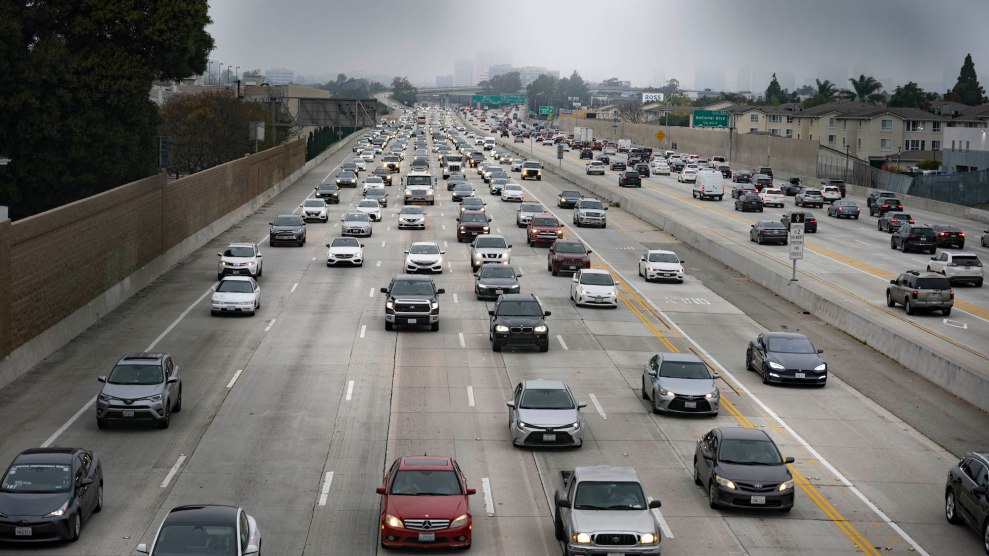
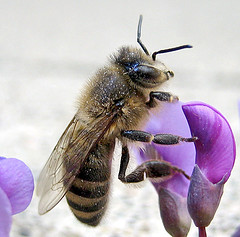
 Air pollution is destroying the fragrance of flowers and preventing pollinating insects from following scent trails to their source. The research from the University of Virginia indicates that power plants and automobiles are behind at least some of the decline of wild pollinators, like bees.
According to Jose Fuentes, co-author of the study, the scent molecules produced by flowers in the less polluted environment of the 1800s could travel up to 4,000 feet. Today, downwind of major cites, they may travel only 700 feet. This makes it increasingly difficult for pollinators to find flowers. The result, potentially, is a vicious cycle where pollinators struggle to find enough food to sustain their populations, and populations of flowering plants don’t get pollinated sufficiently to proliferate and diversify. [Sound familiar?]
The scent molecules produced by flowers are highly volatile and quickly bond with pollutants such as ozone, hydroxyl and nitrate radicals, which destroy their aromas. So the flowers no longer smell like flowers. This forces pollinators to search farther and longer and possibly to rely more on sight and less on smell. Using a mathematical model of how scents travel with the wind, the team found it apparent that air pollution destroys the aroma of flowers by as much as 90 percent from periods before automobiles and heavy industry. The more air pollution in a region, the greater the destruction of the flower scents.
Just in case we don’t already have enough reasons to tackle emissions.
Julia Whitty is Mother Jones’ environmental correspondent, lecturer, and 2008 winner of the Kiriyama Prize and the John Burroughs Medal Award. You can read from her new book, The Fragile Edge, and other writings, here.