BP’s Oil: Still Out There

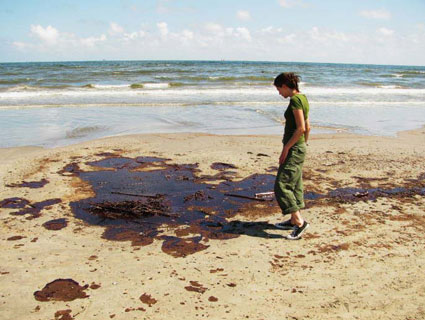
Photo courtesy of Auburn University.

Get your news from a source that’s not owned and controlled by oligarchs. Sign up for the free Mother Jones Daily.


A new study out this week finds that the tar balls that washed ashore during Tropical Storm Lee are evidence that oil from the BP spill isn’t breaking down as fast as many predicted.

After the spill last year, there were a flurry of stories about how bacteria in the Gulf of Mexico had devoured much of the oil remarkably fast. And although it did appear that ravenous sea life made quick work of a lot of the oil, in the months after the spill other studies found that some of the oil and chemical dispersants were lingering in the Gulf longer than expected. This latest research from engineers at Auburn University in Alabama points to the black lumps kicked up in the tropical storm as evidence that much of the crude hasn’t broken down much since last year.

From the Associated Press:

Auburn University experts who studied tar samples at the request of coastal leaders said the latest wave of gooey orbs and chunks appeared relatively fresh, smelled strongly and were hardly changed chemically from the weathered oil that collected on Gulf beaches during the spill.

The study concluded that mats of oil — not weathered tar, which is harder and contains fewer hydrocarbons — are still submerged on the seabed and could pose a long-term risk to coastal ecosystems.

The piece continues:

Marine scientist George Crozier said the findings make sense because submerged oil degrades slowly due to the relatively low amount of oxygen in the Gulf’s sandy bottom.

“It weathered to some extent after it moved from southern Louisiana to Alabama … but not much has happened to it since then,” said Crozier, longtime director of the state sea laboratory at Dauphin Island.

The full study is here. It’s yet another reminder that just because we (usually) can’t see the oil doesn’t mean its not still there.


BEFORE YOU CLICK AWAY!

December is make or break for us. A full one-third of our annual fundraising comes in this month alone. A strong December means our newsroom is on the beat and reporting at full strength. A weak one means budget cuts and hard choices ahead.

The December 31 deadline is closing in fast. To reach our $400,000 goal, we need readers who’ve never given before to join the ranks of MoJo donors. And we need our steadfast supporters to give again today—any amount.

Managing an independent, nonprofit newsroom is staggeringly hard. There’s no cushion in our budget—no backup revenue, no corporate safety net. We can’t afford to fall short, and we can’t rely on corporations or deep-pocketed interests to fund the fierce, investigative journalism Mother Jones exists to do.

That’s why we need you right now. Please chip in to help close the gap.

BEFORE YOU CLICK AWAY!

December is make or break for us. A full one-third of our annual fundraising comes in this month alone. A strong December means our newsroom is on the beat and reporting at full strength. A weak one means budget cuts and hard choices ahead.

The December 31 deadline is closing in fast. To reach our $400,000 goal, we need readers who’ve never given before to join the ranks of MoJo donors. And we need our steadfast supporters to give again today—any amount.

Managing an independent, nonprofit newsroom is staggeringly hard. There’s no cushion in our budget—no backup revenue, no corporate safety net. We can’t afford to fall short, and we can’t rely on corporations or deep-pocketed interests to fund the fierce, investigative journalism Mother Jones exists to do.

That’s why we need you right now. Please chip in to help close the gap.

We Recommend

Latest

Sign up for our free newsletter

Subscribe to the Mother Jones Daily to have our top stories delivered directly to your inbox.

Get our award-winning magazine

Save big on a full year of investigations, ideas, and insights.

Subscribe

Support our journalism

Help Mother Jones' reporters dig deep with a tax-deductible donation.

Donate