Some Context on the Gold Standard

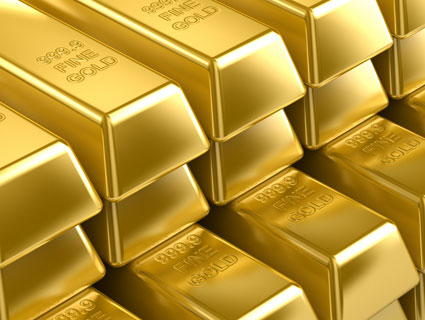
Tomislav Forgo/<a href="http://www.shutterstock.com/cat.mhtml?lang=en&search_source=search_form&version=llv1&anyorall=all&safesearch=1&searchterm=gold&search_group=&orient=&search_cat=&searchtermx=&photographer_name=&people_gender=&people_age=&people_ethnicity=&people_number=&commercial_ok=&color=&show_color_wheel=1#id=6953350&src=2dbeafd1b13d6603725c602be554a220-1-46">ShutterStock</a>

Get your news from a source that’s not owned and controlled by oligarchs. Sign up for the free Mother Jones Daily.


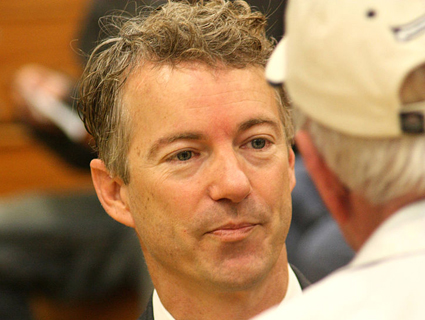
During Monday night’s GOP presidential primary debate on NBC, Rep. Ron Paul (R-Tex.), a prominent advocate of pegging the value of the US dollar to the price of gold, praised Newt Gingrich, the former speaker of the House, for promising to appoint a federal gold commission to “look at the whole concept of how do we get back to hard money.” Since there was little actual discussion of the gold standard as policy (President Richard Nixon took the US off gold in August 1971), it’s worth examining what top economists think about it. In short, they don’t think it’s a great idea. The University of Chicago’s business school recently asked several dozen top economists whether they agreed with the following statement:

If the US replaced its discretionary monetary policy regime with a gold standard, defining a “dollar” as a specific number of ounces of gold, the price-stability and employment outcomes would be better for the average American.

Every single one of the economists surveyed disagreed with the statement; i.e., they unanimously embraced the anti-gold standard view, differing only on the degree to which they disagreed with it. 

Gold standard advocates will point out that many top economists missed things like the housing bubble and the financial crisis, and that establishment support for a view doesn’t necessarily mean it’s correct. That’s true, but context is important, too.
Owned by no one—except you.

We just keep seeing it happen: Newsrooms owned by billionaires and corporations are spinning their own narratives, overwriting the truth, following only stories that keep them in the pocket of those with even more power.

Not here. We’re not owned by anyone. We’re not part of any cult that demands our allegiance to a bottom line. We’ve spoken up and spoken out while other newsrooms changed their stories—or cut them altogether—to keep the C suite happy.

Our mission is to find the truth and amplify it. That’s why we’re independent, nonprofit, and, crucially, funded by readers. The investigations on our website will always be free to read, watch, and listen to, but our newsroom is powered by readers who pitch in what they can so we can keep asking the hard questions.

Can you chip in today?

Owned by no one—except you.

We just keep seeing it happen: Newsrooms owned by billionaires and corporations are spinning their own narratives, overwriting the truth, following only stories that keep them in the pocket of those with even more power.

Not here. We’re not owned by anyone. We’re not part of any cult that demands our allegiance to a bottom line. We’ve spoken up and spoken out while other newsrooms changed their stories—or cut them altogether—to keep the C suite happy.

Our mission is to find the truth and amplify it. That’s why we’re independent, nonprofit, and, crucially, funded by readers. The investigations on our website will always be free to read, watch, and listen to, but our newsroom is powered by readers who pitch in what they can so we can keep asking the hard questions.

Can you chip in today?

We Recommend

Latest

Sign up for our free newsletter

Subscribe to the Mother Jones Daily to have our top stories delivered directly to your inbox.

Get our award-winning magazine

Save big on a full year of investigations, ideas, and insights.

Subscribe

INDEPENDENT. BECAUSE OF YOU.

Mother Jones has no billionaires calling the shots—just readers like you making fearless reporting possible

Donate