Octavio Jones/ Tampa Bay Times/ Zumapress
Fight disinformation:
Sign up for the free
Mother Jones Daily newsletter and follow the news that matters.
On Monday morning, two different people showed up for work at the Consumer Financial Protection Bureau, claiming to be the acting directors of the financial watchdog agency following the departure of its Obama-era director, Richard Cordray, late last week.
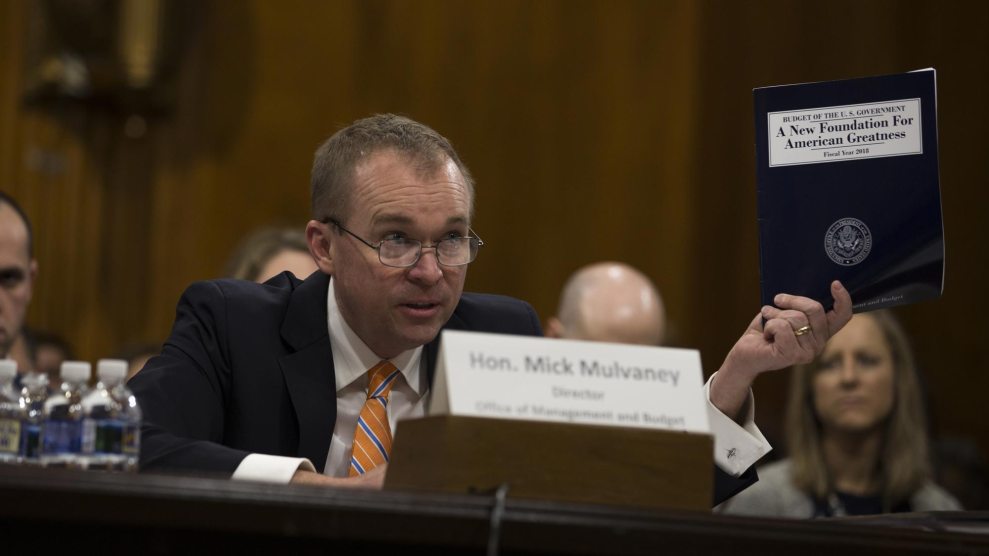
Mick Mulvaney, Trump’s White House budget director and the president’s pick to run the agency, brought doughnuts . Leandra English, Cordray’s former chief of staff and chosen successor, emailed the staff to welcome them back to the agency after Thanksgiving, signing off as the acting director.
Mulvaney sent his own memo, telling employees to “Please disregard any instructions you receive from Ms. English in her presumed capacity as Acting Director.”
This confusing chain of events came after a showdown over the Thanksgiving weekend about who is the rightful interim head, and whether Trump has the power, by law, to install his own choice to temporarily lead the agency.
The tug-of-war began late on Friday, when Cordray appointed English to be the CFPB’s deputy director and then stepped down from his post. Cordray’s departure triggered a provision of the 2010 Dodd-Frank law that stipulates the deputy director—in this case, English—”shall” become the acting director of the agency should the CFPB head leave, until the president nominates, and the Senate confirms, a permanent replacement.
That language may sound definitive, but the Trump administration thought otherwise: That same day, Trump appointed Mulvaney, a vocal, long-time foe of the CFPB, to serve as the agency’s head.
On Saturday, the Department of Justice issued a memo explaining that the administration believes Mulvaney’s appointment is legal because the 1998 Federal Vacancies Reform Act gives the president authority to supersede the rules of succession outlined in Dodd-Frank and appoint an acting director. (That memo was written by DOJ lawyer Steven Engel who in 2015 was one of two lead lawyers defending a payday lender in their case against the CFPB.)
Now, the succession battle is headed to court. Late on Sunday, English a lawsuit in federal district court against Trump and Mulvaney, arguing that she is the “rightful Acting director” of the CFPB, according to the agency’s chain of succession laid out in the 2010 Dodd-Frank financial reform legislation. She also requested an emergency restraining order to prevent Mulvaney—or anyone else handpicked by Trump—from stepping into the acting director position.
In the complaint, she refers to Mulvaney as “the person claiming to be acting director of the Consumer Financial Protection Bureau,” asserting, “the President’s purported or intended appointment of defendant Mulvaney as Acting Director of the CFPB is unlawful.”
English’s lawsuit alleges that DOJ’s reasoning is flawed, in part because when lawmakers drafted Dodd-Frank, they made an explicit choice to scrap the FVRA process for appointing an acting director—the procedure was written into an earlier draft. Instead, they created different rules of succession for the CFPB, in which the deputy director is entitled to the acting director job automatically. “The President’s stance is…difficult to square with the relevant legislative history,” the lawsuit notes.
“The President’s attempt to install a White House official at the head of an independent agency—while allowing that official to simultaneously serve in the White House—is unprecedented,” English’s lawyer, Deepak Gupta, said in a press release . “The law is clear: Leandra English is Acting Director of the Consumer Financial Protection Bureau until the Senate confirms a new Director.”
You can read the full lawsuit below:
&amp;amp;amp;amp;amp;amp;amp;amp;amp;amp;amp;amp;amp;amp;amp;amp;amp;amp;amp;amp;amp;amp;amp;amp;amp;amp;amp;amp;amp;amp;amp;lt;br /&amp;amp;amp;amp;amp;amp;amp;amp;amp;amp;amp;amp;amp;amp;amp;amp;amp;amp;amp;amp;amp;amp;amp;amp;amp;amp;amp;amp;amp;amp;amp;gt;&amp;amp;amp;amp;amp;amp;amp;amp;amp;amp;amp;amp;amp;amp;amp;amp;amp;amp;amp;amp;amp;amp;amp;amp;amp;amp;amp;amp;amp;amp;lt;br /&amp;amp;amp;amp;amp;amp;amp;amp;amp;amp;amp;amp;amp;amp;amp;amp;amp;amp;amp;amp;amp;amp;amp;amp;amp;amp;amp;amp;amp;amp;gt;&amp;amp;amp;amp;amp;amp;amp;amp;amp;amp;amp;amp;amp;amp;amp;amp;amp;amp;amp;amp;amp;amp;amp;amp;amp;amp;amp;amp;amp;lt;br /&amp;amp;amp;amp;amp;amp;amp;amp;amp;amp;amp;amp;amp;amp;amp;amp;amp;amp;amp;amp;amp;amp;amp;amp;amp;amp;amp;amp;amp;gt;&amp;amp;amp;amp;amp;amp;amp;amp;amp;amp;amp;amp;amp;amp;amp;amp;amp;amp;amp;amp;amp;amp;amp;amp;amp;amp;amp;amp;lt;br /&amp;amp;amp;amp;amp;amp;amp;amp;amp;amp;amp;amp;amp;amp;amp;amp;amp;amp;amp;amp;amp;amp;amp;amp;amp;amp;amp;amp;gt;&amp;amp;amp;amp;amp;amp;amp;amp;amp;amp;amp;amp;amp;amp;amp;amp;amp;amp;amp;amp;amp;amp;amp;amp;amp;amp;amp;lt;br /&amp;amp;amp;amp;amp;amp;amp;amp;amp;amp;amp;amp;amp;amp;amp;amp;amp;amp;amp;amp;amp;amp;amp;amp;amp;amp;amp;gt;&amp;amp;amp;amp;amp;amp;amp;amp;amp;amp;amp;amp;amp;amp;amp;amp;amp;amp;amp;amp;amp;amp;amp;amp;amp;amp;lt;br /&amp;amp;amp;amp;amp;amp;amp;amp;amp;amp;amp;amp;amp;amp;amp;amp;amp;amp;amp;amp;amp;amp;amp;amp;amp;amp;gt;&amp;amp;amp;amp;amp;amp;amp;amp;amp;amp;amp;amp;amp;amp;amp;amp;amp;amp;amp;amp;amp;amp;amp;amp;lt;br /&amp;amp;amp;amp;amp;amp;amp;amp;amp;amp;amp;amp;amp;amp;amp;amp;amp;amp;amp;amp;amp;amp;amp;amp;gt;&amp;amp;amp;amp;amp;amp;amp;amp;amp;amp;amp;amp;amp;amp;amp;amp;amp;amp;amp;amp;amp;amp;amp;lt;br /&amp;amp;amp;amp;amp;amp;amp;amp;amp;amp;amp;amp;amp;amp;amp;amp;amp;amp;amp;amp;amp;amp;amp;gt;&amp;amp;amp;amp;amp;amp;amp;amp;amp;amp;amp;amp;amp;amp;amp;amp;amp;amp;amp;amp;amp;amp;lt;br /&amp;amp;amp;amp;amp;amp;amp;amp;amp;amp;amp;amp;amp;amp;amp;amp;amp;amp;amp;amp;amp;amp;gt;&amp;amp;amp;amp;amp;amp;amp;amp;amp;amp;amp;amp;amp;amp;amp;amp;amp;amp;amp;amp;amp;lt;br /&amp;amp;amp;amp;amp;amp;amp;amp;amp;amp;amp;amp;amp;amp;amp;amp;amp;amp;amp;amp;amp;gt;&amp;amp;amp;amp;amp;amp;amp;amp;amp;amp;amp;amp;amp;amp;amp;amp;amp;amp;amp;amp;lt;br /&amp;amp;amp;amp;amp;amp;amp;amp;amp;amp;amp;amp;amp;amp;amp;amp;amp;amp;amp;amp;gt;&amp;amp;amp;amp;amp;amp;amp;amp;amp;amp;amp;amp;amp;amp;amp;amp;amp;amp;amp;lt;br /&amp;amp;amp;amp;amp;amp;amp;amp;amp;amp;amp;amp;amp;amp;amp;amp;amp;amp;amp;gt;&amp;amp;amp;amp;amp;amp;amp;amp;amp;amp;amp;amp;amp;amp;amp;amp;amp;amp;lt;br /&amp;amp;amp;amp;amp;amp;amp;amp;amp;amp;amp;amp;amp;amp;amp;amp;amp;amp;gt;&amp;amp;amp;amp;amp;amp;amp;amp;amp;amp;amp;amp;amp;amp;amp;amp;amp;lt;br /&amp;amp;amp;amp;amp;amp;amp;amp;amp;amp;amp;amp;amp;amp;amp;amp;amp;gt;&amp;amp;amp;amp;amp;amp;amp;amp;amp;amp;amp;amp;amp;amp;amp;lt;br /&amp;amp;amp;amp;amp;amp;amp;amp;amp;amp;amp;amp;amp;amp;amp;gt;&amp;amp;amp;amp;amp;amp;amp;amp;amp;amp;amp;amp;amp;amp;lt;br /&amp;amp;amp;amp;amp;amp;amp;amp;amp;amp;amp;amp;amp;amp;gt;&amp;amp;amp;amp;amp;amp;amp;amp;amp;amp;amp;amp;amp;lt;br /&amp;amp;amp;amp;amp;amp;amp;amp;amp;amp;amp;amp;amp;gt;&amp;amp;amp;amp;amp;amp;amp;amp;amp;amp;amp;lt;br /&amp;amp;amp;amp;amp;amp;amp;amp;amp;amp;amp;gt;&amp;amp;amp;amp;amp;amp;amp;amp;amp;amp;lt;br /&amp;amp;amp;amp;amp;amp;amp;amp;amp;amp;gt;&amp;amp;amp;amp;amp;amp;amp;amp;amp;lt;br /&amp;amp;amp;amp;amp;amp;amp;amp;amp;gt;&amp;amp;amp;amp;amp;amp;amp;amp;lt;br /&amp;amp;amp;amp;amp;amp;amp;amp;gt;&amp;amp;amp;amp;amp;amp;amp;lt;br /&amp;amp;amp;amp;amp;amp;amp;gt;&amp;amp;amp;amp;amp;amp;lt;br /&amp;amp;amp;amp;amp;amp;gt;&amp;amp;amp;amp;amp;lt;br /&amp;amp;amp;amp;amp;gt;&amp;amp;amp;amp;lt;br /&amp;amp;amp;amp;gt;&amp;amp;amp;lt;br /&amp;amp;amp;gt;&amp;amp;lt;br /&amp;amp;gt;&amp;lt;br /&amp;gt;&lt;br /&gt;<br /><br />