Book Review: War Nerd
Arts: Does it matter if controversial military columnist Gary Brecher is really an overweight data-entry clerk from Fresno?
August 4, 2008
|
|
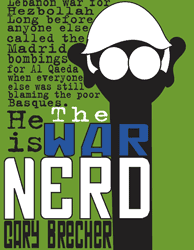
Military columnist Gary Brecher's look at contemporary war is both offensive and illuminating. His book, War Nerd, which is a collection of articles Brecher penned for the Moscow-based weekly eXxile, aims to explain why the best-equipped armies in the world continue to lose battles to peasants armed with rocks.
In this 317-page polemic, Brecher, who became a military authority of sorts through countless hours in front of the computer reading blogs and online news sites, ridicules much of the reasoning behind the US war in Iraq, saying most people "don't give a s—t about democracy." In a recent interview for Marketplace of Ideas, a public radio program about books and culture, he explained that this war is evidence that most people are not rational, but tribal. People fight wars to appropriate the enemy's stuff and sleep with his women. Any excuse of democracy or even ethnic or religious purity is just window dressing.
When the goals are so limited, it makes sense that insurgency is the newest and most predominant type of warfare. The best soldiers know their territory and are willing to keep fighting for just a little cash and the promise of excitement. That, Brecher says, is why conventional war, with all of the Pentagon's spending on bigger, faster, and stronger weapons, is a fruitless effort. The future won't see any more "total wars of the good ol' WWII kind," Brecher says. "We'll have…very cautious, limited wars between the big players, and bloody messes" with the "savages." He thinks most conflicts in the future are likely to be long, small, insurgent affairs. And the Bush administration's war in Iraq is only the latest example. Others include the vast waste of time and money of Plan Columbia and the latest round of interracial violence in Liberia.
Although much of what the author says makes sense, and resonates profoundly with our current situation, it's often hard to take Brecher seriously because his book is plagued by offensive language and peculiar digressions. Brecher begins a passage about American immigration by admiring Mexican immigrants. "What's wrong with Mexicans?" Brecher asks. "They're the best soldiers we've got. Just check the casualty lists from Iraq: they read like the time sheet at your local burrito shack." And what's the added value of a 14-page rant about Tom Clancy, or the continual narrative detours about how the real Brecher (Gary Brecher is a pseudonym; the author says he is really a 43-year-old data-entry clerk from Fresno, California) is overweight, underpaid, and has a hard time getting a date? It leaves the reader wondering if this is a book about war or a cry for help.
Brecher has a great gift for taking theories of war outside of esoteric discussions about hardware and intricate ethnic fighting and discussing conflict in terms everyone can understand. While War Nerd is often marred by strange editorial decisions and all-too-frequent irrelevant insertions, Brecher's unrefined voice adds something essential to the conversation. Too often American war discussions—why we lost in Vietnam, why we're losing in Iraq—become tactical and moral jungles. Brecher, the outsider-expert, suggests a simpler solution: avoid fighting a war at all.
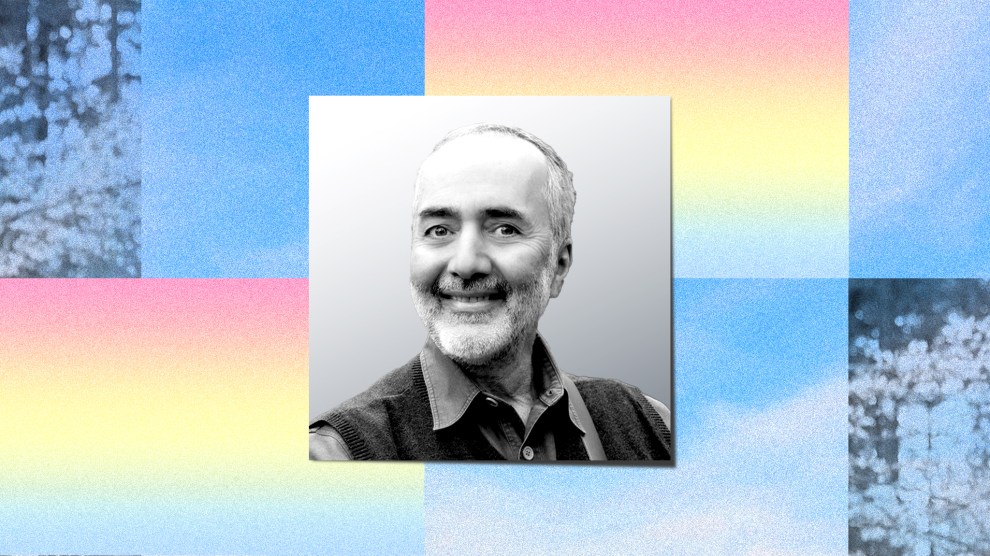
Daniel Luzer is an editorial intern at Mother Jones.

Let me suggest that, in the future, you ask yourself, "What would Lat-man read?"
Daniel Luzer (one "z" please) is my son, and he is a good writer with two Ivy League degrees, and I bet you don't even have any because you can't even spell Luzer right. Son, don't listen to these people. You are a talanted writer and your mother and I are very, very proud of you.
From Daniel Luzer Sr.
Wow, it really is a symbol of moral turpitude!
If you were certain that you weren’t a terrible person, you would have laughed the suggestion off easily. Your to be hurt by words makes you complicit. You know why you are a terrible person, you who so casually call data enterers fat!
Does it matter if uncontroversial intern Daniel Luzzer is really a bean-pole Ivy Leaguer from San Francisco?
Brecher's commentary is spot on, as much as reviewer Luzer cares to denigrate it with his own digressions (Mr. Brecher's are fully appropriate; Mr. Luzer's, unwelcome). We are on the verge of colonial collapse. The economic powerhouse that we have built through two hot and one cold wars is being speared at the seams by an enemy we choose not to understand. Like Batista's brush-off of Castro, we fail to understand the guerrilla strategy that our enemies employ to win hearts, minds, and battles, and we will soon fall prey to our arrogance. Thanks to Mr. Brecher for his thoughtful analysis. To Mr. Luzer, thanks for nothing.
Publisher? Price? ISBN?
Hm. While the professionals -- the people who know what they're talking about -- talked us into this totally unnecessary war of choice and have been making, by and large, a complete hash of it ever since, at considerable loss of human life?
Give me the advice of a crank, any time!
That Brecher uses irony apparently has gone over the head of this reviewer.
So he hasn't been in the military nor seen war. Then neither has your Commander in Chief who sends others to do HIS fighting. Not only that when the opportunity presented itself He sought every possible way out. Not unusual, his chief supporters in Iraq were Tony Blair (U K ) and John Howard (Australia) and surprise, surprise, both of those avoided involvement in the military also.
At least Brecher is advocating NOT sending others to fight. When I was in WW11 I admired my superior who wouldn't ask anybody to do what he wouldn't do himself, and always LEAD the way.
Now not having read the book I'll not comment on the contents, but the last line Yep!! Go for it. "Avoid fighting a war at all." Why not? Worked for George W Bush, Blair, and Howard.
tomedgar@halenet.com.au
The point of the book doesn't appear to be the paucity of fulfillment in the author's life, but the insights it offers on the role of war in human affairs. A bit of spice can't hurt however, and Luzer does observe the humanizing effect of the author's digressions -- which to my mind (I've not read the book) likely save the reader from oppression by such a depressing subject. It just sounds like blogging, to me.
That said, I think "Brecher" has a point. The glaring examples of the two world wars should serve as a more or less permanent reminder to trouble-making countries that, if you directly threaten your neighbors with masses of arms, those neighbors will get together and directly threaten you right back, with (hopefully) predictable results. It's much more rewarding, to a certain mindset, to simply rig elections, and then draw out the resultant oppression, keeping the executions and suffering to a low burn, so as not to excite the world community's immune systems; all the while acting like it's all a lark, to throw the righteous bastards off the scent.
Call it Mugabe-retro-viral warfare, putting on a cloak of bonhomie, so the macro-phages can't see you. If you keep the disturbance to a steady level -- low, or at least not too high -- the news/trance cycle will build up a resistance to the irritant, and pretty soon the entire conflict is effectively invisible, to us on our couches. So you gain a bad name. That hardly matters, does it, if you can retire to Swizerland with a billion or so, to pay for booze and whores through your retirement.
Death-by-small-bites, after all, is the theme of our times, from the Bush strategy of "governing" by bankrupting our country, so progressive won't be able to progress when they get in, to the "free" market's venerable "right-to-work" initiatives, to take the sting out of the unions, and therefore the drain of adequate wage compensation out of their pocket-books.
Potatoes don't think much, after all -- they just watch the pretty lights, until it's time for the harvest.
Ha. Mother Jones turns Victorian prude?
Tribal warriors take women to rape them, and keep them if they like them. Achilles took Briseis this way, and the same thing is happening in the Congo today.
"plagued by offensive language"
Brecher is talking about the real reasons why people kill each other. If he put the gloves on, he wouldn't be Brecher.
Feature, not bug.