Shorter Trees Could Make Peaches Cheaper

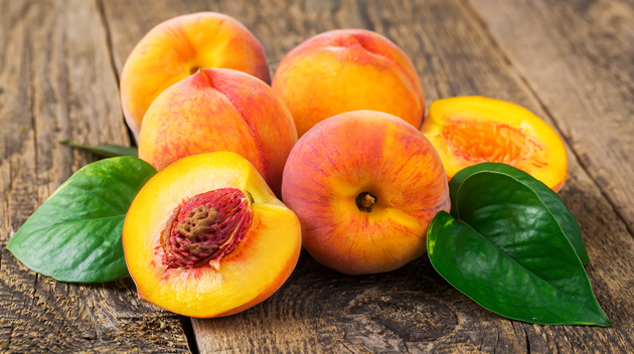
Millions of peaches, peaches for me.<a href="http://www.shutterstock.com/pic-190839806/stock-photo-fresh-peaches-on-wood-background.html?src=csl_recent_image-1">Zadorozhna Natalia</a>/Shutterstock

Get your news from a source that’s not owned and controlled by oligarchs. Sign up for the free Mother Jones Daily.


When it comes to peach and nectarine trees, bigger isn’t necessarily better. An orchard worker can spend as much as half of his or her day lugging around the ladders required to reach the branches of a typical 13-foot tree. Plus, the danger of climbing the ladders drives up the cost of workers’ compensation insurance—growers of peaches and nectarines pay about 40 percent more for it than growers of low-lying fruit like grapes.

Now scientists at the University of California are trying to shrink the cost of labor on peach and nectarine farms by shrinking the plants themselves. In a 4-acre orchard south of Fresno, researchers are growing trees that they expect to max out at seven or eight feet. They say the shorter trees, which would not require a ladder to harvest or prune, could cut down on worker injuries and slash labor costs by more than 50 percent. If cultivated correctly, the mini-trees could be as fruitful as their taller counterparts.

If the experimental orchard works, it could have environmental perks too. In comments to UC Davis, one farmer estimated it costs him $1,400 an acre to thin his 250-acre peach and nectarine farm. Because of the high cost of ladders, many of his fellow growers are switching to almonds, he said. And almonds, as we’ve said before, are sucking California dry.


BEFORE YOU CLICK AWAY!

December is make or break for us. A full one-third of our annual fundraising comes in this month alone. A strong December means our newsroom is on the beat and reporting at full strength. A weak one means budget cuts and hard choices ahead.

The December 31 deadline is closing in fast. To reach our $400,000 goal, we need readers who’ve never given before to join the ranks of MoJo donors. And we need our steadfast supporters to give again today—any amount.

Managing an independent, nonprofit newsroom is staggeringly hard. There’s no cushion in our budget—no backup revenue, no corporate safety net. We can’t afford to fall short, and we can’t rely on corporations or deep-pocketed interests to fund the fierce, investigative journalism Mother Jones exists to do.

That’s why we need you right now. Please chip in to help close the gap.

BEFORE YOU CLICK AWAY!

December is make or break for us. A full one-third of our annual fundraising comes in this month alone. A strong December means our newsroom is on the beat and reporting at full strength. A weak one means budget cuts and hard choices ahead.

The December 31 deadline is closing in fast. To reach our $400,000 goal, we need readers who’ve never given before to join the ranks of MoJo donors. And we need our steadfast supporters to give again today—any amount.

Managing an independent, nonprofit newsroom is staggeringly hard. There’s no cushion in our budget—no backup revenue, no corporate safety net. We can’t afford to fall short, and we can’t rely on corporations or deep-pocketed interests to fund the fierce, investigative journalism Mother Jones exists to do.

That’s why we need you right now. Please chip in to help close the gap.

We Recommend

Latest

Sign up for our free newsletter

Subscribe to the Mother Jones Daily to have our top stories delivered directly to your inbox.

Get our award-winning magazine

Save big on a full year of investigations, ideas, and insights.

Subscribe

Support our journalism

Help Mother Jones' reporters dig deep with a tax-deductible donation.

Donate