MOTHER JONES BY E-MAIL

«--Previous Post | Blog Index | Next Post--»

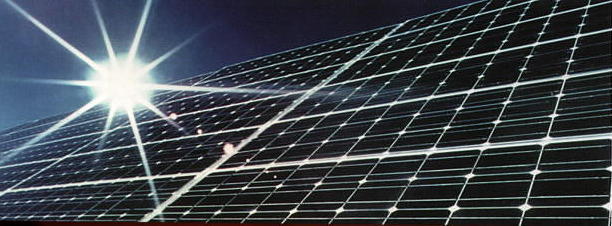
Hidden Costs of Solar Power

stream_file.jpg

Wondering which solar technology has the smallest environmental footprint? In recent years new photovoltaic technologies have nearly doubled the efficiency of solar cells. Yet production methods, whether from silicon, metal, or other material, raise doubts about their environmental friendliness. For example, purifying and producing silicon uses a lot of water and energy, whereas refining zinc and copper ores to get cadmium, telluride, and other elements creates metal emissions and an energy sink.

Now Environmental Science & Technology calculates the impact. They've released a life-cycle assessment of some of the leading photovoltaic technologies. Some appear better than others. You can read the pdf here.

The study notes that, even with the costs, the benefits of replacing gas- and coal-fired grids with photovoltaics cut greenhouse & particulate emissions 89–98%. Rooftop panels reduce emissions even more due to the resulting decrease in transmission lines and other infrastructure.

The winner? Thin-film cadmium–telluride (CdTe) photovoltaics—with more efficient energy conversion and lowest costs.

Julia Whitty is Mother Jones' environmental correspondent and 2008 winner of the John Burroughs Medal Award. You can read from her new book, The Fragile Edge, and other writings, here.






Comments

Best part about solar panels: they don't have to have sun 100% of the time to work!

My university, in Seattle, has a solar panel that links directly into the power grid. It's pretty cool that even in Seattle, solar energy can be used effectively.

I think solar, combined with other approaches, will be the answer, but not by itself, for obvious reasons. IF you want 100% power, you gotta have something that generates 100% of the time. But, a flexible power generation concept, including efficiency/turn it off, do without/do you REALLY need a light, there, that kind of conceptualization, in other words a 100% flexible approach, a pocket mini-flash costs 2 bucks, that'll get you up the stairs...focus on not just leaving the lights on for 4 hours if you're not even there etc.

Posted by: Bert on 02/06/08 at 8:20 PM  Respond

Why limit the solar power discussion to photo voltaics? Sun-tracking solar reflectors driving Stirling engines to produce electricity are a better solution. They're only now coming online in S. California, despite being developed back in the Carter administration.

Building hundreds of these devices in our southern deserts could power much of the country. Bert is wrong to say that solar is not the answer because it doesn't generate 100% of the time: if a portion of the energy developed is diverted into stored energy, then that stored energy can be released at night and on non-sunny days, providing energy 100% of the time.

How is the energy to be stored, you ask? One simple (conceptually, though the engineering may be difficult) solution is to use some of the energy produced to lift enormous weights during the sunny times, and release them at other times, so that the energy produced by the downward motion is converted back into electricity.

Clearly, a solar solution does need a good deal of redundancy to ensure a constant energy supply. A combination of wind and solar with enough redundancy would power the country, and for the cost of the Iraq war we could be well on the way to that renewable energy Nirvana.

Posted by: John Q on 02/06/08 at 11:11 PM  Respond

True, photovoltaic is not the optimum of the use of solar energy. For Third World Countries they are often too expensive and makes them dependent from big industry. As a journalist, I just researched a story about Tamera/Portugal, an institute which is researching on solar energy systems without photovoltaic or with systems which increase their effectivity. Impressive...

Back in 1991, before Al Gore first shouted that the Earth was in the balance, the Danish Meteorological Institute released a study using data that went back centuries that showed that global temperatures closely tracked solar cycles.

To many, those data were convincing. Now, Canadian scientists are seeking additional funding for more and better "eyes" with which to observe our sun, which has a bigger impact on Earth's climate than all the tailpipes and smokestacks on our planet combined.

And they're worried about global cooling, not warming.

Kenneth Tapping, a solar researcher and project director for Canada's National Research Council, is among those looking at the sun for evidence of an increase in sunspot activity.

Solar activity fluctuates in an 11-year cycle. But so far in this cycle, the sun has been disturbingly quiet. The lack of increased activity could signal the beginning of what is known as a Maunder Minimum, an event which occurs every couple of centuries and can last as long as a century.

Such an event occurred in the 17th century. The observation of sunspots showed extraordinarily low levels of magnetism on the sun, with little or no 11-year cycle.

This solar hibernation corresponded with a period of bitter cold that began around 1650 and lasted, with intermittent spikes of warming, until 1715. Frigid winters and cold summers during that period led to massive crop failures, famine and death in Northern Europe.

Posted by: The Ice Man on 02/08/08 at 3:17 PM  Respond

TheIceMan's concerns about the likelihood of solar activity bringing on an ice age and having a bigger impact than "all the tailpipes and smokestacks on our planet combined" are unfounded. Just about every single one of his assertions is disproved by the recent study "2007 Was Tied as Earth's Second-Warmest Year" appearing on the Goddard Institute for Space Studies website http://www.giss.nasa.gov/research/news/20080116/

peace,
Paul

Posted by: Paul Crouser on 04/17/08 at 11:38 PM  Respond

Post a comment


RECENT COMMENTS

Some Corals Survived A-Bombs, Others Didn't (1)
BlueBerry Pick'n wrote: that is fascinating. I'd never *considered* coral at all.... [more]

MoJo Nukes Convo: Judith Lewis Highlights (11)
Steven wrote: Corn can be used for ethanol in cars and power plants, for... [more]

MoJo Nukes Convo: Stewart Brand's Take (1)
G.R.L. Cowan, H2 energy fan 'til ~1996 wrote: One of the comments you -- or your machine -- attributes t... [more]

Antarctic Sea Ice Increase: Fodder for Global Warming Skeptics? (23)
Ted wrote: Ed in Mt. You are right. America is the Saudi Arabia of Co... [more]

Cheaper, More Reliable Solar? (2)
wiseman wrote: Solar Thermal kicks ass.... [more]

Bush's EPA Pollutes Science (1)
Elydog wrote: What is the American word for "Lysenko"? Do we have a fav... [more]

Bring Back the Bison (8)
Marilyn Wargo wrote: Marilyn G and Old soldier, The Area around Yellowstone has... [more]

The Problem With Nuclear: No Uranium (9)
JimHopf wrote: We will have enough uranium ore to meet our nuclear needs ... [more]

Pro-Nuke? Anti-Nuke? Talk About It With the Experts (230)
Mother Jones Administrator wrote: Thanks for the great dialogue, this conversation with the ... [more]

Listen Up, Pandas, You Need to Fight (7)
tyxa wrote: it"s so funny...........i like panda!!!!!!!!!!!... [more]

XML RSS Feed

Powered by
Movable Type 3.33

Jail.org - Inmate Search
Criminal records, instant public records & people search & current court records. www.jail.org

U.S. Public Records Search
Search County & State Court Records, Criminal records, Vital and Adoption Records www.PublicRecordsInfo.com

Records.com - People Search
Public Records and Background Checks. Instantly Search Criminal Records, Addresses and Court Records www.Records.com

Court Records & County Records
Find Instant Public Records, Criminal Records as Well as County Property Records Search. www.PublicRecordsIndex.com


bookIN PRINT

CLICK HERE
for more great reading

headphones IN TUNE
New music every issue

CLICK TO LISTEN


This article has been made possible by the Foundation for National Progress, the Investigative Fund of Mother Jones, and gifts from generous readers like you.

© 2008 The Foundation for National Progress

About Us   Support Us   Advertise   Ad Policy   Privacy Policy   Contact Us   Subscribe   RSS