MOTHER JONES BY E-MAIL

Thirty Days in Iran's Worst Prison

Interview: Zarah Ghahramani, an Iranian student, was sent to Evin prison for exposing her head in public in 2001. Seven years later, she talks about what happened next.

January 4, 2008


TOOLS

EmailE-mail article
PrintPrint article


BACKTALK

E-mail the editor


Google


RELATED ARTICLES

In autumn of 2001, 20-year-old college student Zarah Ghahramani broke the law by pulling her headscarf back a few inches on the streets of Tehran. Her crime didn't go unnoticed—she was picked up by the police and hauled off to spend 30 grueling days in Iran's infamous Evin prison. There she endured interrogations, beatings, and solitary confinement. At the end of her sentence, the authorities dropped her off in a distant suburb and left her to find her way back to her home—and to figure out how to readjust to life outside prison walls.

After Evin, Ghahramani stopped giving political speeches on campus—the risk of getting arrested again was too great. She now lives in Australia, working and attending university. She tries to keep up with her activist friends back home, but in Iran, staying in touch is a dangerous business, since the simple act of contacting an old friend can be enough to get him arrested. "[My friend] Arash chose to stay in Iran, even though he knows they're watching him," she says. "He has to be really careful about everything, even the friends he chooses. So many times, I've done a Google search and found out who's been arrested lately. I'm always thinking, 'Am I going to see his name?'"

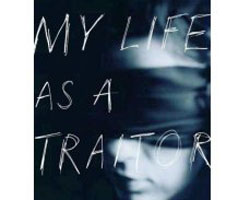
In her new memoir, My Life as a Traitor, Ghahramani chronicles her time in prison and describes her liberal upbringing under an increasingly conservative regime. At home, Ghahramani recalls, she was encouraged to express herself, but in public, she was forced to obey the oppressive rules of the mullahs. "In school, I was taught that my greatest loyalty must be to God, then to the father of the Islamic Republic, the Ayatollah Khomeini, then to the nation itself," writes Ghahramani. At home, though, "Iran, my country, was the captive of sinister, inflexible people who saw the world in black and white, no color permitted, no shading, no nuances, no tolerance of beauty outside of Islamic spirituality."

Mother Jones talked with Ghahramani about her time inside Evin—and how her life changed when she was released.

Mother Jones: How did you pass the time in prison?

Zarah Ghahramani: This might sound a bit weird, but it's unbelievable—human nature actually adapts itself to anything that we face. You just wake up at whatever time of the day or night, you sit there, and you keep thinking, because there's absolutely nothing else to do. If I was strong enough and I wasn't in pain, I would try to do some exercise. I would think, or talk with the guy who was above my cell, or cry, or be angry, or. . .I don't know. You just sit there and do nothing. You try to keep yourself alive and happy all day with whatever you have. Anything that you're left with is a blessing. The fact that you're not dead yet, or the fact that you can move your feet and breathe—it's good. You don't really think you're going to be free again, so you just deal with the situation at the time.

MJ: What was the hardest part of being in Evin?

ZG: When they shaved my head. I never thought it would mean so much, but for me it was such a big thing. It was my womanhood. It was my dad who loved my hair. It was me. These guards know exactly what makes you really depressed. They are really good at what they do.

MJ: When the book ends, you've been dropped off in a distant suburb of Tehran and you've called your father to come pick you up. What happened next?

ZG: He came, and we hugged and cried and all that, and then we went home. My sisters came over, and my father made breakfast for us, like when we were kids. It was all really normal. I was expecting them to ask me what had happened, where I had been, but we just had normal, everyday breakfast. Then I went to have a shower and I saw my face for the first time after a month. It was really scary. I hardly stopped myself from screaming, wondering what my family was going through seeing me like that, and not even saying anything. It was really frustrating for me—I really wanted to talk. But when I think about it now, it was the best thing they did. It was hard enough for them, what happened to me. I'm sure they didn't want to know any more.

MJ: What was it like readjusting to life outside?

ZG: I sort of hated myself for being depressed. I said to myself, "How dare you be depressed? You've put your family through so much, and now you're going to be depressed?" So I would actually try to cheer them up—I would act like, "I'm over it; it's fine; you guys should get over it, too." But there was always an unspoken fear between us that they would take me again. Sometimes I would come back a little bit late, and I would find my mom shivering and screaming, "Where have you been? Why didn't you call me or pick up your phone?" She would basically freak out. So it was really hard to go back to a normal life. There was always that paranoia for them and for me, and it stopped us from living life like we used to.

MJ: Was that a real possibility, being arrested again?

ZG: I wasn't giving any speeches or writing anything, but I would see my other friends arrested again and again, and I thought eventually that would happen to me, too. Even if you've just contacted an old friend, that could be a reason to get arrested if you have a previous record.

MJ: What made you choose to go to Australia?

ZG: I met [my coauthor] Robert [Hillman] and his wife [Ann] in Tehran, and we became friends. After they learned about my story, Robert kept telling me, "They're going to take you again." I wasn't planning to leave Iran, but it just became clear that it's not possible to live a normal life, so I decided to do it. Robert and Ann were the only people I knew overseas, so I decided to go to Australia.

MJ: In the book, you criticize Iranian American TV channels, saying the Iranian American community is urging people in Iran to become martyrs.

ZG: In Iran, we get those channels through satellite. When there were protests in the street, [Iranian Americans] would be like, "Oh, get out there into that street." For them it's really easy to say, because they don't know what it's like when you're taken to prison. For me, it would be a very difficult thing to do—sitting here in the sunshine in Australia telling people to go kill themselves. I would never give anyone advice to do that, and in fact, in my interviews I've been telling people not to do it.

MJ: After being in Evin, do people generally give up activism?

ZG: Not everyone. Some of them, even after their release, they still do things, and they keep taking them back again and again. Some of them actually die in prison. I decided that I wanted to have a normal life, and I don't want to put my family through any more than I already have. To be honest, I feel like I've paid my share. I've done whatever I could as a woman in Iran in the political scene.

MJ: Are you worried about the book's effect on your family?

ZG: Of course. I want everyone to know that what has happened to me has absolutely nothing to do with my family. If there's anyone to be blamed, it's me. I wrote the book to inspire other people, because I know a lot of people go through really tough times and they end up being depressed for the rest of their lives. I believe that you can get over something and get on with your life, no matter how much of a bad experience you've been through.

Kiera Butler is an associate editor at Mother Jones.


Post a Comment

Your Name: 

Your Comment: 
 
Please press "Submit" only once to avoid double-posting.
All HTML formatting is removed from comments.
Read the Mother Jones community rules here.

Comments:

Why is this titled "Thirty Days..." was she only in prison 30 days?
Posted by:HaahJanuary 4, 2008 2:09:35 PMRespond ^
Although this is a horrible story (and excellent interview) it is misleading to say she was thrown in jail for taking off a scarf. That is just the charge, or the excuse the cops use. It's obvious they must have been watching here for other reasons. Not that it justifies anything, but it is LIE to say it was as simple as the scarf. If you LIE TO PEOPLE then your journalism suffers. DO NOT LIE.
Posted by:Just the facts....January 4, 2008 2:11:36 PMRespond ^
I did not read your book, but I read two articles about you in the Western journals. I am aware of the fact that the Iranian regime oppresses all kind of political activities and throws people in jail. But I never heard of any story that someone goes to jail and tortured for just not wearing a headscarf properly. Either there is some political issue behind this that we don’t know or there is a little bit of exaggeration. I don't know how naive the western journalists are to buy such stories. This is a great disservice to the real political activists who go to jail for a real cause and get tortured or even executed. I am sorry to say but your story just makes a joke out of all political activism and it is an insult to them. Maybe you can title your story as a social story but not a political one. I apologize in advance if I am wrong.
Posted by:Voice of FreedomJanuary 4, 2008 3:07:50 PMRespond ^
The Neocons'll love this! J.T.F. got it right.I don't doubt the veracity of the story but it does seem incomplete.
Posted by:MishaJanuary 4, 2008 6:15:50 PMRespond ^
Zarah is a courageous lady. She exposed her hair, gave speeches on the campus, and talked to her friends about politics. We take all this for granted in democratic countries. People like Zarah will help bring democracy to Iran and make it a better place for every one to live. Iran’s government is challenging the United States imperialism and adventurism around the glob at great expense to its people. It is a noble thing to do. But, it needs to clean it own acts at home. It is shameful and discredits the government to put people like Zarah in jail.
Posted by:RezaJanuary 4, 2008 7:46:22 PMRespond ^
You do not know that she lied. It is your accusations that are disingenuous. This is the interview. Read the book and speak with the person before you demonize the story. And if the headline appears to be at fault, then blame the article's author, not the person who's story was being told. The head scarf law in Tehran is, in fact, real. And yes, it was, as it would appear, the actual reason behind the arrest. And yes, it also seems reasonable to me that they had been watching her due to other "radical" activities...(being present and participating in democracy protests?). Don't be so harsh, and avoid judgementalism when you yourself do not know all the facts.
Posted by:XboxershortsJanuary 5, 2008 2:20:45 PMRespond ^
it seems that the actiism was the reason not the scarf. I rmemebr seeing pictures of girls/women walking in Tehran with thei scrafs a few inchess of their foreheads. However, don't worry there's something like this about to happen much closer as unexpected couhntries are heading in the I'm unable to accept dissent category. See: http://www.informationclearinghouse.info/article18998.htm Social Repression and Internet Surveillance http://www.counterpunch.com/roberts01042008.html January 4, 2008 Jane Harman and Liberty's Lost Light Thinking for Yourself is Now a Crime By PAUL CRAIG ROBERTS H. Res. 1695, 1955 & S.1959
Posted by:SageJanuary 5, 2008 8:19:25 PMRespond ^
It really depends on where a person lives in Iran, in Tehran there is some laxity regarding head scarves that is not found elsewhere in Iran due to it's contact with the West. However 2007 did mark a year where Iran did start to crack down (further) on women who do show a couple inches of their hair. She was an activist, the head scarf reason may have been an excuse but it does show that the law enforcement can use that as an excuse for her imprisonment.
Posted by:LoiseJanuary 5, 2008 10:46:58 PMRespond ^
forced religion = bad medicine
Posted by:Dr.QJanuary 6, 2008 11:59:21 AMRespond ^
It is a great and courageous thing that woman like Marina Nemat (Prisoner of Tehran, 2006) and now Zarah Ghahramani are telling their stories to the world and expose all the brutality in this places by this governments.
Posted by:KJanuary 7, 2008 11:49:23 AMRespond ^
oh, grow up, whoever thinks the headscarf info was a lie and so egregious that it damages the whole struggle for human rights, for crying out loud! this interview doesn't even suggest that the headscarf was all she did or that was the even the real reason she came to the attention of authorities. it just says that was the excuse used at the time to drag her in. is there no nuance in people's heads any more? have we stopped teaching people in this country how to read and think???
Posted by:pgobJanuary 7, 2008 12:48:16 PMRespond ^
Fortunately, she could escape to Australia. Where can a black woman excape to? Nowhere. Now that is depressing. Few people really know the despair that blacks face in America. It is no wonder that so many turn to drugs, suicide by cop and live in denial. It couldn't really be that bad? Yes it is. I am not a criminal, never been within that system. Never used drugs, and alcohol only at a few celebratory occasions. I have a higher than normal IQ; am somewhat educated. I have a home of my own and enough to live rather comfortably. Yet my children and I face enough discrimination to permit me to describe true hopelesness for real progress in human rights in our country, the USA. The unfortunate thing is that most people are so unaware. Without the awareness of the depth of the problem, it can never be addressed. I've been to Australia. I wasn't welcome. Nevertheless, I am glad for those who are able to enjoy a bit of the good life there and anywhere else.
Posted by:MistyJanuary 7, 2008 1:46:34 PMRespond ^
This article is totally misleading and I'm finding MJ's is falling away from Truth. I agree with Just the facts, that the article is written to make us believe she was arrested for her scarf. It is obvious she was arrested for her liberal views and speaking out about her political views. MJ's journalism is suffering.
Posted by:Truth AlwaysJanuary 8, 2008 7:05:38 AMRespond ^
If you lie to people then your country suffers. There are too many administration lies to even count...
Posted by:TiredofNeosJanuary 8, 2008 3:52:58 PMRespond ^
Most of these responses are idiotic. How can some of you say that you know for certain that the girl was not arrested for what she said she actually arrested for. How do you really know? Were you there when it happened? Do you live in the same town where it happened? Are you familiar on a first hand basis with the laws, customs, and ways of those people. Just because you live in a part of the world where something of this sort of thing would be implausible, or unthinkable, does not mean it would not be a way of life outside your narrow minded little circle of what you have mapped out for your idea, or assumption of reality.
Posted by:The FingerJanuary 9, 2008 12:23:35 AMRespond ^
During the Taliban period in Afganistan it was not unknown for woman to have had their arms and legs amputated for revealing skin of any type.The abuse of young woman trying to learn and get an education in controled regions usually results in the decapitation of the instuctor in front of the students much akin to the Viet Cong on the 1960's. Any price to pay to help these people is more then worth it. No human being should have to live this way
Posted by:Gregory Allen LeedsJanuary 11, 2008 9:58:33 AMRespond ^
I am an American who lived in Iran for 8 years with my Iranian husband under Islamic Rule. I can testify that yes you can get arrested for crimes as minor as "bad veiling" or how you are dressed by the Pastar or so called "morality police". What I can't believe is that Zarah would urge her friends not to protest against their goverment. Or that herself who is now free from prosecution would not join with Iranians outside of Iran to protest and lobby for change in Iran. My family returned to the states but we cannot forget all those we left behind and work in any way we can to help the world know what it is like there. But if the people within Iran do not continue the protests and struggle the world will continue to ignore their plight
Posted by:CYNTHIA BESHARATPOURJanuary 12, 2008 9:34:26 AMRespond ^
She says that she gave speechs and wrote about the situation in Iran before being arrested. She makes it very clear the scarf incident was the deciding factor-they were looking for an abvious reason. Shame on you for even alluding to the fact that she's lying.
Posted by:HeatherJanuary 15, 2008 9:39:15 AMRespond ^
I agree with you that people must continue to try to change things in Iran-expecially if they are outside the reach of that oppressive government. But, I must ask how you'd feel if you spent 30 days in their jails being tortured? I'm sure she worries about her family also. She is outside their reach, but they are not.
Posted by:HeatherJanuary 15, 2008 9:42:10 AMRespond ^
maybe the problem is with you???
Posted by:jimmyFebruary 11, 2008 9:06:19 AMRespond ^
I like to know more about prison.I was there for 4 years but it was 20 years ago.I like to know ,step by step ,how they torture and how prisioner handle all pressures.
Posted by:RezaMarch 3, 2008 8:45:23 PMRespond ^

Jail.org - Inmate Search
Criminal records, instant public records & people search & current court records. www.jail.org

U.S. Public Records Search
Search County & State Court Records, Criminal records, Vital and Adoption Records www.PublicRecordsInfo.com

Records.com - People Search
Public Records and Background Checks. Instantly Search Criminal Records, Addresses and Court Records www.Records.com

Court Records & County Records
Find Instant Public Records, Criminal Records as Well as County Property Records Search. www.PublicRecordsIndex.com


bookIN PRINT

CLICK HERE
for more great reading

headphones IN TUNE
New music every issue

CLICK TO LISTEN


This article has been made possible by the Foundation for National Progress, the Investigative Fund of Mother Jones, and gifts from generous readers like you.

© 2008 The Foundation for National Progress

About Us   Support Us   Advertise   Ad Policy   Privacy Policy   Contact Us   Subscribe   RSS