doc.gov
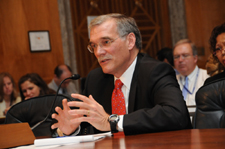
On Friday, May 15, I attended the confirmation hearing for Robert M. Groves, Obama’s designee to become the next director of the U.S. Census Bureau. Groves, formerly an academic from the University of Michigan, has dedicated his life to census-related matters. A total of three senators attended his hearing, including Susan Collins, the lone GOP representative. Without objections, the Senate Committee on Homeland Security and Governmental Affairs unanimously approved Groves’ nomination by voice vote five days later. However, Groves’s confirmation by the full Senate has been stalled by at least one anonymous Republican senator. Under Senate rules, a Senator can hold up a nomination without going public or providing an explanation.
It has now been 40 days since Groves’s nomination hearing. One reason for the anonymous hold may be Groves’s support for statistical sampling. This practice is controversial because it involves using expert opinions to calculate the accuracy of figures rather than relying solely on a door-to-door headcount. As Time reported, when Groves was “an associate census director in the 1990s, [he] angered Republicans by supporting a statistical adjustment to compensate for the 1990 undercount.”
However, sampling should be a nonissue because the method was banned for decennial headcounts by the United States Supreme Court, and Groves has sworn not to use it for the 2010 Census.
In addition to Groves, 61 other Obama nominees remain unconfirmed. (Also, Obama has yet to fill 210 open positions.) The longer these positions sit vacant, the greater the chance that bureaucratic errors will be made due to a lack of leadership.
And no place is more prone to bureaucratic error than the Census Bureau.