Going Up the River, Travels in a Prison Nation. By Joseph T. Hallinan. Random House. $24.95. 288 pages.
In Going Up the River, Pulitzer Prize-winning reporter Joseph T. Hallinan takes us around the United States to examine our nation’s incarceration compulsion.
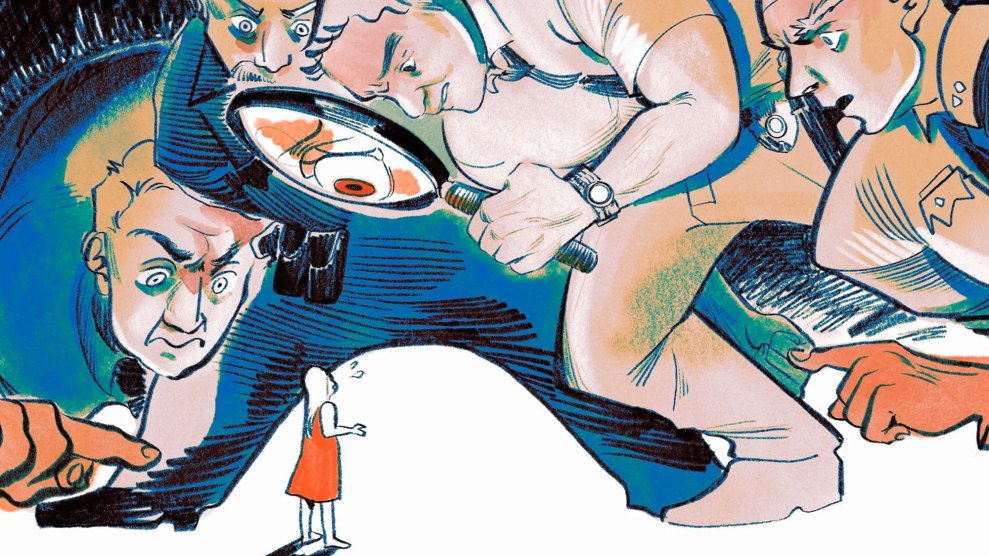
He looks at America’s frightening increase in prisoners, prisons, and related industries through the eyes of those directly involved. We meet inmates, wardens, guards, kitchen workers, prison planners, townspeople who serve the visiting families of prisoners — even a South African entrepreneur who moved his furniture factory inside the walls of a South Carolina penitentiary. Though the book has the requisite alarming statistics — 2 million people, nearly half of them black, behind bars; $25 billion spent each year on prisons — its real value is in the stories about those who live, by choice or by incarceration, in our “prison nation.”
Hallinan’s first stop is Beeville, Texas, a remote outpost on the plains between Corpus Christi and San Antonio. Texas was a popular destination for Hallinan’s travels because, as he writes, locking people up “is something of a religion” in Texas, where 1 in every 9 U.S. inmates can be found. Hallinan explains that the state has built more than 100 prisons since 1980 and that “in 1995, at the peak of the expansion, Texas opened a new prison nearly every week.” These are facts worth remembering as we begin the presidency of former Texas governor George W. Bush.
Beeville is instructive because it shows how deeply the urge to incarcerate has captured otherwise reasonable places. The mostly white town of 13,000 is home to two prisons, which together house another 7,200 people, mostly minorities. There is no crime in Beeville to speak of, yet the residents have an economic need to believe it is “a clear and present danger.” They seem to believe about crime, Hallinan writes, what America believed about communism in the ’50s: “that its threat lurked everywhere at all times, and could be stemmed only by the creation of a vast military-industrial complex — except that now it was a prison-industrial complex.”
In Texas, the economic roots of this complex stretch back two decades. During the ’70s oil boom, few people wanted to live near prisons. But the state’s economic collapse soon changed the equation. As prison planner Jack Kyle explained to Hallinan, “Oil prices went down…Everybody was having a hard time — except the folks that were around the prisons. So somebody says: Hey…I’d get a constant ßow of money comin’ in here, and those folks in Huntsville like it, I guess, so why don’t we get one?” Communities across the state soon found themselves in bidding wars to bring prisons to town. This phenomenon was not unique to Texas: The same logic has spurred prison construction from Louisiana to upstate New York and other places where industrial ßight or agricultural decline left residents desperate for an economic engine.
Though his stories are well written, it’s not always clear where Hallinan is going. In journalistic terms, his chapters need a “nut ‘graph,” a paragraph that tells readers the point of the story. But this is a small detraction in a book that successfully presents the prison nation in human terms.
Hallinan makes complex issues tangible through such common folks as Jennifer Miller, a divorced mother of three and a prison guard in Big Stone Gap, Virginia. After the once-booming coal industry turned cold and divorce split up her family, Miller needed income — and the new local prison offered steady employment. It’s important to understand people like Miller. One reason the prison complex has become so entrenched is that she and thousands of other righteous, hardworking Americans have come to depend on our racist, perverted criminal justice system to feed their children.
Joe Davidson is a commentator on NPR’s “Morning Edition” and a columnist for BET.com. He formerly covered criminal justice issues for the Wall Street Journal.