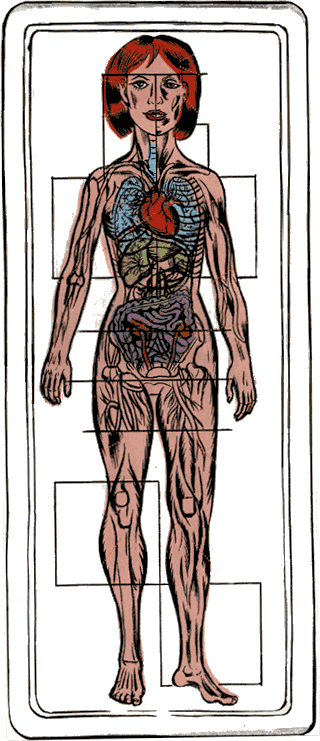
An Owners' Guide

Pharmaceutical companies are mining your DNA for scientific gold

Baldness gene
Patent pending
Columbia University
Alzheimer's gene
Patent 5,508,167
Duke University,
licensed to Glaxo Wellcome

Parkinson's disease gene
Patent pending
National Human Genome
Research Institution
(National Institutes of Health)

Brain cancer gene
Patent pending
Myriad Genetics

Blindness gene
(retinitis pigmentosa)
Patent 5,705,380
Axys Pharmaceuticals/ Jackson Lab

Premature aging gene
(Werner's Syndrome)
Patent pending
Darwin Molecular, licensed to Geron Corp.

Asthma gene
Patent pending
Axys Pharmaceuticals

story continues below

story continued from above

High blood pressure gene
(hypertension)
Patent 5,589,584
University of Utah Research Foundation, licensed to Myriad Genetics

Epilepsy gene
Patent pending
Stanford University, licensed to Progenitor

Obesity gene
Patent 5,646,040
Millennium Pharmaceuticals, licensed to Hoffmann-
La Roche

Osteoporosis gene
Patent 5,501,969
Human Genome Sciences

Melanoma gene
Patent 5,633,161
Millennium Pharmaceuticals

Glaucoma gene
Patent pending
University of Connecticut/ InSite Vision

Cardiovascular disease gene
Patent pending
Myriad Genetics/ Novartis

Breast and ovarian cancer gene
Patent 5,693,473
Myriad Genetics/ Centre de Recherche du Chul/ Japanese Foundation for Cancer Research

Colon cancer gene
Patent 5,648,212
University of Utah/ Johns Hopkins University/ Japanese Foundation for Cancer Research/ Zeneca Limited

Arthritis gene
(rheumatoid arthritis and some autoimmune diseases)
Patent 5,556,767
Human Genome Sciences

Human Growth Hormone gene
Patent 5,597,709
Human Genome Sciences

Iron overload gene
(hemochromatosis)
Patent 5,705,343
Progenitor, licensed to SmithKline Beecham

Since the early 1990s fledgling genomic companies with enigmatic names such as Progenitor, Millennium Pharmaceuticals, and Darwin Molecular have been pinpointing and patenting human life with the help of $4.5 billion in investments from pharmaceutical companies. The science could lead to cures for cancer and many inherited diseases. But monopoly patents hinder that promise.

Myriad Genetics, for example, found a gene that causes inherited breast cancer and licensed the therapeutic development rights to Eli Lilly. Activists worry that exclusive patent rights over the gene could lead to more expensive gene screening tests and treatments. Patents give companies the right to determine who gets access to genes and at what price. Researchers express concern that exclusive patents will have a "chilling effect" on research and increase medical costs. Biotech companies say patents—and the resulting licensing fees—provide the key incentive for this research. But in Myriad's own corporate literature, the firm candidly admits that its "broad and substantial proprietary estate" of breast cancer genes not only promises huge profits but keeps competitors at bay. "The identification and patenting of genes," notes Myriad, "will present [competitors with] significant barriers to entry."

illustration by Gary Panter

Research provided by the Rural Advancement Foundation International

Plus: Special RAFI supplement for MoJo readers

Get Mother Jones by Email - Free. Like what you're reading? Get the best of MoJo three times a week.
Comments
no profile pic for comment author

موقع منتديات

موقع منتديات العاب دليل العاب طبخ العاب بنات العاب سيارات العاب باربي العاب للبنات فقط العاب تلبيس العاب تلبيس بنات العاب بنات فقط دليل مواقع العاب قص الشعر العاب ترتيب الشعر العاب اطفال العاب بنات جديدة العاب البنات العاب قص شعر العاب ترتيب تلبيس بنات العاب الطبخ العاب السيارات العاب مغامرات العاب اكشن العاب استراتيجية العاب ذكاء العاب ذكاء للكبار العاب مسدسات العاب تصويب العاب سباق سيارات باربي العاب جديدة العاب سونيك العاب ميك اب العاب مكياج توبيكات 2009 العاب بنات 2009 العاب طرزان العاب براتز العاب ديزني العاب دراجات العاب دبابات دليل المواقع قوقل الياهو الهوتميل  رسائل حب توبيكات ملونه تسريحات 2009 صور×صور رسائل شوق صور ماسنجر توبكات ملونه توبكات مسجات توبيكات حزينه فساتين سهرة رموز متحركة للماسنجر حنان دشتي رجيم  الطب النبوي منال العالم صور 2009  اناشيد طيور الجنة توبيكات فيديو صور العاب طبخ جديدة  hguhf العاب    http://www.arabstart.com/sitemaps/sitemap_index.xml.gz http://forum.arabstart.com/sitemap_index.xml.gz

no profile pic for comment author

Biologics

Biopharmaceuticals, also known to be in the red biotechnology classification, are specialty therapeutic agents created differently than other typical synthetic pharmaceuticals, and therefore are have a unique molecular complexity that are designed for serious illnesses such as anemia or multiple sclerosis.

Unlike typical drugs, biopharmaceuticals are large complex protein molecules developed utilizing living organisms, such as certain cell. A host cell is manipulated and is inserted into a cell line where it is cultured to produce the desired protein by the manufacturer.

This is a common method of production of biopharmaceuticals.

Because of their uniqueness and exclusivity, they are very expensive- costing thousands a month for the payers, as the manufacturer of such therapies spend over a billion dollars bringing such a biologic to market.

The incentive for the manufacturer is complete exclusivity, as follow on biosimiliars are not authorized as of yet in the United States, yet are in Europe on a case by case basis.

Generic biologics are not possible, as duplication cannot be developed, as all biologics are created with some degree of difference. Also, only about a third of biologic agents make it to market after initiating the development of a particular agent.

Biologic medications began to be used primarily in the 1980s and now this new industry presently make close to80 billion a year- with about 15 percent growth in this market annually, and this is twice the growth of the pharmacetuical industry.

With anemia patients, oncology and dialysis clinics are targets for such meds in this category, as anemia is associated with their treatment and conditions for such diseases. Venture capitalists usually fund the manufacturers of such products produced by new and small manufacturers. Presently, Genentech and Amgen have the largest share of this market.

Yet, some claim that biopharmaceutical products benefit patients to only a certain degree, as they do in fact extend the life of such patients, such as those on chemotherapy or dialysis, but by only a few months. So the high cost of these meds is questionable and has been debated by others.

But again, no substitutes for these products are allowed in the United States, which may explain the very high cost of most biologics. Also, and to some degree, the efficacy of these biologic agents have also been questioned as well in other treatment aspects aside from life extension.

Then there is the issue of fraud with kickbacks and overuse of some of the biopharmaceutical meds used to treat anemia in dialysis clinics in particular. On a few occasions, doctors and clinics have been penalized for overusing the meds and for kickbacks in the form of discounts of the manufacturers.

Ironically, the dialysis process was never patented, yet the many centers that exist have proven to be very profitable, more for some than others.

An example is the situations where dialysis doctors, called nephrologists, have been accused of over-dosing patients with biologic meds to increase their income through their discount arrangement through the manufacturer of such meds, such as those biologics for anemia, and this arrangement is being investigated by regulators and encouraged by the representatives of such meds.

Presently, there are many that approach the FDA to aggressively insist that follow on biologics be allowed into the market for the benefit of these critically ill patients, and this would be of great benefit for such patients, and this can be done, as far as judging such an agent in molecular and biologic terms.

And their efforts have been somewhat successful, as the follow on equivalents of biopharmaceuticals, called biosimilars, could be manufactured and available within the next few years if authorized by this industry’s regulator, which is the Public Health Services Act, a subsidiary of the FDA.

However, this situation of biosimiliar delays illustrates one of many flaws in the U.S. Health Care System- when the sickest have to complicate their illnesses by possible financial stress, such as the case with biologic agents.

Relief is needed, and should be demanded by the public. After all, why be so sick, and then be financially burdened? One solution or suggestion is to either lower the cost of these types of drugs, or allow biosimiliar forms to enter the market faster than what the situation is presently. Recently as well, synthetic biotechnology is speculated to be present in the future.

“A little learning is a dangerous thing.” ---- Alexander Pope

Dan Abshear

no profile pic for comment author

Biologics

Biopharmaceuticals, also known to be in the red biotechnology classification, are specialty therapeutic agents created differently than other typical synthetic pharmaceuticals, and therefore are have a unique molecular complexity that are designed for serious illnesses such as anemia or multiple sclerosis.

Unlike typical drugs, biopharmaceuticals are large complex protein molecules developed utilizing living organisms, such as certain cell. A host cell is manipulated and is inserted into a cell line where it is cultured to produce the desired protein by the manufacturer. This is a common method of production of biopharmaceuticals.
Because of their uniqueness and exclusivity, they are very expensive- costing thousands a month for the payers, as the manufacturer of such therapies spend over a billion dollars bringing such a biologic to market.

The incentive for the manufacturer is complete exclusivity, as follow on biosimiliars are not authorized as of yet in the United States, yet are in Europe on a case by case basis. Generic biologics are not possible, as duplication cannot be developed, as all biologics are created with some degree of difference. Also, only about a third of biologic agents make it to market after initiating the development of a particular agent
Biologic medications began to be used primarily in the 1980s and now this new industry presently make close to80 billion a year- with about 15 percent growth in this market annually, and this is twice the growth of the pharmacetuical industry.

With anemia patients, oncology and dialysis clinics are targets for such meds in this category, as anemia is associated with their treatment and conditions for such diseases. Venture capitalists usually fund the manufacturers of such products produced by new and small manufacturers. Presently, Genentech and Amgen have the largest share of this market.

Yet, some claim that biopharmaceutical products benefit patients to only a certain degree, as they do in fact extend the life of such patients, such as those on chemotherapy or dialysis, but by only a few months. So the high cost of these meds is questionable and has been debated by others. But again, no substitutes for these products are allowed in the United States, which may explain the very high cost of most biologics. Also, and to some degree, the efficacy of these biologic agents have also been questioned as well in other treatment aspects aside from life extension.

Then there is the issue of fraud with kickbacks and overuse of some of the biopharmaceutical meds used to treat anemia in dialysis clinics in particular. On a few occasions, doctors and clinics have been penalized for overusing the meds and for kickbacks in the form of discounts of the manufacturers. Ironically, the dialysis process was never patented, yet the many centers that exist have proven to be very profitable, more for some than others.

An example is the situations where dialysis doctors, called nephrologists, have been accused of over-dosing patients with biologic meds to increase their income through their discount arrangement through the manufacturer of such meds, such as those biologics for anemia, and this arrangement is being investigated by regulators and encouraged by the representatives of such meds.

Presently, there are many that approach the FDA to aggressively insist that follow on biologics be allowed into the market for the benefit of these critically ill patients, and this would be of great benefit for such patients, and this can be done, as far as judging such an agent in molecular and biologic terms.

And their efforts have been somewhat successful, as the follow on equivalents of biopharmaceuticals, called biosimilars, could be manufactured and available within the next few years if authorized by this industry’s regulator, which is the Public Health Services Act, a subsidiary of the FDA.

However, this situation of biosimiliar delays illustrates one of many flaws in the U.S. Health Care System- when the sickest have to complicate their illnesses by possible financial stress, such as the case with biologic agents.

Relief is needed, and should be demanded by the public. After all, why be so sick, and then be financially burdened? One solution or suggestion is to either lower the cost of these types of drugs, or allow biosimiliar forms to enter the market faster than what the situation is presently. Recently as well, synthetic biotechnology is speculated to be present in the future.

“A little learning is a dangerous thing.” ---- Alexander Pope

Dan Abshear

Post a comment
Alternately, you may login to or register an account
The content of this field is kept private and will not be shown publicly.
  • Web page addresses and e-mail addresses turn into links automatically.
  • Allowed HTML tags: <a> <ul> <ol> <li> <blockquote> <img>
  • Lines and paragraphs break automatically.

More information about formatting options


Jail.org - Inmate Search
Criminal records, instant public records & people search & current court records. www.jail.org

U.S. Public Records Search
Search County & State Court Records, Criminal records, Vital and Adoption Records www.PublicRecordsInfo.com

Records.com - People Search
Public Records and Background Checks. Instantly Search Criminal Records, Addresses and Court Records www.Records.com

Court Records & County Records
Find Instant Public Records, Criminal Records as Well as County Property Records Search. www.PublicRecordsIndex.com

Mother Jones Podcast
Get in on the conversation! We talk about culture, politics, the environment, the economy and more. Listen now!

TalkBackTees.com
A treasure trove of liberal wit, wisdom and quotations, from ancient to modern, on colorful, cotton tees.

Support Independent Artists
Amazing art, crafts, apparel, paper-goods and more. A carefully curated selection of sundries since 1999.

FREE CONNECTIONS FOR GREEN SINGLES
Meet progressive singles in the environmental, vegetarian & animal rights community who share your values