Photo: Craig Cutler
Editors’ Note: Since this story was first published, the scientific debate it covered has been settled: Vaccines do not cause autism. Thimerosol has been removed from all early childhood vaccinations (except flu shots), yet the “autism epidemic” persists. A 1998 Lancet study that fueled the vaccine-autism scare has been thoroughly discredited and found to be fraudulent. Additionally, the special federal vaccine court mentioned in the article has since ruled that “the evidence was overwhelmingly contrary” to the case presented by experts and families claiming a link between vaccines and autism.
In August of 2001, Rita Shreffler of Nixa, Missouri, sent her son’s baby tooth to a lab. A year earlier, nine-year-old Andy had been diagnosed with Asperger’s syndrome, a form of autism, and Shreffler had just read a report in the journal Medical Hypotheses suggesting that such neurological disorders might be the result of mercury poisoning associated with an additive in children’s vaccines.
Wayne Middleton, of Middleton Microbiological & Environmental Testing Laboratory, was so astonished at Andy’s results that he even used his own children’s baby teeth as controls. Andy’s tooth registered a mercury level of 3,040 parts per billion. By comparison, the Environmental Protection Agency’s limit for mercury in drinking water is 2 ppb, and the limit for mercury content in waste going into a landfill is 200 ppb.
“Wayne asked me how on earth Andy could have been exposed to so much mercury,” recalls Shreffler. “When I explained that a vaccine preservative called thimerosal had exposed babies to excessive levels of mercury, he said that couldn’t be true because he used to work for a lab that made animal vaccines, and thimerosal had been discontinued in vaccines for cattle back in the early 1990s. He was sure it wouldn’t be allowed in children’s vaccines.”
He was wrong.
The Battle Lines
Did the use of a mercury preservative in vaccines directly contribute to the autism epidemic plaguing the country? And did federal health officials—fearful of liability facing their agencies and vaccine manufacturers, and loss of compliance with the federal vaccine program—put such concerns above the health of millions of infants? Are the recent studies discounting a link between thimerosal-containing vaccines (TCVs) and autism really rife with conflicts of interest and data manipulation? Or are the parents, researchers, and members of Congress who make such claims seeing conspiracies where none exist?
The stakes in this debate are high indeed. In 2002, an estimated 1 in 250 American children was diagnosed with autism, up from 1 in 500 in 2000, and 1 in 5,000 in the 1980s. If vaccine manufacturers and government agencies are found liable for neurological damage to millions of infants, TCV litigation could rival that of tobacco or asbestos. Currently, some 3,500 families of autistic children are slated to go before a special federal vaccine court—a step that Congress has required before they engage in any civil litigation, but one that will probably be just the first in a long legal battle.
The controversy began back in July 1999, when the American Academy of Pediatrics and federal health officials unexpectedly announced that thimerosal would be phased out of children’s vaccines—a change, they insisted, that was purely precautionary. “The current levels of thimerosal will not hurt children,” said then-AAP president Joel J. Alpert. “Reducing those levels will make safe vaccines even safer.”
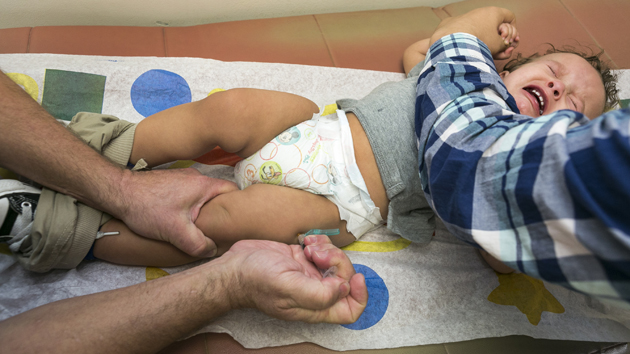
Prior to the AAP announcement, there had been no public outcry against TCVs. But there had been increasing concern about mercury in fish and other food, so much so that Rep. Frank Pallone (D-N.J.) authored a bill requiring the Food and Drug Administration to evaluate mercury levels in all food and drug products—including vaccines. This accounting unearthed a disturbing fact: Throughout the 1990s, as new TCVs were added to the list of a child’s required shots, federal health officials had inadvertently nearly tripled the amount of mercury—a potent neurotoxin—being injected into some babies during a critical period for brain development. Astonishingly, as each new vaccine was added to the schedule, no one bothered to total up how many micrograms of mercury children would receive as a result. By 1999, a baby who received all recommended vaccines at her two-month checkup could be injected with up to 62.5 micrograms of mercury—118 times the EPA’s limit for daily exposure. (These guidelines are based on methylmercury, while thimerosal contains ethylmercury; the difference regarding human toxicity is thus far unclear.) During the 1990s, when some 40 million children were vaccinated, the number of TCVs given to children nearly tripled, while autism rates inexplicably increased tenfold.
Though the public didn’t know it, this discovery alarmed health officials. Consider a June 29, 1999, email sent by Peter Patriarca of the FDA, which licenses vaccines, to Martin Meyers, head of the CDC office that monitors vaccine safety and formulates immunization policy in concert with the AAP. Facing pressure from AAP vaccine expert Neal Halsey to assess and disclose the thimerosal problem, Patriarca said he feared the FDA would be criticized for being “‘asleep at the switch’ for decades by allowing a potentially hazardous compound to remain in many childhood vaccines and not forcing manufacturers to exclude it from new products.” Noting that calculating the cumulative dose really involved nothing more complicated than ninth-grade math, Patriarca posed the questions he feared would be asked: “What took the FDA so long to do the calculations? Why didn’t CDC and the advisory bodies do these calculations when they rapidly expanded the childhood immunization schedule?”
Transcripts of CDC meetings show that officials compounded this remarkable lapse in oversight with concerted efforts to minimize both the extent of the problem and any liability their agencies faced. “We are in a bad position from the standpoint of defending any lawsuits,” noted one CDC adviser, “and I am concerned.” Regulators chose not to act aggressively to reduce infants’ exposure to thimerosal, and as a result TCVs mandated for infants remained on the U.S. market until November 2002. (The CDC and FDA refused Mother Jones‘ requests for interviews, as did vaccine makers, citing pending litigation.)
“You would think the CDC and FDA would be totally mobilized,” says Rep. David Weldon (R-Fla.), “that they would be making rapid efforts to get mercury out of all the vaccines, bringing in independent scientists to study this, and really doing a very thorough investigation. But their response has been totally inadequate.”
As a conservative and a physician, Weldon is an unlikely critic of either the vaccine program or of pharmaceutical companies. But he sat on the Committee on Government Reform, and when its then chairman, Rep. Dan Burton (R-Ind.), was prompted by his grandson’s autism diagnosis to investigate the risks posed by mercury in vaccines, Weldon found himself listening to three years of testimony on the subject. Now, like many parents of autistic children and a growing number of scientists, he believes that exposure to thimerosal among infants born with a heightened sensitivity to mercury or an inability to excrete it could have contributed to the autism epidemic.
Dr. Weldon is also troubled by what he described in a November 2003 letter to CDC director Julie Gerberding as a “disturbing pattern” of collusion among vaccine-program officials, the pharmaceutical industry, and others with a vested interest in minimizing liability. Weldon specifically addressed a just-published and much-publicized Pediatrics article that analyzed CDC vaccine data and claimed there was no consistent link between TCVs and autism. Weldon’s review of the study revealed the “appearance of selective use of data to make the associations…disappear.” He also noted that Pediatrics failed to mention that the study’s author now works for a vaccine maker facing liability and instead identified him as still being a CDC employee, which “undermines this study further.”
Weldon also asked that the CDC provide all its vaccine data to independent researchers, which thus far it has been unwilling to do. “If it is eventually determined that an entire generation of kids was essentially poisoned, a class-action suit against the federal government could be on the order of hundreds of billions of dollars, and so there’s very good reason for them to try to cover this up,” says Weldon. “And then when they appear as though they are covering it up, it makes you suspicious that it’s all true.”
Between the Cracks
Anyone who recalls the stinging sensation of having a skinned knee painted with a reddish-orange antiseptic called Merthiolate has an intimate acquaintance with thimerosal, simply another name for the bacteria-killing compound developed by Eli Lilly in 1929. Early internal safety data on injections containing thimerosal were not encouraging. In 1935, for example, a researcher reported to Lilly that adverse reactions indicated that thimerosal was “unsatisfactory as a preservative for serum intended for use on dogs.”
Yet that same year, thimerosal began to be added to childhood vaccines. Mostly it was used in large, multidose vials in which contamination can arise from repeated needle re-entry. Individually bottled vaccines don’t require preservatives but are more expensive, and a mercury-free preservative has been used by one pediatric vaccine maker since 1997; but in 1999 most infant vaccines used in the United States contained thimero-sal (as, indeed, some flu and booster shots—and most infant vaccines used in the developing world—still do).
Back in 1935, the FDA didn’t yet regulate drugs and vaccines. But even once it did, remarkably, thimerosal was never required to undergo clinical testing. When FDA officials asked Lilly for safety data in 1973, shortly before reviewing thimerosal’s use in over-the-counter products, Lilly’s director of regulatory affairs responded, “[I]t would be difficult to get recognized researchers to conduct new studies for safety or efficacy. They believe that over 40 years of wide usage has proven efficacy and safety beyond that which could be done in special studies.” Nine years later, FDA officials recommended pulling over-the-counter products containing thimero-sal from the market, though 16 years passed before they were. And, still, its use in vaccines went unexamined. Thimerosal also continued to bypass toxicity testing, even after federal regulations for reviewing vaccines required it. “The absence of appropriate preclinical testing of thimerosal is a staggering oversight,” FDA drug reviewer Dr. Eric Colman wrote in 2002, after his son was diagnosed with an autistic spectrum disorder.
The Tipping Point?
When autism was first recognized as a neurological disorder in 1954, the symptoms described were essentially the same as those currently used for diagnosis of classic autism: severely limited speech, impaired social interaction, and repetitive behaviors such as arm flapping. Today, the broader autistic spectrum includes less severe forms in which some children may speak but have unusual behaviors and learning disabilities, or have high IQs but difficulty with social interaction, a common characteristic of Asperger’s syndrome.
Psychologist Bruno Bettelheim once convinced doctors that autism was attributable to the bad parenting of “refrigerator moms.” After that theory was scrapped, autism was assumed to be an unavoidable genetic fate. But the exponential rate increases have led more and more scientists to suspect that autism might result from an interplay between genetic vulnerability and nongenetic causes, says Harvard pediatric neuroscientist Dr. Martha Herbert. “This new line of investigation calls for a knowledge of toxicology, genetic individuality, and biochemistry much more detailed than most current autism researchers possess.”
Those who believe in the thimerosal/autism theory suggest that the precise form the disease takes simply reflects the degree of mercury exposure. Vaccines are just one pathway for mercury to reach and accumulate in the fetal or infant brain, but a high exposure at a key time might—especially for children genetically ill- disposed to flush the toxin—be the tipping point. For infants born to women with high mercury consumption, AAP vaccine-policy expert Neal Halsey commented back in 1999, “no one knows what dose of mercury, if any, from vaccines is safe.… We can say there is no evidence of harm, but the truth is no one has looked.”
After the AAP announcement, a group of parents founded Sensible Action for Ending Mercury-Induced Neurological Disorders, or Safe Minds. Many members of Safe Minds (and other groups) are doctors, nurses, and researchers who stress that they are “anti-mercury, not anti-vaccine,” says board member Mark Blaxill. “Virtually every step forward of any consequence with respect to the scientific agenda has come from parents. This is a new phenomenon: direct scientific activism by parents using their own professional skills to aggressively take on anyone who makes arguments based on sloppy science to try to make this problem go away.”
In 2001, two Safe Minds board members, Lyn Redwood, a nurse, and Sallie Bernard, a market researcher, published a study in the journal Medical Hypotheses that detailed overlaps between symptoms of autism and those of mercury toxicity. They noted, for example, that a brand of teething powder containing mercury was popular until the 1950s, when a doctor finally connected it to Pink’s disease, which had symptoms similar to autism. Once the teething powder was removed from the market, Pink’s disease disappeared.
Blaxill himself published a paper in the April 2003 Journal of Autism and Developmental Disorders that outlined errors made in a study by public-health experts who argued that the rise in autism rates could be partly accounted for by diagnostic substitution, i.e., children previously categorized as mentally retarded now diagnosed as autistic. Blaxill’s analysis prompted the study’s authors to concede that his criticisms were valid. A partner in a leading business-strategy firm, Blaxill says that he “learned to be skeptical of ‘experts'” in his business. “I’m not intimidated by numbers or science,” he says. “I know how people can lie with numbers, and if there’s one thing I’m good at doing, it’s taking those numbers apart to find the truth. The CDC has been lying with numbers regularly.”
Blaxill also contributed to a study led by Louisiana physician Amy Holmes, who is the mother of an autistic child, which analyzed mercury levels in samples collected from baby hair. The August 2003 International Journal of Toxicology study revealed that healthy children excreted eight times more mercury via their hair than did autistic children. In fact, the more severe a child’s autistic symptoms, the less mercury was excreted in her hair, indicating that mercury also could be retained in the child’s tissue, including her brain.
Because mercury crosses the placental barrier, the study also examined maternal exposure to mercury via food, dental fillings, and the thimerosal-containing Rho D immunoglobulin injections typically given to Rh-negative women—16 percent of the population—during pregnancy. Prior to the mid-1980s, an Rh-negative woman was given this injection only after delivery to prevent complications that can occur if the baby is Rh-positive. But Rh-negative women now receive Rho D injections at 28 or 34 weeks, and any time there is a chance of a mother’s blood mixing with the baby’s—after undergoing amniocentesis, for instance. The study found that nearly half of the autistic children’s mothers had received Rho D injections, compared with only 9 percent in the control group. In addition, 37 percent of mothers in the autistic group also had 10 or more fillings containing mercury, compared with only 18 percent in the control group. The authors suggest that the near absence of mercury in hair samples of autistic infants despite higher exposure indicates that TCVs could be the last straw for children whose ability to excrete mercury is impaired or who are near a dangerous threshold due to maternal exposure.
But it’s not just parents who are conducting important research about thimerosal. Boyd Haley, a University of Kentucky biochemist who researches heavy-metal neurotoxicology, explains that APO-E—a protein crucial in carrying mercury out of the body—comes in three varieties, ranging from one that can carry out two atoms of mercury for every molecule of APO-E, to the least protective version, APO-E4, which doesn’t carry out any. Both autistics and Alzheimer’s patients tend to have APO-E4. “There is clearly a subpopulation of people who can’t excrete even low levels of mercury effectively,” says Haley. He also found evidence that may explain why for every autistic girl, there are four autistic boys. When he added estrogen to a petri dish of thimerosal and brain cells, the hormone reduced the rate of brain cells killed by thimerosal, whereas adding testosterone dramatically increased the death rate. Based on his results, Haley says no level of mercury can be considered a “safe dose” for infants.
Haley—whose thimerosal research was tangential to what he’s best known for, developing successful diagnostic tests for Alzheimer’s—says that once he published the risks of mercury in vaccines and dental fillings, he found himself turned down for NIH grants, after being consistently funded for decades. “People told me I would have funding problems if I worked on mercury, and they were right,” Haley says.
Richard Deth, a Northeastern University pharmacologist, has found that even low levels of thimerosal affect a critical neural pathway regulating brain-cell growth. When Deth submitted his study to Proceedings of the National Academy of Sciences, he said he was rejected on the grounds that it hadn’t met standards for “exceptional importance and novelty.” Deth was dumbfounded: “I keep hearing from public-health officials that there is no scientific basis to support a connection between thimerosal exposure and autism. Yet here I am bringing it to you and it’s not considered important?”
“We are treated all too often,” says a researcher who insists that anonymity equals continued funding, “to patronizing remarks by researchers about ‘hysterical parents’ who ‘can’t accept their child’s genetic fate’; highly publicized but methodologically weak and conflict-of-interest-ridden studies that claim to definitely refute any role for various vaccines in the increased rates of autism but raise no alarms about the increased rates themselves; and a press blackout on subsequent critiques and refutations.”
Rep. Weldon has heard similar complaints from other researchers and is examining whether the NIH peer-review system has become as politicized as they contend. “I’ve heard that if you start wading into this,” he says, “you can ruin your career.”
Protect the Herd
Why would there be a backlash against researchers who investigate the interplay between TCVs and autism? Aside from liability issues and conflicts of interest (more on that later), the medical establishment is deeply protective of the national vaccine program, and “herd immunity”—ensuring that the highest number of people are vaccinated—is key to preventing diseases such as polio and rubella, which the program has been so successful in stamping out. And the anti-thimerosal lobby tends to get lumped in with the anti-vaccine movement, which threatens the herd.
In March 2003, a Pediatrics paper by Dr. Karin B. Nelson, a neurological researcher at NIH, and Dr. Margaret Bauman, a Harvard neuropathologist, challenged the thimero-sal/autism link first publicized by Safe Minds’ Bernard and Redwood. They pointed out that there is no clear evidence that the ethylmercury in thimerosal has the same ability as the methylmercury found in fish to cross from the blood to the brain. (NIH researchers now studying thimerosal say it does but is flushed from the body much quicker and thus might not be as cumulatively toxic.) The Pediatrics paper also questioned whether autism increases are indeed real: “There has clearly been a broadening of the criteria for autism, better case-finding, increased awareness by clinicians and by families, and an increase in referrals…. Whether the sum of these is sufficient to account for the more frequent diagnosis of autism is a matter of contention and is properly settled by careful research.”
But careful epidemiological research is being done by the state of California, where classic autism diagnoses nearly doubled between 1998 and 2002, and are 6.3 times higher than in 1987. The state commissioned a study to see if the increases could be explained by factors suggested in Pediatrics. Investigators, led by University of California-Davis epidemiologist Dr. Robert S. Byrd, verified all diagnoses and ruled out all alternative explanations except for better case finding and increased public awareness, which they didn’t study. “That could be a contributing factor,” says Byrd, “but for hyperawareness to explain the increases we’ve seen, we would have had to be missing 2 out of 3 cases of autism, so I don’t think that’s a plausible explanation….The increase we are seeing is real and unexplained.”
An Interpretive Dance
As the court dates draw closer, a flurry of studies both to disprove and support the thimerosal/autism link has been released. Typically they have been criticized by one side or the other as conducted by researchers with a bias or conflict of interest. And some rely on small sample sizes that can be easily dismissed. Which is why the latest flash point is over what could be a comprehensive source of data. Several HMOs are paid by the federal government to provide children’s immunization and medical records for the CDC’s Vaccine Safety Datalink, a database used to track pos-sible adverse side effects of vaccines. After the discovery that mercury levels had exceeded EPA guidelines, the CDC’s Thomas Verstraeten reviewed medical records of 110,000 children. A confidential February 29, 2000, version of his report obtained through the Freedom of Information Act showed that the “relative risk” for autism in infants receiving 62.5 micrograms or more of mercury by the age of three months (as had most children abiding by the vaccine schedule) was 2.48 times higher than in infants who did not. In courts of law, a relative risk of 2.0 or higher has been considered sufficient proof that a given exposure causes disease. The figure was especially significant given that autism is typically not diagnosed until after age three, and 40 percent of the children in the study were younger.
Yet these findings were never published or even disclosed to CDC advisory-committee members. Prior to a meeting of the committee in June 2000 to discuss the report, CDC officials apparently added to the study’s database children born with congenital disorders (who had previously been excluded) and two groups of babies not yet one year old. Such statistical adjustment reduced the relative risk for autism to 1.69, comfortably below the legal threshold for causation. The lower number was provided to the CDC’s advisory-committee members.
Nevertheless, as a transcript of that meeting reveals, even the adjusted results—which still showed statistically significant relationships between thimerosal exposure and subsequent diagnoses of attention deficit disorder, language and speech delays, and a host of other neurodevelopmental problems—startled committee members.
When one member asked Verstraeten why risks of neurodevelopmental problems were higher in children with greater exposure to thimerosal, he replied, “Personally, I have three hypotheses: My first hypothesis is it is parental bias: The children that are more likely to be vaccinated are more likely to be picked up and diagnosed. Second hypothesis: I don’t know—there is a bias that I have not recognized, and nobody has yet told me about it. Third hypothesis: It’s true—it’s thimerosal.”
Asked by another member whether that third hypothesis was clearly biologically plausible, Verstraeten responded, “When I saw this, and I went back through the literature, I was actually stunned by what I saw, because I thought it was plausible.”
Bill Weil, a pediatrician representing the AAP’s environmental-health committee, noted, “There are just a host of neurodevelopmental data that would suggest that we’ve got a serious problem.… The number of kids getting help in special education is growing nationally and state by state at a rate we have not seen before.”
“Forgive this personal comment,” added Dr. Richard Johnston, a Colorado immunologist, “but I got called out for an emergency call and my daughter-in-law delivered a son by C-section. Our first male in the next generation, and I do not want that grandson to get a thimerosal-containing vaccine until we know better what is going on.”
Verstraeten’s results also worried committee member Robert Brent, a developmental biologist and pediatrician from Thomas Jefferson University. “The medical/legal find- ings in this study, causal or not, are horrendous, and therefore, it is important that the suggested epidemiological, pharmacokinetic, and animal studies be performed,” Brent said. “If an allegation was made that a child’s neurobehavioral findings were caused by thimerosal-containing vaccines, you could readily find a junk scientist who would support the claim with ‘a reasonable degree of certainty.’ But you will not find a scientist with any integrity who would say the reverse with the data that is available…. So we are in a bad position from the standpoint of defending any lawsuits if they were initiated, and I am concerned.”
Perhaps because of such concerns, the committee decided to go along with the CDC’s view that it should refrain from stating a preference for thimerosal-free vaccines. The fear was that such a statement would discourage physicians and clinics from using existing inventories, and immunization rates might fall if thimerosal-free versions weren’t available everywhere. But the financial impact to manufacturers was mentioned three times by the CDC’s Roger Bernier. “It could entail financial losses of inventory if current vaccine inventory is wasted,” he said. “It could harm one or more manufacturers and may then decrease the number of suppliers.”
Transcripts also reveal that some members of the committee went on to discuss various ways to “push” and “pull” the data further. Weldon and other critics allege that’s just what happened. When the final version of the study was published in the November 2003 Pediatrics, Verstraeten—who’d since left the CDC to work for vaccine maker GlaxoSmithKline—claimed he had found “no consistent significant associations between TCVs and neurodevelopmental outcomes.”
Writing to the CDC director, Rep. Weldon says that given the appearance of data ma-nipulation and conflict of interest, the CDC should open up its entire vaccine database to independent scientists. He notes that geneticist Dr. Mark Geier paid the CDC for data sets, only to be given many with no usable data—treatment Weldon characterizes as “abysmal and embarrassing.” Overall, he later wrote, “I have lost confidence in the ability of the CDC officials to give an honest evaluation of the matters at hand.”
Thanks to Weldon’s intervention, Geier has now been able to use the CDC database to compare autism rates among more than 85,000 children who received a TCV for diphtheria/tetanus/acellular pertussis (DTaP) with rates among nearly 70,000 children who got the thimerosal-free version. In the TCV group, the risk of autism was 27 times higher. Geier’s analysis is before two journals. Meanwhile, Dr. Walter Spitzer, a highly respected epidemiologist, has reviewed it and says, “This is important and needs to get out immediately. I see no major flaws. It is sound epidemiologically.”
“Denying the existence of the tragic, massive autism epidemic will neither cure the problem nor restore confidence in our much-needed vaccine program,” says Geier. “Rather, we must admit our past mistakes openly and honestly and then work to improve current and future vaccines. The first step is the removal of thimerosal from all vaccines, which we predict will result in the end of the autism epidemic.”
Full-Court Press
And that’s the true test of the thimerosal theory: Will rates of autism and related disorders decline in the years ahead? In May 2003 the AAP stated, “All routinely recommended infant vaccines currently sold in the U.S. are free of thimerosal as a preservative and have been for more than two years.” Yet because the FDA maintained it did not have the scientific evidence to justify a recall of thimerosal, vials distributed prior to the introduction of thimerosal-free versions were allowed to remain on the market until they became outdated. That means that regularly mandated TCVS were still available until November 2002. And injections of Rho D containing 10.5 micrograms of mercury per dose were on the shelves until April 2003, even though Rho D was produced in single-dose vials that don’t require a preservative. “Because the FDA chose not to recall thimerosal-containing vaccines in 1999,” the House Committee on Government Reform April 2003 report concludes, “in addition to all of those already injured, 8,000 children a day continued to be placed at risk for overdose for at least an additional two years.”
This timetable is crucial to the coming legal battle. If federal health officials had ordered the removal of thimerosal by a specific date, there would be a clear line in the sand to definitively indicate whether exposure promoted neurological damage. As it is, the beginning of a trend may be detectable in 2004, but due to the typical age of diagnosis, a full assessment won’t be possible until late 2008 or early 2009.
Meanwhile, though, the federal vaccine injury court is seeking to determine whether sufficient evidence exists that thimerosal caused harm to the children in the 3,500 cases before it. The court was created in 1988 to prevent drug companies from abandoning manufacturing vaccines due to rising liability costs. Before suing manufacturers, families must file claims through the federal Vaccine Injury Compensation Program, which awards damages from a fund financed by a fee tacked on to each vaccine’s price. A team of special masters hears claims; the federal government is represented by the Justice Department. Regardless of the outcome, families can then move to civil court. In November 2002, the Justice Department asked the vaccine court to seal all documents in the autism cases; only days earlier, congressional Republicans had sneaked a provision into the homeland security bill that would shield Eli Lilly and other pharmaceutical companies from civil suits over thimerosal. Both moves were thwarted by public outcry from parents’ groups. Still, because government agencies and industry have been recalcitrant about handing over documents, the discovery process has stalled and families are starting to be allowed to move to civil court.
If the thimerosal theory starts to gain traction in court, the cost to the $8 billion-a-year industry could be gigantic. Approximately 40 million American children were immunized in the 1990s. If current rates hold true, roughly 160,000 will be diagnosed with classic autism, another 270,000 with autistic spectrum disorders, and as many as 2 million with pervasive developmental disorders.
But whether or not thimerosal is found to be instrumental in the problems facing any of these children, the systemic flaws that allowed mercury levels in vaccines to exceed federal guidelines must be fixed. In a move observers consider highly significant, former AAP official Neal Halsey also wrote a letter to Pediatrics criticizing Verstraeten’s study. In it, he suggests that an independent scientific body should review the data and take charge of evaluating vaccine safety. Having the CDC recommending vaccines and assessing their safety, Halsey has said, “is a problem.”
And while the immunization program is laudable, zeal for full compliance sometimes backfires. In an email sent to AAP officials back in 1999, Ruth Etzel of the Department of Agriculture made that point eloquently: “As you know, the Public Health Service informed us yesterday that they were planning to conduct business as usual and would probably indicate no preference for either product. While the Public Health Service may think that their ‘product’ is immunizations, I think their ‘product’ is their recommendations. If the public loses faith in the PHS recommendations, then the immunization battle will falter. To keep faith, we must be open and honest now and move forward quickly to replace these products.”
The jury is still out as to whether thimero-sal injections caused the autism epidemic or whether the concern over ethylmercury will expose methylmercury or another compound to be the true culprit. But what is certain—as evidenced by a 10-year interagency push to study all possible causes of autism announced last November—is that researchers and policymakers are no longer dismissive of environmental factors. “To cling to a purely genetic explanation for autism is a desperate attempt to maintain the illusion that one lives in a comfortable and rational world where new chemicals and technologies always mean progress; experts are always objective and thorough; corporations are honest; and authorities can be trusted,” says Harvard’s Martha Herbert. “That human actions, rather than genes, might be responsible for compromising the health of a significant proportion of a whole generation is so painful as to be, for many, unthinkable.”
Soon, however, jurors will be joining the ranks of those who’ve been forced to give the matter some very serious thought.