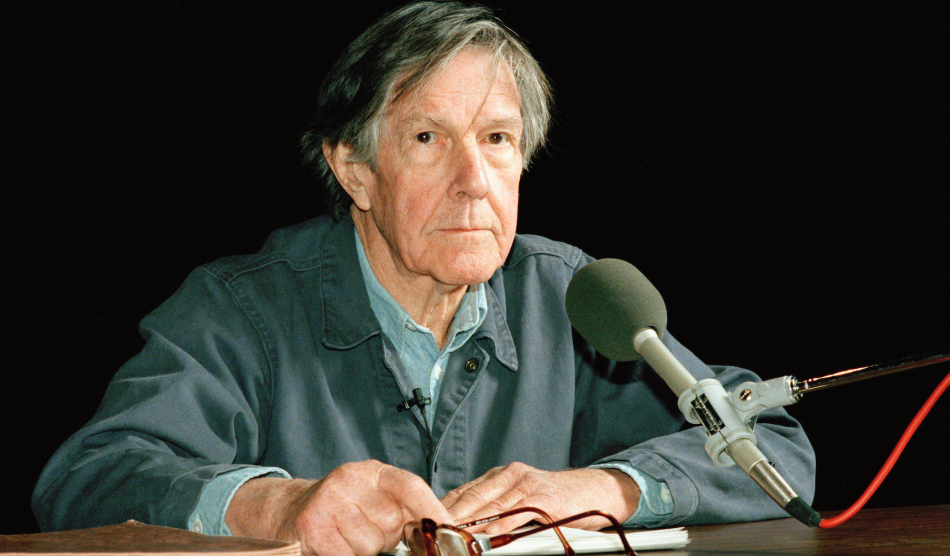
As a senior analyst at Australia’s top intelligence agency, the Office of National Assessments, Andrew Wilkie had high-level access to the raw data pouring in before the Iraq war. But while his country’s prime minister, John Howard, resolutely supported an invasion, Wilkie saw a significant gap between the evidence the intelligence community collected and the way Howard, George Bush, and Tony Blair argued the case for war.
Just a few days before the U.S., UK and Australia led the “Coalition of the Willing” into Iraq, Wilkie resigned his post at ONA in protest, and took his case against the Howard government public. Since then, he has spoken at numerous protests, testified before government inquiries in Australia and the UK, and won the inaugural Whistleblower of the Year award from the United Nations Association of Australia.
Wilkie has written a new book, “Axis of Deceit,” which discusses the intelligence relating to Iraq and how it was politicized in Canberra, London, and Washington. And he is continuing to take the fight to the government, running an underdog race as the Green Party candidate for Howard’s parliamentary seat in the upcoming Australian elections. The former intelligence officer spoke with MotherJones.com about his resignation, the war in Iraq, and how the post-war focus on intelligence failures is helping governments avoid responsibility.
MotherJones.com: When did you make the decision to resign from ONA and why?
Andrew Wilkie: It was many, many weeks in the making. I first started to have some concerns about the Iraq war in late 2002, when I wrote the secret report for the Australian government on the possible humanitarian implications of a war. It was a very sobering exercise; it made me start to look at the evidence much more critically. And there were certain waypoints, such as Colin Powell’s address to the Security Council on Feb. 5 2003. So much so that by about a fortnight before the war, I had reached the conclusion that a war was not going to be the most sensible or ethical way to resolve the Iraq issue. There are all sorts of things that public servants disagree with, but to my mind, I was looking at government misconduct on an extraordinary scale. So much so that I felt I couldn’t support the government any longer and, also, that I had an obligation to speak out publicly.
I never thought I could stop the war. In fact, I don’t think anybody could stop the war by early 2003 — not even George Bush; there was just so much momentum behind it. What I did hope to do was to energize the public discussion about it. I had a very privileged access to secret information, and was basically just backing up what many of the people on the outside were already thinking. I just felt I had an obligation to tell them what I knew and to basically stir up the debate.
MJ: How did John Howard and the government react?
AW: The evening I resigned, they told the media that I hadn’t been involved in the Iraq issue -– in other words, that I didn’t know what I was talking about. Which was a nonsense, as I’d been involved in the Iraq issue from the start, and I’d written the report in December on the possible consequences of a war. The morning after I resigned, one of the prime minister’s staff told the media that I was mentally unstable and shouldn’t be listened to. The foreign minister here, Alexander Downer, has been very outspoken about me and called me all sorts of things, and I have been vilified very strongly in our Parliament by government politicians. But, mind you, I’ve gone strongly in return and spoken very strongly against the Howard government in laying out my case.
MJ: How have you seen public opinion toward the war shift in Australia?
AW: Before the war, there was overwhelming public opposition. Different polls had different results, but certainly in the order of three-quarters of Australians opposed the war. Now as soon as the war started, that did a backflip, and most Australians got behind it. I think part of the explanation was, “our troops are in combat; it’s our duty to support them.” And then, of course, the war seemed to go well at first. George Bush landed on the aircraft carrier with “Mission Accomplished,” the statue was pulled down in the square in Baghdad, and Prime Minister Howard did what I’d call a victory lap around the world and went out to Washington and London. At that point, I think the war was almost a political plus for John Howard, as well as for George Bush and Tony Blair. But steadily, it has turned sour in Australia, and the war has now become a clear political negative for the prime minister, one that he is seeking to neutralize in our forthcoming election.
MJ: In your book, you discuss ONA’s pre-war assessments of the United States and its intentions. How did that information shape the case for war?
AW: This is a very important point. There’s been so much debate in Australia — and in the UK — about what our intelligence agencies were reporting about Iraq. But just as important — maybe more important — is what Australian and British intelligence agencies were saying about the United States. It was made very clear to the Australian government that there was a very broad range of drivers for this war –- of which WMD and terrorism were only two, and they were well down the list. What that means is every time John Howard stood up in front of the Australian people — and every time Tony Blair stood up in front of the British people — and waxed on about WMD and terrorism, they were doing that in the full knowledge that those weren’t the main reasons for the war.
In Australia, there were only two dimensions to the official case for war. One, that Iraq had failed to disarm its weapons of mass destruction, that it had a massive arsenal. And two, that it was collaborating actively with Al Qaeda, and that it was just a matter of time before those weapons were passed to terrorists. That was really the official case for war in Australia. Unlike in the U.S., I might add, where your government did talk about the value of regime change. In Australia, John Howard dismissed regime change. In response to a question by a journalist before the war, he said we wouldn’t be able to justify a war on the basis of regime change. So all this talk now about the value of that change and the humanitarian benefits, it has nothing to do with the pre-war case presented in Australia.
MJ: What did Howard hope to gain by Australia’s supporting the war?
AW: First and foremost, he has a deep personal conviction about the Australian alliance with the U.S. Howard was in the U.S. on Sept. 11, and I think that’s one reason why he feels so much a part of this. But his personal ideology is strongly inclined that way, much more than even his Liberal Party’s is. The Iraq war in Australia is very much John Howard’s war; it reflects that obsessive relationship with the Bush administration. I think that’s what drives him. There are practical benefits — for example, security guarantees for Australia, free-trade agreements and so on — but they are really just dividends of this fundamental personal conviction of his.
MJ: How have the Australian intelligence agencies changed their approach to terrorism after Sept. 11?
AW: It goes without saying that 9/11 was a shock, even to the intelligence agencies. They had completely underestimated the threat from Islamic extremists. So it really has shaken them up, and there was certainly an increased focus on terrorism, and transnational threats generally.
Having said that, in Australia there wasn’t enough of a focus brought to bear on the terrorism threat. Where I used to work, at the Office of National Assessments, they only took on two terrorism experts after 9/11. It was a bit token, and I think that helps to explain why Australia then got caught out, again, with the Bali bombing. We didn’t see that coming either. We hadn’t really learned our lesson from 9/11, and I don’t think we really learned our lesson from the Bali bombing either. It’s only now, because of this Iraq misadventure, that the intelligence agencies are looking more carefully at how they operate.
I should make one more point about the 9/11 thing. Because of the way we were all caught out over 9/11, I think the agencies have been more inclined to think worst-case. And I think that helps to explain the intelligence failure over Iraq. They didn’t want and couldn’t afford to be caught out again, so the agencies tended to overestimate the threat posed by Iraq.
MJ: How did the governments make the qualified intelligence on Iraq fit their arguments?
AW: Intelligence is inherently ambiguous. That’s just the nature of the way it’s collected — there are always uncertainties, and the intelligence agencies know that. The agencies will invariably give very measured and carefully qualified advice to government. That was, in fact, the finding of this recent Philip Flood report in Australia. The official government inquiry has found -– and these are the words used by Flood himself — that the intelligence agencies gave “cautious and qualified advice.”
But that cautious sort of advice was, of course, not the style of what was being said by George Bush or Cheney or Wolfowitz or Rumsfeld or John Howard or Alexander Downer. To them, the advice was always strong and unambiguous; it always had those qualifications removed. And the qualifications were normally just simple words like “could,” as in “Iraq could be doing this,” qualifications like “uncorroborated evidence suggests” or caveats like “intelligence suggests.” Words like “suggests,” “could,” “can’t be ruled out” or “uncorroborated.” And those words were almost always dropped from the official government statements. In doing so, all our governments – very deliberately, very mischievously and very dishonestly – turned uncertainty into certainty. And that completely reengineered the threat posed by Iraq.
MJ: What were the main gaps you saw in the intelligence relating to Iraq?
AW: The first main intelligence gap was the unaccounted-for WMD material. There wasn’t a lot unaccounted for, but that material became quite central to the official case for war last year. The other intelligence gap was what Iraq got up to after 1998, when UNSCOM pulled out. Now, I think that highlights the inadequacies in our intelligence services, that we didn’t have effective human intelligence operations going on, and were relying instead on Iraqi dissidents and whatnot, who all had an agenda. There were too many people who were trying to encourage a U.S. intervention and were prepared to say anything that the U.S. government wanted to hear. In that context, the intelligence database on Iraq just became increasingly contaminated with what I’d call garbage-grade intelligence. So it made it very easy to cheery-pick the database and basically come up with the case for war that the politicians wanted.
MJ: One of the things you worked on at ONA was an assessment of the possible humanitarian costs of an invasion. How has the aftermath compared to the scenarios you considered?
AW: Thankfully, my worst-case scenarios have not eventuated. Mind you, I wasn’t looking this far ahead; I was looking at the immediate aftermath. And some of the possible scenarios there were quite scary, in particular the idea of Saddam Hussein himself creating a humanitarian disaster to complicate coalition war-fighting operations or to compel the international community to intervene and say “stop this madness.” Given that we all thought he had a very limited chemical and biological capability, it was not impossible that he would use some sort of chem-bio agent on one of his own cities. It wasn’t impossible that he’d blow dams and flood areas. There were lots of things he might have done. If I had my time again, I’d probably write the same assessment of the possible humanitarian implications, even though some of those things haven’t come to pass. But some did. There’s no doubt that the situation in Iraq, for many Iraqis currently, is very dire. It’s unfortunate that some parts of the country are now so violent that the media can’t get out there and report the situation. It will still be a long time before Iraq is a better place for most Iraqis.
MJ: You’ve said the post-war focus on intelligence failures in all three countries lets the governments off the hook. How so?
AW: In all three countries, the governments have very deliberately kept the focus on the intelligence agencies and steered the focus away from the bigger issue, which is the government’s relationship with the agencies, and the government’s misuse of intelligence material. And we’re saying this in all three countries. The Flood report’s terms of reference were very specifically to look only at the performance of the intelligence agencies. Everyone knows they failed — the previous Australian inquiry found that out. The most recent British inquiry did the same thing — looked at the intelligence agencies. The U.S. inquiry did the same thing. I think the governments are being very mischievous in the way they’re keeping the focus on the intelligence agencies. Which did fail, there was a limited intelligence failure. But that limited failure in no way excuses the governments for their decision to go to war.
MJ: With the Australian election coming up, how effective has the opposition been at making the war an issue?
AW: We’ve got a real problem in Australia in this regard. I think the opposition, the Labor Party, has really let us down on this. The Labor Party flip-flopped on its position before the war, and more recently, I don’t think Mark Latham [the Labor leader] has been inclined to go hard on this issue; he just doesn’t seem to go near the war too much. He’s taken a bit of a stand on troops out by Christmas, but I think the Labor Party knows they’re a bit vulnerable on this issue, because they didn’t take a strong enough stand before the war. Then you’ve got the Australian media, and they haven’t got a good record on this. Australia’s good journalists are the best in the world, but too much of the Australian media was lazy over Iraq, sometimes incompetent, and often compliant with Rupert Murdoch’s empire. His papers, like the The Australian, were just mouthpieces for the Bush administration and, by implication, the Howard government. So it’s not entirely unsurprising that so many Australians have been a bit disengaged, and that’s certainly motivated me to keep speaking out.
MJ.com: What should the opposition do, then?
AW: The Labor Party just needs to focus more on it. We’re still engaged in an unjustified war. This should bring a government down, and the Labor Party just isn’t going hard enough. The Greens have gone very hard on this, which probably helps to explain my attraction to the Greens. And I’m still going hard on it. National security is really the central, main plank in my own campaigning. Rather than being strong on national security, I think John Howard is actually recklessly dangerous on it.
MJ: On the intelligence end, what will the agencies do to prevent similar failures?
AW: I’m very confident that the intelligence agencies are already well advanced in reform. The intelligence agencies are made up of mostly highly competent, highly professional people, and I think the focus on the intelligence failure has been somewhat unfair on the agencies. Intelligence can never be perfect, and will fail from time to time, because that’s the nature of the work. That’s why intelligence has to treated with great care. It needs to always be kept in balance with things like the advice of political staffers and policy departments, public opinion, polling, the media’s views — and the intelligence has to be kept in perspective.
MJ: One of the recommendations in the Sept. 11 commission’s report was the creation a national intelligence czar to oversee the various U.S. agencies. Does that seem like a step in the right direction?
AW: Not knowing all the details, I would agree with the need for better coordination between agencies. But I think it’s important that agencies still have a certain amount of independence so they can come up with independent opinions. Depending how it’s done, there’s a danger that if you have one person in charge, linked too closely to the government, you end up getting one line of compliant reporting. One of the strengths of the U.S. intelligence system before the war was that the INR in the State Department took an independent position on Iraq and was actually much closer to the mark than the CIA. I think that shows the value of having separate lines of reporting from separate agencies and getting those different opinions. So whatever reform occurs, you wouldn’t want to get rid of that.
MJ: On the political end, what will it take to ensure the American, British and Australian governments don’t make the same mistakes in the future?
AW: That rests upon all three governments being punished at the polls. It’s looking more and more like Bush is gone in the U.S. It’s hard to imagine the British Labor Party having Blair in charge come the next election. And I think Howard’s on the ropes in Australia. It’s hard to tell, it’s about 50-50 maybe. But if all three governments are punished at the polls, if all three are turned out, that will send a strong signal to the future governments that people won’t accept this happening again. If any of those governments survive, that will of course be very worrying, because it will almost legitimize what they did. Hence it’s so important that they be punished at the polls. But regardless of the election results, I think the Bush administration is generally shocked at the mess they now find themselves in with Iraq, and I think U.S. foreign security policy will be in the shadow of Iraq for the forseeable future. If only because with so many troops bogged down there, the U.S. doesn’t have the resources to be too reckless anywhere else for a while. So I suppose there’s some good news in this mess.
MJ: You’re standing as the Green Party’s candidate for John Howard’s seat in Parliament. Why did you decide to run, and to challenge that specific seat?
AW: I wasn’t a member of any particular party or politically active when I resigned. But not long after, I decided to become active because I just wanted to keep pressing my case against the government, and didn’t believe the government had been held to account. I eventually decided to join the Greens; they’re the best match for me personally for a range of reasons. And I’m standing against John Howard personally in his own seat of Bennelong, in part because I want to represent the people in the electorate of Bennelong, but in part also that I judge by going up against the PM personally, it’s another way for me to get some more traction for my case against the government.
There’s three strong candidates running, though there will probably be a dozen or more candidates in Bennelong. The standout candidates will be John Howard for the Liberal Party, the Labor candidate will poll strongly, and I will also poll strongly. In fact, I think I can get the second-largest number of primary votes; I think I can beat the Labor candidate. So with the primary vote split three ways, nobody will get more than 50 percent, which means it will go to preferences. So someone can win the seat with as little as 30 percent of the primary vote. In that context, a John Howard victory is the likely outcome, but it can’t be taken for granted. I have a small, but real, chance of causing a major upset.