The current wave of globalization has its origins in the economic crises of 1970s, when the industrialized economies, after three decades of steady growth, began to flounder, beset by persistently high unemployment and inflation, and governments began casting around for an alternative to the Keynesian orthodoxy that had dominated economic thinking since the end of the Second World War. They found that alternative in a (hitherto fringe) school of thought associated with Friedrich von Hayek and, later, Milton Friedman, one premised on the notion that in matters of economic management government was the problem, not part of the solution, as Keynesianism had it.
Central to the new thinking—taken up famously and with particular fervor in the 1980s by Margaret Thatcher and Ronald Reagan—was the the idea that market forces work best and to everyone’s benefit when government stands aside. Left alone, such forces would inevitably unleash waves of trade, which would in turn generate a tide of growth, raising all ships in both the developed and developing world. Deregulation and privatization were the watchwords of the day.
Developing countries were effectively forced to open up to foreign trade and capital—for their own good. On a global scale, the embrace of what fast became a new orthodoxy promised an impressive array of social and political benefits as trade barriers fell and international markets were freed from the dead hand of government: the power of the nation-state would wane; nationalism and racism would fade; economics, not politics—and certainly not religion—would shape human events. Free markets and free democracies would become the norm in an interdependent, peaceful world held together by the magic of enlightened self-interest.
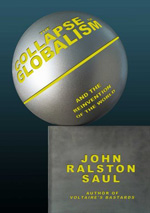
However, as John Ralston Saul argues in his new book, The Collapse of Globalism, things didn’t work out quite as planned. The past three decades have been marked by unimpressive economic growth and sharply increasing economic inequality, and recent years have seen a marked rise in economic populism, nationalism, and conflict, much of it within states. The Asian financial crisis of 1997-98 pointed up the instability of the global economic system, and, in 1998, the talks on the Multilateral Agreement on Investment (MAI) collapsed. In 1999, the WTO conference at Seattle drew huge protests that derailed the talks. As the failure of last week’s free trade meeting in Argentina showed, developing countries, having gradually and painfully discovered that globalization, at least as currently conceived by the industrialized countries, has been something less than a boon, are no longer willing to open their markets with no questions asked, on terms dictated by the United States and other industrialized countries.
Saul, a Canadian, writes that the collapse of free trade orthodoxy has left us in a vacuum, unmoored from the (spurious) certainties of yesterday’s economic fundamentalism but lacking a better framework for thinking about economic arrangements within and among states. The task of figuring out what that framework might be requires, first of all, that the proponents of globalization admit that there’s a problem with their model, which many have been unwilling to do.
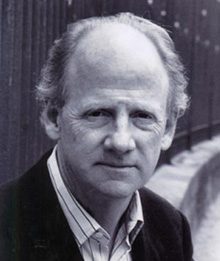
Saul is the author of many books, including Voltaire’s Bastards. He recently talked with Mother Jones by phone from Canada.
Mother Jones: It’s fairly clear that some of the wilder political predictions of globalization theorists—the decline of nationalism, the fading away of sectarian passions, for example—have fallen short. But you argue that the economic promise hasn’t panned out, either.
JRS: That’s right. Look, we’ve seen a 22 times increase in world trade, a 15 times increase in foreign investment, incredible multiples in financial markets. Traditionally in capitalism, when you have more cash, you can fund more activity, which produces more jobs and creates more wealth. That’s basic economic theory. But in fact you find that this 30-year period has been a time of average or below-average growth. Interestingly, the Keynesian period, covering the previous 25 years, was a period of high taxes and high growth. So you stand back and you say, ‘So, we got this growth in trade and investment and money markets, and we didn’t get even an above-average growth. Why not? Why hasn’t it worked? And why aren’t we discussing the fact that it hasn’t worked?’
MJ: What about economic equality among and within nations? Is that another sign that something’s amiss?
JRS: Yes, and the statistics show this pretty much everywhere. And the interesting thing is, even that disparity between rich and poor doesn’t total up to a big increase in wealth; it’s just that a small group of people are getting richer and a much larger group of people are getting poorer. So getting more of the pie today, for the poor, still wouldn’t represent a success for the system. This suggests that the system, as designed by the globalists, simply isn’t delivering what it said it would deliver.
MJ: Why not?
JRS: One of the reasons is that a great deal of what’s counted as trade isn’t in fact trade. This is the sort of thing we need to discuss—that what we call transnationals you could very easily call the British East India Company, or the Hudson Bay Company; in other words, they’re big mercantilist operations of the 16th- and 17th-century sort; they’re basically anti-free market devices. And the whole point of the industrial revolution, the whole point of Adam Smith was that we were going to break down this mercantilist international oligopoly/monopoly system and get competition, and that competition would lead to growth. Instead, what we’ve got is these large machines which actually slow down growth.
We count as trade what is moved around inside a transnational corporation, where no real profits are being made at each level. In fact, transnationals are very carefully organized so that they actually make losses at most levels. I give an example in the book of 30-60 corporations operating in Britain. The Financial Times discovered that most of them, despite massive turnover, were making losses, and therefore weren’t paying taxes. More important, they weren’t investing in each place. Suppose the supply chain were 10 separate companies. Well, in some way the companies would be investing in its area—building houses, building schools, paying taxes, in a sense being a real part of the local economy. You’d be getting growth; today you’re not. It’s all designed to prevent the creation of real wealth.
MJ: OK, but haven’t millions of people in, say, India and China, the 21st century’s rising economic powers, benefited enormously from globalization?
JRS: What you’re seeing with India and China is the building and rebuilding of nation states on their own model. The Chinese are really going back to the Middle Kingdom view of themselves, and in the case of India they have a history as a nation state very different from the European one. In a sense they’re building something that’s about the nation. Does this mean they don’t want to trade with the world? No, of course not. But they’re not buying into globalist theories of inevitability. They have some stuff to sell; they want to sell it.
What’s interesting is how much difficulty we’re having with them. We actually don’t want to give them the kind of access to our markets that we expected would be a normal part of globalization. And I think what it tells you is that for 25 years we’ve said what matters is globalization; borders don’t matter; nation states are weakening; it’s the global market place that matters. And suddenly we’re saying, ‘Hey, you can’t export all that stuff to us, that’s not fair.’ And so you suddenly realize that what we were always saying is that globalization is great—as long as it’s based out of the West.
MJ: Your general argument runs counter to the conventional wisdom, which is that globalization is on balance a good thing. Witness some recent books—say Thomas Friedman’s The World is Flat, Martin Wolf’s Why Globalization Works and Jagdish Bhagwati’s In Defense of Globalization—which all take a much rosier view than you do.
JRS: First of all, Friedman is barely worth considering. It’s basically one of those ‘How to succeed’ books; it’s very embarrassing, frankly. On the other hand, when you read people like Baghwati—who are very intelligent—when he says he thinks it’s a great success, you read the book and you find that 50 percent of it says the opposite. He thinks the inclusion of intellectual property in the WTO was a terrible mistake and could well bring down the international trade system. And he says the deregulation, willy nilly, of international money markets is a terrible mistake. He feels he’s on the side of globalization, but when you really get to what he means by globalization, it’s very very narrow. [Joseph] Stiglitz is a bit further along that road. He says that globalization obviously isn’t working very well, but there’s no way out. John Williamson, the author of the ‘Washington Consensus’ [essentially, the policy advice being addressed by the IMF and World Bank to Latin American countries in the 1980s and 90s, emphasizing open markets] regularly says, “Well, that’s not what I meant….”
MJ: So are you arguing that deregulated global trade hasn’t delievered any benefits?
JRS: Globalization did some small things; but the previous period brought improvements that gave us levels of comfort and education that were unprecedented. What nobody wants discuss is whether or not the black-and-white argument about trade— you’re either a free trader or you’re a protectionist—is the right one. It’s the old 19th century argument. Why don’t we ask, ‘Is this trade?’ ‘What is trade?’ ‘What does trade actually do?’ ‘What is a proper balance between deregulated and regulated?’ ‘Does it make sense to deregulate some things and regulate others?’ At this very moment the practitioners of free trade are in confusion over what to do, and we’re seeing only the first act of the confusion.
MJ: You argue that at the heart of the problem is a tendency to think about the world in exclusively economic terms.
JRS: When I sat down to write the book I tried to decant what is being said, and it’s this: globalization is a theory of truth, and the truth is that you must look at the world through an economic prism, and in that way you’ll understand nation states, war, how to organize politics, what to do in society—everything will be judged somehow through this economic prism. But economics does not apply to a still life; economics applies to real societies. All real societies have problems, have challenges, have things that aren’t what you’d expect. It has to work in the real world.
MJ: And the argument is that economic forces are inevitable and ultimately beneficent.
JRS: There are warning signals of [ideological thinking]—of ideas as religion—and one of them is this idea of inevitability. As soon as you hear somebody saying ‘This is inevitable,’ you basically know they have a weak case and are true believers in an ideology. Globalization has been immersed in just such an argument.
MJ: And it’s an argument that doesn’t have much use for the concept of the public good, correct?
JRS: Once you believe that the market is inevitable you start believing that the lower the taxes the bigger the growth, and the happier people will be. Well, there’s absolutely no historic proof for that at all. That doesn’t mean taxes can’t be too high or that they can’t be badly spent or that you can’t have bureaucratic inefficiency—you can, but those are all different issues. But once people start believing that the sign that individual rights are being successfully asserted is that you’re not paying taxes, then your society’s in real trouble. There’s nothing wrong with paying taxes; they should be paid in proportion to how rich you are. This idea that you’re going to get better growth by cutting taxes at the top has no historical justification. And it’s certainly not an argument in favor of capitalism.
MJ: If globalism has collapsed, it’s in part because developing countries weren’t seeing the promised gains, right?
MJ: Yes. The obvious sign that this system wasn’t going to last was the Asian meltdown in 1997/98. You had these very successful smaller countries—Thailand, Malaysia, and so on—collapsing, really because we’d stuffed a massive amount of money in there—money they basically didn’t need, because they had a very high savings rate—and then when we’d overheated their economy we withdrew the money, all over about a 12-month period. So you then had this international theory of globalist economics applied to them with a vengeance, what I call “crucifixion economics,” you know, you get put on gruel and are forced to wear hair shirts and to self-flagellate, and they’re supposed to come out of it cleansed, reborn. And after a year of this the prime minister of Malaysia, Mohamed Matahir, said, ‘We’re not going to do that. We’re going to raise tariffs, and freeze our currency, and block capital flight.’ And everybody looked away in horror—and then a year later they were doing better than anyone else. Four years later Matahir was invited to make the opening speech at Davos during which he lacerated globalization—and they gave him a standing ovation!
MJ: Isn’t New Zealand another example of a country that lost religion when it came to globalization.
JRS: In the early 1980s the government of New Zealand fell into the hands of true believers, globalist believers, and they embraced the theory of inevitability perhaps more completely than anybody else. And it solved in the very short term some of their debt problems, but in the medium- and long-term it left them in real economic trouble. One of the things they did was sell of everything they could, mainly internationally, and they got a one-time import of capital, followed by a yearly drain, because they had to send all the royalties out every year. So they had youth leaving in droves, a drain of money, high unemployment and so on. And then in 1999 they made the choice to turn their backs on globalism, which didn’t mean to become protectionist, but did mean to put social policy in the center, and economics at the outer rim, and to be much more balanced in their approach. And now they’ve got their unemployment way down; they’ve renationalized some things, including their airlines, they’ve started up a very interesting national small-loans bank, and they’ve got pretty good growth. Also, the government that came to power 1999 and has enacted this program has just been reelected to a third term.
MJ: Should we understand the rise to power of leftist governments in Latin America as in part a reaction against globalization?
JRS: What you’re seeing in Latin America is a new group, Brazil, Chile and Argentina, attempting to go down another road, which is international but not globalist. For example, they’re striking bargains with China where they fix the prices of commodities for a certain period of time, and actually walking away from competition. The decision by Brazil, in the area of AIDS drugs, simply to ignore the intellectual property rules was a great and very important sign that something was happening. People said “You can’t do that, we’ll take you to court,” and then after a few years they just left them alone. And the result is that Brazil is just about the only country on the front line [of the AIDS epidemic] that’s doing reasonably well.
MJ: The case of affordable drugs seems a classic instance where moral concerns should—and increasingly do—trump economic dogma.
JRS: There’s no question that on this front the Western democracies are failing to act in any sort of way that respects what we say are our standards. We’re in total contradiction with ourselves on drug policy because it’s a matter of life and death, and we’re saying, ‘No it isn’t; it’s a matter of profits or death, and profits are more important.’ So that’s why people like Bhagwati say that putting the protections for intellectual property into the WTO might sign the death warrant of free trade. It can’t proceed for a long period of time if it’s perceived to be—and is—an immoral tool.
MJ: Margaret Thatcher famously liked to invoke TINA—“There Is No Alternative”—when challenged on her economic views. What, in your opinion, is the alternative?
JRS: People have become so used to books where authors tell them what to do; or say there’s nothing to be done. What I’m doing is simply stepping back and giving people the picture—which they don’t have—of the last 30 years. And it tells you something about what works and doesn’t work. I’m saying that since 1995 we’ve been in an interregnum, a vacuum where the picture is confused, and our elites are in denial because they’re inheritors of the system. They don’t have the capacity to stand back and say, ‘We’ve got some real problems here. Let’s think about what we can do about them. If we got some things wrong, let’s do something else.’ My book contains a lot of indications of some of the things we might be doing. But mainly I’m saying, ‘Look, here’s the way things appear to be going. What do you think you can do about it?’