Interview with Lawrence Lessig: Stanford Law School Professor, Creative Commons Chair

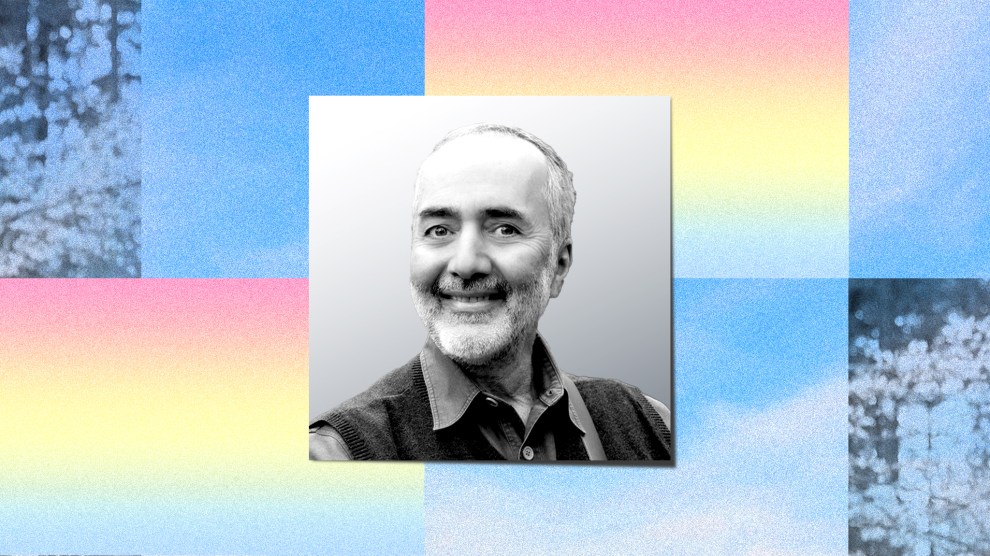
—Photo used under a Creative Commons license by flickr user eschipul
Fri June 29, 2007 12:00 AM PST

Mother Jones: Participatory technology is not exactly brand new; blogs, video sharing, et cetera have been around for a while. What's different this election cycle?

Lawrence Lessig: The campaigns are realizing that if last election was defined by Swift Boat, this election there will be a million Swift Boats. There will be content showing up that will be much more interesting and watched by many more people than what the campaigns are creating. That changes the way that presidential campaigns are defined, where they buy up as much of the speaking space as possible. No one yet knows how this is going to play out.


story continues below
story continued from above

In the analog world, it wasn't really that anyone was stopping ordinary people from becoming political actors, it was that the costs of doing so were so much larger. The technology is unleashing a capacity for speaking that before was suppressed by economic constraint. Now people can speak in lots of ways they never before could have, because the economic opportunity was denied to them.

MJ: So what does that mean for the quality of the conversation? Not that it's a really high bar.

LL: If you look at the top 100 things on YouTube or Google it's not like it's compelling art. There's going to be a lot of questions about whether it's compelling politics either. We can still play ugly in lots of ways, but the traditional ways of playing ugly are sort of over. This medium is only a medium if people are interested, and we'll get as good as we deserve.

MJ: You're writing a book right now about a read/write culture replacing a read-only culture. How does this play out in politics?

LL: What's interesting to me is that people are using digital technology for creative things like remixing content. The "Hillary 1984" ad is technically certainly a violation of Apple's creative work, and we've actually now heard that the copyright owners for the Orwell estate are threatening legal action. That kind of illegal creativity is only going to become more attractive, and people are going to be resistant to regulation there. So you have to start threatening lawsuits and enforcing technology agreements that block certain kinds of content to regain platforms where you can control the conversation. That's going to be a very hard kind of control to sustain. We don't have cultural resources to impose and defend that sort of control, unlike more traditional societies in Europe where people would be more open to the idea of locking down content. Which means that the dynamic is going to spin pretty wildly.


More Interviews << >> Politics 2.0 Index

 

Get Mother Jones by Email - Free. Like what you're reading? Get the best of MoJo three times a week.
Comments
no profile pic for comment author

Professor Lessig represented

Professor Lessig represented web site operator Eric Eldred in the ground-breaking case Eldred v. Ashcroft, a challenge to the 1998 Sonny Bono Copyright Term Extension Act. He has won numerous awards, including the Free Software Foundation's Freedom Award, and was named one of Scientific American's Top 50 Visionaries, for arguing "against interpretations of copyright that could stifle innovation and discourse online."

no profile pic for comment author

I like the title, it really

I like the title, it really got my attention. It made me interested in learning more about the Lawrence.

no profile pic for comment author

Lawrence Lessig shows us

Lawrence Lessig shows us that while new technologies always lead to new laws, never before have the big cultural monopolists used the fear created by new technologies, specifically the Internet, to shrink the public domain of ideas, even as the same corporations use the same technologies to control more and more what we can and can't do with culture.

no profile pic for comment author

As more and more culture

As more and more culture becomes digitized, more and more becomes controllable, even as laws are being toughened at the behest of the big media groups. What's at stake is our freedom — freedom to create, freedom to build, and ultimately, freedom to imagine. ( Diploma at home )

Post a comment
Alternately, you may login to or register an account
The content of this field is kept private and will not be shown publicly.
  • Web page addresses and e-mail addresses turn into links automatically.
  • Allowed HTML tags: <a> <ul> <ol> <li> <blockquote> <img>
  • Lines and paragraphs break automatically.

More information about formatting options


Jail.org - Inmate Search
Criminal records, instant public records & people search & current court records. www.jail.org

U.S. Public Records Search
Search County & State Court Records, Criminal records, Vital and Adoption Records www.PublicRecordsInfo.com

Records.com - People Search
Public Records and Background Checks. Instantly Search Criminal Records, Addresses and Court Records www.Records.com

Court Records & County Records
Find Instant Public Records, Criminal Records as Well as County Property Records Search. www.PublicRecordsIndex.com

Mother Jones Podcast
Get in on the conversation! We talk about culture, politics, the environment, the economy and more. Listen now!

TalkBackTees.com
A treasure trove of liberal wit, wisdom and quotations, from ancient to modern, on colorful, cotton tees.

Support Independent Artists
Amazing art, crafts, apparel, paper-goods and more. A carefully curated selection of sundries since 1999.

FREE CONNECTIONS FOR GREEN SINGLES
Meet progressive singles in the environmental, vegetarian & animal rights community who share your values