It's the Deregulation, Stupid

Democrats from Carter to Clinton helped roll back the government's regulatory power, but as the economic crisis deepens, "regulation" is no longer such a dirty word.

Fri March 28, 2008 12:00 AM PST
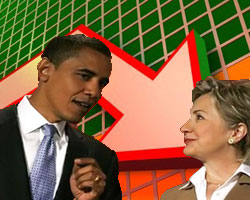
Speaking at Cooper Union in New York City on Thursday, Barack Obama went where few Democrats have dared to go in the past quarter-century: He made a case for more regulation. As part of a speech on his economic platform, Obama depicted the current economic crisis as a consequences of deregulation in the financial sector. "Our free market was never meant to be a free license to take whatever you can get, however you can get it," he said. "Unfortunately, instead of establishing a 21st century regulatory framework, we simply dismantled the old one—aided by a legal but corrupt bargain in which campaign money all too often shaped policy and watered down oversight."
story continues below
story continued from above

This is quite a statement from a candidate who's received $6 million in campaign contributions from securities and investment firms, just slightly less than rival Hillary Clinton, who cashes in at $6.3 million. Obama's criticism was sharp, but his six-point plan for rebuilding a regulatory structure was short on both details and teeth, and relies on the Federal Reserve, which is like having the fox guard, well, the other foxes. Still, his use of the r-word signals what is at least a rhetorical departure for a party that has been running from regulation for decades.

Obama isn't the only one. Last week at the Greater Boston Chamber of Commerce, Massachusetts Democrat Barney Frank, chair of the powerful House Financial Services Committee, also argued that years of banking deregulation were in part responsible for creating the subprime mortgage crisis and the larger economic downturn, which he didn't hesitate to call a recession. He talked about the need to impose more "discipline" on investment banks, requiring a higher level of capitalization and transparency. Frank called on Congress to consider establishing a "Financial Services Risk Regulator" that would have "the capacity and power to assess risk across financial markets" and "to intervene when appropriate."

Such a proposal may seem like too little too late in a month when the likes of Bear Stearns crumbled to dust, yet, like Obama's speech, it suggests a small shift in what has long been the dominant position of the Democratic Party. Without entirely eschewing the sacred myth that the free market always knows best, some congressional Democrats are envisioning a more direct role for the federal government in carrying out economic policy and imposing rules and restrictions on banks and brokerages. Calls for increased oversight of financial markets come at a time when the Federal Reserve System, the quasi-public institution that is seen as the fulcrum for managing the economy, is losing credibility, what with its failure to predict or head off the current crisis and its ineffective and controversial responses once it arrived. Americans are beginning to look elsewhere for leadership on these issues. As the economy continues to decline, some voters may finally start asking their government to rein in Wall Street. And some Democrats may finally be willing to veer out of lockstep in the party's long march toward deregulation.

Deregulation has been the mantra on both sides of the aisle since the late 1960s. Long gone are Democrats like Michigan's Phil Hart who, as chair of the Senate Antitrust Subcommittee, held hearings on the concentration of economic power in the United States, and proposed expanded government regulation of everything from the oil and auto industries to pharmaceuticals to professional sports. Hart believed that because wealth and power were concentrated in the hands of such a small number of corporations, the market economy had become no more than a facade. In this context, what would bring about lower prices and greater productivity and innovation was more government intervention and regulation, not less.

Hart got a Senate building named after him, but his warnings about the threat of unbridled corporate power and consolidation went unheeded. Instead, the rush to deregulation began, first in the transportation sector. Efforts begun under Richard Nixon and Gerald Ford came to fruition under Jimmy Carter, who hired deregulation guru Alfred E. Kahn to head the Civil Aeronautics Board, the widely loathed agency responsible for regulating the airline industry. Senator Ted Kennedy and his then aide, future Supreme Court Justice Stephen Breyer, embraced deregulation as a consumer issue, and with their support, Kahn quickly worked his way out of a job: The 1978 Airline Deregulation Act dissolved the CAB and removed most regulation of commercial airlines. Carter also signed into law bills deregulating the railroads and the trucking industry.

Get Mother Jones by Email - Free. Like what you're reading? Get the best of MoJo three times a week.
Comments
no profile pic for comment author

Oh my goodness, will they ever be satisfied?

no profile pic for comment author

This is a very good piece. For those who care, however, Obama's plan is the only one with a ghost of a chance of getting anywhere. He pay have contributors in the financial sector, but most of his contributions are from Joe and Jill. For that reason alone he is likely to feel he has a responsibility to the public and not to Wall Street. He also is very persuasive, and if anyone can cajole the financial industry into a better job of regulating itself, it is he. For one thing, he can just point out that better regulation would result in more consistent and predictable profits for them in the long run.

no profile pic for comment author

good luck

good luck to our new president.

he has a whole big mess to clean up,
after all the alcohol, parties, drugs, the sex scandals, the contractor fraud in Iraq, stealing of elections in 2000, 2004, etc..by rove and his computer friends, like the ray lemme case..plus links karl rove, bush, cheney, to enron..
and a whole lotta mess in our justice department also.

lets hope this country will give him some time and patience, and understanding,
because he too,
is only human..
he has a lot to do, and some people are trying to blame this mess on our new administration..

remember...it will take some time, and patience also..
and good luck to you all..

no profile pic for comment author

Actually, the top contributors to both
Obama and Hillary come from Wall Street, namely,
JP Morgan, Goldman Sach's, LehmanBrother's, etc.

See the following URL in order to help you understand the money web.

The bottom line is, you don't raise $193
millon from "Joe and Jill".

http://www.opensecrets.org/pres08/moneyweb.asp

no profile pic for comment author

What a great article! I hope an infusion of fresh new talent is elected this fall to help restore a measure of integrity and stability to the economy.
No more BS about how the market can regulate itself.

no profile pic for comment author

The following link, will take to an article 'Subprime Obama' which will refer to Obama's three chief economic adviser's that are long time proponents of De-Regulation! Could that explain why (as usual) his speech lacked detail or teeth?
www.thenation.com/doc/20080211/fraser

no profile pic for comment author

Is he going to Regulate the Market, like he did another Big Contributer, Neclear Power (Exelon?) that was dumping radio-active waste water, and contaminating local drinking water?
Obama 'negotiated' a deal that allows the Neclear Power Plant, to self identify when they violate the law, and volunterily notify local residents!
(on TV, 20/20 or 60 Min.)

no profile pic for comment author

regulation is a DANGEROUS step. Deregulation has far less to do with this crisis than Greenspan artificially lowering interest rates post-9/11
If the government wants to regulate something, they will get strict again on monopolies. Those are far more dangerous to the economy. (I'm thinking of the big media conglomerates in particular) If one of those falls, they no longer just take themselves, but 50 subcompanies with them. That is dangerous.
If they impose strict regulation again you can basically start writing about the Great Depression of 2008 right now.

no profile pic for comment author

I don't care what they regulate or don't regulate, I want to see it where you can set up a good tent for 100 bucks a month, and make your own 'booze-fuel' on official permit from the local government, and still buy clothes made entirely in the United States. They can KEEP the rest of it. Why not turn the NYSE into a local grower's market instead? New York Produce Grower's Association or somesuch?

no profile pic for comment author

German banking isn't paradise but it sure is different. After having paid hundreds if not thousands in bounced check fees in the US, in 1994 I arrived in Tübingen, vitually pennyless, a student. One of my first tasks was to open a bank account, which I did in the presence of a clerk. He asked how much "Überziehungskredit" I wanted. I asked what's "Überziehungskredit"? For when you don't have any money on your account, he replied. A modest credit line, for me. This must be Nirvana, I thought. I've died and been taken up to heaven. Another wonderful article, MJ!

no profile pic for comment author

The media have not done enough to tie the Clintons to the current economic crisis, but they clearly planted and watered the seeds that have borne such bitter fruit. Hillary smirks and waves her arms in the air when she talks about her economic record and credentials, apocryphal as they are, and she needs to be held accountable is she is taking credit (and responsibility) or forced to admit that she actually has less governmental experience than Obama.

no profile pic for comment author

A few thoughts 1.)Agile, yes Obama does take some corporate contributions but Clinton and McCain are begging at the trough compared to Obama who has generated more individual contributions than any other candidate in history and is therefore more accountable to the people.

2.)Andie927 your article is ancient in terms of the current race (I liked Edwards, but articles with him in them are losing relevance in a rapidly changing campaign). The MoJo article posted is about tentative steps toward regulation by Obama which is heresy in the current climate of Freedman style Reganomics. That is why taking bold steps would have a highly charged reaction from business types (fight them after the campaign not during).

3.)manny, don't you get it or have you been worshiping at the alter of Freedman and Regan too long? Deregulation is what is killing the middle class in this country, it's what caused the 1929 stack market crash (OK lack of regulation but its the same lassie faire thing), and it is what has caused the current financial crisis. Regulation on the hand helped restore confidence in the economy and end the depression, and it set the stage for the largest increases in the middle class and general prosperity in the nations history (oh how terrible all that prosperity was under regulation between the '40s and the '90s). A little regulation is a good thing, now it shouldn't take you six months to fill out bureaucratic forms to start a business, but smart simple and enforceable regulation makes a lot of sense.

I generally agree with the rest of your comments, berts ideas on fuel and clothing make some sense but the wall street farmers market thing may just go a little too far.

no profile pic for comment author

This is what spawned the crisis.

"The Community Reinvestment Act is a United States federal law that requires banks and thrifts to offer credit throughout their entire market area and prohibits them from targeting only wealthier neighborhoods with their services, a practice known as "redlining." The purpose of the CRA is to provide credit, including home ownership opportunities to underserved populations and commercial loans to small businesses. The CRA was passed into law by the U.S. Congress in 1977 as a result of national grassroots pressure for affordable housing, and despite considerable opposition from the mainstream banking community."

The CRA mandates that each banking institution be evaluated to determine if it has met the credit needs of its entire community. That record is taken into account when the federal government considers an institution's application for deposit facilities, including mergers and acquisitions.

This is what rocketed the crisis wildly:

In 1995, as a result of interest from President Clinton's administration, the implementing regulations for the CRA were strengthened by focusing the financial regulators' attention on institutions' performance in helping to meet community credit needs. These changes were very controversial and as a result, the regulators agreed to revisit the rule after it had been fully implemented for five years. The revisions allowed the securitization of CRA loans containing subprime mortgages. The first public securitization of CRA loans started in 1997.

As Stan Liebowitz, a University of Texas economist, has pointed out, a Fannie Mae Foundation report enthusiastically singled out one mortgage lender that followed "the most flexible underwriting criteria permitted." That lender's loans to low-income people had grown to $600 billion by 2003. Its name? Countrywide, the largest U.S. mortgage lender and one of the lenders in the most trouble for its lax lending practices.

The rest is history.

Banks were forced to loan money to borrowers they never would have, had government regulation not forced them to. Then, additional government regulation allowed Wall Street to package the loans that never should have been made into negotiable securities and sold, and resold. This made these high risk securities backed by the loans that never should have been made in the first place popular with the hedge funds and investment banks worldwide - because they had a high yield. This created tremendous demand back down the pipe for more of these securities, which accelerated even further the building of homes that never should have been built, and sold to buyers who could not afford, nor had the ability to borrow, which overbuilt the entire housing market and deflated the value of all houses. The genesis of the entire mess is GOVERNMENT wrongly demanding a solution to so-called “affordable housing”, adopting the attitude that Banks were racist for "wink & nod" redlining, then ordering banks to loan money to people NOT based upon credit standards that protected the bank. It was in the mid-1990s when our vaunted statesmen decided the CRA - the Community Reinvestment Act (nice name, kinda like the Patriot Act) allowed CRA loans to be "securitized", or allowed Wall Street to slice and dice the loans so that they would be popular with institutional investors, resulting in more money available to loan money to people who never should have borrowed in the first place.

Rescind the CRA and its authority to allow the securitization of loans made as a result of its passage.

no profile pic for comment author

"Regulation" isn't a dirty word, and "war" isn't a dirty word. Both are necessary as a reaction to extreme force, threats, or deception.

Still, the great majority rightly prefers peace, and we're suspicious of anyone who seems to be looking for excuses to go to war.

And we prefer freedom: a marketplace where we decide for ourselves how we deal with others. Those who seem to be looking for an excuse to put a gun to our heads and "regulate" us, are rightly viewed with the same suspicion as the war-mongers.

Stuart's "Random Thoughts" blog
http://stuart-randomthoughts.blogspot.com/

no profile pic for comment author

What deregulation?

What industry in the USA has been deregulated?

The only industry I can identify that is least regulated by the government is the internet. It is wildly successful and expanding.

The real issue is how the government has screwed up its current regulation schemes. And the solution is not more 'fixing' but REAL deregulation.

no profile pic for comment author

Don't you 'tree hugger' anti corporate types get it?

Corporations WANT to use government power to protect their market share.

All you socialists go along with the idea believing if only the the 'right' people and the 'right' laws are written, the world will be perfect.

You as a consumer have the REAL power to regulate ANY corporation.

Did McDonald's stop using foam boxes because they wanted to or because customers demanded it? Did they start serving salads because the government wanted it or to attract customers?

Every industry that does not have some government protection, they must compete for customers, who are the real regulators of any economy.

no profile pic for comment author

The Raiders of American companies started in the 1980's under Ronald Reagan, not only the S&L's but Companies were acquired by hostile with as little as junk bonds--the pensions were stolen, benefits were cut, money borrowed using the company as collateral and then sold. Many companies were hard pressed just to survive--some did not. Then the Raiders did the same thing to cities, counties, and even state governments. Under the Fascist-Criminal Enterprise rubber stamped by the goose stepping brown shirt GOP, the RNC and it's slithering swift boaters, and the MSM poodle journalism--the Raiders started on the USA Treasury with no-bid and inflated contracts for the phony war on terror and the aftermath of Katrina in New Orleans. They have robbed the present and future taxpayer's for at least 25 years. Just look at the National Debt on 02-20-2001 and today. How much has the N.D. increased?--50%--60%. Cut your own economic throat if you wish, but you do not have the right to cut the economic throat of your children and grandchildren!

no profile pic for comment author

Gee, Agile, I guess you missed the part about the many hundreds of thousands of us "Joes and Jills" giving an average of less than $300 to Obama.

Technically you're right: you don't raise $193 million from "Joe and Jill". Obama has only gotten about $130 million from us...so far.

no profile pic for comment author

...played their part.

no profile pic for comment author

"Under the Fascist-Criminal Enterprise rubber stamped by the goose stepping brown shirt GOP, the RNC and it's slithering swift boaters,"

Don't forget about those liberal fascists. They did their part.

no profile pic for comment author

Holman: You bring up some interesting and undoubtedly slightly influential parts of the sub prime problem. Fraud by brokers, unrealistic dreaming by consumers, a declining economy and even fraud by borrowers were also to blame. But government intervention in the housing market to attempt to supply "affordable housing" didn't cause the massive housing price bubble. It was probably more likely caused by the quick exit of capital from the stock market finding a new "home" (no pun intended) in the housing market. This caused a quick escalation of housing prices around many parts of the country. And this in turn caused ever increasing "faith based lending"--that is, lending based upon blind faith that prices would continue to go up. Of course they didn't. Then ARM's re-set, the economy slowed and the foreclosures began.

no profile pic for comment author

I'm sick of living in a financial Wild West town, where the cowardly sheriff looks the other way whenever a cattle drive passes through and the drovers come into town and make a mess of everything in sight.

And I'm sick to death of Wharton-grad, Masters-of-the-Universe, Wall Street types who, time and again, show us they care for nothing but short-term profit and their year-end bonuses...show us that, but for their own self-interest, they don't know s**t from Shinola.

Good God, after the last three months, when highly informed opinion has done everything but come right out and say that the whole damn house of cards may be about to come tumbling down, how can anybody in their right mind (thus excluding all of the money manipulators) have any doubt that the entire system is screaming out for tighter regulation?

And where, pray tell, does it say that tighter regulation necessarily means less innovation?

Has the most stringent regulation of the drug industry kept those companies from innovating, and making billions in the process? Obviously not.

The analogy is I think apt. The government tries extremely hard, and generally does a damn good job, to prevent the sale of snake-oil pharmaceuticals to consumers. Why should it not exercise similar regulatory authority over the peddlers of financial products and schemes which, according to consensus opinion, nobody even understands anymore?

At the end of this already miserable and even terrifying financial year, the money-changers will still gather in their New York haunts. Their steaks may be just a bit slimmer, their wines slightly downscale, and their cigars may be from the Dominican Republic rather than Cuba. Regardless, they will no doubt toast how smart they are, how even in a bad year they made good money.

Meanwhile the retirement dreams of many older folks, and the American Dream of many younger folks, will have gone up in smoke.

What these smug bastards need is a wholesale exodus by the people from the securities markets and into federally insured bank CDs. And hey, one could do worse! Like by continuing to invest in a market system which clearly is broken, rigged, and at least currently, and recently, is not even matching the returns of a passbook savings account.

When the risk/reward ratio shifts so dramatically in so short a period of time -- for no good reason other than that the gears installed in the clock are not properly working -- and when many and learned voices are calling into question the design of the clock itself, it would not be unreasonable for a reasonable person to decide to take their chances in Las Vegas. At least in Vegas one knows (or should know) the odds, and can limit one's downside by simply walking away from the table. Unfortunately, participants in 401(k)plans -- that is to say, the country's working class; i.e., the vast majority of Americans -- have no such option. They are unfortunately tied to the always greedy and often-as-not short-sighted and misguided machinations of, as noted above, a class of people (I use the word guardedly) who don't know s**t from Shinola, and worse, don't know that they don't know it.

Long before he got the boot, when he still thought he knew it all, former Secretary of Defense Donald Rumsfeld, at one of his press conferences, trying to educate what he clearly perceived as a press corps that was dumb and dumber, lectured them about how there were "known knowns, and known unknowns, and unknown unknowns."

Hmm. In retrospect it's clear that Rumsfeld and his patron knew next to nothing about what they were about, or how to get us out. All they were about were feeble attempts to try to explain what they thought they knew, which was nothing more than a lot of gibberish to mask the fact that they didn't know what they were talking about, let alone what they had haphazardly set this country about.

It's an Alice in Wonderland, Animal Farm, Brave New World time. And the best advice right now for anybody looking to preserve their money may well be akin to the assurances which, decades ago, Ed McMahon used to offer to Johnny Carson's Carnac the Magnificent with respect to the questions (answers) about to be asked; i.e., that they had been kept in a hermetically-sealed mayonnaise jar strategically placed under a mattress.

no profile pic for comment author

Want a job?Contact the State Legislature
For these POLITICIANS to fall back to the position of
"how can we deport 12-20 million ILLEGAL ALIENS" proves what fools they
think we are. * No Deportation is Needed.*

Have you heard of the law passed in Arizona? Recently a delegation
from neighboring Mexican States were sent to Tucson to complain about
the massive return of immigrants to Mexico. The new law states a
business' second offense of employing illegal aliens puts the business
out of business. It caused a massive exodus of illegal aliens from
this state back to Mexico. The first offense is a fine the second
offense pulls your business license permanently. You can actually hear
English spoken almost everywhere now. If they speak Spanish out loud
they have their birth certificate in hand.
UPDATE:
--Arizona Law Appealed By Chamber Of Commerce-
ARIZONA FEDERAL DISTRICT COURT HAS UPHELD THE ARIZONA ILLEGAL
IMMIGRATION LEGISLATION CITING CONCERNS THAT WAGES OF AMERICAN
CITIZENS ARE BEING UNDERMINED BY BUSINESSES USING ILLEGAL ALIEN LABOR.

no profile pic for comment author

Michael Graham's, WTKK Boston:

Have ICE agents follow up on Social Security numbers that do not match. An agent shows up a the place of business who has an employee with a SSAN that does not match the name, and say they will return in a few weeks to collect the $10K/day fine.

AZ, OK and now RI will begin to enforce US immigration laws.

no profile pic for comment author

http://www.indypendent.org/2008/03/17/america%e2%80%99s-imperialist-agen...

“I am saddened…to…acknowledge what everyone knows: the Iraq war is largely about oil,” announced former U.S. Federal Reserve Chairman Alan Greenspan in 2007. It has become fashionable to blame the war on oil, or on a handful of warmongering neo-conservatives in the Bush administration.

But the problem is far deeper than the quest for oil, or the desires of a few rogue politicians in Washington. The broader problem is that of imperialism, which is rooted in protecting “free markets” at whatever cost, and is justified under the false pretenses of spreading “freedom and democracy.”

no profile pic for comment author

Why would an empire protect free markets?

The USA and many other countries forced Iraq from Kuwait to "keep the free flow of oil at market prices".

Wouldn't an empire just take it?

no profile pic for comment author

As for Greenspan, he was in charge of the FED as while the current fiasco was metastasizing.
So, why would anyone believe or trust Greenspan?

no profile pic for comment author

Thank you for the article. I'd like to include that deregulation has also affected key infrastructure in energy and transportation as well. Rampant capitalism is highly dangerous in that greed replaces wise capital investments.

no profile pic for comment author

In the good ol' US of A, the deregulated markets self-regulate because they don't have to.

All the airlines are doing great after deregulation, and the employees are all well-paid. The planes might be older than I am (36), but we can be confident that the FAA is on the case keeping the maintenance top-notch. And whenever I have a problem, the customer service at the airlines fixes it right away - just like at every other big corporation - because they don't have to. Such a pleasure to travel these days, all thanks to deregulation.

Why, the banking and insurance corporations are doing swell after deregulation too. The S&L scandal was an isolated incident from the 1980's that the American taxpayer is still paying for, and sure the Asian's had a crash when they deregulated their banking and insurance industries, but it's not like the mortgage and financial corporations here have ever had a problem. American banking and mortgage companies are rock solid because we don't tell them what to do.

It's just like raising a teenager: don't enforce any rules and your teen will be at Yale in no time at all.

Let's not forget how well energy deregulation worked for Enron, Enron's employees, and the citizens of California. Where would Ken Lay's widow be if it wasn't for deregulation? Not sitting on millions of dollars, that's for sure.

Heck, the deregulations of fair trade laws have been just super for the American factory worker - there are jobs a-plenty and you wouldn't believe the high salaries! Without deregulation the hardworking slaves (almost) abroad, my nephew would never have the lead toys he enjoys so much.

And speaking of delicious but deadly, the FDA of the current administration has decided not only to deregulate as much as possible, but to stop enforcing existing regulations as well. Why there hasn't been a recall of meat at all this month. OK a few people died last year, but the good news is so did a bunch of dogs and cats! Isn't that great? Just when you were getting bored with your pet, now you can get a NEW dog or cat.

Euthanasia, thanks to youth in Asia, thanks to deregulation and unenforcement! That's global village goodness.

People also die from unsafe prescription drugs thanks to deregulation and unenforcement. "So?" as Cheney says. Think of the profits to be made and campaign contributions to be had. For the shareholders, it's like buying dead people for pennies a pound. Drug companies need that money to pay to fund their lobbyists. Deregulation and unenforcement isn't cheap you know. Do you know how expensive it is to get politicians to hire and appoint people to look the other way at regulatory agencies?

Poisoned toothpaste? So what? Who likes to brush anyway? For heaven's sake, everyone has dental insurance - just go in for an extra cleaning and keep the toothpaste locked up in the gun cabinet - wouldn't want the little ones to get their hands on something as dangerous as toothpaste.

By the way, antifreeze or lead: which has a sweeter taste? Only your kids know for sure, thanks to deregulation and unenforcement.

In fact, deregulation and unenforcement has worked so well for your children that the EPA has gotten into the act. If it wasn't for the EPA's unenforcement of its own regulations, do you think we'd have an entire generation of children with an epidemic of asthma?

What about the FCC? Do you think advertisers would have unmitigated access to your children, even in school? The junk food industry industry was made on the backs and bloated stomachs of fat children thanks to deregulation and unenforcement of the advertising industry.

What do you get when you mix fat, sugary snacks and unregulated children's advertisement? You get diabetes and hyperactivity...which in turn helps the drug industry.

See? It's corporate synergy at work, thanks to deregulation and unenforcement.

Deregulation and unenforcement doesn't stop at asthma, diabetes and hyperactivity, no sir! Mercury in the air, mercury in the vaccinations, lead in the toys - whatever doesn't kill your kids makes them stronger, right? So be sure to thank your politicians and corporate deregulation and unenforcement for this epidemic of children stricken by largely preventable diseases.

And when those wheezing kids grow up they can enjoy a tour (or two or three or four) in Iraq where they'll be served hot delicious food, clean water and enjoy all the comforts of home, courtesy of Halliburton, thanks to deregulation and unenforcement. Sure there have been a few scandals at Halliburton (or two or three or four or five) but I say, "Heckuva job, Halli!"

What better way to serve your corporate masters than to let them pay your politicians in Washington DC to let them do whatever the hell they want.

And if you complain, you might get to spend some time at Guantanamo Bay...thanks to deregulation of the Constitution and unenforcement of the Bill of Rights.

no profile pic for comment author

Let's see--what was per capita real income in 1980? (About $22,700.) Today per capita real income is about $38,000. In about a generation, we have almost doubled our average standard of living. So, yeah, it's been a terrible 25 years. We want the increases in the standard of living and the increases in employment, but we don't want any of the risks associated with them. Look around the world and we see we cannot have strong long run growth without occasional crisis. Find one place in the world that is experiencing growth without risk and I'll be happy to argue for their system.

no profile pic for comment author

Having been in the real estate business 38 years has allowed me to watch the financial mess in the housing market play out twice. Certainly saw it all coming but thought it waws a republican congress that deregulated everything from the banking industry to to Enron.

no profile pic for comment author

and why no mention of the Gramm-Leach-Bliley Act which also repealed the Glass-Steagal?

no profile pic for comment author

reagan started the deregulation crap in 1980. as usual the right wing propaganda continues and the spin doctors and right wing wackos such as rush, hannity,o'reilly and savage are at it again. does accuracy ever enter into your world.

no profile pic for comment author

What truly amazes me is that so very many Americans believe that government is as pure as the driven snow and business is as evil as Satan. We are certainly turning into a Nation of Fools.

Government leaders were stirring this mess with their demands for loans to marginal and unqualified borrowers while business leaders were adding the spice in the form of "creative loans".

Where are the righteous cries for investigations?

no profile pic for comment author

You are right Steven. This started back with the Community Reinvestment Act under Carter. Reagan continued deregulation, Gramm-Leach-Bliley helped deregulation, Clinton signed it, and while Bush was calling out the issue, it still went on during his 8 years (4 of which he had partisan control in the congress). Barney Frank, Watts, and others declared there was not crisis while the Fed continued to pump in more money. Some folks wrote bills in attempt to address the issue but the ones Ron Paul submitted were considered looney because of his borderline conspiracy theory mentality. The one written by Hagel and co-sponsored by Dole, Sununu, and McCain were too late in the 109th congress so they rolled to the Dem controlled 110th congress.

This is not a single party issue. This is a culture and accountability issue. It's also an issue of political ideologies which demonstrate that you cannot have benefit from wealth redistribution in this country. I don't trust CEOs to make the right decisions and I definitely don't trust government to make the right decisions. I support decentralization of banking and healthcare because if they get too big and mismanaged, they are too dangerous to all of us when they fail.
We were better off when the phone companies broke apart and we must do the same with all industries or we live with too much potential for risk and corruption.
I think we all want to see corruption and waste eliminated in this country. More folks here should focus on that and less on which party to point fingers at. They are both GUILTY!

no profile pic for comment author

people just dont get it...you have to regulate the corporate giants most of those ceo,s are crooks anyway...I have no time for corporate jerks run off with all the money then blame the democrats....

no profile pic for comment author

Regulation is a necessity, especially in today's world. Human nature is such that someone will always try to take advantage of a situation if no preventative measures are in place.

see: "The Deregulation Farce" at http://www.politicusmaximus.com/2008/09/deregulation-farce.html

no profile pic for comment author

McCain bailout plan: More deregulation
At the same time McCain is telling the public that wall street needs regulation, he takes action to implement more deregulation.

McCain needed to go back to Washington last week in order to secretly push through more corporate tax breaks and deregulation. PLEASE WATCH THIS KATIE COURIC NEWS CLIP!!!
http://www.youtube.com/watch?v=J0663DHLr58

no profile pic for comment author

Cary (from March 30): The escalation of housing prices was caused by negative interest rates. The low rates enticed people to buy instead of rent. Paying a lower rate meant you could buy a more expensive house. As a seller, it meant you could ask for a lot more than you paid for your house just a few years ago because your buyer has access to a higher loan. This may have been what your meant but you didn't make it clear.

no profile pic for comment author

It's unfortunate you couldn't make clear what you think of the GOP. It is also unfortunate that your brain is about the same as the turd I just flushed

no profile pic for comment author

Holman wrote:
"additional government regulation allowed Wall Street to package the loans that never should have been made into negotiable securities and sold, and resold. This made these high risk securities backed by the loans that never should have been made in the first place popular with the hedge funds and investment banks worldwide - because they had a high yield. This created tremendous demand back down the pipe for more of these securities, which accelerated even further the building of homes that never should have been built, and sold to buyers who could not afford, nor had the ability to borrow, which overbuilt the entire housing market and deflated the value of all houses."

1) I wouldn't call THAT government regulation, that would be a misuse of the term.

2) Greed and the demand for more of these high yield securities fueled white collar predatory lending. Taking advantage of programs that help low-income families get a home for white collar economic exploitation is hardly innocent. That's a product of lax regulation, not proper regulation.

Using this crisis as a podium for the conservative mantra of America being ruined by "helping people that don't deserve it" is business as usual for the blind. You've got the concept right but you're using the people with the least amount of political power as your scapegoat.

A social program with noble intent that gets exploited by the wealthy and the wannabees does not indicate a flawed concept, it indicates a flawed application of said concept.

To make a micro analogy with a macro concept: If half of the people in the room don't like your idea/plan, it's usually bound for failure. The dissenters will actively undermine the application of your concept and, when it fails, they will be the first to trumpet how wrong you were.

How many of you "suits" out there know exactly what I'm talking about here? You'd have to be operating out of an ivory tower to not see this dynamic in any human organization.

no profile pic for comment author

Personal Responsibility folks! How many times does this need to be preached? A Contract is a legal document. People now-a-days too often sign their name on something without thinking things through entirely. People are blaming the Mortgage industry for giving out loans to people who can't pay the loans, but they didn't hold a gun to these peoples heads to make them sign the paper! When are people going to take responsibility for their own actions. I DO think loans should be given out the traditional way. A person should HAVE to have a certain credit rating and a down payment in order to qualify to buy a house. But, if someone tells you to sign something you willingly know you cannot afford, DON'T FRICKING SIGN IT!! This whole nightmare is ultimately the idiots who bought the homes fault!!

no profile pic for comment author

We are not teenagers....we are adults and need to do the right thing on our own. If people are going to cheat, lie and steal they will find a way to do it regulated or not.

no profile pic for comment author

It's easy to attribute blame to deregulation when you don't understand how financial markets work. The following article (New York Times, 1999) explains how government pressures caused heavy lending in the subprime market. This was not the only factor, but one of several, none of which had to do with financial market deregulation. Ask your friendly, neighborhood economist. Or Google Peter Wallison's name (he is mentioned in the NYTimes article below). Heavy regulation only works if you can trust the regulators to do their job. The historic S&L bailout, like this current bailout, was also a result of government regulation (S&Ls were limited to real estate lending, giving them risky undiversified portfolios). Anyway, read this:

September 30, 1999
Fannie Mae Eases Credit To Aid Mortgage Lending
By STEVEN A. HOLMES
In a move that could help increase home ownership rates among minorities and low-income consumers, the Fannie Mae Corporation is easing the credit requirements on loans that it will purchase from banks and other lenders.
The action, which will begin as a pilot program involving 24 banks in 15 markets -- including the New York metropolitan region -- will encourage those banks to extend home mortgages to individuals whose credit is generally not good enough to qualify for conventional loans. Fannie Mae officials say they hope to make it a nationwide program by next spring.
Fannie Mae, the nation's biggest underwriter of home mortgages, has been under increasing pressure from the Clinton Administration to expand mortgage loans among low and moderate income people and felt pressure from stock holders to maintain its phenomenal growth in profits.
In addition, banks, thrift institutions and mortgage companies have been pressing Fannie Mae to help them make more loans to so-called subprime borrowers. These borrowers whose incomes, credit ratings and savings are not good enough to qualify for conventional loans, can only get loans from finance companies that charge much higher interest rates -- anywhere from three to four percentage points higher than conventional loans.
''Fannie Mae has expanded home ownership for millions of families in the 1990's by reducing down payment requirements,'' said Franklin D. Raines, Fannie Mae's chairman and chief executive officer. ''Yet there remain too many borrowers whose credit is just a notch below what our underwriting has required who have been relegated to paying significantly higher mortgage rates in the so-called subprime market.''
Demographic information on these borrowers is sketchy. But at least one study indicates that 18 percent of the loans in the subprime market went to black borrowers, compared to 5 per cent of loans in the conventional loan market.
In moving, even tentatively, into this new area of lending, Fannie Mae is taking on significantly more risk, which may not pose any difficulties during flush economic times. But the government-subsidized corporation may run into trouble in an economic downturn, prompting a government rescue similar to that of the savings and loan industry in the 1980's.
''From the perspective of many people, including me, this is another thrift industry growing up around us,'' said Peter Wallison a resident fellow at the American Enterprise Institute. ''If they fail, the government will have to step up and bail them out the way it stepped up and bailed out the thrift industry.''
Under Fannie Mae's pilot program, consumers who qualify can secure a mortgage with an interest rate one percentage point above that of a conventional, 30-year fixed rate mortgage of less than $240,000 -- a rate that currently averages about 7.76 per cent. If the borrower makes his or her monthly payments on time for two years, the one percentage point premium is dropped.
Fannie Mae, the nation's biggest underwriter of home mortgages, does not lend money directly to consumers. Instead, it purchases loans that banks make on what is called the secondary market. By expanding the type of loans that it will buy, Fannie Mae is hoping to spur banks to make more loans to people with less-than-stellar credit ratings.
Fannie Mae officials stress that the new mortgages will be extended to all potential borrowers who can qualify for a mortgage. But they add that the move is intended in part to increase the number of minority and low income home owners who tend to have worse credit ratings than non-Hispanic whites.
Home ownership has, in fact, exploded among minorities during the economic boom of the 1990's. The number of mortgages extended to Hispanic applicants jumped by 87.2 per cent from 1993 to 1998, according to Harvard University's Joint Center for Housing Studies. During that same period the number of African Americans who got mortgages to buy a home increased by 71.9 per cent and the number of Asian Americans by 46.3 per cent.
In contrast, the number of non-Hispanic whites who received loans for homes increased by 31.2 per cent.
Despite these gains, home ownership rates for minorities continue to lag behind non-Hispanic whites, in part because blacks and Hispanics in particular tend to have on average worse credit ratings.
In July, the Department of Housing and Urban Development proposed that by the year 2001, 50 percent of Fannie Mae's and Freddie Mac's portfolio be made up of loans to low and moderate-income borrowers. Last year, 44 percent of the loans Fannie Mae purchased were from these groups.
The change in policy also comes at the same time that HUD is investigating allegations of racial discrimination in the automated underwriting systems used by Fannie Mae and Freddie Mac to determine the credit-worthiness of credit applicants.

no profile pic for comment author

big buiness has too much power...they need to regulated.....you can see what happens when there not.....you know im right....I worked for a big co. they treat employees like crap.....

no profile pic for comment author

(^_^)

yes it is stupid.

no profile pic for comment author

müzik indir

good and beautiful about comments

no profile pic for comment author

It's not JUST deregulation.

It's not JUST deregulation. It's deregulation coupled with OTHER regulations that help the biggest corporations and hurt their competitors. Add corporate welfare to the mix and we're living in fascist Italy (with more money).

Post a comment
Alternately, you may login to or register an account
The content of this field is kept private and will not be shown publicly.
  • Web page addresses and e-mail addresses turn into links automatically.
  • Allowed HTML tags: <a> <ul> <ol> <li> <blockquote> <img>
  • Lines and paragraphs break automatically.

More information about formatting options


Jail.org - Inmate Search
Criminal records, instant public records & people search & current court records. www.jail.org

U.S. Public Records Search
Search County & State Court Records, Criminal records, Vital and Adoption Records www.PublicRecordsInfo.com

Records.com - People Search
Public Records and Background Checks. Instantly Search Criminal Records, Addresses and Court Records www.Records.com

Court Records & County Records
Find Instant Public Records, Criminal Records as Well as County Property Records Search. www.PublicRecordsIndex.com

Mother Jones Podcast
Get in on the conversation! We talk about culture, politics, the environment, the economy and more. Listen now!

TalkBackTees.com
A treasure trove of liberal wit, wisdom and quotations, from ancient to modern, on colorful, cotton tees.

Support Independent Artists
Amazing art, crafts, apparel, paper-goods and more. A carefully curated selection of sundries since 1999.

FREE CONNECTIONS FOR GREEN SINGLES
Meet progressive singles in the environmental, vegetarian & animal rights community who share your values