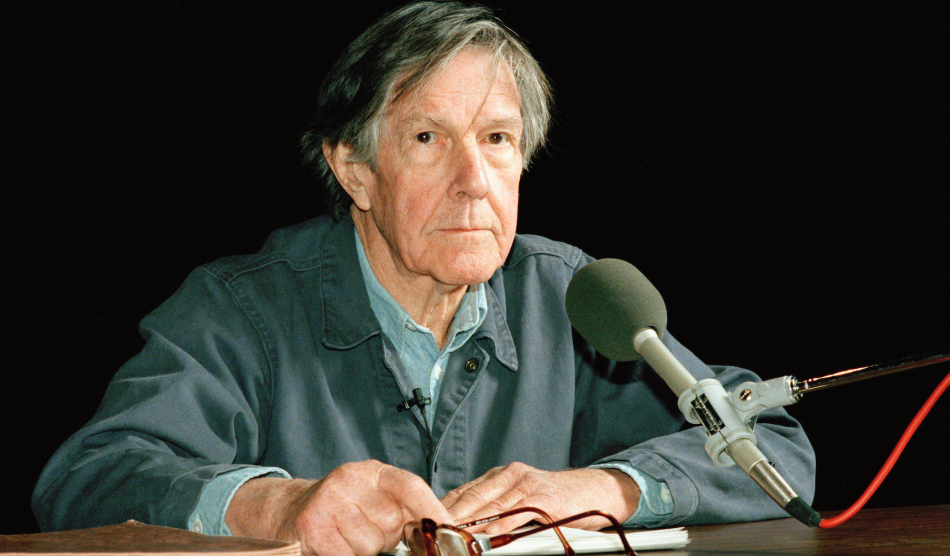
The World War II folk songs on That’s Why We’re Marching (Smithsonian/Folkways, 1996) are catchy, but then they had to be–they’re pro-paganda. Written and performed by folk legends such as Lead Belly (above), Woody Guthrie, and Pete Seeger, the songs render the wartime political landscape in broad strokes, from pacifist pleas to hawkish anti-Hitler rants. Including previously unreleased archival tapes, the album offers insight into popular opinion on the front lines as well as the home front.
Crimes and Splendors: The Desert Cantos of Richard Misrach (Boston: Bulfinch Press, 1996) is a disarming series of photographs documenting life and death in America’s desolate salt flats and deserts. Misrach’s subject matter varies wildly–from military test-bombing, to fire, to floods, to Playboy magazines used for target practice–but the intriguing collection lends political weight to even the most mundane of landscapes.
The concept of “noise” as music isn’t new, but it’s changed since the Cabaret Voltaire in 1919. Its newest incarnation, Offbeat: A Red Hot Sound Trip (Wax Trax!/TVT, 1996) drifts between ambient melodies and haunting sound collages. Released by the Red Hot Organization to benefit AIDS research, the album features familiar rock stars, including David Byrne, as well as newer luminaries such as My Bloody Valentine, Tortoise, and Laika.
James B. Twitchell’s Adcult USA: The Triumph of Advertising in American Culture (New York: Columbia University Press, 1996) hits us with some simple concepts: As much as we hate to admit it, we love being advertised to; and, as much as we would like to resist Madison Avenue, it has already shaped much of American culture. Going beyond a study of subliminal codes, Adcult looks objectively at the work that goes into ads, as well as the work they perform on society.
Race relations in America, Jennifer L. Hochschild says, are at least partly determined by the collision of the American expectation of success with the reality of class structures. In Facing Up to the American Dream: Race, Class and the Soul of the Nation (Princeton, N.J.: Princeton University Press, 1995), Hochschild uses numerous surveys to analyze race and class differences qualitatively, yet she wisely gives credence to intangible distinctions.