<a href="http://www.istockphoto.com/photo/sprinklers-watering-grass-with-sunset-gm514005896-87890991">stevecoleimages</a>/iStock
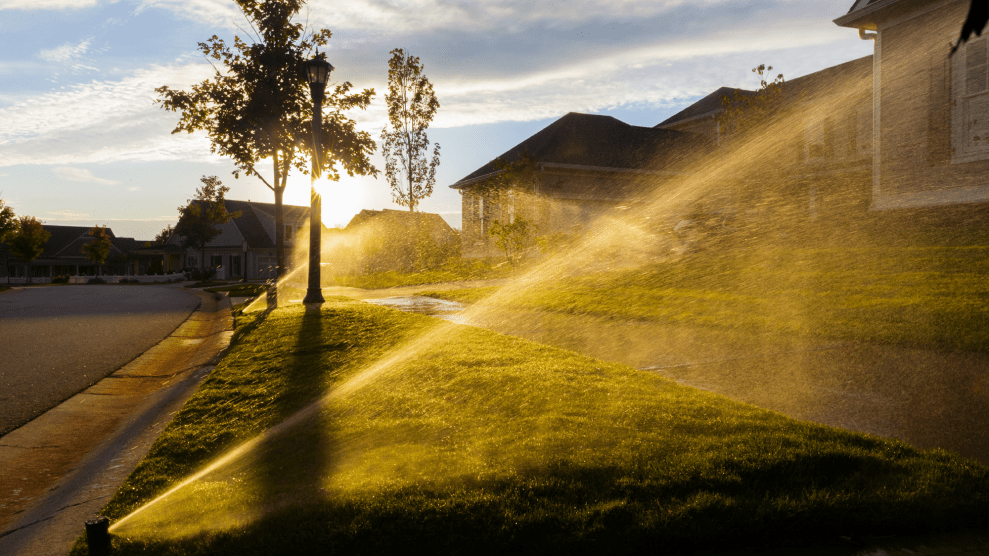
In a major policy shift fueled by a wet winter, California officials announced Wednesday that they will lift mandatory urban water restrictions starting in June.
The water cuts, which began last summer, required the state’s water districts to slash use by 25 percent, leading many Californians to replace lawns with drought-tolerant vegetation, take shorter showers, and change other water-related habits. The change doesn’t mean Californians are in the clear, however. Under the new policy, water districts can set their own conservation standards and are required to report monthly water use data to the state. And some water-saving restrictions will stick around: Residents can’t hose down driveways with drinkable water, and homeowners can’t punish those with brown lawns during a drought.
State officials said they may reinstate the restrictions depending on weather and water use in the coming months. “We don’t know if we have a megadrought punctuated by an okay year,” State Water Resources Control Board chair Felicia Marcus told the Wall Street Journal. “This compromise allows us to keep our eyes wide open.”
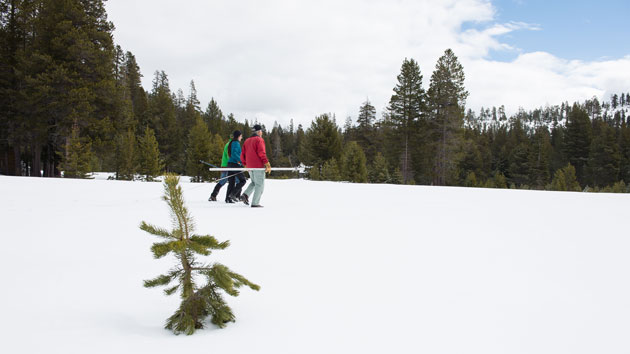
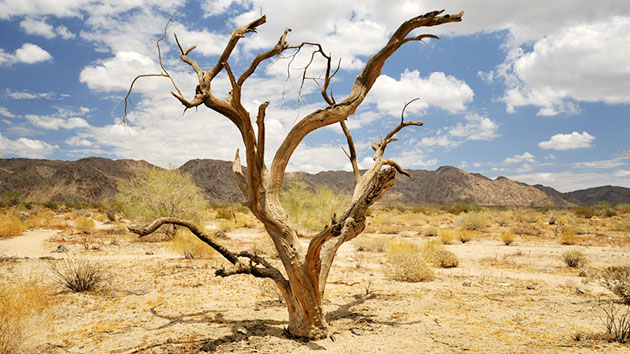
The change is partly in response to the drought’s geographic variation. The snowpack in Northern California neared historic highs earlier this year, filing the state’s two largest reservoirs nearly to capacity. But with an unseasonably warm spring, the snow quickly melted to 33 percent of historic levels, according to the New York Times. Southern California is feeling the drought’s immediate effects more acutely: Many reservoirs in the south are at levels far below the historical average. According to the US Drought Monitor, large swaths of Central and Southern California remain in “exceptional drought”—the most extreme category.
A number of environmental organizations cautioned against Wednesday’s shift. With the dwindling snowpack, low reservoir levels in the south, and overpumping of groundwater, the policy “sends the wrong message,” says Peter Gleick, president of the Pacific Institute. Rather than temporary water cuts, Gleick calls for permanent, long-term water use targets. “By making it possible for urban agencies to set their own conservation targets,” he says, “I’m afraid we’re going to see some water agencies doing a good job and others going to back to old wasteful practices.”